
Wondering if you can visit Mount Vesuvius and Herculaneum in one day and what’s the best way to do so? That’s exactly what we did, so we’ve got you covered with all the tips and tricks for your visit to this historic corner of Italy.
We planned lots of different day trips from Pompei, and one of them was to visit Mount Vesuvius and Herculaneum on the same day.
When we were first thinking about this trip, we found that there was very little information about visiting both places back to back and independently. That being said, we knew that Mount Vesuvius and Herculaneum were quite close to each other, so we thought we’d tackle them together.
In the end, it turned out to be quite manageable, especially since we were coming from nearby Pompei, so today we’re going to share some of our tips for visiting Mount Vesuvius and Herculaneum in one day, complete with transportation details and admission costs.
Mount Vesuvius and Herculaneum Travel Guide: Things to Do & Experience on Your Day Trip
🏛 If you want to hit up all the attractions in one go, this tour from Naples visits Pompeii, Herculaneum and Vesuvius in one day! 🌋
How to get to Herculaneum by train
First things first, we chose a sunny day with good visibility. We were in Pompei for a week and there were a few days when Vesuvius was covered in a thick veil of clouds, so when we woke up and saw the weather had cleared, we jumped at the chance to visit.
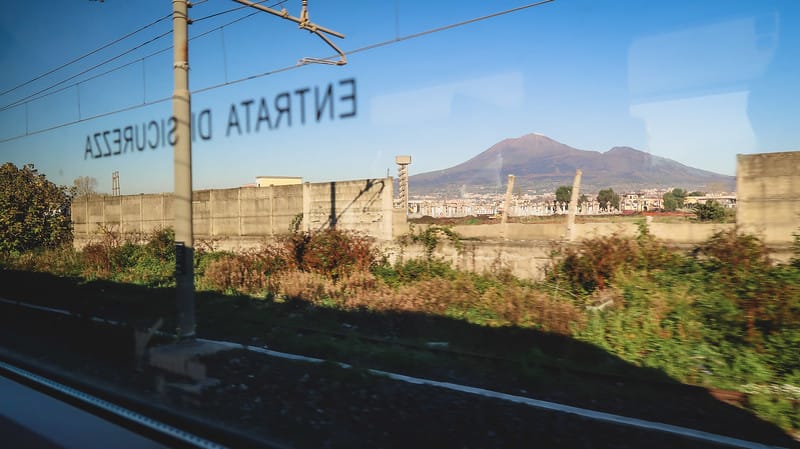
While there are many bus tours to Mount Vesuvius from Naples, Pompei and Sorrento, we decided to ride the train to Ercolano, which is the closest access point to the volcano.
Herculaneum has two train stations: Ercolano Scavi and Portici-Ercolano. We rode the train to Portici-Ercolano because that was the closest line to our apartment, however, this train station is about a 15-20 minute walk from the city centre. In retrospect, it would have been better to arrive at Ercolano Scavi, which is right in the city centre and also where the shuttle to Mount Vesuvius departs from.
Getting to Mount Vesuvius by bus
Once we reached Ercolano Scavi, we walked over to the Vesuvio’s Express office, which is located just outside the train station. It’s hard to miss seeing as the bus is parked right out front. Here we paid a total of 20 Euros per person; that’s 10 Euros for transportation and another 10 Euros for admission to the park. They gave us a two-piece ticket, which we needed to access the site.
I do want to make it clear that Vesuvio’s Express is essentially a shuttle service to transport you up and down the mountain, and that it is not a tour. You will not have a guide providing you with information on the drive up, nor will you be accompanied on the walk up to Mount Vesuvius, so if you’re looking for a more educational experience, this isn’t it!
Tip: If you’re driving up to Mount Vesuvius, keep in mind that you’ll need to pay your admission at the ticketing office, which is located just shy of the entrance to the park. There were a few visitors who completely missed the office and had to go back down the hill!
About Vesuvius National Park
Vesuvius National Park was established in 1995 to protect the famous Mount Vesuvius. It’s important to note that Mount Vesuvius is an active stratovolcano and though it’s mostly remembered for its eruption in 79 AD that destroyed the Roman cities of Pompeii and Herculaneum, it did erupt most recently in in 1944. For this reason, the volcano is monitored closely for any signs of activity.
The national park covers an area of around 135 square kilometres and includes the volcano itself and a larger area surrounding it. It also boasts a unique biodiversity due to its volcanic soil, which supports a mixture of forests, shrubs, and Mediterranean scrub.
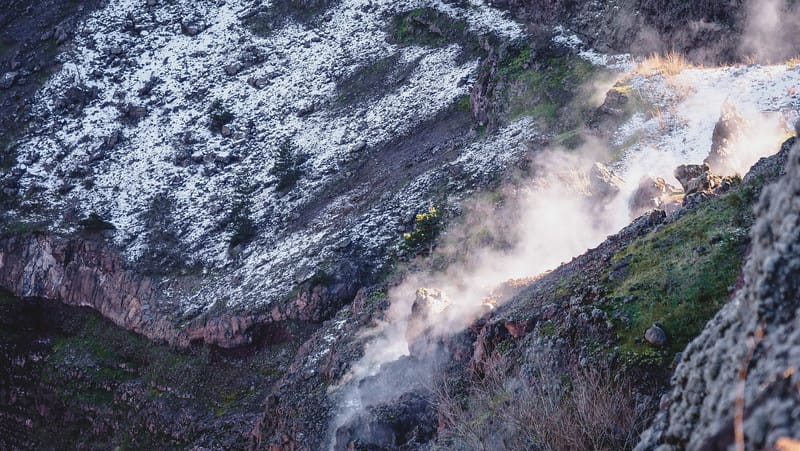
A hiking trail leads up to the crater of Mount Vesuvius, where you can see the steam vents and also enjoy panoramic views of the Bay of Naples. So bring your camera!
Visiting Mount Vesuvius in the morning
So, even though we chose to visit Mount Vesuvius on a clear day, we also visited in December, when the temperatures had dipped below zero, and it had rained the night before…
Not the best idea.
We didn’t think much of this until we started to near the peak of Vesuvius and our bus started to struggle. It turns out the roads were completely iced over and since it wasn’t safe to continue any further. The driver had to unload all the passengers and we had to cover the rest of the way on the foot – which thankfully, wasn’t that far!
Along the way, we saw a few visitors who had also been forced to abandon their cars and motorcycles on the side of the road because they too were sliding. I’m sure we were all quite the sight trying to “skate” our way uphill.
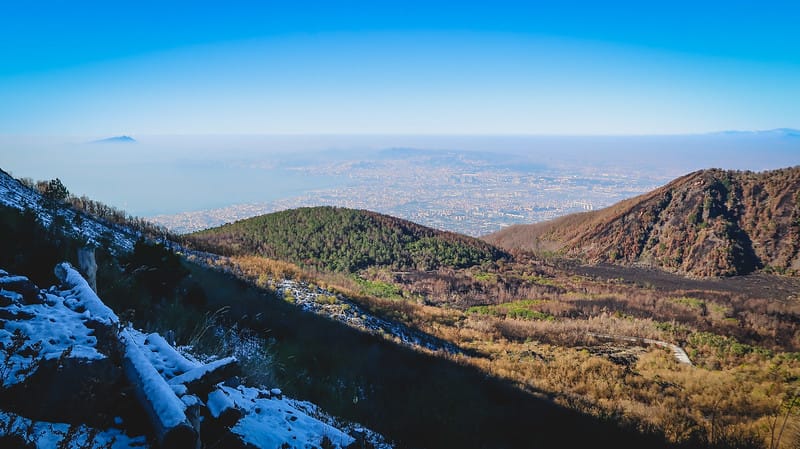
Once we reached the ticketing booth, it was another 15-20 minute uphill walk on a gravel path, but it can take a bit longer depending on the weather conditions.
Also, keep in mind that Mount Vesuvius sits at an altitude of 1,281 metres, so it will be colder at the summit than it is at sea level, and it can get quite windy, so layer up!
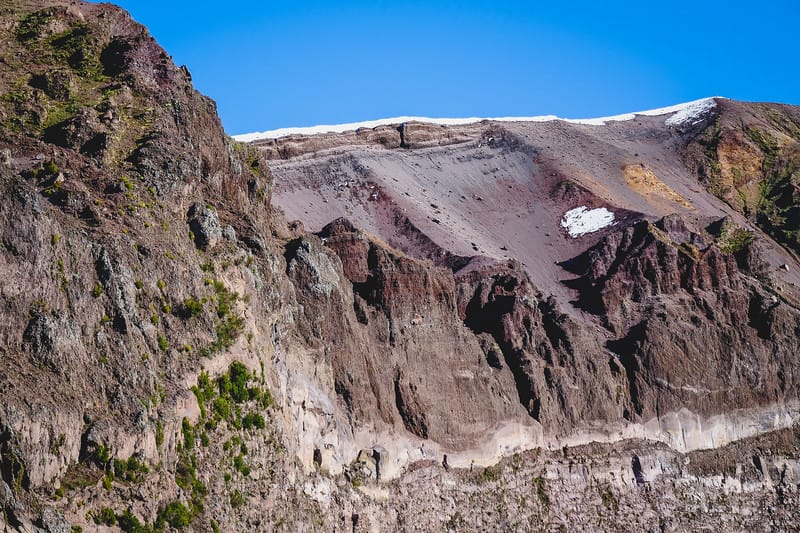
I would say one of the coolest things about hiking all the way up to Mount Vesuvius, was being able to see that it’s a volcano within a volcano. Vesuvius consists of a large cone that’s partially encircled by the rim of an older cone that collapsed. And while there may not have been any bubbling lava visible to the eye, we did get to see steam rising from a few natural vents and that was pretty amazing.
In total, Vesuvio’s Express gives you 90 minutes to hike up to the rim, have a visit, and then hike back down to catch the bus, which we felt would be enough on a good weather day.

A quick lunch break in Ercolano
After all that walking, we were feeling ready for lunch so we chose a pizzeria called La Fornacella.
We went for the classic Pizza Margherita with tomato sauce, mozzarella, fresh basil leaves and a drizzle of extra virgin olive oil on top.

After that, we walked downhill along Via IV Novembre. There’s no way you can get lost because this road connects Ercolano Scavi with the ruins of Herculaneum.
Touring Herculaneum in the afternoon
Once we reached the ruins of Herculaneum, we paid 11 Euros per person to enter the archaeological site.
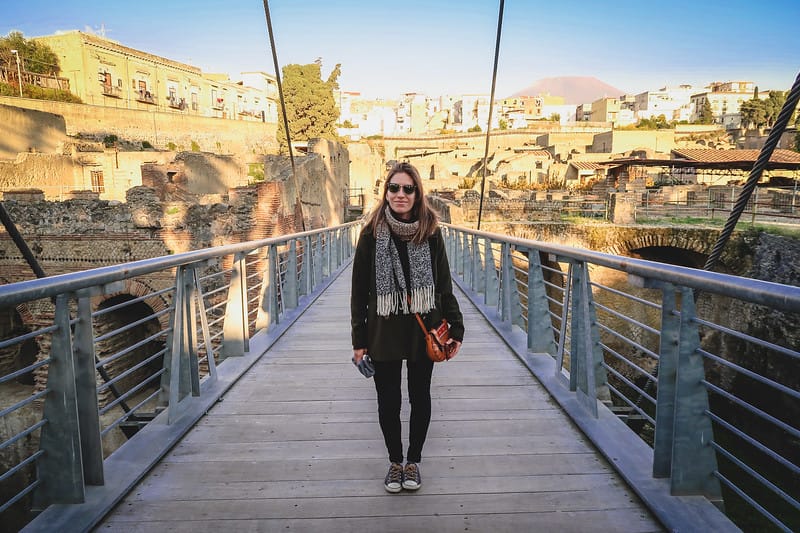
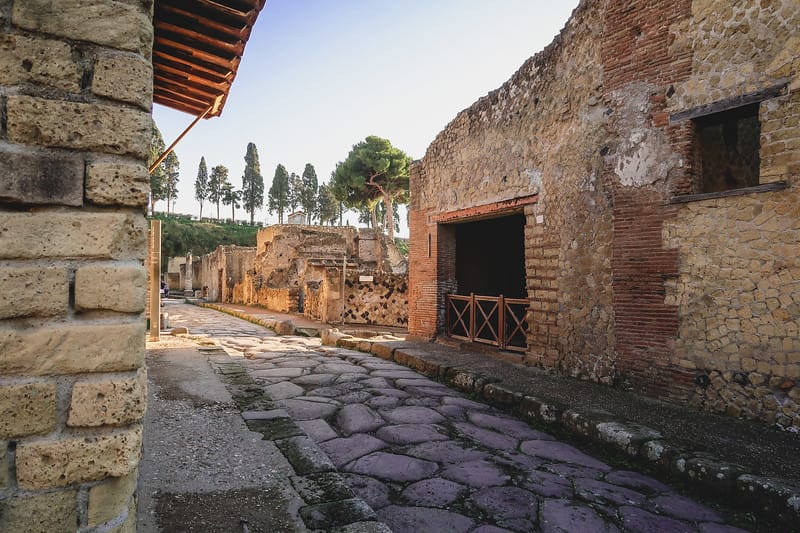
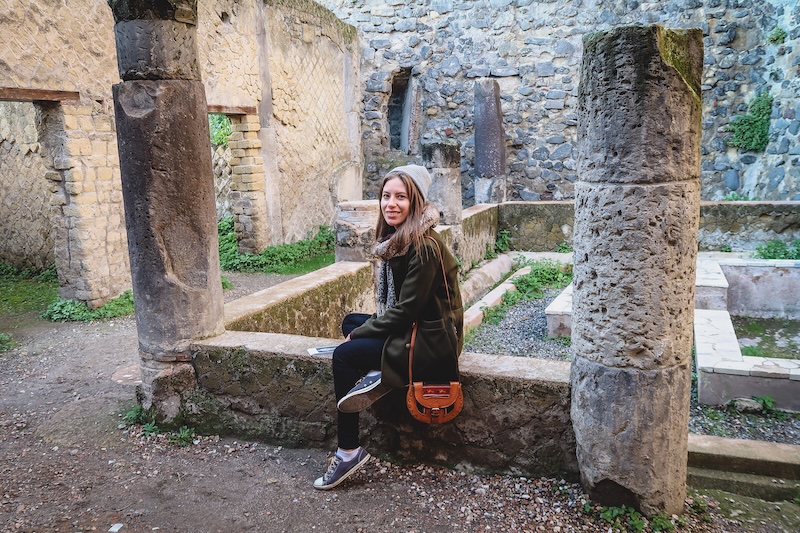
The first thing that struck us about Herculaneum was the view. Because the modern city of Ercolano is much higher than the ancient city of Herculaneum, you get an incredibly overhead view of the excavated ruins down below.
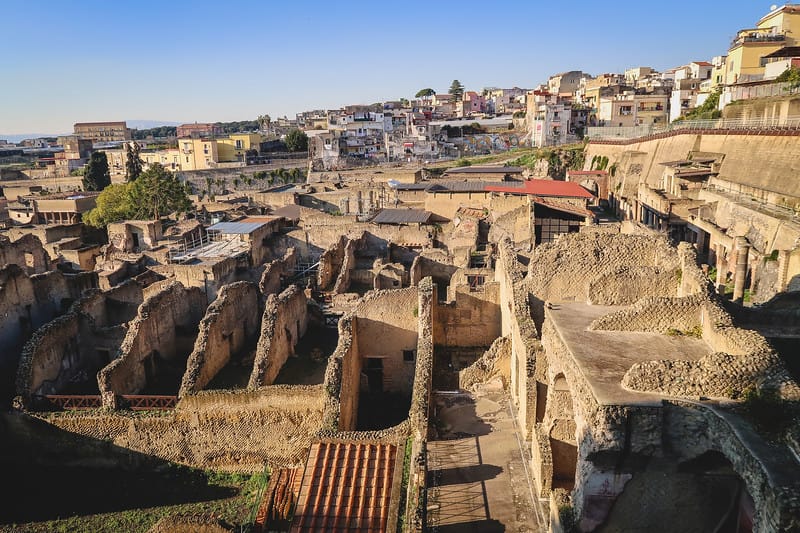
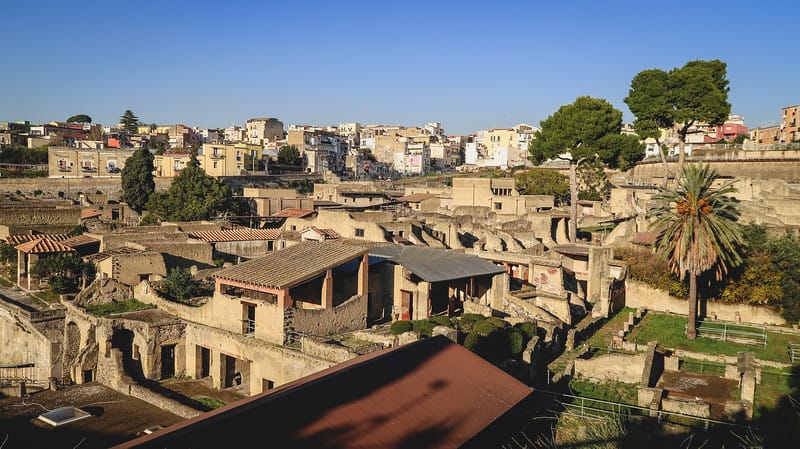
Much like Pompeii, Herculaneum was an ancient Roman town that was destroyed by the eruption of Mount Vesuvius in 79 AD, however, it was preserved in a much different way than Pompeii.
While Pompeii received heavy ash fall that caused the buildings to collapse under all that weight, Herculaneum received very little ash fall. What the city did experience was a series of pyroclastic flows (a mixture of ash and gases), which buried the buildings from the bottom up before solidifying and entombing Herculaneum in time.
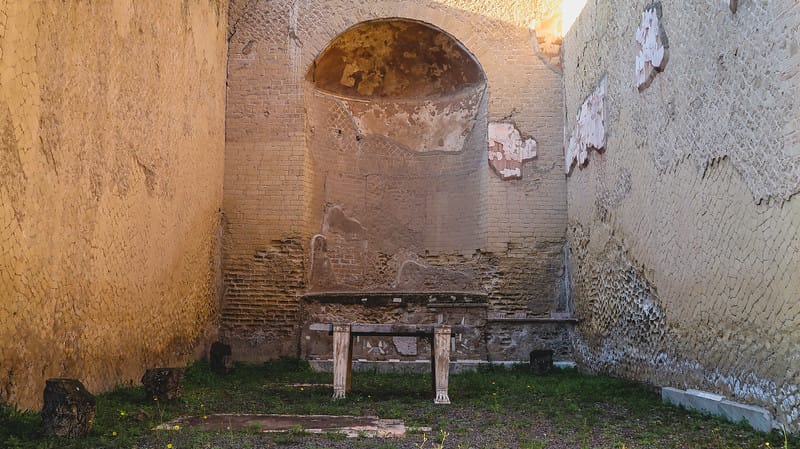
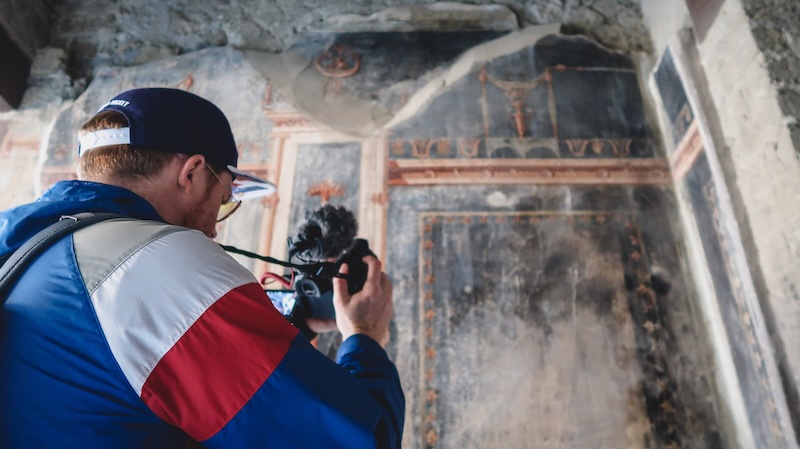
This allowed the city to be surprisingly well preserved and when you walk into some of the villas and temples you are met with vibrant frescoes that don’t look to be 2000 years old!
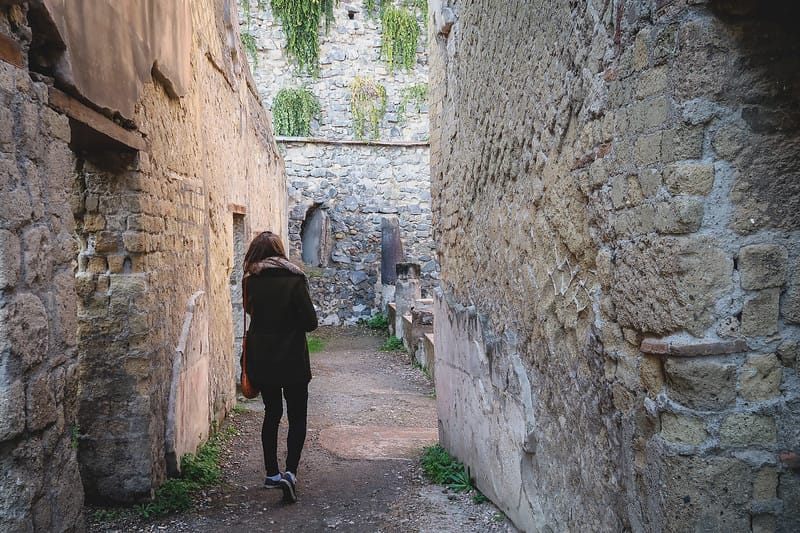
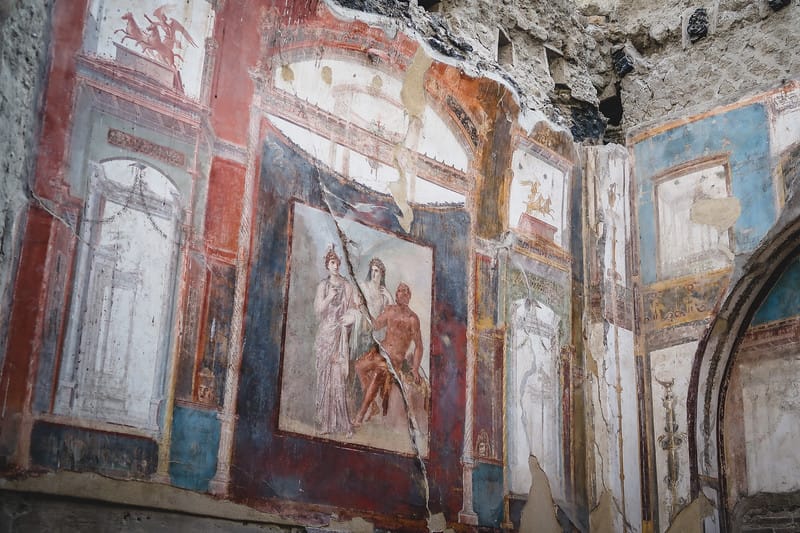
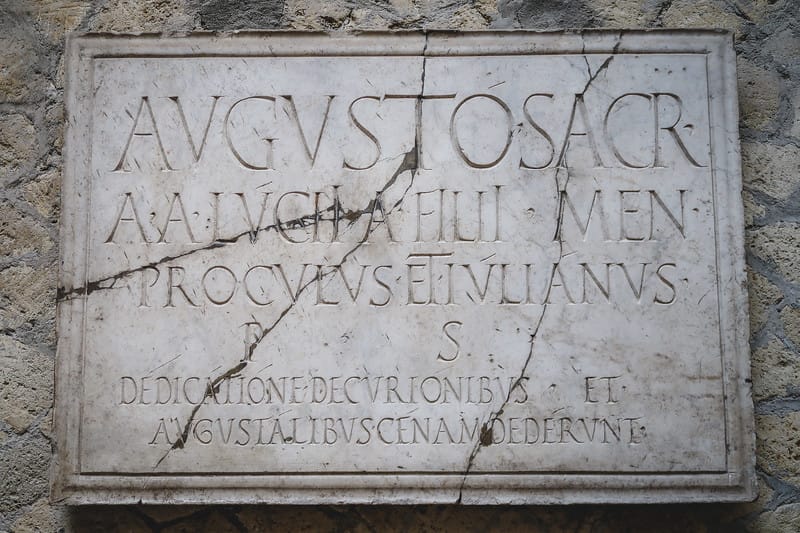
There’s quite a bit to see in Herculaneum and you will receive a map of the archaeological site when you purchase your admission ticket, but a few of the highlights include:
- Thermae – separate baths for both males and females that were fed by a large well
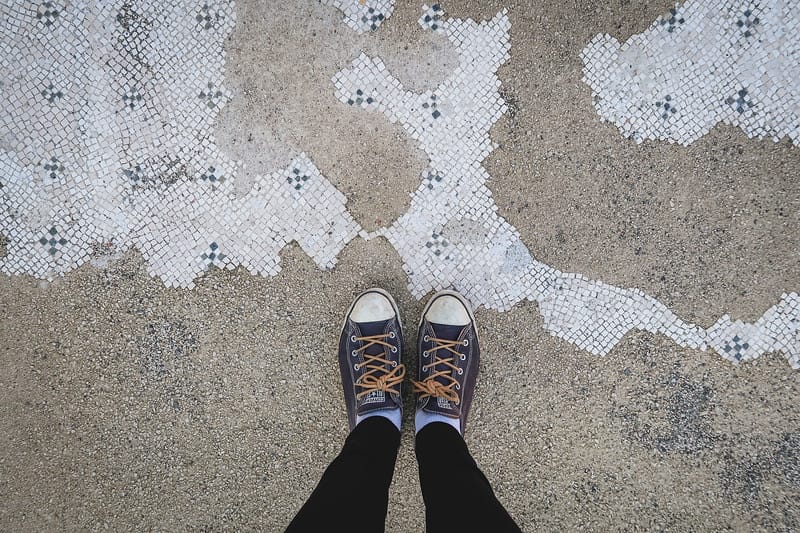
- House of Neptune and Amphitrite – named for its stunning mosaic
- Villa of the Papyri – luxurious villa that stretched down to the sea in four terraces
- Hall of the Augustales – meeting hall for the priests of Emperor Augustus who were usually ex-slaves
- Samnite House – one of the oldest mansions, 300 years old at the time of eruption
- House of the Deer – another luxury waterfront villa
- House of the Relief of Telephus – mansion with red columns and a marble relief
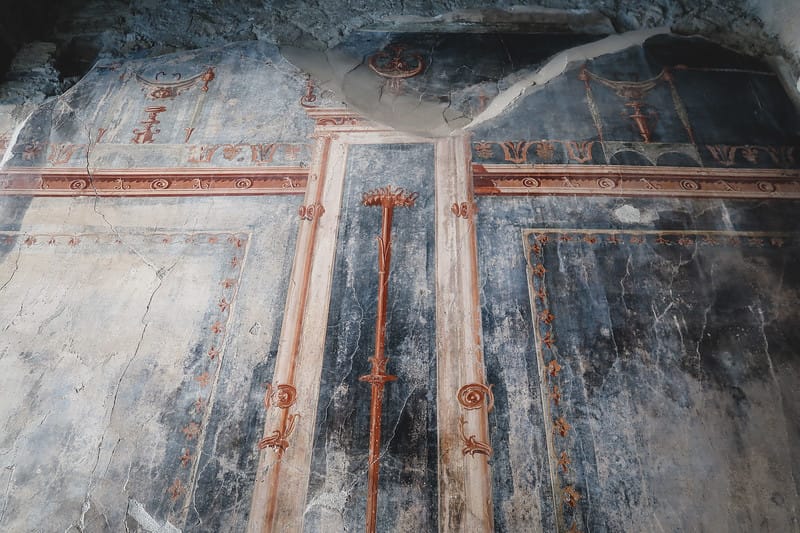
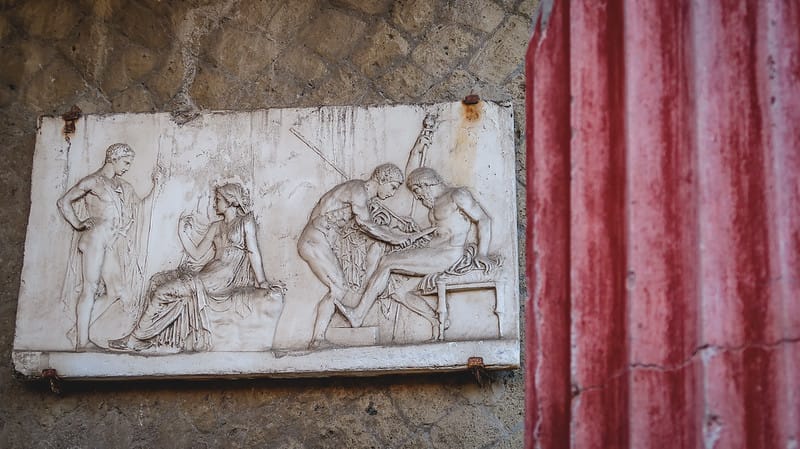
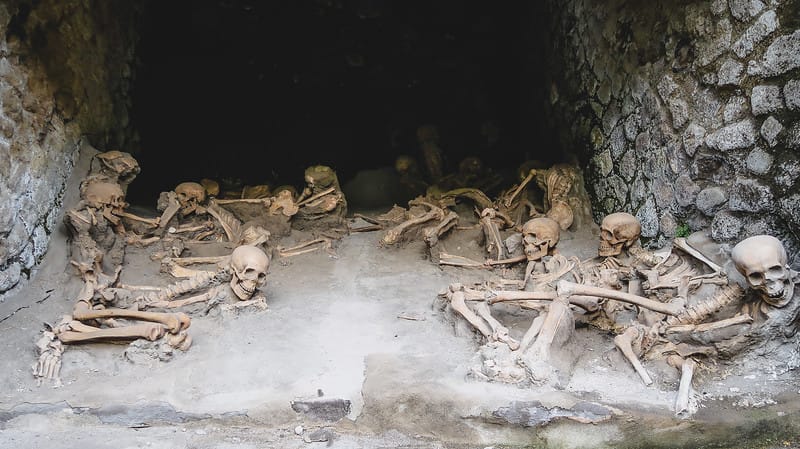
The last place we visited in Herculaneum was the ancient shoreline which in 79 AD sat right on the Bay of Naples. We descended through a tunnel staircase dug into the volcanic rock and were then met with a row of boathouses filled with skeletons.
Those who did not escape Herculaneum on the first day of the eruption, attempted hiding in these boathouses by the water, however, at that point, there was no outrunning Vesuvius’s temperatures and gases.
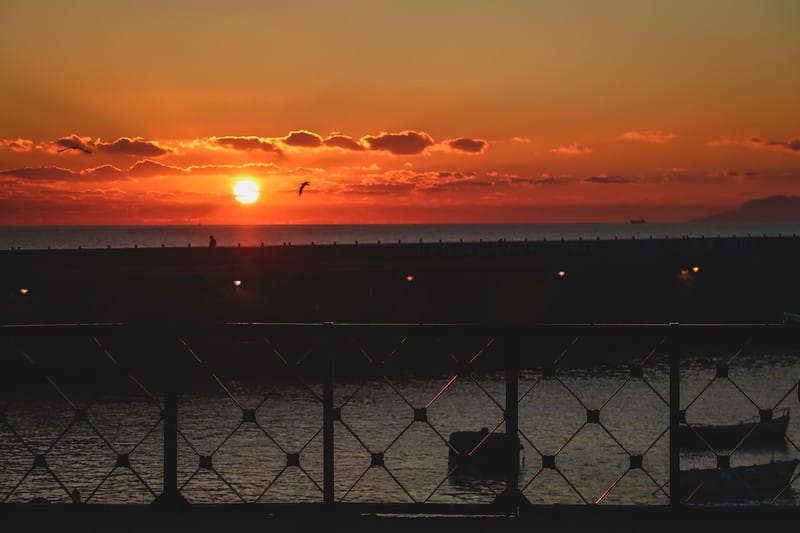
And that’s pretty much a wrap for the day. After walking through the ruins, we walked back to the train station to catch our train back to Pompei just as the sun was setting.
We did have a busy day trip visiting Mount Vesuvius and Herculaneum back to back, but we found it very manageable and we would recommend doing it if you’re keen to visit these two places.
Visiting Vesuvius and Herculaneum: Practical Tips and Timing
We’ve told you what Sam and I did. Here’s what you need to do it better — including the timing nuances we discovered the hard way (in December, on icy roads) and the things worth knowing before you go.
The Volcano Behind the Views: Monitoring and Safety Today
Vesuvius looks tame from the crater rim — a wide grey bowl with a few lazy wisps of steam. It’s easy to forget you’re standing on one of the most closely watched volcanoes on Earth. The Vesuvius Observatory, founded in 1841 on the mountain’s own slopes, is the oldest volcanological institute in the world, and it has kept a seismic and gas-monitoring network running here around the clock ever since. As of this writing, the official alert level is green: ordinary background activity, no signs of unrest. That’s been the story since the last eruption in 1944, but the quiet is exactly why access to the crater path is managed so carefully.
This is also why your ticket has a time printed on it. Entry to the Gran Cono trail is staggered in small groups at set intervals rather than left open all day, and the hours themselves shift with the season — roughly 9am to 3pm in the depths of winter, stretching to 9am to 6pm in July and August. If you’re building your own itinerary rather than joining a shuttle package, check the current seasonal window before you plan your train time, since arriving after the last entry slot means a trip up the mountain with no walk to show for it.
When to Go: Morning or Afternoon?
We did Vesuvius first and Herculaneum second, and that worked well — but you could easily swap the order.
A few things to consider:
- Visibility: Mornings often offer clearer skies on Vesuvius, especially outside of summer.
- Heat: If you’re visiting between May and September, hike Vesuvius as early as possible to avoid the midday sun. There is no shade on the crater trail.
- Crowds: Herculaneum tends to be less busy than Pompeii, and late afternoons are particularly quiet — perfect for lingering in nearly-empty ruins.
What to Pack
You don’t need to overthink your packing, but having these essentials will make a real difference:
- Water and snacks: There are limited places to refill at Vesuvius. Bring at least 1L per person in summer.
- Sun protection: Hat, sunglasses, and strong sunscreen. The crater path is exposed and reflects light off the gravel.
- Sturdy shoes: The gravel on Vesuvius is loose and can be slippery — trainers are fine, sandals will be regretted.
- Layers: Weather on the volcano changes quickly. A light jacket is wise outside the summer months, and essential in winter.
- Portable charger: Both sites are photo goldmines; keep your phone or camera charged.
- Cash: Small cafés and shuttle vendors sometimes only take cash.
- Compact bag: Herculaneum does not allow bags larger than 30×30×15 cm inside the site. Free baggage storage is available at the entrance, so pack light or plan to drop your bigger bag before entering.
The Campania Express: A Calmer Way to Reach Ercolano
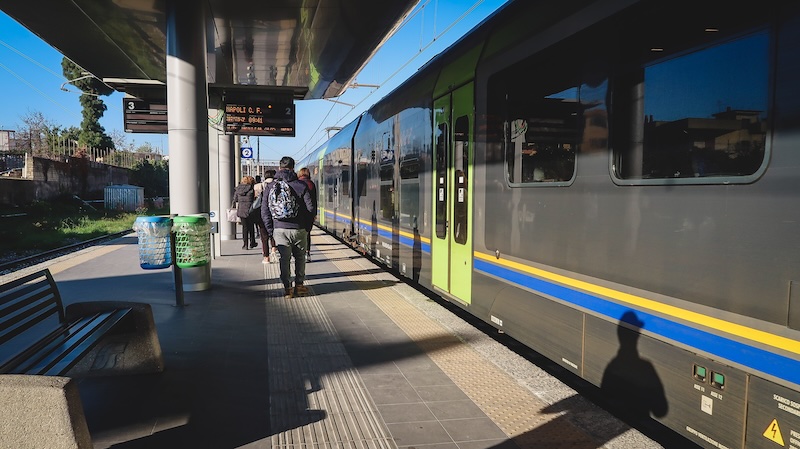
Most visitors default to the regular Circumvesuviana without realising there’s a more comfortable option on the same line. The Campania Express is a tourist-oriented service run by EAV, the same operator, but it stops only at the destinations travelers actually want — Ercolano Scavi and Pompei Scavi among them — and it guarantees a seat, air conditioning, and dedicated luggage space, none of which the standard commuter train promises during peak hours.
It runs seasonally, from mid-March to mid-October, and costs a little more than the regular fare. For a first visit with luggage, or if you’re travelling in the crush of summer, it’s worth the small premium; for a quick hop with nothing to carry, the ordinary Circumvesuviana is fine and runs far more frequently.
Getting There from Different Bases
If you’re not based in Pompei, here’s how the trip works from elsewhere:
From Naples
- Circumvesuviana train: Depart from Napoli Porta Nolana or Napoli Garibaldi to Ercolano Scavi.
- Tours: If you’d prefer everything arranged, small-group tours from Naples can cover both sites — sometimes with Pompeii added, though that makes for a very long day.
From Sorrento
- Train to Ercolano Scavi: The Circumvesuviana connects Sorrento and Ercolano — plan for about an hour each way.
- Private car or taxi: More flexibility, especially for families or tighter schedules, but more costly.
By Car
- Parking at Vesuvius: There is a paid car park about 1km from the ticket office. Arrive early — spaces fill fast in summer and on weekends.
- Parking at Herculaneum: Municipal car parks are available near the ruins with clear signage as you approach.
What’s Currently Closed at Herculaneum
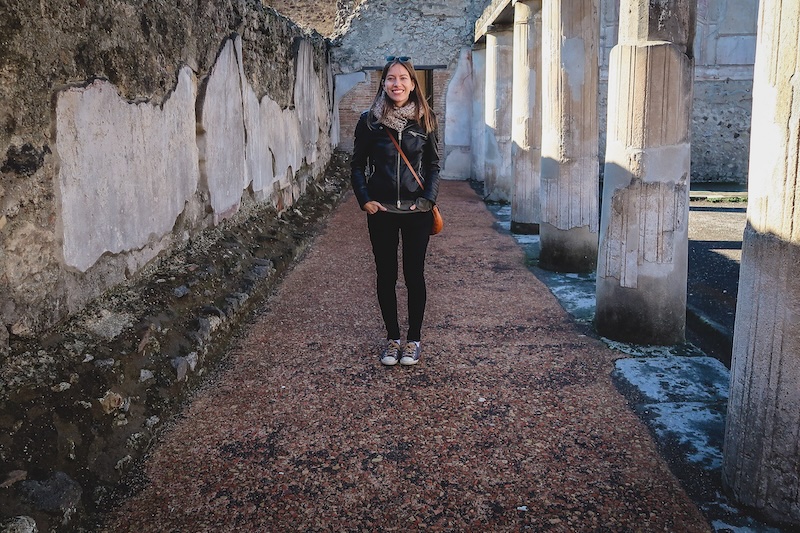
Two of Herculaneum’s best-known names are currently off the visitor route. The Villa of the Papyri — the sprawling seafront villa that gave the world’s only surviving library of papyrus scrolls from antiquity — is closed while excavation and accessibility work continues, with no confirmed reopening date. The Ancient Theatre, one of the earliest structures ever excavated at the site back in the 18th century, is also shut for extraordinary maintenance. Neither closure affects the core archaeological area or the houses along the main streets, which remain fully open, but if either site is the reason you’re visiting, it’s worth checking the park’s official notices before you build your afternoon around them.
Why Choose Herculaneum Over Pompeii?
Pompeii is massive, iconic, and endlessly fascinating. Herculaneum is the underrated gem beside it. Here’s what makes it unique, in case you’re deciding which site to prioritise:
- Compact size: Herculaneum is smaller, so you can see the highlights in 2–3 hours without feeling rushed.
- Preservation: The pyroclastic flows carbonised wood, meaning you’ll see ancient beams, doors, and even furniture still in place — something Pompeii can’t match.
- Frescoes and mosaics: Vivid colours and beautiful designs adorn many houses, looking almost freshly painted.
- Atmosphere: Less crowded and more peaceful. You’ll often have entire lanes to yourself.
Add-Ons for a Longer Day
If you have a car — or just an afternoon to spare — you could expand your day with any of these:
- Wine tasting: The volcanic soils of Vesuvius produce excellent Lacryma Christi wines. The Mount Vesuvius Vineyard Tour with Wine Tasting and Lunch takes you through a family-run organic estate on the volcano’s slopes, pairing a classic or superior tasting with a light lunch made from local ingredients — good for couples or small groups wanting a slower half-day.
- Villa Campolieto: A restored 18th-century Neoclassical villa on Ercolano’s “Golden Mile,” designed in part by Luigi Vanvitelli, with gardens and sweeping Bay of Naples views — worth an hour if you’re passing. It’s closed on Mondays, and the entry fee is modest.
- Naples Archaeological Museum: Home to mosaics, statues, and artefacts excavated from both Pompeii and Herculaneum, including the Alexander Mosaic and the Farnese Bull. The Tour of the Archaeological Museum of Naples is a 3-hour guided visit that connects what you’ve just seen in the ruins to the objects taken from them. Note the museum is closed on Tuesdays.
How Long Does Each Site Actually Take?
| Site | Minimum | Sweet Spot | For History Buffs / Photographers |
|---|---|---|---|
| Vesuvius Crater Walk | 90 minutes (as allocated by Vesuvio’s Express) | 2 hours — lets you linger at every lookout, grab an espresso at the summit kiosk and read the geological information boards. | 3 hours at dawn or dusk; fewer crowds, softer light. |
| Herculaneum Ruins | 1.5 hours (fast lap) | 3 hours with map and audioguide (opens 8:30 AM, closes 7:30 PM peak season / 5:00 PM winter) | 4–5 hours if you read every panel and wait for sun-slanted courtyard shots. |
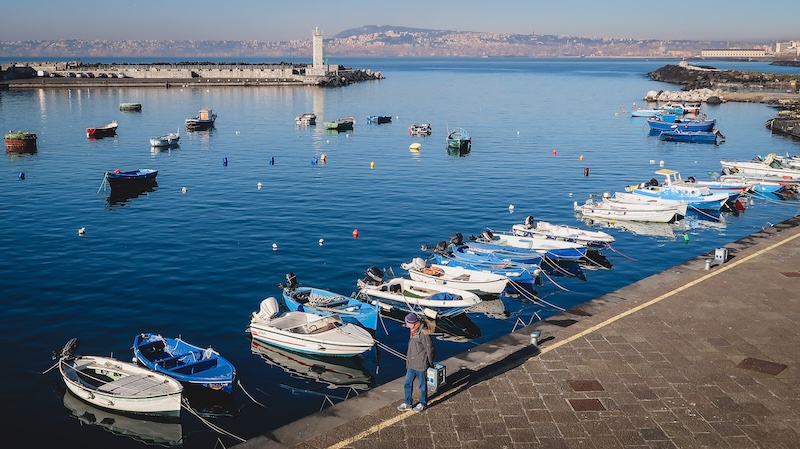
Choosing Your Base: Pompeii, Naples or Sorrento?
| Consideration | Pompeii | Naples | Sorrento |
|---|---|---|---|
| Commute | 15 min Circumvesuviana to Ercolano | Direct metro and Circumvesuviana — about 20 minutes | Circumvesuviana to Ercolano — about 45 minutes |
| Ambience | Ruins-centric, quiet at night | Bustling, gritty and excellent food | Cliffside resort vibe, sunset spritz culture |
| Budget Double € | 55–90 | 70–140 | 90–200 |
| Who it suits | Archaeology-focused visitors, early-rising hikers | Urban explorers, street-food hunters | Couples chasing dolce vita evenings on the coast |
Where to Stay
Five options across Pompei, Naples and Sorrento, covering everything from a backpacker dorm to a cliffside 5-star:
- Agorà Hostel (Pompei): A small, family-run hostel two minutes from the Amphitheatre entrance to the ruins and a short walk from both train stations. Offers private rooms and dorms, a garden courtyard, and hosts who are known for helping guests plan their route through Pompeii and Vesuvius. Good for solo travelers and budget backpackers.
- Hotel Forum (Pompei): A 4-star hotel directly opposite the Pompeii excavations entrance, with a citrus-tree garden, on-site restaurant, and free parking. Simple, reliable, and about as close to the ruins as you can sleep. Good for archaeology-focused visitors and early-rising hikers.
- Habita79 Pompeii – MGallery Collection (Pompei): A design-forward 4-star with family rooms, an indoor pool, spa, and rooftop bar, a short walk from the ruins. The spa itself is adults-only, but the family rooms and central location make it a comfortable base for parents travelling with kids. Good for families and travelers who want a bit of polish after a day on the volcano.
- Hotel Costantinopoli 104 (Naples): A boutique hotel set in a 19th-century villa with an outdoor pool — rare in central Naples — in the Spaccanapoli historic district, close to the Circumvesuviana at Napoli Garibaldi and a five-minute walk from the Archaeological Museum. Good for couples and urban explorers.
- Bellevue Syrene (Sorrento): A 5-star cliffside villa dating to the 18th century, with panoramic terraces overlooking the Bay of Naples and Vesuvius across the water. The Circumvesuviana station is 10 minutes on foot, which makes day trips to Ercolano straightforward. Good for honeymooners and anyone looking to splurge.
Sample Itinerary from Pompei
06:46 Circumvesuviana from Pompei → 07:11 Ercolano Scavi
07:30 Vesuvio’s Express tickets, depart 07:45
08:30–10:30 Summit hike, espresso, photos
11:15 Bus back, 11:35 arrive Ercolano; walk to pizzeria
12:15–13:00 Pizza lunch
13:10 Enter Herculaneum ruins
16:10 Exit via gift shop gelato stop
16:28 Train to Pompei or Naples
Vesuvius and Herculaneum in One Day: FAQ
Can I really do Mount Vesuvius and Herculaneum in one day?
Yes — very manageable, especially if you start early. Vesuvius in the morning for clearer views and cooler temperatures, Herculaneum in the afternoon when crowds thin out. That’s exactly the order we did it.
What’s the best order and why?
Vesuvius first, Herculaneum second works well: morning visibility on the crater rim, then an easy downhill walk into Ercolano for lunch and the ruins. You can swap if the weather demands it.
How do I get there by public transport?
Take the Circumvesuviana train to Ercolano Scavi — the stop in the town centre. From there, walk outside to Vesuvio’s Express, the shuttle up and down the mountain. This is the same route we took (minus the wrong station we initially used). If you’d rather have a seat and luggage space guaranteed, the seasonal Campania Express covers the same stop.
Do I need a guided tour for Vesuvius?
No. Vesuvio’s Express is a shuttle, not a guided tour. You pay for transport and park entry, then walk the crater path independently. If you want commentary, book a guided day tour from Naples or Sorrento instead.
How much time do I need at each site?
- Vesuvius: The shuttle typically gives around 90 minutes total at the crater area — enough on a good weather day.
- Herculaneum: Plan 2–3 hours for the highlights at a relaxed pace.
How hard is the Vesuvius hike?
A steady 15–20 minutes uphill on a gravel path, exposed to wind and sun. The summit sits at 1,281 m — expect it to feel colder than sea level. Wear sturdy shoes and layers. In winter or after rain, expect ice near the top (we learned this the hard way).
How do I buy tickets and what do they cost?
At Ercolano Scavi, buy the two-part ticket from Vesuvio’s Express (shuttle transport plus park entry). Combined this comes to around €20 per person based on our visit, with Vesuvius park entry at €10 of that. Herculaneum entry is currently €16 per adult (prices have risen since our original visit when it was €11 — always check current rates before you go). EU citizens under 18 enter Herculaneum free; the first Sunday of each month is free admission for everyone. Bring cash.
I’m driving — anything I should know?
Pay your Vesuvius park admission at the ticket office just below the entrance — it’s easy to miss and a few visitors on our day had to drive back down to do it. There is paid parking near the trailhead; arrive early on weekends.
Where should I eat between the two sites?
Grab lunch in Ercolano — we liked La Fornacella for a classic Margherita. Then stroll down Via IV Novembre directly to the Herculaneum entrance. You can’t get lost; the road connects Ercolano Scavi with the ruins.
Why choose Herculaneum over Pompeii if I’m short on time?
Smaller, quieter, and astonishingly preserved. The pyroclastic flows carbonised wood and protected frescoes, beams, doors, and even furniture. You can see a lot in 2–3 hours and you’ll often have entire lanes to yourself. Note that the Villa of the Papyri and the Ancient Theatre are currently closed to visitors, but the main streets and houses are unaffected.
What should I pack for a dual Vesuvius–Herculaneum day?
Water (at least 1L in summer), snacks, sun hat, sunglasses, sunscreen, layers, sturdy shoes, power bank, cash, and a compact bag — Herculaneum does not allow bags larger than 30×30×15 cm inside; free storage is available at the entrance. In winter or after rain, expect wind and possible ice near the summit.
What’s a smooth sample schedule from Pompei?
- 06:46 Circumvesuviana Pompei to 07:11 Ercolano Scavi
- 07:30 Buy Vesuvio’s Express tickets; 07:45 shuttle departs
- 08:30–10:30 Crater walk and photos
- 11:15 Shuttle down; lunch in Ercolano
- 13:10–16:10 Herculaneum ruins
- 16:28 Train back to Pompei or Naples — spritz well earned
Best itinerary for a day, time is money they say!
Thank you. Just what we were looking for. We will try this tomorrow.
Thank you for sharing your story! It was so helpful, and we have just spent a wonderful day visiting Vesuvius and Herculaneum! The train and bus combo was easy, and 90mins up at the crater was just the right amount of time. Happy travels!
Thanks Kara! Glad to hear you enjoyed your visit. 🙂
Last year I had the opportunity to be in Naples and occasionally visited Herculaneum. I was there immediately after opening and I had ruins only for myself. Cool feeling 🙂
Great info! How long is the bus ride up Mt. Vesuvius? We will be there in a couple weeks, and want to plan accordingly. Plus, my husband is a bit worried about the bus ride, as he tends to get motion sick. Thanks!
Hi there, I am going to be hosteling in Ercolano in 2 weeks time for 8 days , so was interested in your reviews.
I have read that Naples can be dangerous as there is a lot of crime there. Is it a real problem at nights or at any other times ?
That’s a great sum up! Was thinking of doing the volcano too, you tipped me over the edge! 🤣
Safe travels, Matt
Thank you for this great blog! We are staying in Naples for 3 days July 22-24 and want to visit Mount Vesuvius and Pompeii in the same day, much like your visit except we would visit Pompeii instead of Herculaneum. However, your pictures and descriptions of Herculaneum is making me reconsider… I’m sure you also visited Pompeii as well. If we only have time to visit 1, would you suggest Herculaneum or Pompeii? I think it would be less exhausting and sensory overload to do Vesuvius and Herculaneum in one day instead of Vesuvius and Pompeii, but I would hate to come all this way and forego a visit to Pompeii… We plan to get the Campania Artecard, which includes unlimited transportation on the Circumvesuviana Train from Naples to Sorrento with stops at Ercolana and Pompei. We would have to manage our time to catch the train between Ercolana and Pompei stops.
This is a beautiful guide/template – cheers! My partner and I are looking to do the same trip in a couple of days, but from Naples. I was humming and hawing about which station to arrive at, so your logistical insight is much appreciated 🙂
So glad I found this info! We are going to Naples tomorrow and wanted to do this very trip the next day.
Thank you!
Wish I was still an independent traveller. I’ve just come back from an organised bus tour to herculaneum and vesuvius. Except, the trip included lunch with wine tasting, and whilst we were sat eating, one of the guides came up and said, “I’m very sorry, but there’s been a mistake, and you’ve not been booked on the bus that goes up to vesuvius. There are no spare seats on the bus either”. We had no other option but to take the measly refund they offered, and we were led to the bus that took us all the way back to Sorrento where we’re staying. This trip cost us a lot of money, and was a very disappointing experience. To everyone reading this, stay independent, there’s nothing grown up about being herded on a bus by a tour operator who’s only interested in your money.
How long did you spend at Herculaneum? And how long is the bus ride to Vesuvius? Thanks so much for all of this info!
Thank you! Very helpful post.
What a fantastic guide! I’m planning my trip to Italy soon, and I love how you laid out the itinerary for visiting both Mount Vesuvius and Herculaneum in one day. The tips on transportation and timing are super helpful. Can’t wait to experience the stunning views and the fascinating history! Thank you for sharing!