
Last week I finally signed up for a Thai cooking class here in Chiang Mai. Cooking classes and food tours have been somewhat of a trend during my travels, so I couldn’t leave Chiang Mai without learning to prepare a few of my favourite Thai dishes.
When it came time to choosing a school, I went with The Chiang Mai Thai Farm Cooking School. I randomly picked up their brochure at a travel agency and I was sold when I read that the class would take place at an organic farm outside of the city – the perfect setting for a full day of cooking and eating!
Shopping at the Local Market
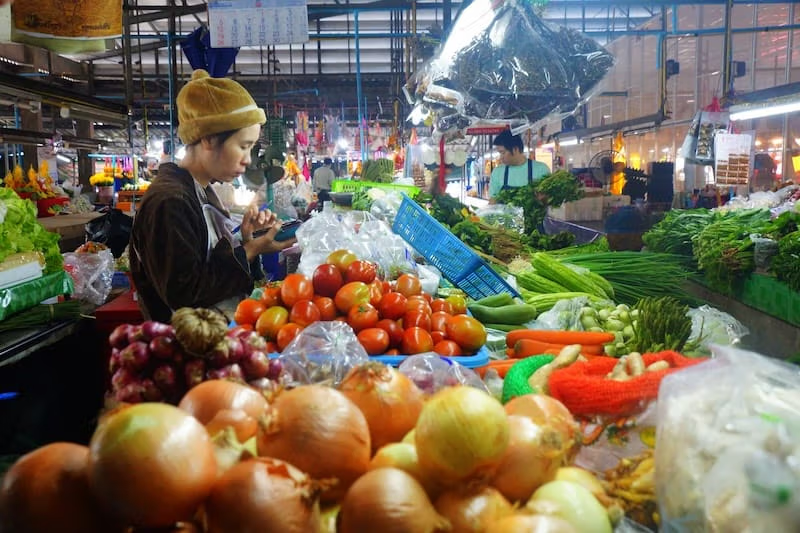
Our first stop of the day was at a local market, where we picked up a few ingredients we would be needing that day. Our guide and cooking instructor, Pern, walked us through the rows of produce and introduced us to numerous spices, roots and vegetables that many of us had never seen nor heard of.
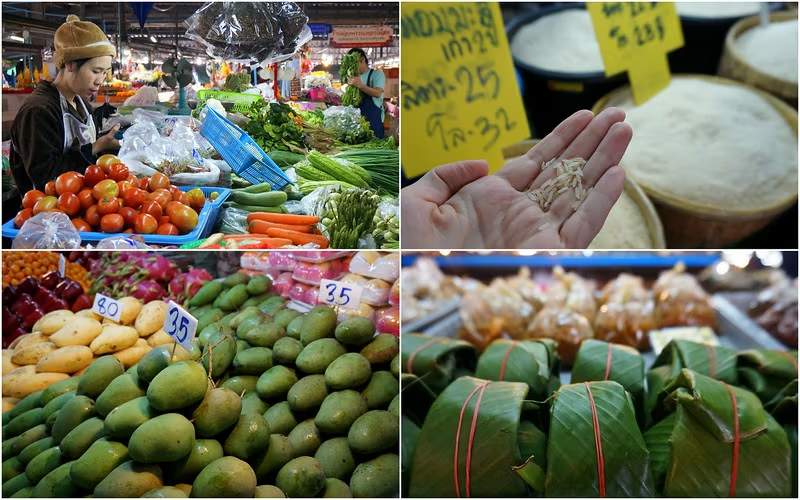
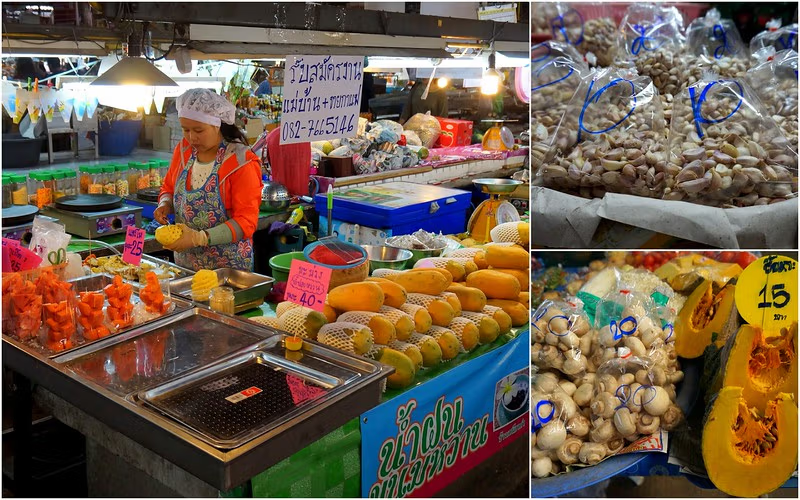
After sniffing, tasting, and feeling our way through the market, we had some free time to peruse on our own. Some people got adventurous and decided to sample deep-fried maggots, while the squeamish cheered them on from a distance. As you can probably guess, I was one of the latter.
Touring the Organic Farm
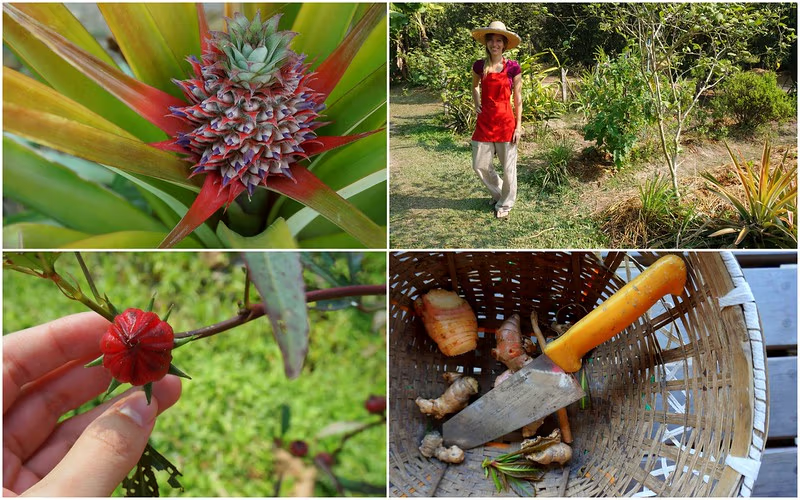
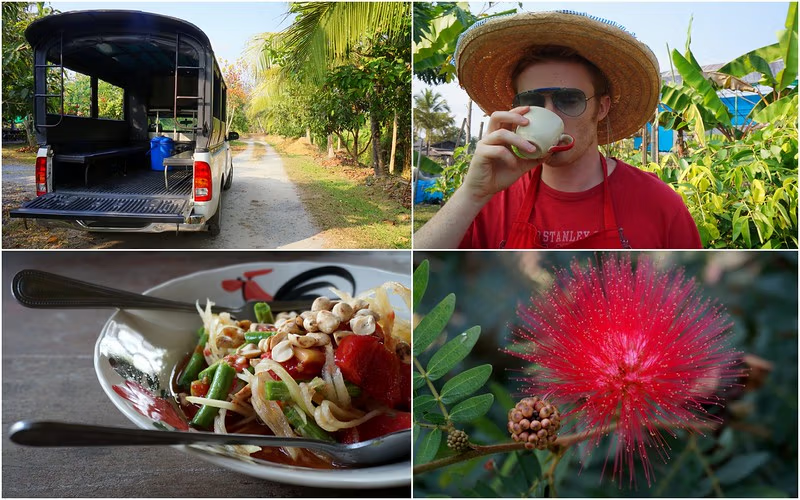
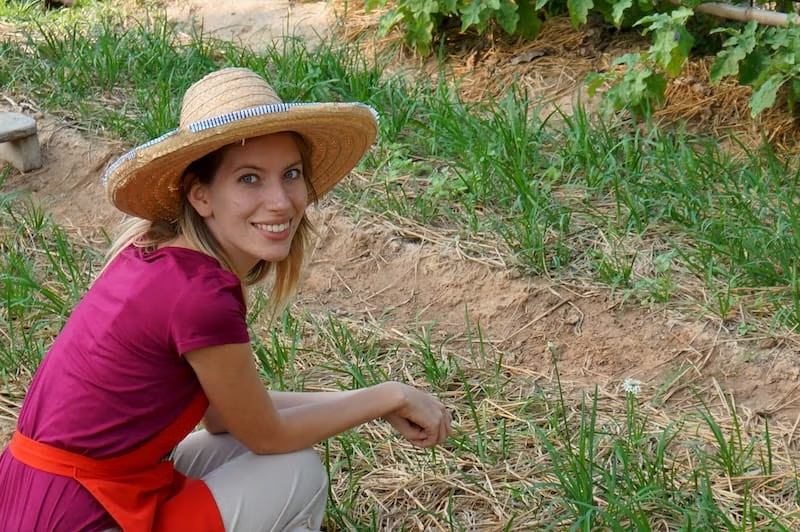
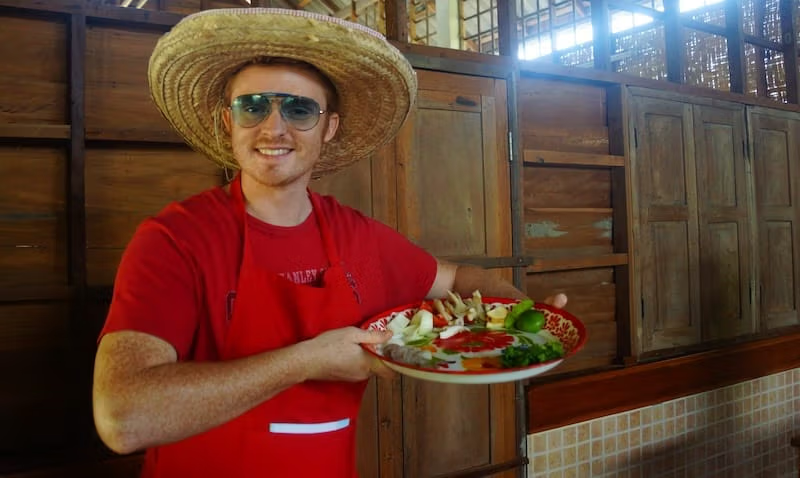
From there it was about a 20 minute drive out to our cooking class in the countryside. Once we reached the farm, we got a bit of a farmer makeover. Wearing straw hats and red aprons, we followed Pern as she walked us through the grounds and showed us the various spices and vegetables growing there. We picked holy basil, Thai parsley, coriander, kaffir lime, bitter eggplant and a few other ingredients.
Let’s get cooking!
When it came to cook, we each selected the different dishes we were interested in making. What I liked about this school is that they didn’t have a set menu, but rather you had 3 different options for each different course, which meant no one was stuck cooking something they didn’t like.
I decided to go with my all time favourites and chose the yellow curry, tom yam soup, chicken with cashew stir-fry, spring rolls, and mango sticky rice for dessert.
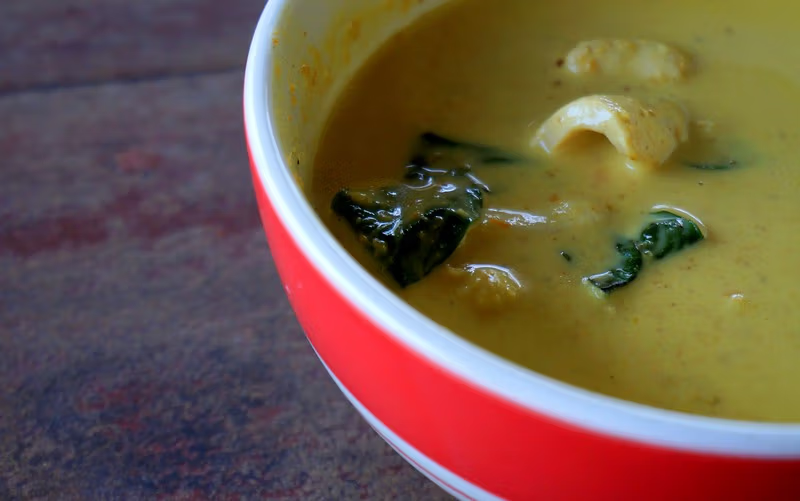
Yellow Curry
Our first task in the kitchen was to prepare the paste for our curry, and I’m not talking about the ready-made option. No, we made ours from scratch using a pestle and mortar and we had to put some serious muscle into it.
Since I was making the yellow curry, my ingredients included dried red chillies, chopped shallots, galangal, lemongrass, garlic, cumin seeds, coriander seeds, turmeric, yellow curry powder and ginger.
I put all the ingredients into the mortar and pounded them with the pestle until everything was crushed, ground, and mixed thoroughly into a paste. The whole process took about 10 minutes.
Once I had the curry paste ready, it was time to start preparing the actual curry. That involved heating coconut milk and bringing it to boil before adding ingredients like the curry paste, potatoes, pumpkin, onions, spring onions, chicken, and sugar, salt, and soy sauce for flavouring.
The end result was good, but I probably could have put more chillies in! I think my palate has gotten used to Thai spice.
Curry options: Green Curry, Red Curry, Yellow Curry
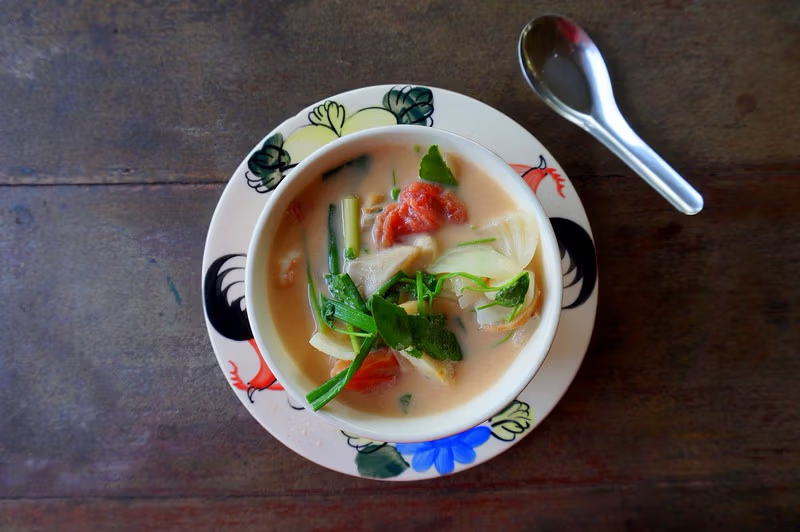
Tom Yam Kung
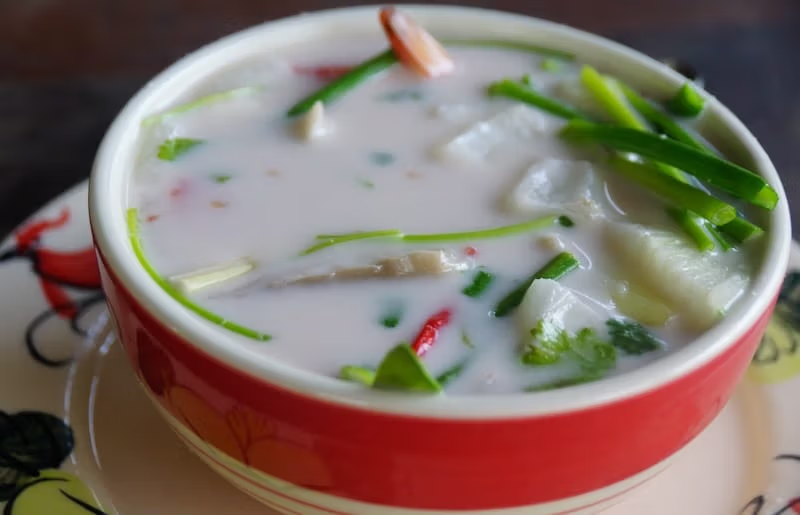
I’m not a huge fan of shrimp, but it somehow works in this delicious coconut soup. The Tom Yam Kung was really easy to make and it’s one of the recipes that I would most like to recreate once I have a kitchen of my own.
To make it, I heated a pot with coconut milk and then added lemon grass stalks, onions, galangal, tomatoes, mushrooms, hot chillies, lime leaves, and soy sauce. I also added brown sugar and a pinch of salt of flavouring, followed by the shrimp which cooked in 20 seconds. The dish was completed by squeezing a fresh lime overtop.
This is the kind of soup where you can’t eat all the ingredients you put in since they are mostly there for aroma and flavouring, but with that in mind, it’s a pretty tasty soup!
Soup options: Tom Yam, Tom Kaa, Thai vegetable soup
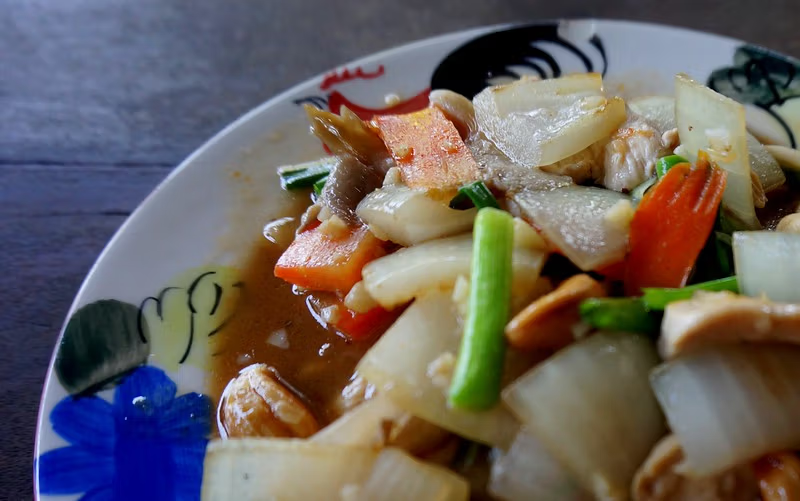
Stir-fry with cashews
For my stir-fry I went with the chicken and cashew option.
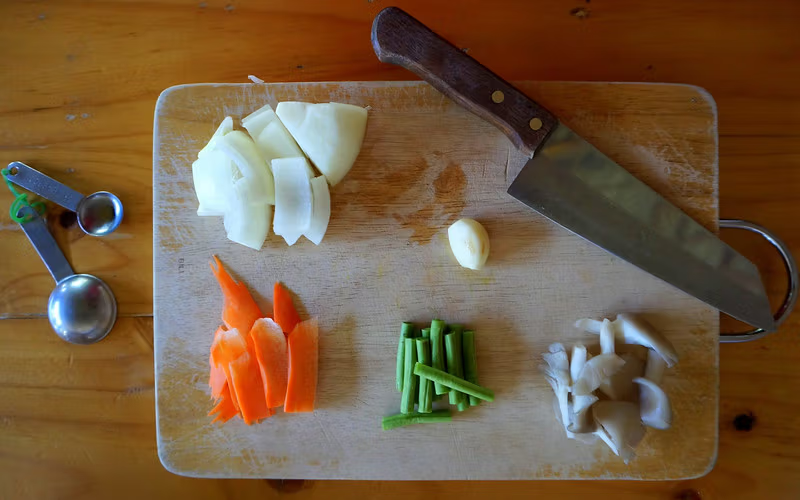
We heated our woks and then added a bit of oil. First we cooked our carrots, onions, green beans, and mushrooms, and next we added the chicken which cooked in 2 minutes. Once the fire was off, we added spring onions and cashew nuts, and voila, the quickest stir-fry I have ever made.
Stir-fry options: Chicken stir fry with cashew nuts, sweet and sour stir fry, chicken and basil stir fry.
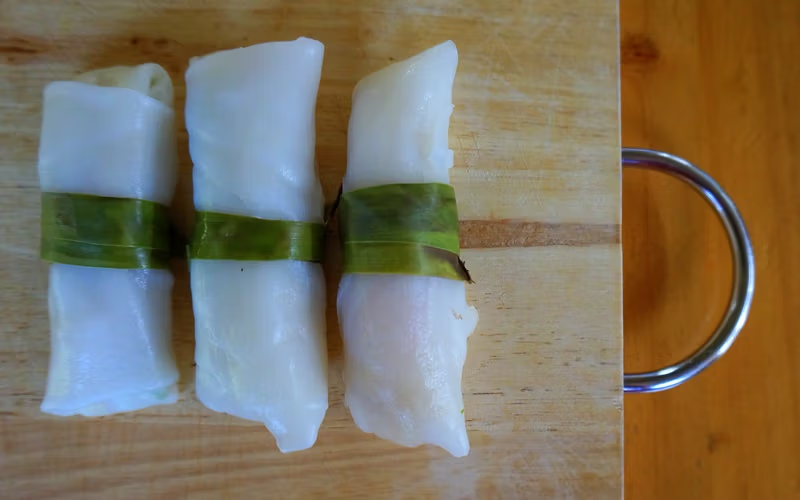
Spring rolls
I was kind of expecting something similar to the fresh spring rolls I ate in Vietnam when I decided to make these (no other spring roll has been able to top the ones I ate in Hoi An!), and while these didn’t quite meet my grand expectations, they were still fun to make.
First up we prepared the filling for our spring rolls. This meant stir-frying grated carrots, cabbage, onions, bean sprouts, glass noodles and tofu. We also added a bit of soya sauce, salt and pepper for flavouring. Once our filling had cooled down, we rolled them up in a thick rice paper sheet and they were ready for consumption – except everyone was beyond stuffed at this point so we had to start packing our food into little containers to take home.
Noodle dish options: Spring rolls, Pad Thai, Pad See Ew
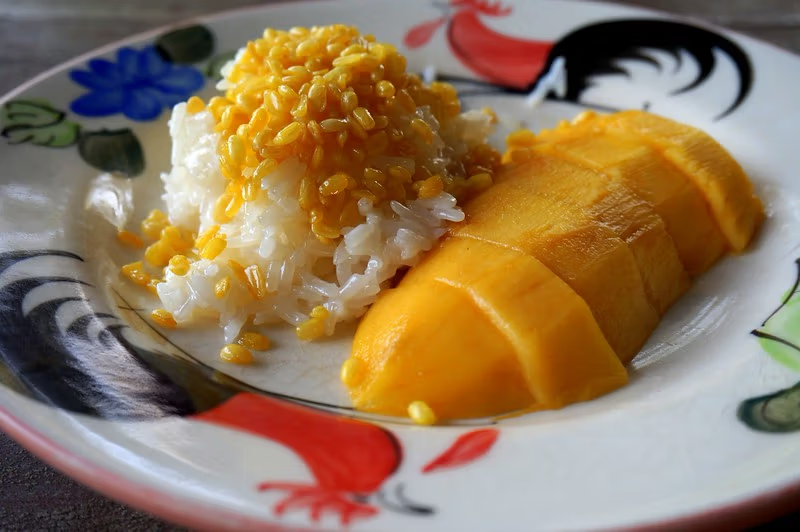
Mango Sticky Rice
And the best for last – mango sticky rice!
I was kind of torn about my dessert because I really wanted to learn how to make the bananas in coconut milk, but in the end I had to go with my all time favourite – mango sticky rice. I mean just look at that thing of beauty!
The dessert was surprisingly easy to make. While the rice was being steamed, we worked on preparing the coconut sauce. We mixed fresh coconut milk, sugar, and a pinch of salt in the pot and heated it without actually allowing it to boil. Once our rice was ready, we mixed it in the coconut sauce for a rich flavour, and then served it on a plate with ripe mango slices and some crispy deep-fried mung beans on top.
I prefer having extra coconut sauce to pour overtop (you can never have too much coconut!), but I have to admit this was pretty tasty.
Dessert options: Bananas in coconut milk, mango with sticky rice, pumpkin in coconut milk.
Details:
The cooking class cost 1,100 baht ($33 USD). This included transportation to and from the cooking school. Every student had their own individual cooking station and our lively cooking instructor, Pern, kept us laughing all day. Lemongrass tea and papaya salad were included with our meals. And we got to take home a cooking booklet with ALL the recipes of the day, which meant that even if you didn’t get to prepare the pad thai or the bananas in coconut milk, you still have the steps to try it out at home.
Would I recommend it?
Absolutely! Considering we made 5 dishes, I felt it was excellent value for money. I even brought some of my food home for dinner because I simply couldn’t finish it all. Plus the location was amazing! I can’t think of a better place to spend the day cooking than out in the Thai countryside.
Bringing the Flavours Home: Pantry, Technique and Chiang Mai Shopping
The recipe booklet you take home covers everything on the day — but there’s a gap between having the recipe and finding the right ingredients once you’re back at your own stove. Here’s what’s worth knowing before you try.
Building a Thai Pantry at Home
A handful of staples cover most of the class dishes, and most have reasonable substitutes for when you can’t find the real thing.
| Thai Staple | Why You Need It | Easy Substitute |
|---|---|---|
| Palm sugar | Adds caramel depth without the burnt edge of white sugar | Equal parts dark brown sugar plus a small drizzle of maple syrup |
| Tamarind pulp | The sour backbone of Pad Thai and som tum | One tablespoon lime juice mixed with one teaspoon brown sugar |
| Glutinous rice | Essential for mango sticky rice | Sushi rice works reasonably well — soak for four hours and steam rather than boil |
| Holy basil (krapao) | Gives stir-fries a peppery kick | Three-quarters Thai basil combined with one-quarter fresh mint |
| Shrimp paste (kapi) | Umami base for curry pastes | Mashed anchovies with a splash of fish sauce |
One useful note on coconut milk: shake the can before opening. If you don’t hear liquid sloshing, the cream has solidified — that’s what you want for thick curries. If it sloshes freely, save it for soups.
Getting the Most from a Mortar and Pestle
Pern used a stone mortar, and for good reason — it unlocks oils you’ll never get from a blender. If you can’t fit one in your luggage, a Mexican molcajete or Italian marble mortar works just as well. A few things worth knowing:
- Chill the bowl before use — keeping it cold keeps herbs vibrant and stops garlic from turning bitter during pounding.
- Smash before you grind — use downward punches first to release the oils and flavours, then switch to circular grinding to bring it together into a paste. Trying to grind from the start just pushes things around without breaking them down.
- Dry ingredients go in first — dried chillies, cumin and coriander seeds pound more efficiently before the wet aromatics are added.
Taste, Then Season: Balancing Thai Flavours
Thai dishes balance five elements: salty, sweet, sour, spicy and creamy. The approach the class teaches works equally well at home:
- Dip a spoon into your sauce or curry.
- Ask yourself which element is missing or too dominant.
- Adjust with fish sauce (salty), palm sugar (sweet), lime juice (sour), chilli flakes (spicy) or coconut milk (creamy).
- Taste again and repeat until the balance feels right.
Curry paste ratio is the other thing people get wrong at home: roughly two tablespoons of paste per cup of coconut milk is the starting point. If the result tastes flat, you almost certainly used too little paste rather than too little anything else.
Sourcing Ingredients in Chiang Mai Before You Leave
If your onward journey includes a kitchen, it’s worth stocking up before you fly:
- Warorot Market (Kad Luang) — the spice alley here sells vacuum-sealed curry kits that travel well through customs. A practical buy if you want to recreate the class dishes without hunting down individual ingredients at home.
- Thanin Market — sells pre-packed kaffir lime leaves. Separate the stems, dry-pack the leaves in paper towels, and they’ll hold up reasonably well for travel.
- Pantip Plaza — worth checking for kitchen equipment including the collapsible bamboo steamers used for sticky rice. They pack flat and weigh almost nothing.
A Thai Dinner Menu You Can Actually Pull Off
A manageable way to put the class skills to use: one starter, one soup, one main, a side and mango sticky rice. Everything here can be prepared mostly in advance so you’re not stuck in the kitchen all evening.
| Course | Dish | Make-Ahead Tip |
|---|---|---|
| Starter | Som Tum (green papaya salad) | Shred the papaya and carrots in the morning; pound the dressing at the last minute |
| Soup | Tom Kaa Gai | Simmer the base an hour before guests arrive; add chicken and mushrooms to reheat |
| Main | Pad Krapao Moo (holy basil pork) | Pre-mix the sauce; it’s a five-minute wok job during the salad course |
| Side | Jasmine rice | Use a rice cooker — set it and forget it |
| Dessert | Mango Sticky Rice | Steam the rice mid-afternoon; warm the coconut drizzle just before serving |
Common Problems When Cooking Thai at Home
- Curry tastes flat: Almost always too little paste. The ratio is roughly two tablespoons per cup of coconut milk as a starting point — adjust from there rather than adding more salt or fish sauce first.
- Pad Thai noodles clump: Soak rice noodles only until pliable (about 30 minutes), then rinse in cold water. They finish cooking in the wok — if they’re already soft before they go in, the result will be mushy.
- Mango sticky rice is runny: The coconut sauce went on before the rice had cooled. Let the rice rest for ten minutes first so it absorbs moisture evenly rather than sitting in a puddle.
Thai Farm Cooking School FAQ
Where is the Thai Farm Cooking School located?
On an organic farm about 20 minutes outside Chiang Mai. Transportation is included in the class fee, so you’ll be picked up from your hotel in the morning and dropped back at the end of the day.
How long does the class run?
It’s a full day, typically from around 8:30 a.m. to 4:30 p.m. The day covers a market visit, a farm tour, multiple cooking sessions, a relaxed lunch and time to rest between courses.
What’s included in the price?
For 1,100 baht (around $33 USD at the time of visiting — check current rates), you get transportation, a guided market tour, the farm walk, five dishes of your choice, lemongrass tea and papaya salad, a personal cooking station, and the recipe booklet to take home at the end.
What dishes can you learn to cook?
You choose one from each category, so the day is built around what you actually want to make:
- Curry: Green, Red, or Yellow
- Soup: Tom Yam, Tom Kaa, or Thai vegetable soup
- Stir-fry: Chicken with cashews, Sweet and Sour, or Chicken with basil
- Noodle: Pad Thai, Pad See Ew, or Spring Rolls
- Dessert: Mango Sticky Rice, Bananas in Coconut Milk, or Pumpkin in Coconut Milk
Do you make the curry paste from scratch?
Yes — and it’s one of the most satisfying parts of the day. Using a stone mortar and pestle, you pound together lemongrass, galangal, turmeric, dried chillies, shallots, cumin, coriander seeds and garlic until you have a smooth, fragrant paste. It takes about ten minutes of real effort, but the flavour difference over ready-made paste is significant.
Is it suitable for complete beginners?
Completely. No prior cooking experience is needed. Each person has their own station and the instructors give clear step-by-step guidance throughout. Even if you’ve never held a wok before, you’ll be producing decent dishes by the afternoon.
How spicy are the dishes?
You control the heat. The instructor explains the role of chillies in each recipe and you decide how many to use. Mild is fine; if you want more kick, add more. Personally, I could have added more to my yellow curry — my palate had adapted to Thai spice levels by that point in the trip.
What is the market visit like?
The day starts with a guided walk through a local wet market where the instructor introduces Thai herbs, spices and produce. You’ll learn to identify kaffir lime leaves, bitter eggplant, holy basil and tamarind pulp. There’s also time to wander on your own — some people sampled deep-fried maggots during the free time, while the rest of us cheered them on from a comfortable distance.
What is the farm tour like?
At the farm, you put on straw hats and red aprons and walk through the organic gardens with your instructor, picking coriander, holy basil, kaffir lime and other herbs directly from the ground. It gives you a hands-on sense of where the ingredients come from before you start cooking with them.
Do you eat everything you cook?
Yes — and it’s a generous amount of food. You eat some dishes right after making them and can pack leftovers to take back for dinner. After five courses, most people are well beyond full by the time the mango sticky rice arrives. Containers are provided for whatever you can’t finish on the spot.
Can you recreate the dishes at home?
The booklet covers all dishes offered on the day — not just the ones you personally cooked — so you have the full range to work from. The instructors also mention ingredient substitutions during the class, which is genuinely useful once you’re back in your own kitchen without access to a Thai wet market.
Is the class worth it?
Absolutely. Five dishes from scratch in a countryside farm setting, your own cooking station, a lively instructor and a recipe booklet to take home — all for around $33 USD. It’s difficult to think of a better way to spend a day in Chiang Mai.
Where to Stay in Chiang Mai
If you’re planning the class as part of a longer Chiang Mai stay, here are three hotels worth checking out:
- Anantara Chiang Mai Resort — a 5-star property on the banks of the Mae Ping River, close to the Night Bazaar and the main cultural areas. Consistently one of the most lauded hotels in the city, with extensive spa facilities and a strong sense of place. A natural fit if the cooking class is part of a broader food and culture trip.
- Rachamankha — a boutique heritage hotel set within a compound of traditional Lanna-style buildings near Wat Phra Singh in the Old City. Small, quiet and carefully done. One of the more atmospheric places to stay in Chiang Mai if you want something with genuine character rather than international hotel polish.
- 137 Pillars House — a colonial-style boutique property with only a small number of suites, set in mature gardens. Regularly cited among the best small hotels in Southeast Asia and genuinely worth the price if you’re treating Chiang Mai as a destination in its own right rather than a stopover.
If you’d like more culinary exploration beyond the cooking class, Chiang Mai street food and night market tours are also searchable on Stay22 — a good companion activity for an evening after the class day.
Do you have a favourite Thai dish?
Do you ever take cooking classes when you travel?
Omg! This sounds right up my alley! I still can’t get over how cheap everything is in Thailand. Such a perfect budget destination for food lovers. 😀 Your post made me feel brave enough to use the green curry that I picked up in Thailand over the New Year. Here’s to delicious curry!
That must’ve been a fun holiday! Did you spend it in Chiang Mai or elsewhere in Thailand? P.S. Go easy on the curry powder. 😉 I’m yet to order a green curry that doesn’t leave my throat on fire.
Ah! I’m currently looking into traveling to Thailand in the winter and doing a cooking class is one of the things I would love to do. This looks like such a fun experience, not only cooking, but being able to go to the market and the farm. I will definitely have to look into this as I research more options.
Chiang Mai is a lot of fun! I would recommend it as a stop on your Thai itinerary. Aside from the cooking classes, there are also lots of great of activities like zip-lining, jungle hikes, and plenty of temples to visit.
Oh wow, Audrey, look fantastic!! well done!
We were thinking for the Thai farm cooking class too and we did a macrobiotic one in the town at the end, as you could see.
But this looks much fun outside Chiang Mai 🙂
Greetings from beautiful Luang Prabang!
The macrobiotic course sounded really interesting! I was considering that one too, but in the end heading out to a farm for the day won. 😉
I hope you guys are having a great time in Luang Prabang. I’m following the updates and getting ideas for when I head out there next month!
Oooh! Yum yum yum. I’d really love to learn how to make yellow and green curries from scratch, so this will be high on my to-do list when I make it to Chiang Mai. And those spring rolls…just so cute!
Curries are a lot of work – especially when you’re making the paste from scratch! I have a feeling I may end up buying pre-made curry paste once I have a kitchen to cook in, but shhhhh, don’t tell my cooking instructor! 😉
I’m not a big fan of Thai food (I know, most people who hear me say that think I’m crazy!), but I still think this looks like great fun!
WHAT!?!? I’m sure there’s at least one Thai dish out there that you would enjoy. 😉
This looks like such a fun experience! I loved everything I ate in Chiang Mai (and Thailand for that matter) and would love to be able to recreate the dishes at home. We only had five days in Chiang Mai, and since it was also Loy Krathong, taking a cooking class never occurred to me. But I will absolutely go back one day and delve deeper into the food culture!
this pregnant reader craves for that mango sticky rice.
OMG i have to ask my husband to make it.
Haha, it’s really not that hard to make. So long as mangoes are in season wherever in the world you are… 😉
When I was in Portugal there was a cooking/photography class I wanted to take — you learn how to make these gorgeous, delicious dishes and then after that they teach you how to photograph them. Basically every blogger’s dream. Unfortunately they were closed for the few days I was in town!
I’ve not taken a cooking class while traveling (or at home) but Audrey, you have inspired me. Classes, even just one, would be a great way to learn more about where you are. Btw, I can easily picture you with you own full-on cooking show… I’d watch every episode.
Well, I tend to burn things in the kitchen, so it would certainly be entertaining to watch! I’ll let you know when the Food Network comes calling. 😉
I second the recommendation for the Thai Farm Cooking School in Chiang Mai! It was a wonderful experience, I learned so much about Thai food (and seeing how much work goes into good Thai food, it gave me a whole new love and respect of Thai food!) Being able to pick many of the ingredients fresh from the farm and go shopping for the rest at the market made it a really special experience. My mouth is watering just thinking about it!
This cooking class looks so cool! We did something similar in Siem Reap, Cambodia but it didn’t include a trip to the farm. That would’ve been really interesting. Great pictures, too!
Sounds like a great class! And your photos are great.
I just signed up for a cooking class in Hoi An and am really looking forward to it! Maybe I can make a cook out of myself yet…
Nice! I also took a cooking class in Hoi An (it was in the back kitchen of a little family owned restaurant) and it was so much fun. My favourite item was the fresh spring rolls. Yum!!! 😀
I didn’t take a cooking class in Chiang Mai, but I did take one in Bangkok! We took May Kaidee’s vegetarian cooking class, seeing as we are both vegans. We had great fun, made and ate about 8 dishes, and made some friends in the process. Highly recommended!
What a fun way to spend the day! Everything looks so yummy. 🙂
I love cooking lessons. It’s clear you had so much fun enjoying the Thai countryside and the great food. 🙂
I think it’s so cool that you get to shop for the ingredients in the market – a complete experience, from start to finish. I’ve seen cooking classes but they always seemed to have already bought what you need. Next time I’m in Chiang Mai I’ll be sure to check out the Thai Farm school, thanks!
Tom Yam is my favorite food second to Pad Thai. It is always easy to find great Thai food and taste yummy as well. I’d love to go back to Thailand again.
I attended cooking classes when I was a teenager during an exchange program in Mexico which I just loved. Since then I’ve only done a cooking class in my home city. Cooking school abroad is definitely something I’d love to experience one day, think it would be so memorable. Your photos are definitely enticing!
Ah I have seriously addicted to making Asian food lately and I feel like half of my paycheck goes straight to the nearby Asian market, but this, THIS is a dream. I’ve particularly been keen on perfecting Tom Yam lately but I know I could never come close to this freshness.
When I get myself to Thailand, I’m going to take a cooking class every day.
Sold! I’ve been looking into taking a cooking class when we get to Chiang Mai, and this one sounds right up our alley 🙂
That curry looks fantastic, and now I am SOOOO hungry.
Experienced Songkran in Thailand yet?
I love a good food tour or cooking class! This one sounds fabulous. Thanks for sharing, Audrey!
Happy travels 🙂
Hi Audrey! Thanks for bringing back amazing memories from my cooking course here in 2010. It was the highlight of my Chiang Mai trip & I’ve since made the dishes at home (incidentally, Valentine’s Day was the last time…). Beautiful photos!
I have to third (or fourth??) the recommendation for the Thai Farm Cooking School! I had often cooked Thai food (or thought I was) at home before I started traveling. This class taught me that the key to great Thai food is doing everything more simply. I was adding so many unnecessary steps and making everything take FOREVER before. I couldn’t believe how easy Thai food actually is to make, and how much better it tastes when everything is fresh and not overcooked. Beautiful photos!
The food and experience looked really fun. I’ll be in the area later this year and will have to track them down. Thanks for the post!
I think I am going to take the cooking class too, when I am there!!
your stories brings me smile 🙂
Enjoy! It was a really fun cooking class. 🙂
Awesome post and pictures! We took a vegetarian Thai cooking class in Chiang Mai and had such an amazing time. Cooking in the beautiful countryside sounds like an added bonus as well. We’ll have to check this place out when we go back to Thailand later in the year. Seems like it has a lot of glowing reviews 🙂
The cooking class I had in Chiang Mai is amongst my top memories from the country. It amazed me how easy (and fun) it was to cook such delicious things!
This class sounds awesome! I went to Thai Akha Cooking School for a class when I was in Chiang Mai. Also a class that I would definitely recommend.
You can read my post here – http://www.herenthere.co/blog/cooking-class-in-chiang-mai/
This made me so hungry! What a great idea! Amazing suggestion for a food lover, Thanks for giving me a wonderful idea to travel and learn to make Thai foods. Last time I personally visit so many cooking classes and “My Thai cooking” is one of the best Thai cooking school in Bangkok. They also provide half-day small group cooking classes for couples, families, and friends. You can check it out https://www.mythaicooking.com/ for more detail.