
We visited Pula in October hoping to catch the last rays of summer in this popular holiday hotspot. Pula is a small city in the southern part of Istria, the heart-shaped peninsula in northwestern Croatia, and it draws huge crowds during the summer months, both for its beaches and its famed film and music festivals. Well, we may have missed all the buzz, but we still managed to have a wonderful time in Pula during low season.
Since we travelled by bus by way of Italy and Slovenia, reaching Pula meant travelling the full length of Istria and we were amazed by the scenery outside the window. We went past fields of green in the form of olive groves and vineyards, roads lined with Italian Cypress trees, and hilltop towns dominated by orange rooftops and church bell towers. Istria was love at first sight, even causing us to switch up our Balkans travel itinerary so that we could spend a little more time along the coast and a little less time inland.
In total, we spent a week in Istria and this is a little taste of what we got up to in Pula:
Pula Travel Guide: What to Do, See, Eat, Drink & Experience in Pula, Croatia
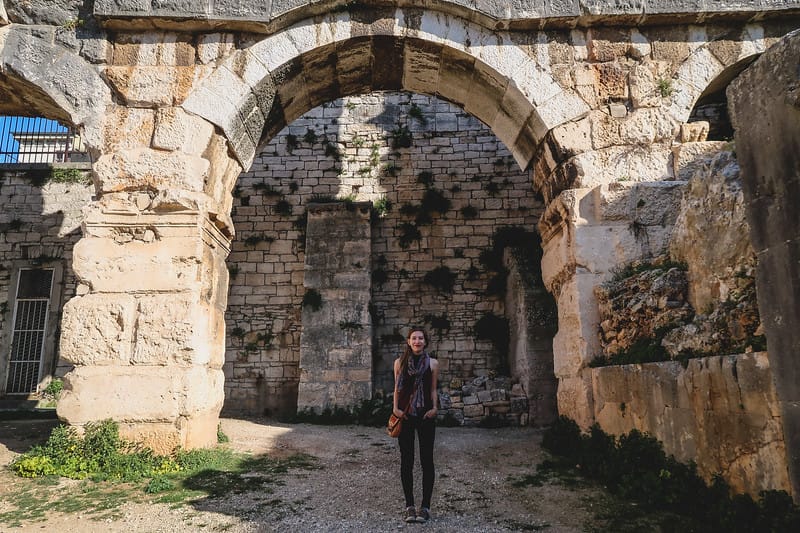
Touring the impressive Pula Arena
We kicked off our sightseeing in Pula with a visit to the city’s best-known attraction: Pula Arena! This Roman amphitheatre is an architectural behemoth that dates back to the 1st century. It was built during the reign of Emperor Vespasian, at the same time the Colosseum in Rome was going up.
What’s even more shocking is how well preserved it is; this is the only remaining Roman amphitheatre with all four side towers and three stories still standing.
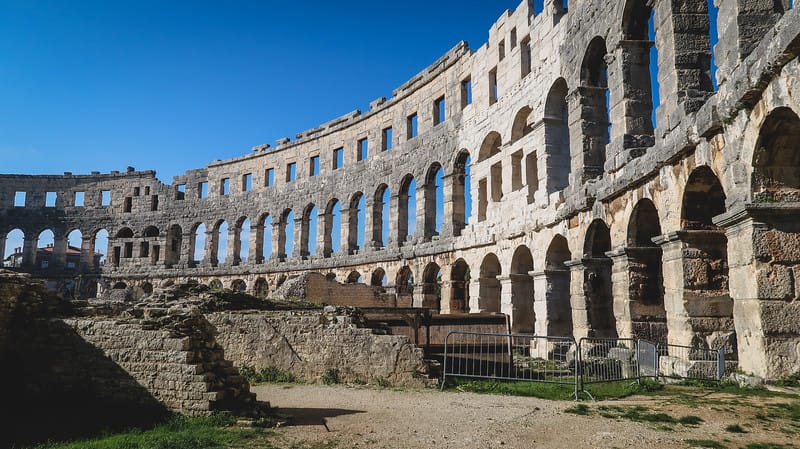
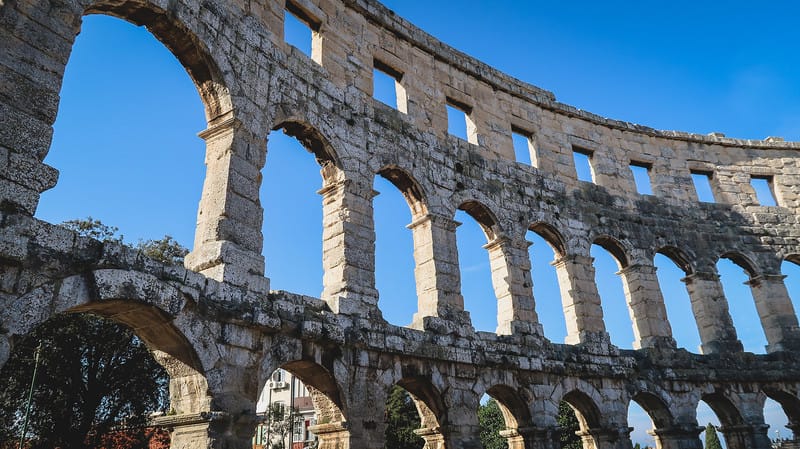
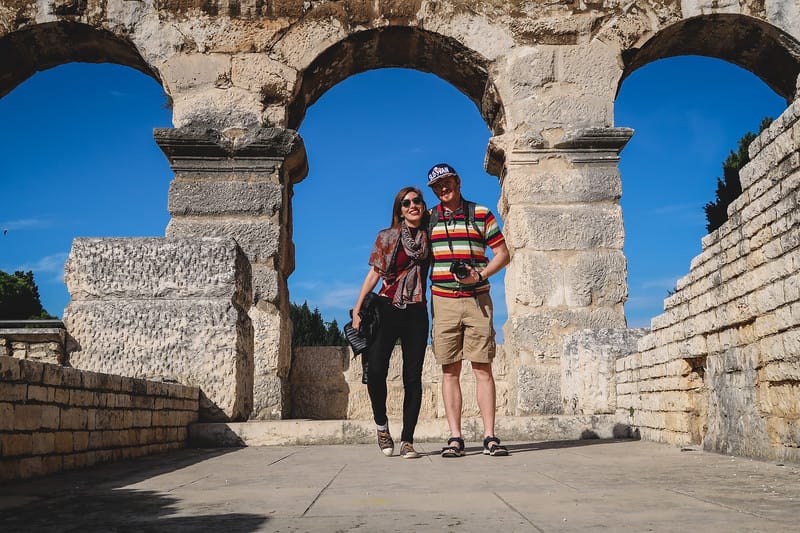
We walked past the arena on our first day in Pula as we were going to check into our apartment and what a sight that was! We were up and early the following morning ready to explore the inside.
It is believed that the amphitheater could seat about 20,000 spectators – gladiator fights would have taken place in the arena while spectators sat on the stone steps – but this structure would not go forgotten after the fall of the Roman Empire; during the Middle Ages, this is where knights would have held their tournaments and fairs.
Admission: 50 kuna / 10 Euros
Tip: During the summer months, Pula Arena puts on “Spectacvla Antiqva”, an event that reenacts gladiator fights and games from Roman antiquity. Alternatively, you can buy a ticket to one of the many concerts or films that are screened in the amphitheatre as part of the summer music festivals and Pula Film Festival.
Visiting the Roman Forum
From there, we also made time to visit the Roman Forum, which was the main square and the centre of social, religious and political life during Roman times.
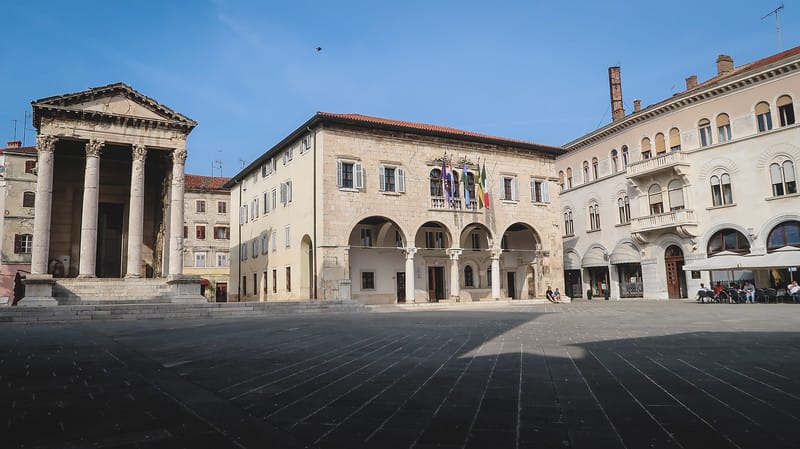
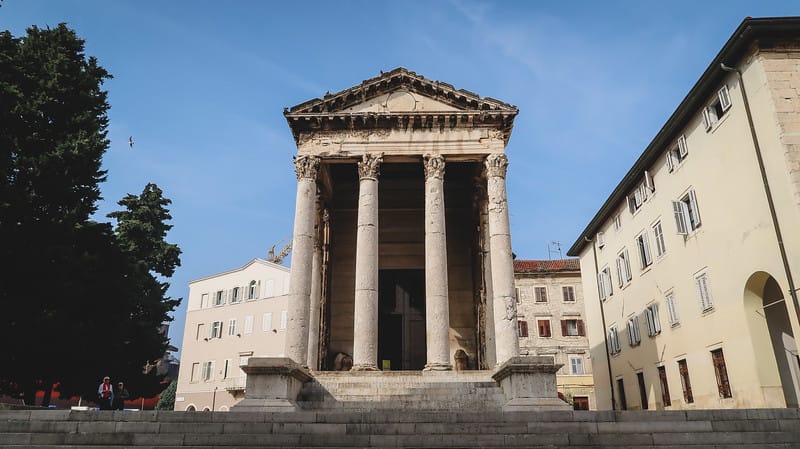

The Forum in Pula once housed 3 temples: the Temple of Augustus, the Temple of Diana, and the Temple to the Capitoline Triad (where Jupiter, Juno and Minerva were worshipped), but today, only the Temple of Augustus remains.
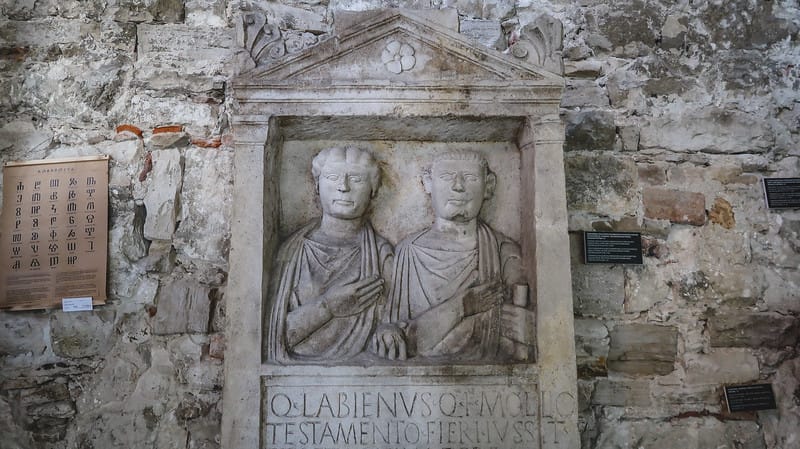
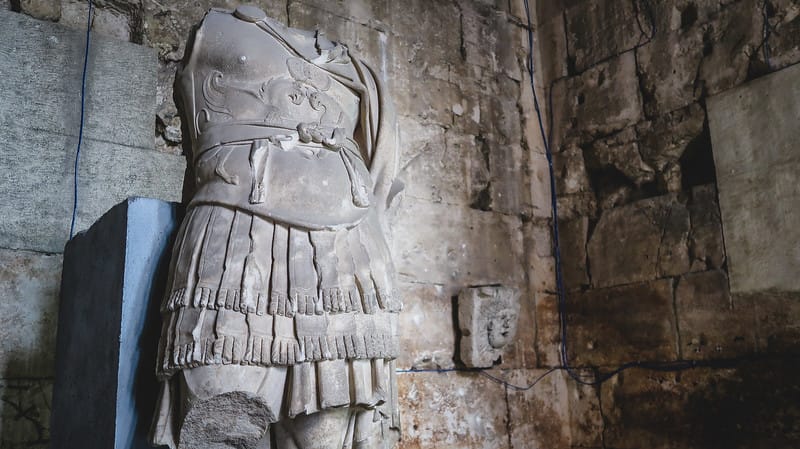
Over the course of the centuries, the Temple of Augustus has seen many uses from a Christian church to a grain storehouse, but at present, it houses a very small 1-room museum – and when I say small, I mean you can visit in 5 minutes! Inside you can see a small collection of sculptures, reliefs and statuettes.
Admission: 5 kuna
Tracking down the Roman Mosaic
And speaking of the Romans, another cool site not too far from the Forum is the Roman Mosaic. This incredible well-preserved floor depicts the Punishment of Dirce, which is straight out of Greek mythology.

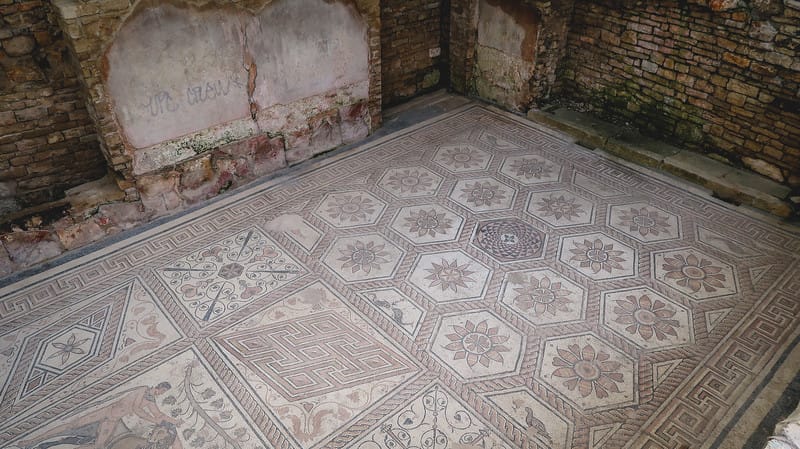
The mosaic is tucked away in a bit of an inconspicuous location, but it’s easy to find if you know how to get there. The best thing you can do is plot “Roman Floor Mosaic” on GoogleMaps, which will lead you to a parking lot off Ulica Benediktinske opatije.
You might think you’re off course at this point, but keep going. Walk through the parking lot until you see a set of gates on the left-hand side – it’ll look like you’re walking into the back entrance of a building complex. As soon as you walk through the gates, you’ll be able to see the mosaic on your right. A fascinating slice of history right under your nose!
Admission: Free
Eating the best pizza in town
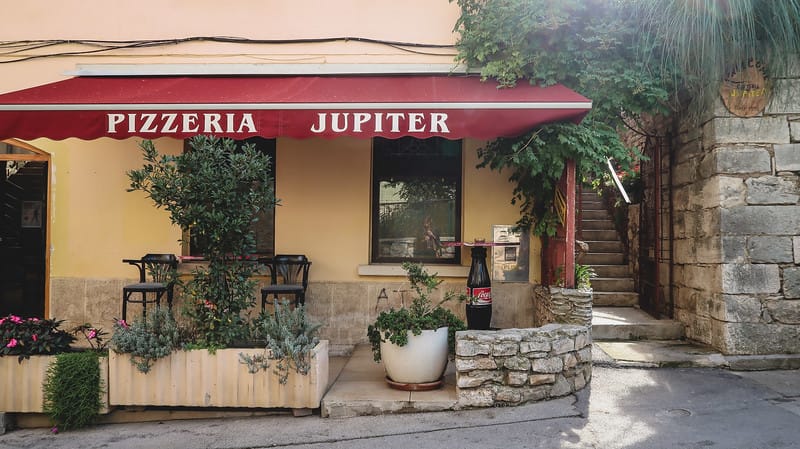
Now for our favourite restaurant in town, allow me to introduce you to Pizzeria Jupiter! We found this place pretty early on and we ate here once a day the whole time we were in Pula.
I know you’re probably wondering, “Pizza in Croatia? What are you doing? This isn’t Italy!” but to be fair, Istrian cuisine does have a strong Italian influence and their pizza is amazing.
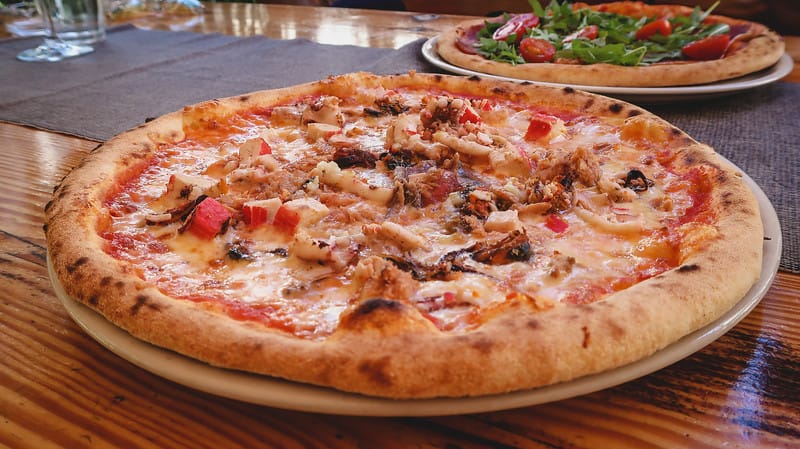
Two of our favourites at the restaurant were Frutti di mare a seafood pizza topped with tomatoes, cheese, scampi, mussels, tuna, sardines, squid and garlic; and Istriana topped with tomatoes, mozzarella, prosciutto, rucola and cherry tomatoes. Add a glass of the house red and I was in my foodie zone.
Sampling all the artisanal gelato
And speaking of food, we somehow managed to book ourselves into an apartment that was right next-door to a gelato shop, so needless to say, we were regulars at that place!
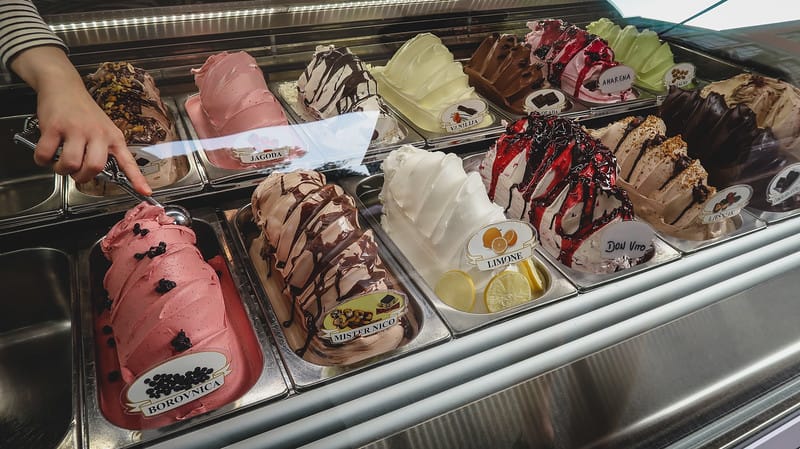
Over the course of our stay, we became very well-acquainted with Slastičarnica Fortuna – a fourth-generation gelato shop! – and we soon befriended one of the great-grandsons who worked there. Sam was all about the pistachio and I was super fond of anything with berries, so I had a new flavour to sample each day.
Getting lost in the Old Town
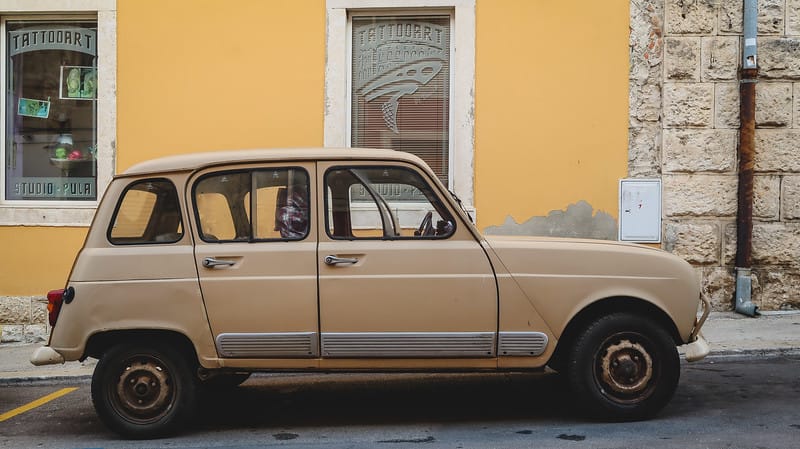
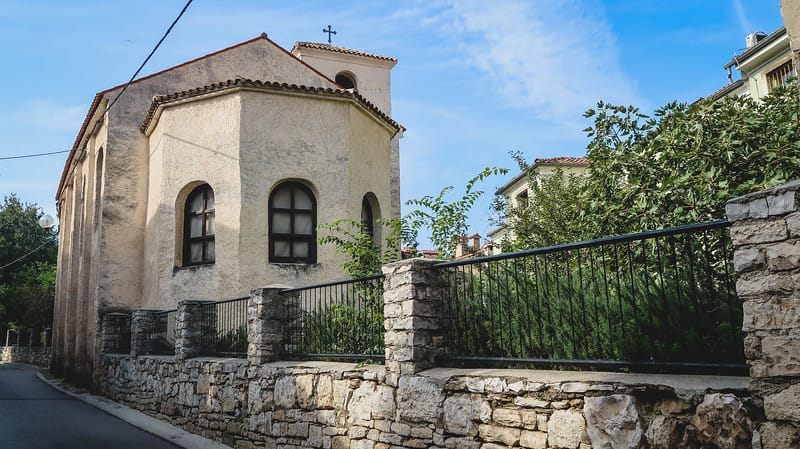
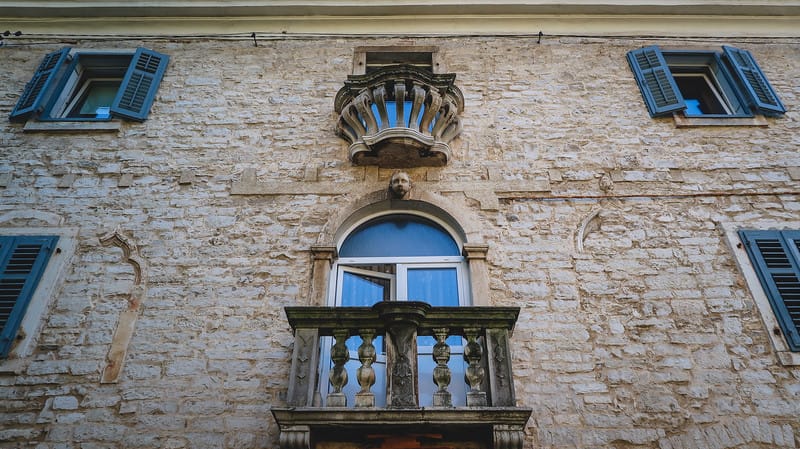
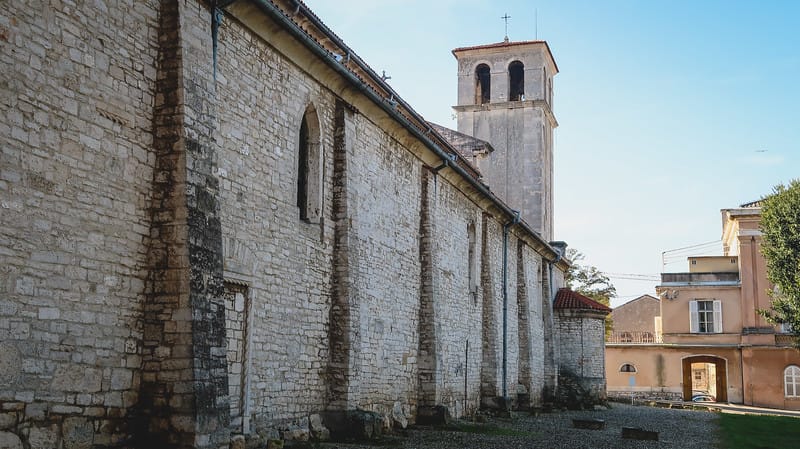
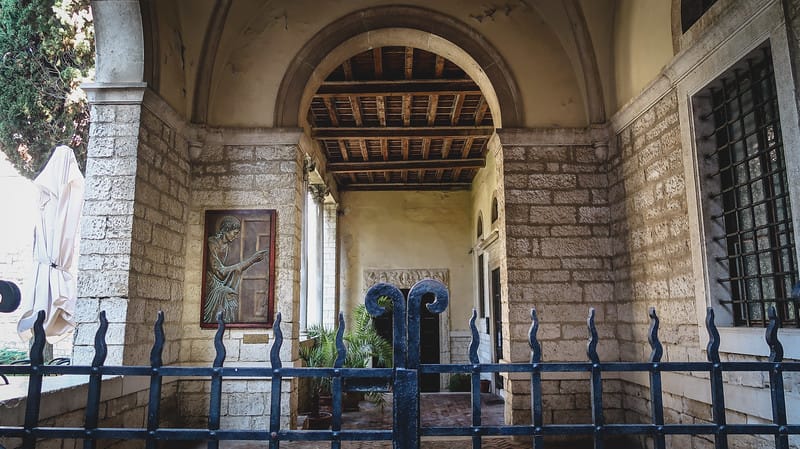
Another thing we did plenty of in Pula was walking around without much of a plan. I’m someone who just enjoys wandering up and down back streets admiring the architecture, popping into shops, and snapping photos along the way. Pula’s streets are perfect for this with so many impressive gates, cobbled lanes, and surprising facades.
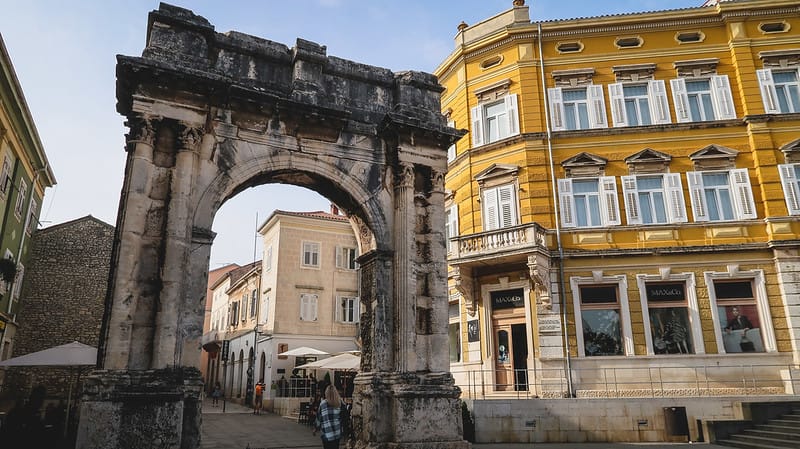

If you prefer a bit more structure to your wanderings, try walking the length of Kandlerova, Forum and Sergijevaca; this is one street that runs through the Old Town in a horseshoe formation, changing names along the way.
This will take you past the cathedral, the tunnel network known as Zerostrasse, the Roman Forum, the Temple of Augustus, the Roman Mosaic and the Arch of Sergii just to name a few. You can also use this walk to scout out some restaurants or do a little souvenir shopping.
Enjoying a walk along the marina
Another thing you can do in Pula is go on a boat cruise. The most popular destination is Brijuni National Park, a group of 14 small islands that sit out on the Adriatic Sea.
The islands have a few archaeological and cultural sites and though admission to the park used to be free, these days you have to join one of the official excursions arranged by the park or local tourist agencies.
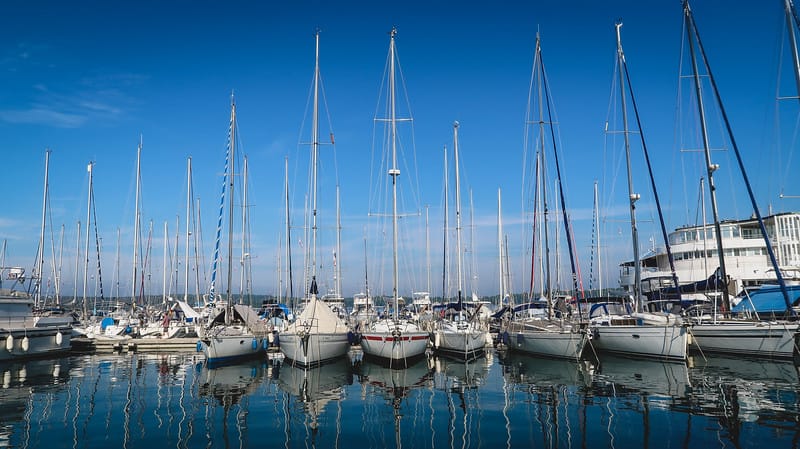
I tend to get super queasy on boats, so we ended up skipping this and wandering along the marina instead, but if you want to see more of the Istrian coast, this is a really popular day trip from Pula. To arrange an outing, you just have to walk down to the marina where you’ll find a row of tour operators offering different trips including a few sunset cruises.
Climbing the fortress for city views
Next up, for city views we walked up to Pula Castle, also known as Kaštel. This is an old fortress situated on a hill right in the centre of Pula and it was built by the Venetians during the 17th century.
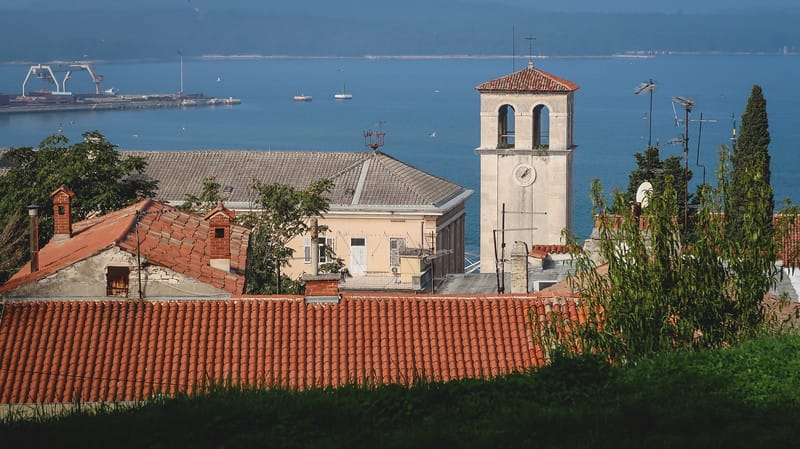
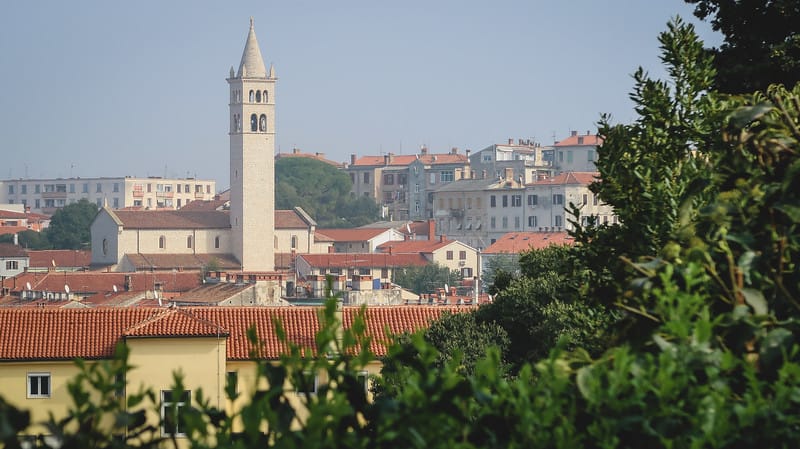
The fort houses the Historical and Maritime Museum of Istria, but I would say the main draw are the views you get.
Admission: 20 kuna
Hitting up Pula’s beaches
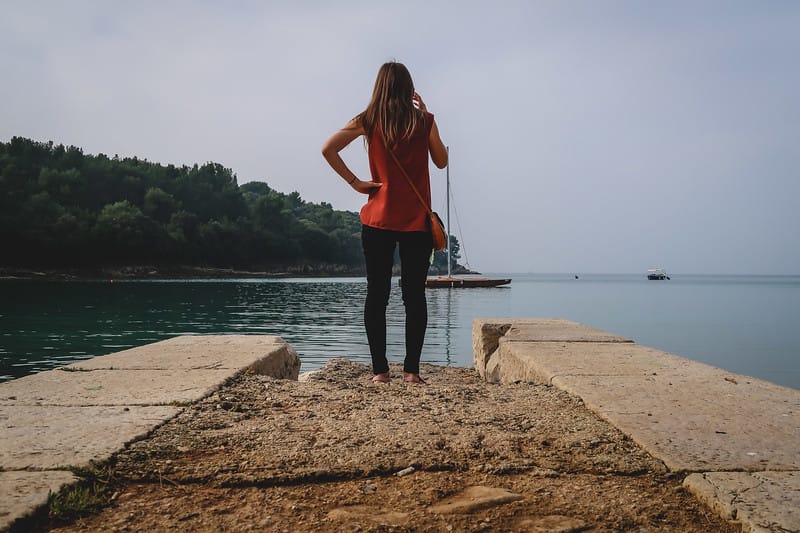
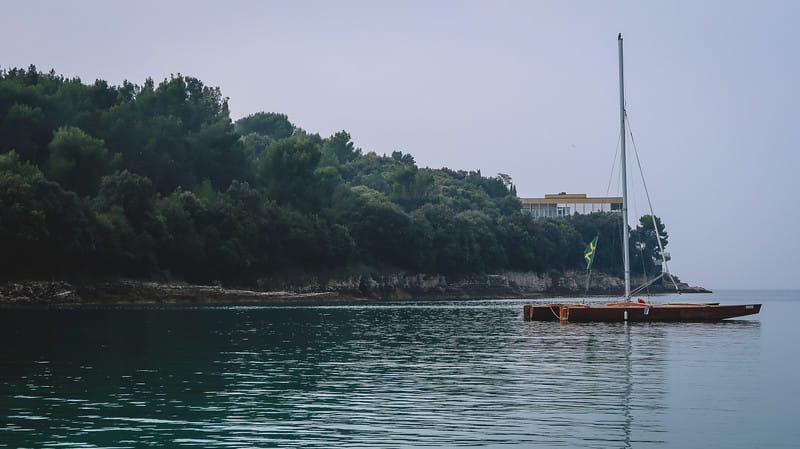
We visited Pula during the low-season and even though the locals insisted “the water was warmer than the air” and still okay for a swim, I felt otherwise! I may not have gone for a swim, but I can agree that Valsaline is a beautiful beach and I can only imagine the crowds it draws during the summer months.
Since I’m no expert on summer in Pula, here’s a link to some of the best beaches in Pula for you to take your pick.

Where to stay in Pula
We had initially considered visiting Pula in the middle of summer, but the prices scared us away. Like most of Croatia’s coastline, Pula too is a summer hotspot, so not only where most properties already booked up for July and August, but the remaining ones had ridiculous price tags – we’re talking about $100/night for tiny studios.
By comparison, visiting during the low season, we were able to get a 1-bedroom house in the heart of the city for $40/night, so that’s something to keep in mind. You can get a better idea of rates for accommodations in Pula here.
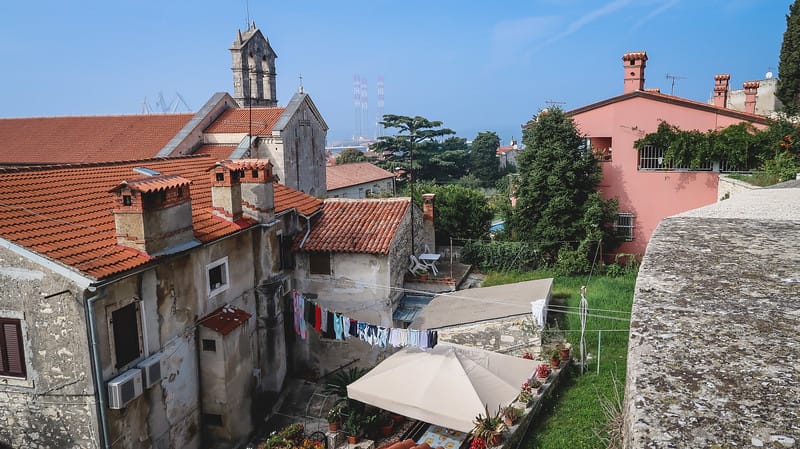
As for location, Pula is fairly compact and walkable, so anywhere in the Old Town is a good place to stay.
Weather in Pula in October
So, Pula in the off-season – what was the weather like?
We were there in mid-October and though that late summer warmth was gone, it was still pleasant. The temperatures were about 16-20°C during the day, but would drop down to 6-10°C at night.
Mornings and evenings in Pula were usually foggy with mist rolling in from the water. In the mornings, I would leave our place wearing a scarf and a jacket, but then by mid-morning, I’d be peeling off these layers and basking in the sunshine in my short sleeve.
I do think this is still a nice time of year to be in Pula if beaches and summer rays aren’t your top priority. Locals told us how the summer months can be a bit stifling (one of them said that by the end of summer he’s wishing for rain!), so I thought the cooler weather was ideal for long days of wandering around on foot.
If you liked this Pula post you might also enjoy reading about our day trip to Rovinj and our city guide to Zagreb.
Low-Season Practicalities: Getting Around, Staying & Day Tripping
Even without the summer buzz, Pula makes a solid base for exploring the wider Istrian peninsula: sleepy hill towns known for truffles, quiet pebble coves, and Roman ruins you can actually see without a crowd in front of them. Here’s how to make the most of an off-season stay.
Getting Around When Buses Thin Out
- Rent a small car for a day or two. In the off-season, compact manual hatchbacks are usually cheaper than two round-trip regional bus tickets combined. Parking inside Pula’s old walls is limited, but there’s metered space near the marina.
- FlixBus and Arriva still run routes through the colder months, but frequency drops — check timetables a day ahead, especially on weekends, and book online rather than assuming a seat will be available.
- Bikes and e-scooters: flat waterfront paths run from the centre out toward the Stoja peninsula, and a few rental kiosks near the Arena offer day rentals — worth asking your accommodation for the closest one, since exact operators can shift season to season.
Where to Stay: Hotels for Every Traveler
Pula is compact enough that almost anywhere central works, but these three cover different budgets and travel styles:
- Hostel Antique — a budget pick right in the centre, about an 8-minute walk from Pula Arena. Good for solo travelers and backpackers who want to be within stumbling distance of the Old Town without paying for it.
- Hotel Scaletta — roughly 300 metres from Pula Arena, with the Arch of Sergii and Temple of Augustus about a 10-minute walk away. A solid mid-range option for couples or families who want everything on foot.
- Grand Hotel Brioni — Pula’s only 5-star property, set on the seafront Verudela peninsula with sea views from most rooms. Better suited to a honeymoon or splurge stay than a walkable city break, since it’s a short drive or taxi from the Old Town.
Day-Trip Delights (45 Minutes or Less)
| Destination | Travel Time | Why Go in Autumn/Winter | Quick Tip |
|---|---|---|---|
| Rovinj | 40 min by bus | Misty bell-tower views and empty cobblestone lanes | Grab a takeaway burek and watch fishermen mend nets on the quay. |
| Vodnjan & the Olive Route | 20 min drive | Fresh-pressed oil tastings begin in autumn | Chiavalon, a well-regarded family olive estate just outside town, runs tastings and tours by appointment — worth calling ahead in the off-season. |
| Labin & Rabac | 45 min drive | Medieval hilltop town plus quiet pebble beaches | Park in upper Labin and walk down toward Rabac, then taxi back if you don’t fancy the climb. |
| Cape Kamenjak Nature Park | 30 min drive | Dramatic cliffs with no summer crowds | Off-season entry is typically unstaffed and free — bring a thermos, as facilities are limited outside high season. |
Guided Tours & Experiences
- Pula walking tour — a small-group or private option covering the Arena, Forum, and Temple of Augustus with a local guide, useful if you want the history without doing your own research first.
- Brijuni National Park boat excursion — sails out to the island group with a guide narrating the archaeological and natural sites; departures run less frequently in the off-season, so check availability before planning your day around it.
- Cape Kamenjak tour from Medulin — a boat-based route around the peninsula’s coves and sea caves, better suited to those who want the scenery without driving themselves.
Seasonal Food & Drink
- Fuži with truffle cream: black truffle season starts in early autumn. Kantina Restaurant (Kandlerova 26, tucked just off the pedestrian zone near the market) is a well-reviewed spot for truffle pasta and steak, generally at lower prices than peak summer.
- Čufte Istriana: slow-braised meatballs in tomato-wine sauce served over polenta — good, warming food after a windy marina walk.
- New-vintage wine tastings: fresh whites from the season’s harvest start appearing in cellar doors and wine bars around town by late autumn — worth asking locally which spots are pouring that week.
- Something warming by the fire: Cvajner, a longstanding café and gallery space right on Forum square, is a good spot to switch from a spritz to a hot drink or local brandy once the evenings turn cold.
Events Worth Timing Your Visit Around
- Lighting Giants
The Uljanik shipyard’s cranes are illuminated after dark in a rotating light display — a genuinely unusual sight against Pula’s Roman backdrop. The display traditionally runs on the hour in the evening (historically around 9pm, 10pm, 11pm and midnight), though scheduling and which cranes are lit can vary by season, so check locally rather than assuming a fixed nightly show in deep winter. - Istrian Truffle Days, Livade
Weekend truffle markets take place in the truffle-growing town of Livade in autumn, with tastings and the classic truffle-dog demonstrations. Transport options change year to year, so check with the local tourist office for the current shuttle or driving directions rather than relying on a fixed schedule. - Off-season cinema screenings
Pula’s Kino Valli often runs a winter film programme with a mix of international and local titles — a good rainy-evening option, with listings best checked closer to your travel dates. - Olive harvest visits
Some family-run olive estates around Vodnjan welcome visitors during the autumn harvest for a hands-on morning followed by a simple lunch — Chiavalon (mentioned above) is a good starting point for asking what’s currently on offer.
What to Pack for Moody Adriatic Weather
- Lightweight down jacket — packs small, blocks the marina wind
- A scarf that doubles as a blanket for impromptu cliffside stops
- Waterproof shoes — autumn rain makes the limestone streets slick
- A reusable coffee cup — some cafés knock a little off the price, and you’ll likely be drinking more than one to stay warm
Pula in the Off-Season (October–April): Your Questions Answered
Is Pula worth visiting in low season?
Yes. You trade the festivals and beach crowds for quiet Roman sites, easier restaurant reservations, and cheaper accommodation. Days stay mild enough for walking (roughly 16–20°C in October), and foggy mornings give the Old Town an atmospheric feel.
What are the must-see sights if I only have a day?
Prioritize Pula Arena (inside and the outer arches), the Forum with the Temple of Augustus, the hidden Roman Mosaic (Punishment of Dirce), the Arch of Sergii, and Kaštel fortress for harbour views.
Are attractions open year-round?
Most stay open with shorter hours, and last entries can come earlier than in summer. Occasional maintenance closures happen in the quieter months, so visit the Arena and Temple earlier in the day and keep a flexible backup plan.
How do I find the hidden Roman Mosaic?
Plot “Roman Floor Mosaic” in Google Maps, walk through the small parking lot off Ulica Benediktinske opatije, and pass through the gate on the left. It’s free to view and easy to miss if you’re not looking for it.
What’s a good self-guided loop through the Old Town?
Walk Kandlerova → Forum → Sergijevaca, a single horseshoe-shaped route that links the cathedral, the Zerostrasse tunnels, the Forum and Temple, the Roman Mosaic, and the Arch of Sergii, with plenty of cafés along the way.
Where should I eat in low season?
Pizzeria Jupiter for Istrian-Italian pizza, Kantina for truffle dishes and steak, and a family-run gelateria for something sweet. A warm burek from a local bakery is a good call on foggy mornings.
Can I still do boat trips or visit Brijuni National Park?
Yes, though departures thin out and run on reduced schedules. If boats aren’t running when you visit, the marina promenade is a peaceful alternative with harbour and lighthouse views.
Are the beaches any good outside summer?
You’ll likely skip swimming, but Valsaline and the Stoja/Verudela coastline are good for quiet walks and photos. Pack a windbreaker — most visitors picnic rather than swim.
What’s the low-season situation on prices and availability?
Accommodation prices drop noticeably compared with July and August, and you’ll rarely need a reservation at restaurants or museums. Some beach bars close for the season, so stick to the central spots around the Forum and Arch of Sergii.
How do I get around without a car?
Buses connect Pula with Trieste, Ljubljana, and Zagreb year-round, though less frequently — book ahead. Within the city, walking covers almost everything; taxis are useful for reaching the peninsulas.
What should I pack for October–April?
Layers, a scarf, waterproof shoes for slick limestone streets, and a compact umbrella. Mornings tend to be cool and foggy, clearing to milder afternoons.
Any easy add-ons from Pula in low season?
Rovinj for misty lanes and bell-tower views, Cape Kamenjak for cliffs without the summer queues, Vodnjan for olive oil tastings, and Labin/Rabac for a hilltop town paired with a quiet pebble shore.
Have you been to Pula?
What were some of your highlights?
What did you think of our best things to do travel guide?
Pula looks like a charming European town, a little lesser-known…but amazing! Good that you spent more time there.
Aww I loved Pula! Unfortunately for us we only had half a day there, we were pretty gutted. It was so cool, I’d love to go back 🙂 Love your photos.
Wow! Pula seems breathtaking, Audrey. I will definitely have to add it to my bucket list and go back to Croatia again for it. How many days would you recommend spending there to see all the highlights?
It seems like a quaint little Roman town. I have never heard of it but will definitely keep this town in mind. I just discovered your blog and it’s so much full of information. I just started blogging last week and wrote my first blog post on winter ravel style guide. I read few of your posts today and I could relate to them, I am an avid traveler myself.
Hi Audrey, I’m really glad to hear that you are quite happy with your visit to Pula, our 3000-year-old coastal town. Pizzeria Jupiter is great, isn’t it – hahaha. I bet you enjoyed a lot by walking the beautiful Lungomare beach. Didn’t you know that Pula is called Pula Rock City? By the way, this summer we will have in Arena 2-days concert of Foo Fighters (18 and 19.06.2019).
Adrey, thanks for bringing me back! We spent a day there a few years ago, and what a surprise! I had never read much about it on the webs before, so we weren’t expecting such views and such a lively town. We loved it, we rent a boat with yachting.com and we enjoyed this magical country so much!
Have a great day,
V.