
What are some things to do in Quedlinburg, Germany during your visit? Quedlinburg is a beautifully preserved medieval town situated on the north-eastern edge of the Harz Mountains in the state of Saxony-Anhalt, Germany and it dates back over a millennium!
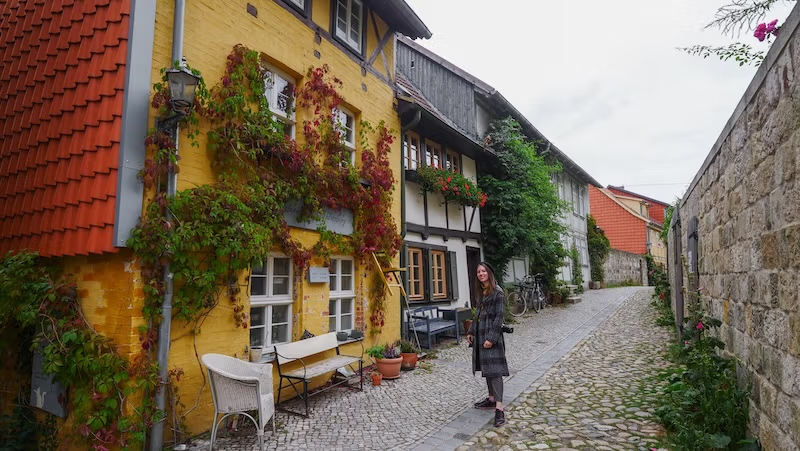
The old town is a maze of Romanesque half-timbered houses featuring a castle, churches, gardens, squares and winding alleys where one could happily get lost for hours. Picturesque doesn’t even begin to do it justice.
Quedlinburg is also one of the stops on Germany’s Romanesque Road, a scenic route in the German state of Saxony-Anhalt that links village churches, monasteries, cathedrals and castles that were built between 950 and 1250. These represent the emergence of Christianity in this part of Germany, making it another reason to visit.
So without further ado, today we’re sharing some best things to do in Quedlinburg during your visit to this charming medieval town!
Things to Do, See, Eat, Drink & Experience in Quedlinburg, Germany
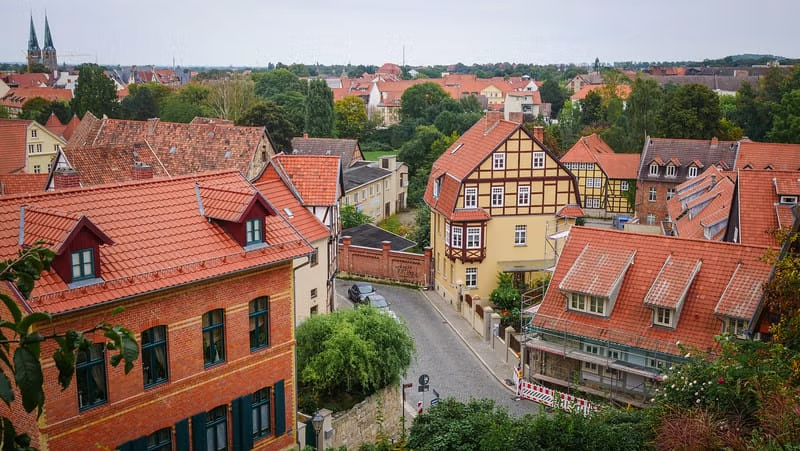
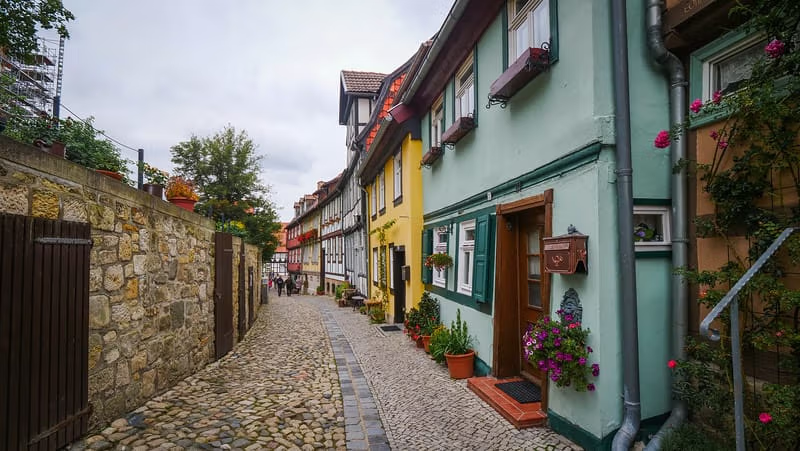
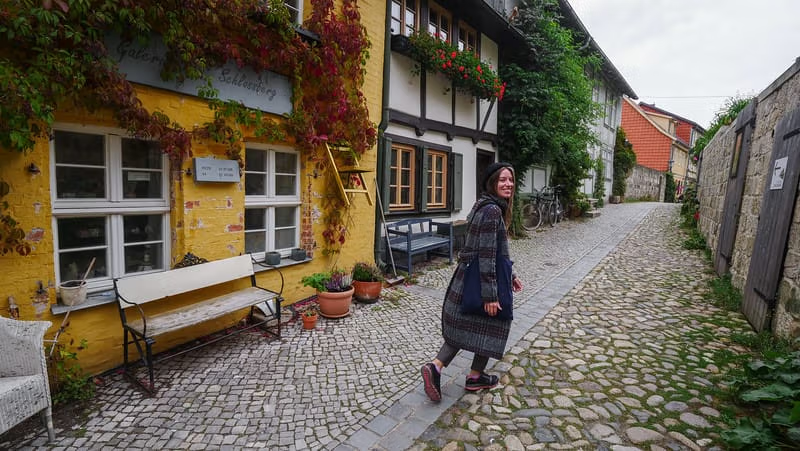
Quedlinburg Castle and Collegiate Church of St Servatius
The main attraction in Quedlinburg is, of course, Quedlinburg Castle, a medieval fortified abbey fortress that sits on a hill known as Schlossberg or ‘castle mountain’.
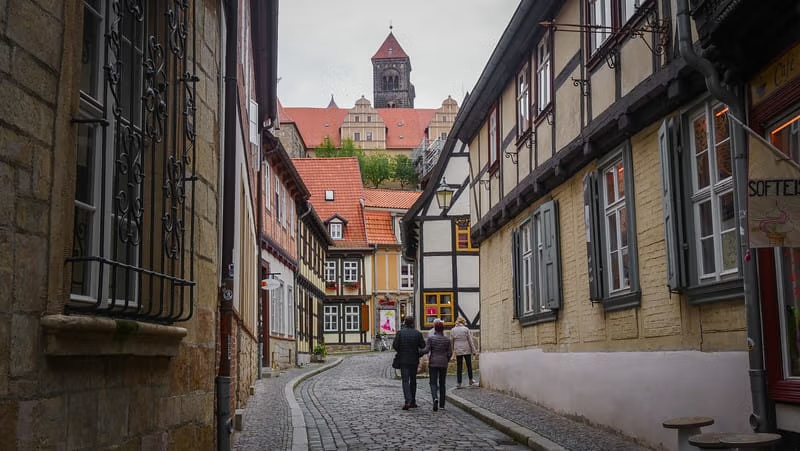
Within the complex, you also have the Collegiate Church of St Servatius. This church was dedicated in the year 1129, though it was preceded by earlier structures. It was one of the most highly regarded churches of the Empire during the Middle Ages.
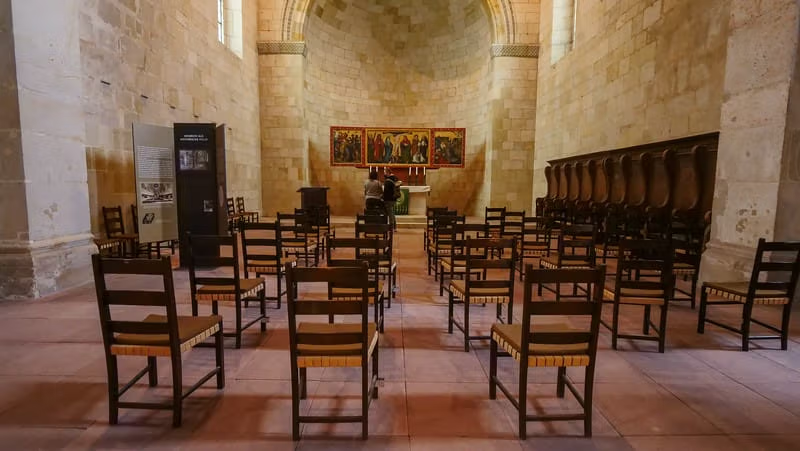
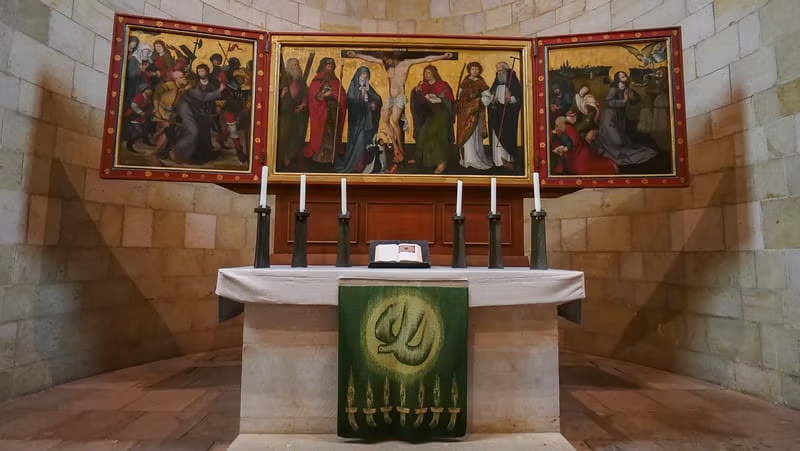
In the crypt beneath the choir, you’ll find the royal graves of Henry the 1st and his wife Mathilde. King Henry the Fowler (also known as King Heinrich I) ruled during the early 10th century and is credited with being the founder of medieval Germany and is considered the first German King,
Lastly, the Schlossgarten or ‘castle garden’ offers a nice vantage point over the city. It’s red rooftops and church steeples as far as the eye can see – the quintessential medieval town!
Together, the aforementioned church, castle and old town are UNESCO World Heritage Sites thanks to their outstanding example of a European town with medieval foundations and preserved timber-framed buildings.
Guided Walking Tour
In the morning we joined a guided walking tour to learn about the town’s unique architecture. If you enjoy doing walking tours when you first arrive in a new destination, consider this Quedlinburg walking tour or for something a bit more unconventional this evening walking tour where a night watchman takes you down medieval streets recounting tales from another time.
Quedlinburg happens to be Germany’s largest half-timbered town, with more than 1,300 timber-frame houses, and the cool thing is that you can walk around and see how this style evolved over the centuries.
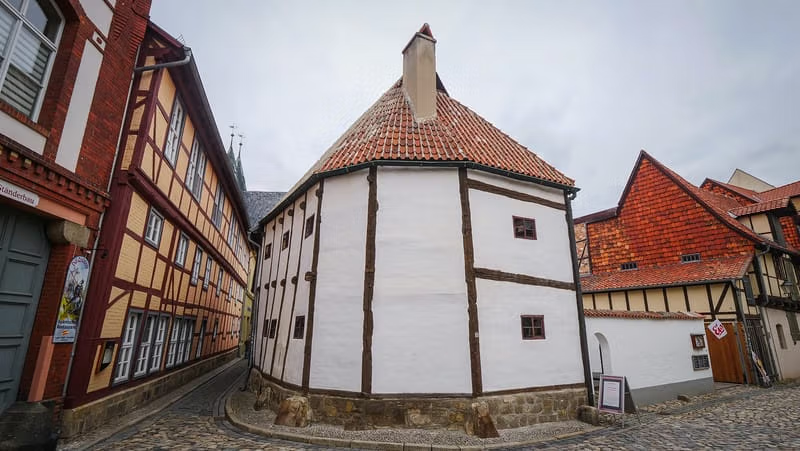
One of the places we visited was the Timbered Museum that dates back to the 14th century and shows a very early example of this type of construction.
Here you can see an individual vertical beam from the ground all the way up to the roof, which meant the height of the framed houses was limited to the tallest trees that could be found.
Inside the museum’s courtyard, you can see examples of how timbered buildings were constructed – frames, walls and all.
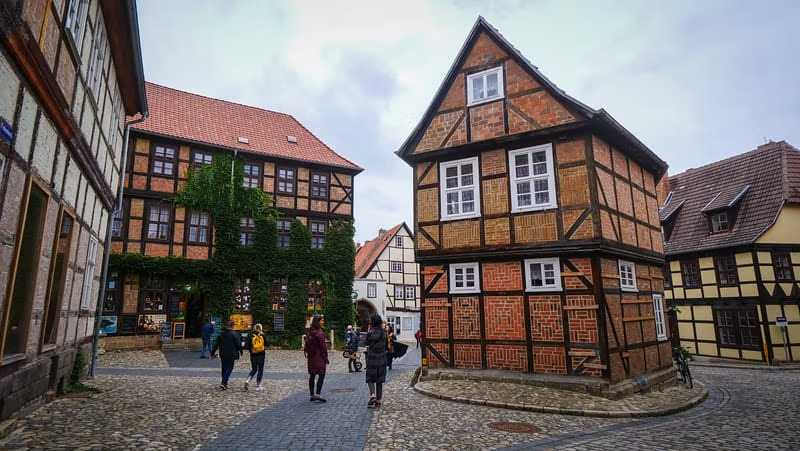
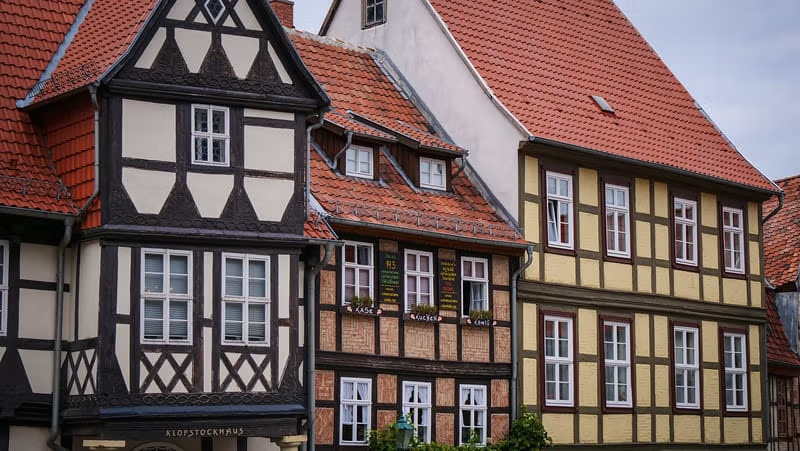
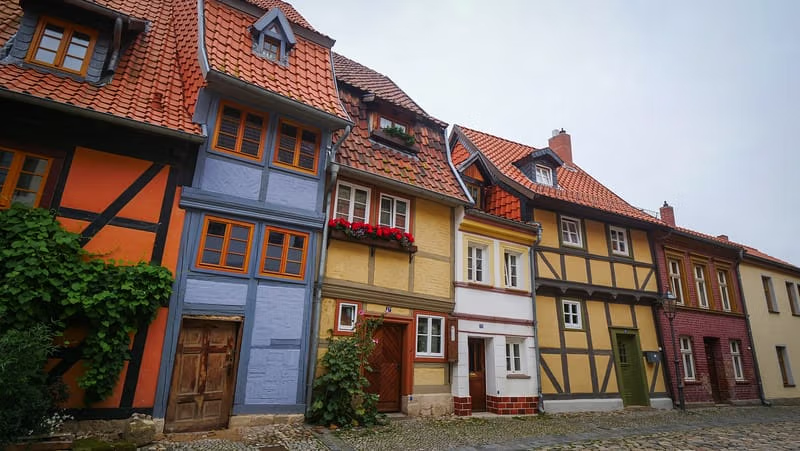
We then continued our walk through town for more examples of how the half-timbered construction style evolved to have multiple protruding levels, and more elaborate design elements.
This town has some of the most interesting architecture we’ve seen, so if you’re into that sort of thing, it’s well worth joining a guided tour because you learn about all the little details that would otherwise go unnoticed.
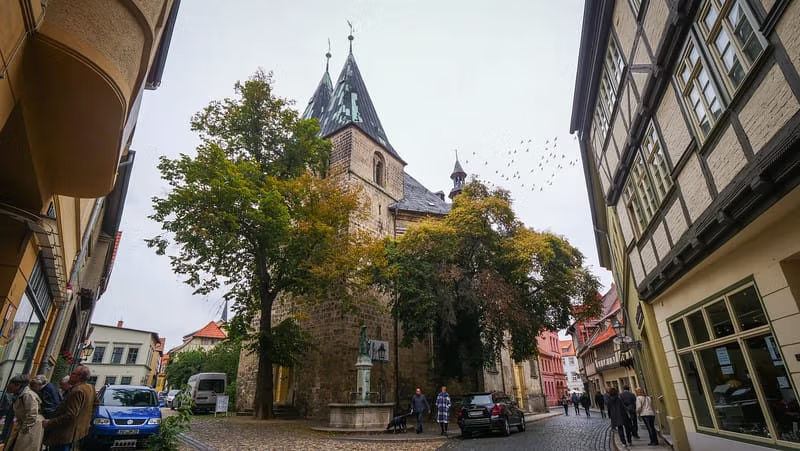
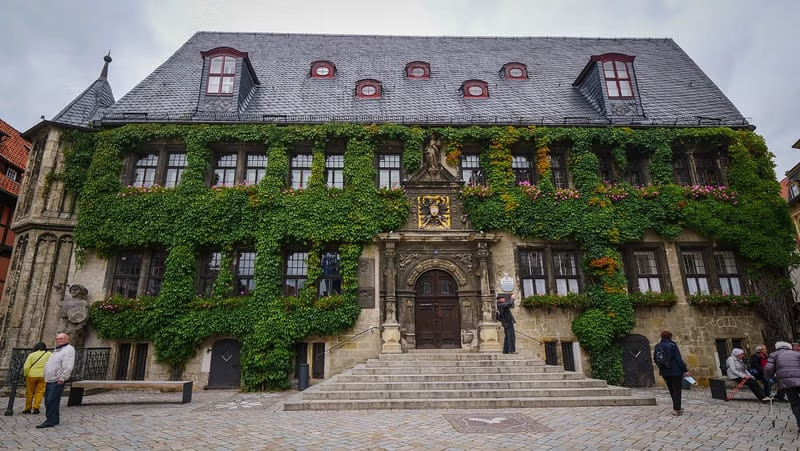
Lunch at Hotel zum Bär
We had a hard time finding a restaurant that was open, but eventually stumbled upon Hotel zum Bär which is located in Market Square.
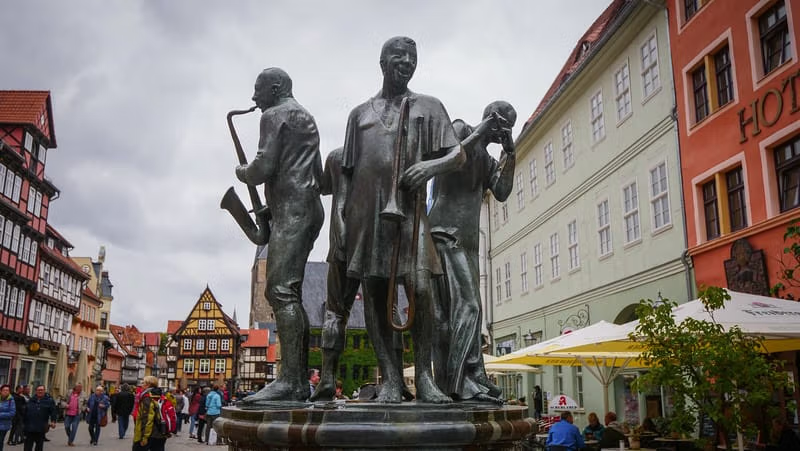
It was a very cool autumn day, so we were craving hearty dishes and big portions, and this restaurant delivered on both fronts.
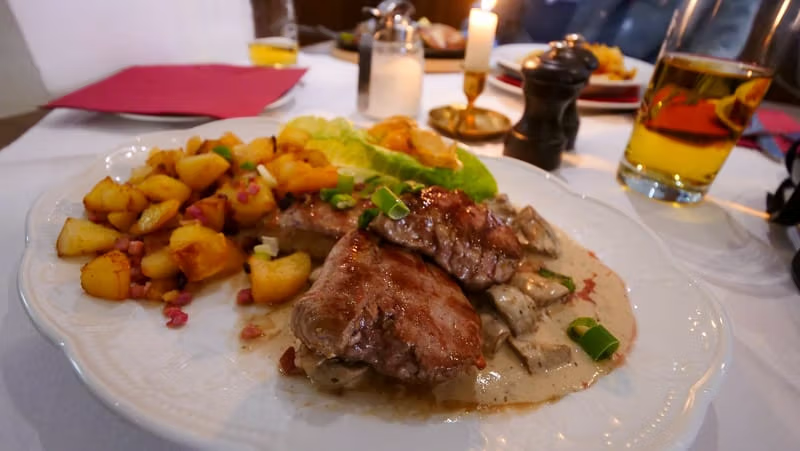
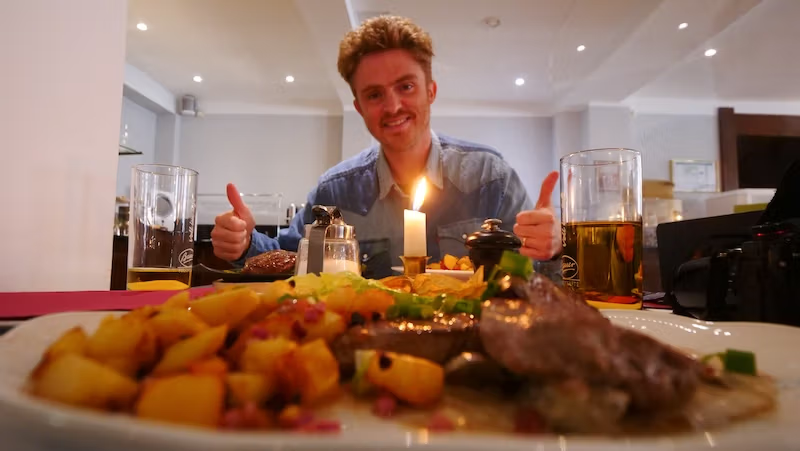
I got the pork medallions served in a creamy mushroom sauce with a side of fried potatoes and bacon.
Meanwhile, Sam ordered the ‘Bear Platter’ (there was no bear meat, it was just a bear-sized portion!) featuring chicken, pork and beef on a bed of green beans with a side of potatoes and bacon.
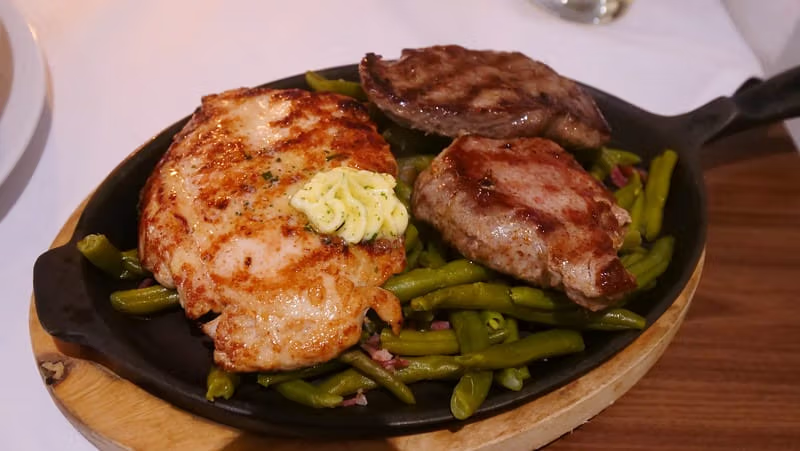
We really enjoyed both meals and left feeling beyond satisfied.
Museum Lyonel Feininger
In the afternoon, we visited the Museum Lyonel Feininger, which bears the name of the German-American artist Lyonel Feininger.
Feininger was born in New York City but travelled to Germany at age 16 to study art. He was a leader in the Expressionist movement and worked as a painter, caricaturist and comic strip artist. He then went on to produce a large body of photographic works later in his career.
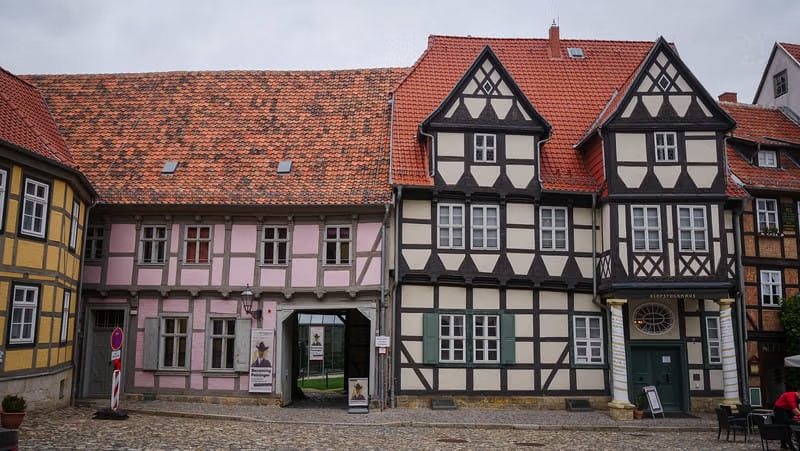
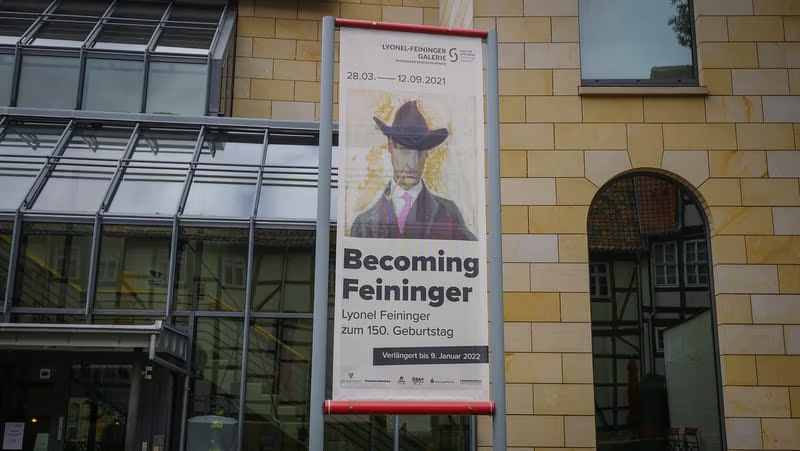
The museum houses many of his works and it’s a nice way to spend part of the afternoon if you enjoy art.
Cheesecake at Cafe Vincent
After exploring Quedlinburg on foot most of the day, we decided to treat ourselves to a mid-afternoon snack.
We went to Cafe Vincent which is best known for its Käsekuchen or cheesecake! It’s a very popular spot in town; there was actually a line of people waiting to order a slice of cheesecake from the window. Always a good sign.
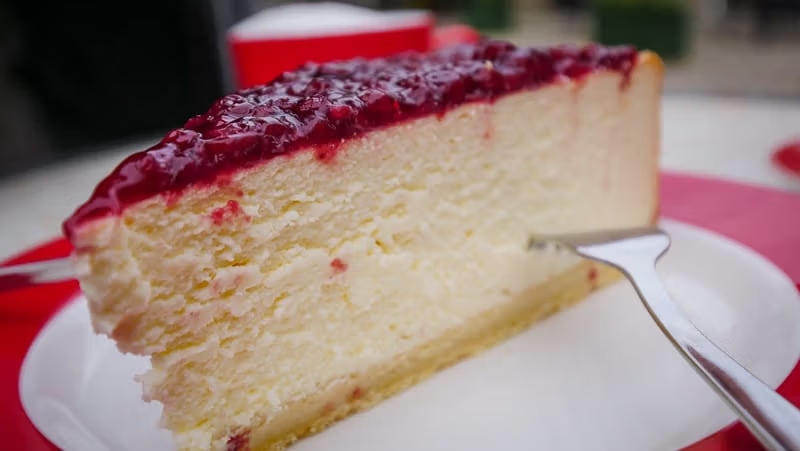
What caught our attention was the variety of cheesecakes they had on offer: mango, blueberry, lemon and thyme, basil, caramel and more. The list was endless. We opted for the mascarpone cheesecake with wild berries which was super creamy.
We also got some cappuccinos to try and beat our jet lag.
Brühl Park
Another thing to do in Quedliburg is to go for a stroll in Brühl Park. This park was just down the street from our hotel, so we made time to visit.
We first enjoyed a walk down Brühlstrasse, which is lined with beautiful mansions and villas. Eventually, we reached the Bode River, where a riverside trail led us to the park.
Brühl Park once formed part of the gardens of the former monastery and is home to a beautiful forest that feels like something out of a fairy tale.
Stay at Romantik Hotel am Brühl
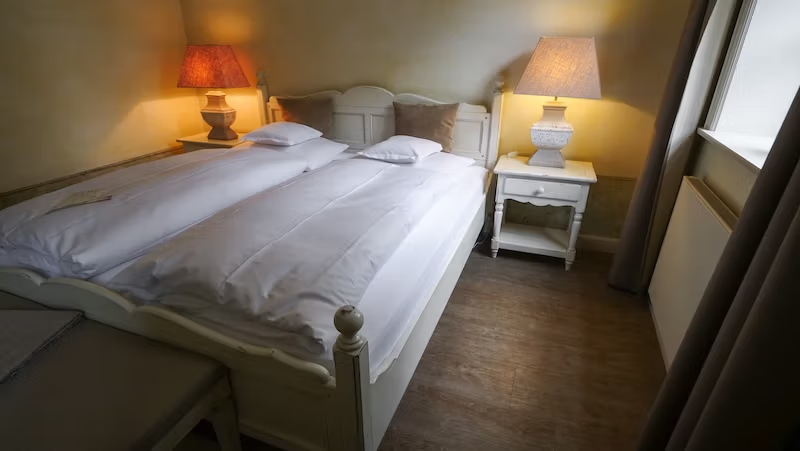
During our visit to Quedlinburg, we stayed at Romantik Hotel am Brühl, a hotel situated just south of Schlossberg just a few minutes from the castle.
This hotel is spread out across a series of restored buildings including a timbered barn that was previously home to a seed-growing company, a palace formerly owned by a distillery, and a barn with Prussian vaulted ceilings.
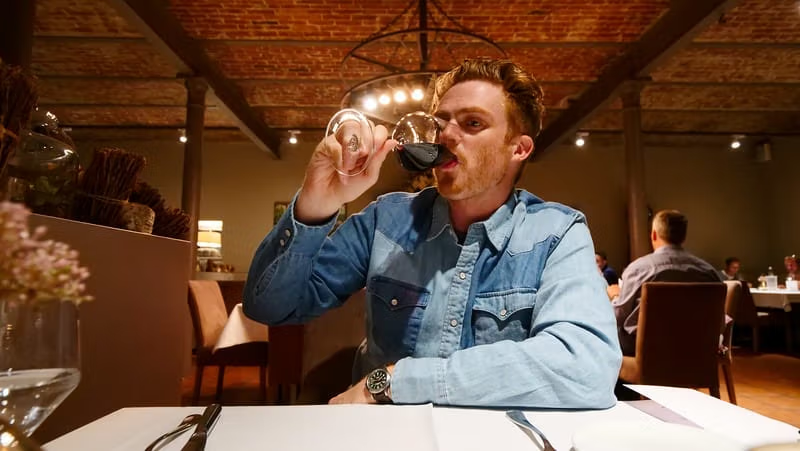
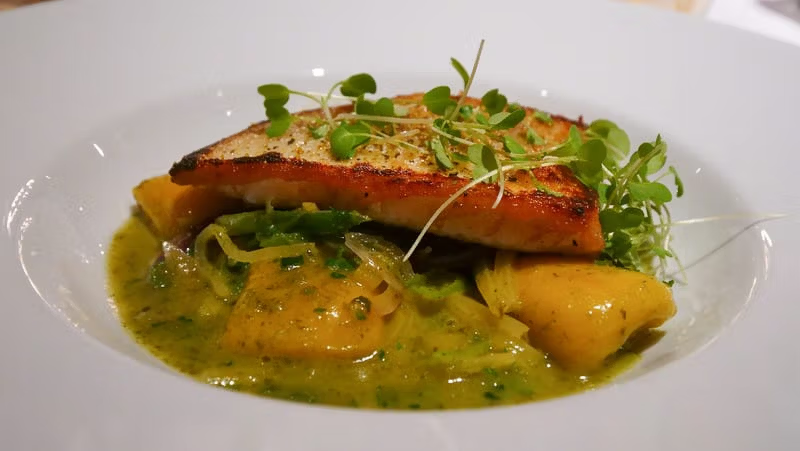
The hotel also has two onsite restaurants: Weinstube which focuses on regional dishes with an haute cuisine twist, and Le Mariage which is a bit more exclusive (it only seats 20 guests who get to enjoy a 7-course meal).
We had dinner at Weinstube one night and enjoyed a lovely meal.
More Things to Do in Quedlinburg: Festivals, Practical Tips & Travel Itinerary Ideas
Venture Beyond the Main Square: Hidden Streets & Local Shops
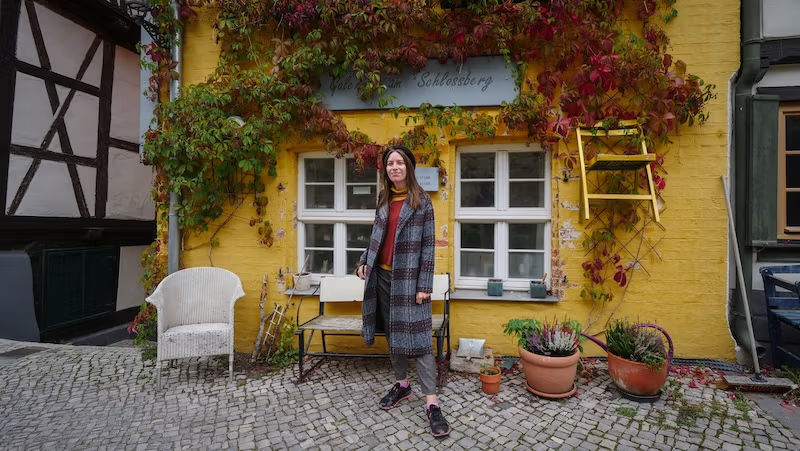
It’s tempting to spend your whole visit wandering the main Markt and Schlossberg, but Quedlinburg’s real character is just as much in its side alleys. Get lost on purpose.
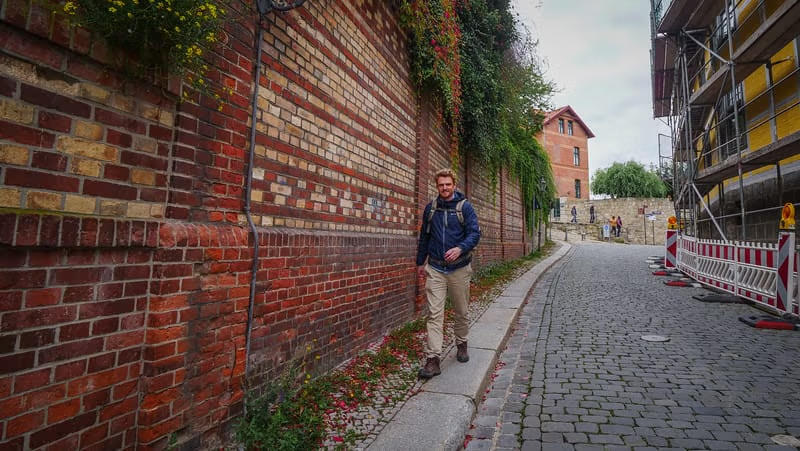
- Stroll Münzenberg Quarter: This old hillside neighborhood is a delight—narrow cobbled lanes, tiny courtyards, and sweeping views back toward the castle. Many of the former monastery buildings have been restored as artists’ studios and homes.
- Wander the smaller lanes off the Markt: Away from the main square you’ll find woodworkers, candlemakers, and small craft shops tucked into ground-floor workshops, many happy to chat about what they’re making. It’s a good spot for a handmade souvenir.
Seasonal Festivals: Celebrate Like a Local
Advent in Quedlinburg
December transforms Quedlinburg into a Christmas market town. The old town lights up with fairy lights and the smell of mulled wine, roasted almonds, and gingerbread. The Advent in den Höfen event is the standout—on the first three weekends of Advent, dozens of the town’s historic courtyards that are normally closed to the public open their doors, with pop-up stalls, music, and crafts inside.
Kaiserfrühling (Emperor’s Spring Festival)
Every May, Quedlinburg hosts the Kaiserfrühling, a celebration of spring and the city’s imperial history. Expect costumed processions, medieval music, open-air markets, and plenty of chances to try local food and drink.
Musikfestspiele (Music Festival)
In summer, the UNESCO World Heritage site becomes the backdrop for the Musikfestspiele, with classical concerts, jazz nights, and experimental performances staged in churches, courtyards, and gardens. If you’re a music lover, this is worth timing a visit around.
Explore the Harz Mountains: Day Trips & Outdoor Adventures
Quedlinburg makes a good base for the Harz region—forests, half-ruined castles, and plenty of local folklore.
- Ride the Harz Narrow Gauge Railway: The historic steam network connects Quedlinburg toward Gernrode and, via Wernigerode, up to the Brocken summit, the highest peak in northern Germany. Trains run year-round, though timetables and steam-versus-diesel service can shift seasonally, so it’s worth checking the current schedule before you plan around it.
- Hike or bike: Trails crisscross the Harz, from gentle river paths to steeper mountain routes. Ask at your hotel or the tourist office for current route maps—the Ilsetal Valley and Bodetal Gorge are two well-regarded options.
- Visit Wernigerode: A colorful town about half an hour away by train, known for its own hilltop castle and timber-framed old town.
Practical Tips for Your Quedlinburg Visit
- Getting Around: The old town is best explored on foot—wear comfortable shoes for the cobbles. If you arrive by car, use one of the designated parking lots just outside the pedestrian area.
- Where to Stay: A restored timber-frame guesthouse or boutique hotel adds to the atmosphere. Rooms fill up fast in summer and around Advent, so book ahead.
- Budget for a small tourism tax: Quedlinburg charges a nightly visitor’s tax per adult on top of your room rate (with a lower rate for children and an exemption for young kids)—a small line item, but worth knowing about when booking.
- Cash is Still King: Many small shops and bakeries in Quedlinburg are cash-only, so bring euros.
- Language: English is widely understood in restaurants and hotels, but a few German phrases go a long way.
Souvenir Shopping: Take Home a Piece of Quedlinburg
Bring home something local. A few ideas:
- Handmade candles (look for beeswax for that old-world scent)
- Harz Mountain honey and herbal teas
- Locally distilled schnapps (often flavored with wild fruits or herbs)
- Books or art prints featuring Quedlinburg’s streets
Quedlinburg Travel Itinerary: 2 Day Trip Hour By Hour Trip Ideas
DAY ONE – “Postcard Quedlinburg” Essentials
| Time | Activity | Why It’s Worth Your Morning |
|---|---|---|
| 08:00 | Sunrise at Münzenberg | A short uphill walk from the Marktplatz brings you to Quedlinburg’s former craftsmen’s quarter. The exterior staircase of the Romanesque St. Marienkirche ruin is a good vantage point for a near-360-degree roofscape before the day-trip crowds arrive. |
| 09:00 | Bakery Breakfast | Pick up a warm bread roll from one of the bakeries along Blasiistraße and eat it on the move—an easy, low-key way to start the day among the half-timbered façades. |
| 10:00–12:30 | Castle & Collegiate Church of St Servatius | A guided crypt tour (small extra fee) covers the royal graves of Henry the Fowler and Queen Mathilde. Don’t skip the Domschatz upstairs, the church’s treasury of medieval artifacts including the famous 10th-century ivory comb. |
| 13:00 | Lunch at Brauhaus Lüdde | This historic house brewery near the Marktplatz serves hearty regional dishes alongside its own beers—settle in for something filling before an afternoon on foot. Note that it’s closed on Sundays. |
| 14:30–17:00 | Self-Guided Half-Timbered Hunt | Pick up a Fachwerk (half-timbered) map from the Tourist Office and wander streets like Poststraße, Wordgasse, and Weberstraße. Duck into courtyards along the way—many hide small gardens, studios, and shops. |
| 17:15 | Finkenherd & the Legend of Henry the Fowler | A small square where, according to legend, Henry the Fowler was hunting with a bird net in 919 AD when messengers arrived to tell him he’d been elected king—an event tied to the founding of medieval Germany. |
| 19:00 | Night-Watchman Tour | An evening lantern-lit walk with a costumed night-watchman guide, weaving stories of medieval curfews and town life into a stroll through the backstreets. Tours typically leave from near the Rathaus—check with the Tourist Office for the current schedule and to reserve a spot. |
DAY TWO – Beyond the Main Square
| Time | Activity | What Makes It Special |
|---|---|---|
| 09:00 | Bike the Countryside | Several local outfitters rent bikes and e-bikes for exploring the meadows and timber-frame hamlets around town—ask at the Tourist Office for the nearest current rental option and a suggested loop. |
| 11:45 | Browse the Old Town Shops | Return your bike, then spend some time in the small specialty shops near the Marktplatz—look out for local mustard, honey, and other regional foods worth tasting before you buy. |
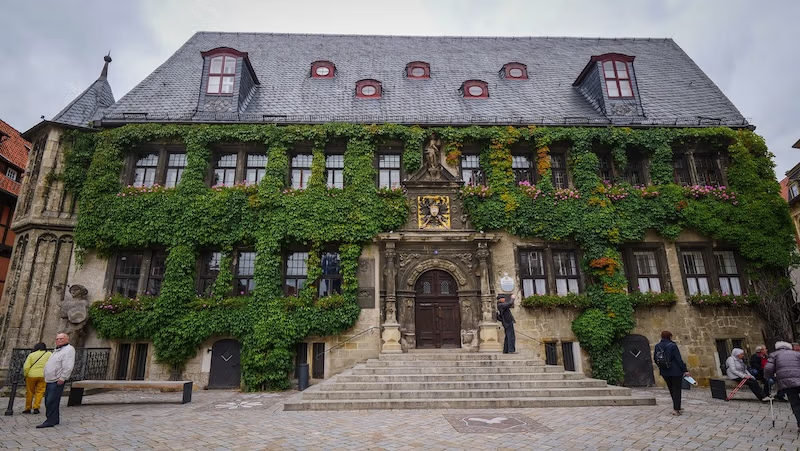
| 12:15 | Klopstockhaus | The birthplace of poet Friedrich Gottlieb Klopstock, now a museum. Even without a particular interest in 18th-century poetry, the creaking floors and painted beams give an intimate look at middle-class domestic life of the period. |
| 13:30 | Picnic in Brühlpark | Pick up some Harzer Roller cheese and a pretzel before crossing the Bode bridge into the park. Locals sunbathe beneath the plane trees, and in spring wild garlic scents the air. |
| 15:00 | Sternkiekerturm | A short woodland path behind Brühlpark climbs to this modern lookout tower—another sweeping town panorama, with fewer steps than the castle and free entry. |
| 16:00–18:00 | Narrow-Gauge Train to Gernrode | The Selketalbahn line runs out of Quedlinburg station through beech forest to Gernrode in about 25 minutes. Sit in an open carriage if one’s running that day, and grab a drink at the small station buffet before heading back. Trains run roughly every 90 minutes—check the current timetable before you go, since schedules can vary seasonally. |
| 18:30 | Dinner in the Old Town | Look for one of the old town’s timber-framed taverns serving regional specialties like Flammkuchen or venison—a good way to end a second day on foot. |
Quedlinburg, Germany — 12-Question FAQ: Half-Timber Icons, Castle & Crypt, Walking Tours, Festivals, Photo Spots, Harz Day Trips, and Practical Tips
Why visit Quedlinburg—what makes it so special?
Quedlinburg is a remarkably preserved medieval town with more than a millennium of history and Germany’s largest concentration of half-timbered houses. Its trio of UNESCO-listed sites—Old Town, Castle, and the Collegiate Church of St. Servatius—make it a strong pick for architecture lovers, photographers, and anyone who likes to travel slowly.
How much time do I need—day trip or overnight?
You can cover the headline sights in one full day: castle, church, and Old Town. An overnight lets you add the Fachwerk Museum, the Münzenberg quarter, Brühl Park, a night-watchman tour, and a slower dinner. Two days works well if you also want a Harz train excursion.
What are the absolute “don’t-miss” highlights?
Climb Schlossberg to tour Quedlinburg Castle, visit the Collegiate Church of St. Servatius—including the crypt with the royal graves of Henry the Fowler and Queen Mathilde—and take in the view from the Schlossgarten. In town, wander the Marktplatz and the timber-frame lanes nearby.
How do I get there and get around?
Regional trains connect Quedlinburg via Magdeburg or Halle; from Berlin, expect roughly 2.5–3.5 hours with a change. If you’re driving, there’s signed parking just outside the pedestrian core. Once in town, walk—distances are short—and rent a bike if you want to reach the parks or nearby viewpoints.
Where do I see the best half-timbered architecture (and learn how it evolved)?
Start at the Tourist Office for a simple Fachwerk map, then walk Poststraße, Wordgasse, and Weberstraße. The Fachwerk (Timbered) Museum shows early construction techniques and how upper stories gradually began to overhang the ones below over the centuries.
Are guided tours worth it—any unique options?
Yes. A daytime architectural walk helps you notice details you’d otherwise miss, and the evening night-watchman tour brings the same streets to life after dark with local history and legend.
What (and where) should I eat?
For hearty classics, Hotel zum Bär near the Marktplatz is a solid choice, and Brauhaus Lüdde pairs its own beers with schnitzel and mushroom-sauce dishes. For something more refined, Restaurant Weinstube at Romantik Hotel am Brühl serves regional dishes with a finer touch (closed Sundays). For dessert, Café Vincent’s rotating cheesecake selection is worth the short line.
Any great viewpoints and photo tips?
The Schlossgarten and the Münzenberg quarter both deliver classic roofscape views, with Münzenberg especially good at sunrise. The Sternkiekerturm lookout behind Brühl Park offers a quieter angle with far fewer steps. Overcast light suits the timber-frame colors well, and wet cobbles hold the evening light nicely.
What festivals or seasonal events should I plan around?
December’s Advent in den Höfen opens dozens of normally private courtyards with crafts and mulled wine—a genuinely local experience. Spring’s Kaiserfrühling marks the town’s imperial history, and summer brings concerts across the UNESCO site during the Musikfestspiele.
Can I combine Quedlinburg with Harz Mountains adventures?
Yes. The Harz narrow-gauge network connects Quedlinburg toward Gernrode and, via Wernigerode, up to the Brocken. Timetables and the mix of steam and other traction can shift by season, so check current schedules before planning around a specific train. Hikers can head for the Bodetal Gorge or the Ilsetal valley instead.
Practicalities: cash/cards, Sundays, language, and comfort?
Carry some euros, since small cafés and shops are often cash-only. Many stores close early or entirely on Sundays. English is common in hospitality settings, and a few German phrases are appreciated. Wear supportive shoes—the Old Town is compact but its cobbles are uneven. Note also that Quedlinburg charges a small nightly tourism tax per adult on accommodation.
Where should I stay for atmosphere?
Timbered guesthouses and boutique hotels are plentiful. Romantik Hotel am Brühl, near Schlossberg, spans several restored historic buildings and has two on-site restaurants. Book ahead for summer weekends and Advent, when rooms go quickly.
Final Thoughts On Visiting Quedlinburg
Hopefully this gives you an idea of some of the things you can do in Quedlinburg during your visit.
We arrived on an early morning train and then stayed in town for the night, so everything you see here was done with one day in Quedlinburg.
The nice thing about a small, walkable, medieval town is that you can see quite a lot in one day!
If you enjoyed this destination, you may also be interested in visiting the medieval town of Lüneburg that’s famous for salt, exploring Germany’s northernmost wine region of Saale-Unstrut, or going on a Black Forest road trip.
Ah, the simple pleasure of strolling through new destinations, enjoying their history and old buildings.
Audrey, your review has shown that Quedlinburg is a truly picturesque place to visit. It fascinates me that one can explore a significant portion of this small, walkable, medieval town within a single day!
By the way, your photographs are beautiful and enhance the place’s allure, making me even more intrigued and wanting to visit.
Cheers,
Femi.
Really been debating between Quedlinburg, Bamburg or Nuremburg for my extra 3 days after leaving Berlin during my trip in October. Thanks for sharing the details of your visit!