
We came to Agra for the same reason everyone else does: to see the Taj Mahal – the one attraction that sits at the top of every visitor’s Agra travel itinerary. This symbol of undying love is one of the seven Wonders of the Modern World and one of the most beautiful buildings in India, so like countless travellers before us, we too made the long journey to see it with our own eyes. (Spoiler alert: it lived up to every single expectation and then some!)
Since our month in India was all about travelling at a slow and leisurely pace, we gave ourselves three full days in Agra (we later learned that most people only stay a night or two!), and fortunately for us, that meant we got to see and do quite a bit around the city. Now here’s a look at how we spent our 3 days in Agra:
Agra Travel Itinerary: Make the Most of Your Taj Mahal Experience!
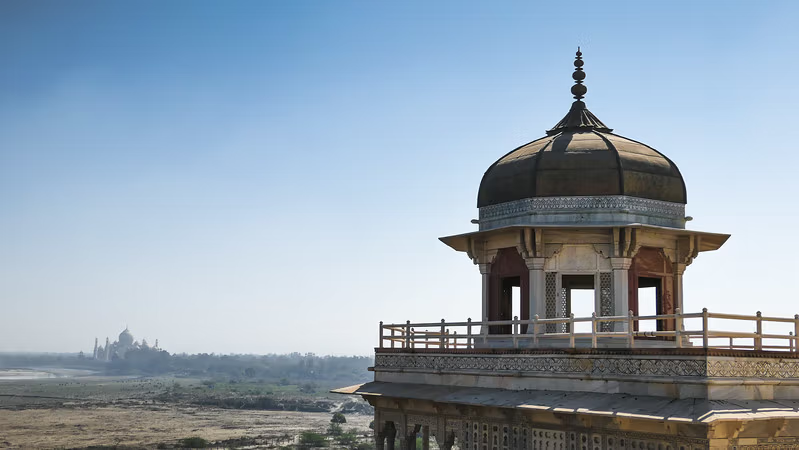
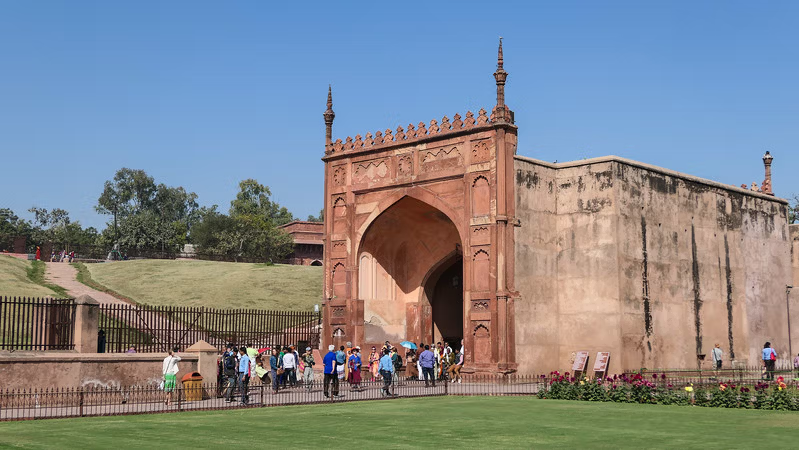
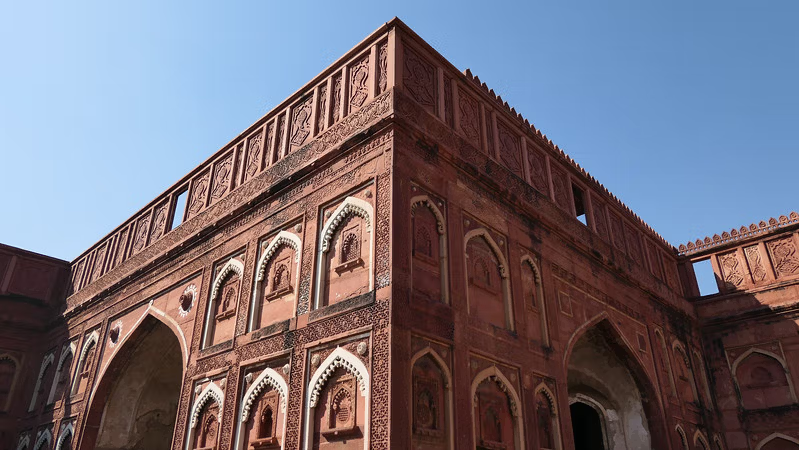
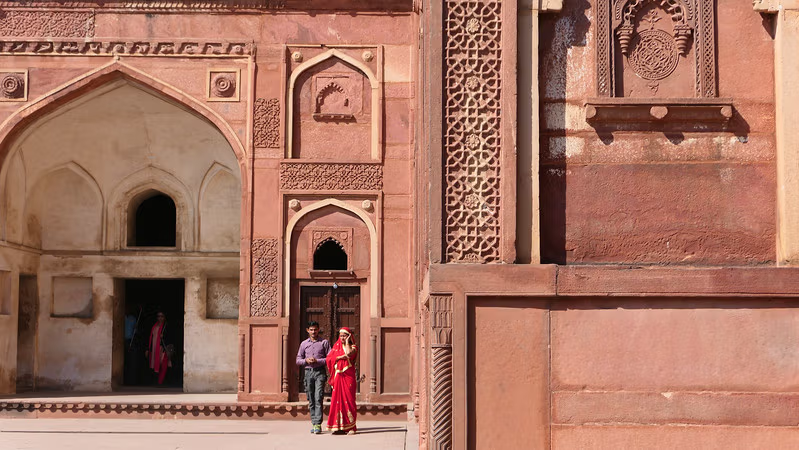
Tour Agra Fort on foot
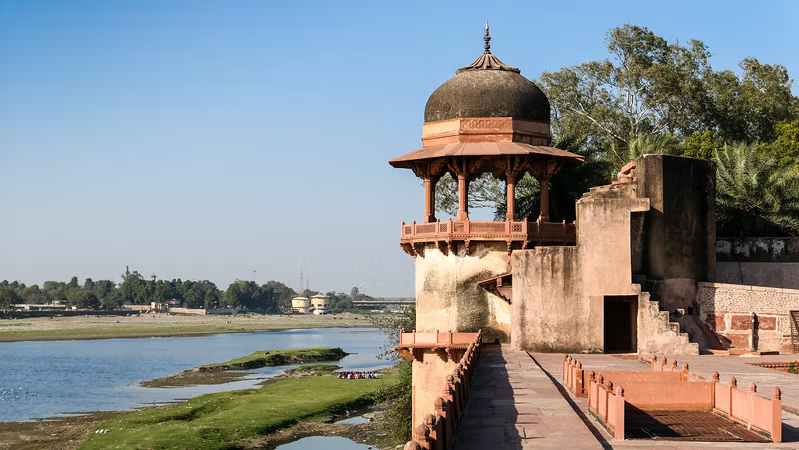
Agra Fort was the main residence of the Mughal emperors before they moved their capital to the Red Fort in Delhi, so if you’ve already been there on your travels through India, it’s kind of cool to see some of the similarities between the two structures.
Like the Red Fort in Delhi, Agra Fort is also a walled city and inside the enclosure you’ll find gardens, palaces, mosques, audience halls, and basically a maze of marble and red sandstone. If you’re interested in the history of the fort, you can easily hire a guide at the gates, however, it’s also the kind of place that you can enjoy on your own.
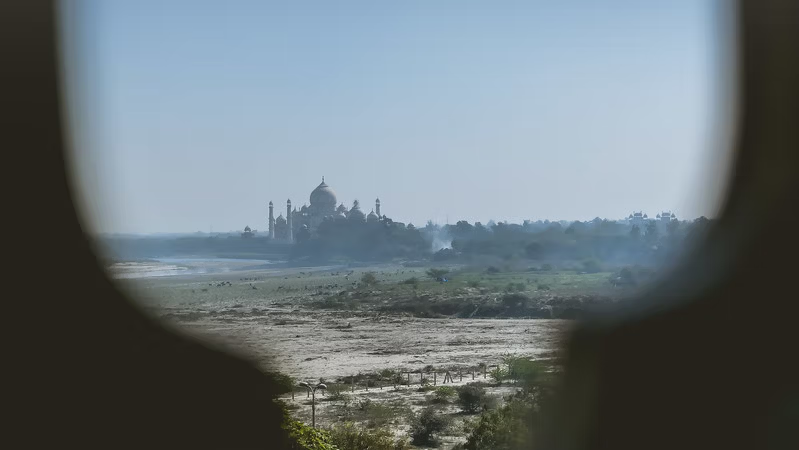
The cherry on top is that because Agra Fort is located just 2.5 kilometres from the Taj, you get some pretty cool views of it as well!
Admire the Baby Taj up close
Alright, so you’re not going to get any views of the Taj Mahal from the baby Taj, but if you’re already heading to Mehtab Bagh, this stop is right along the way.
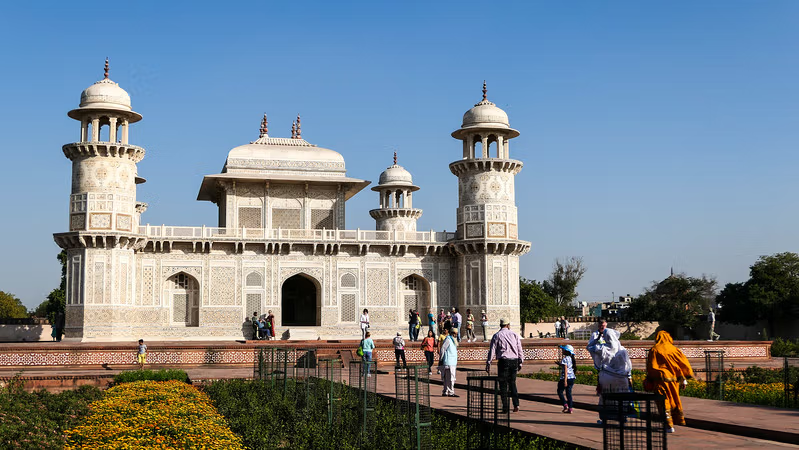
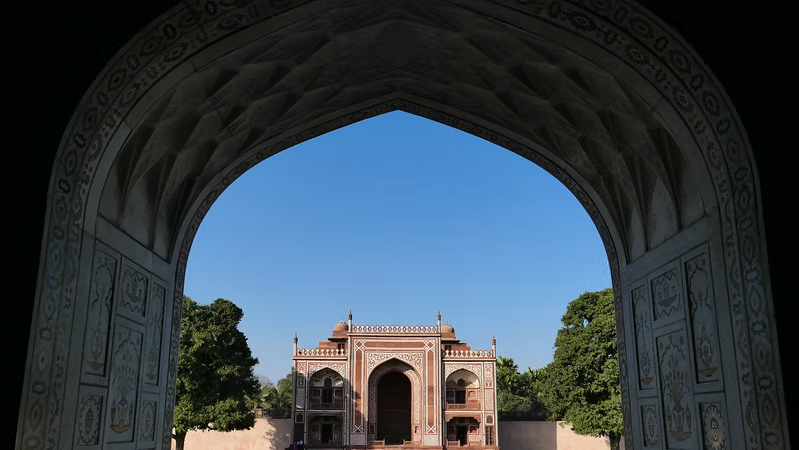
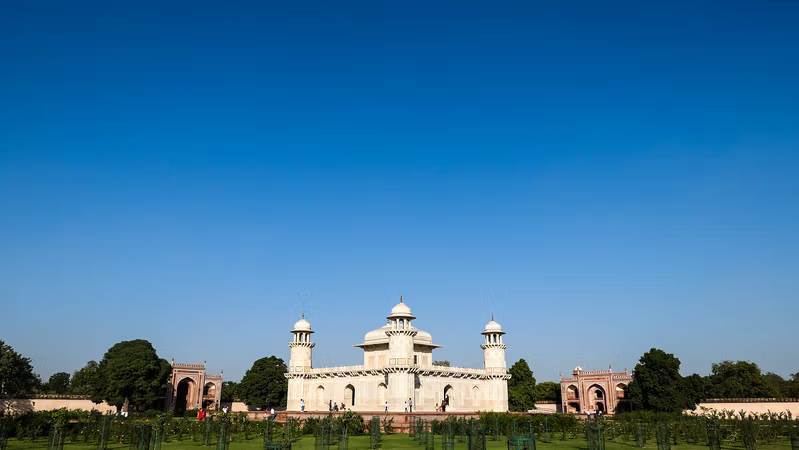
The Baby Taj, whose real name is the Tomb of I’timād-ud-Daulah, is a mausoleum that was commissioned for Mirzā Ghiyās Beg; he was the grandfather of Mumtaz Mahal, the woman the Taj was built for.
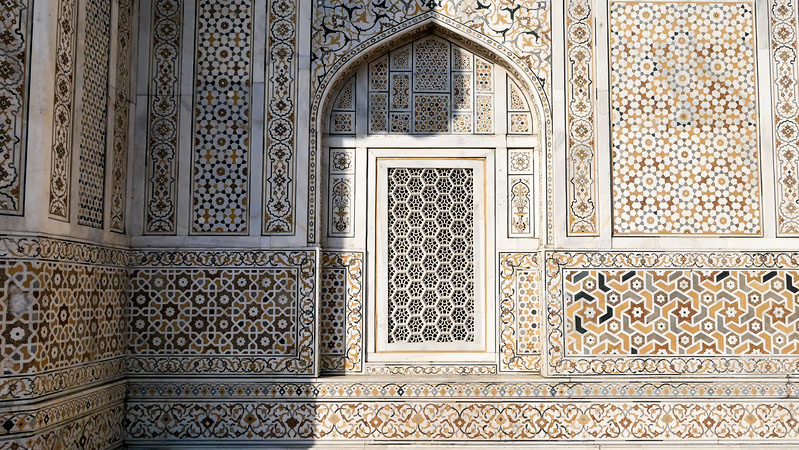
The Baby Taj has been regarded as an early draft for the Taj, but I personally don’t see the resemblance – I think Humayun’s Tomb in Delhi offers a better representation of that! But what I can agree with is that the Baby Taj looks a bit like a jewelry box. From a distance the building may appear to be solid white marble, however, when you get up close you can see that it is covered in arabesques, geometric patterns, and colourful semi-precious stones!
Catch sunset at Mehtab Bagh
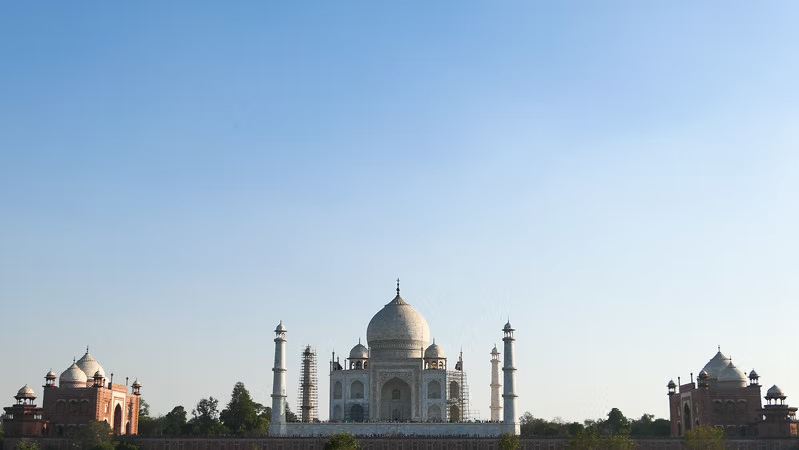
Another place you should make time for in Agra is Mehtab Bagh, which also goes by the ever romantic name: Moonlight Garden.
Aside from offering a quiet respite from Agra’s busy streets, these gardens sit directly behind the Taj Mahal and right across the Yamuna River, which means that once again you get some postcard perfect views.
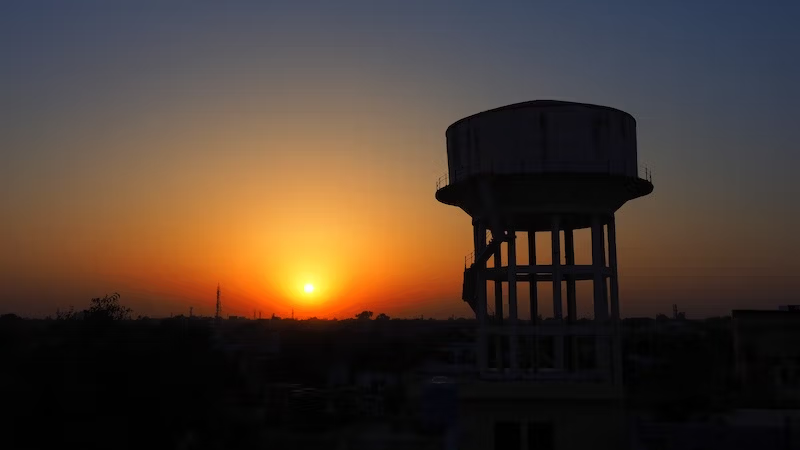
This location is really popular at sunset, and couples, families, and tour groups were already starting to gather across the lawn long before the sun went down.
Legend has it that Emperor Shah Jahan, who commissioned the Taj Mahal, had wanted to build a mausoleum of black marble for himself in these very gardens to mirror the Taj Mahal. As history would have it, Shah Jahan’s own son ended up throwing him in prison, which meant this plan never came to pass, but can you imagine what that would look like today?
Tip: Because Mehtab Bagh is located so close to the Yamuna River, it can partially flood during the rainy season. Something to keep in mind if you visit during that time of year.
Get close to nature on the Taj Walk
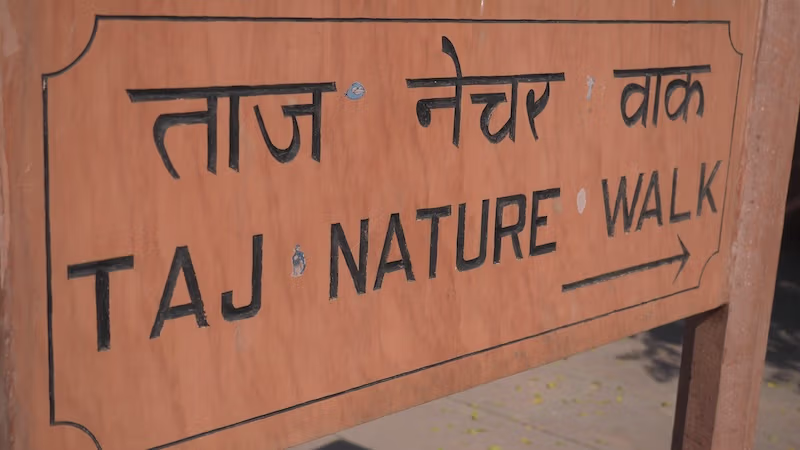
One of the biggest surprises in Agra was the Taj Walk, also known as the Taj Protected Forest, which is located just before reaching the East Gate.
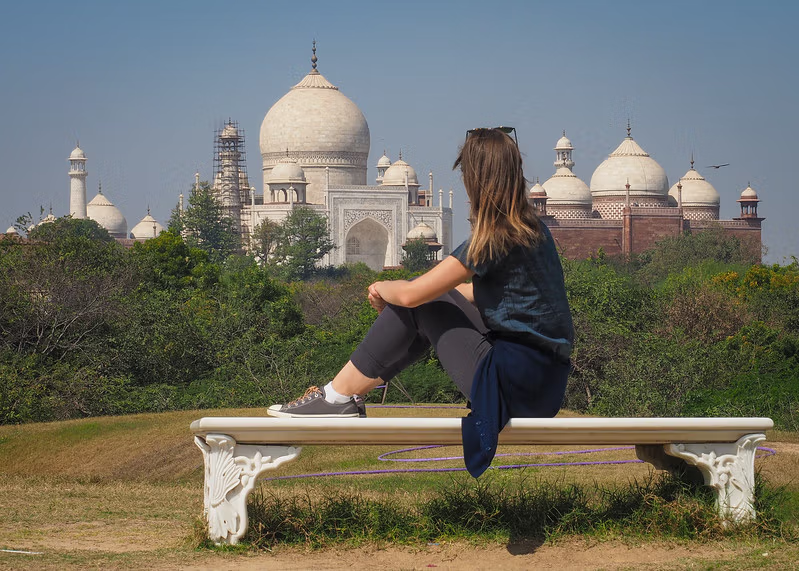
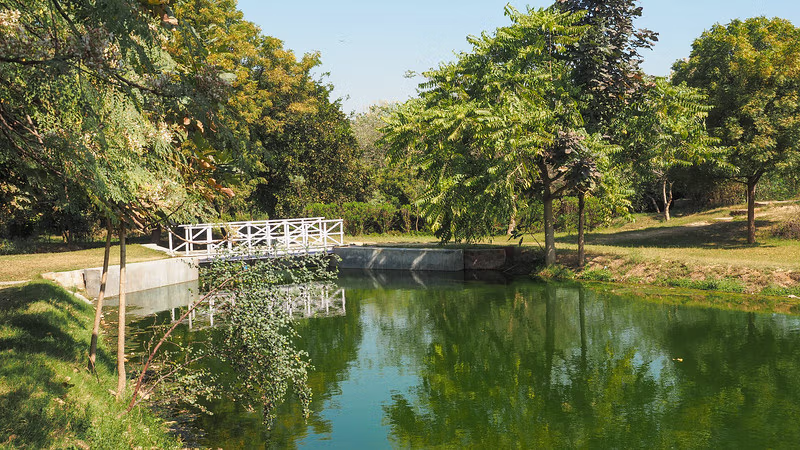
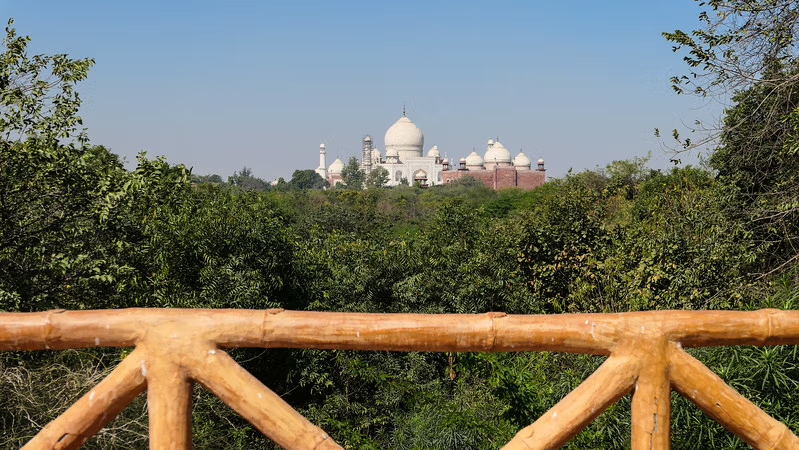
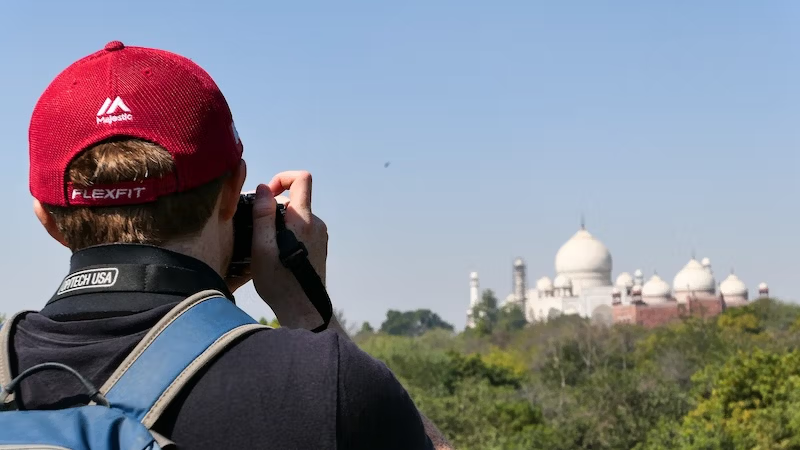
The Taj Walk is a mix of paved paths and dirt trails, where you can spot peacocks roaming wild, however, the crowning jewel of the park are the free views of the Taj Mahal! They have a few benches scattered across the grounds and every once in a while you’ll come across an unexpected hill that offers views of the Taj dazzling in the sunlight.
Because the park is located east of the Taj, you get the best views in the morning when the sunlight hits the building. You can still visit in the afternoon, but the Taj will be backlit – something to keep in mind for all you photogs out there.
Enjoy a meal with a view of the Taj
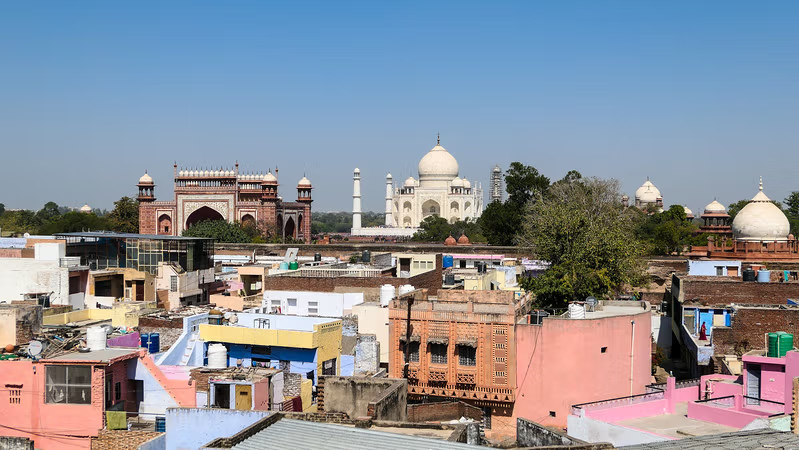
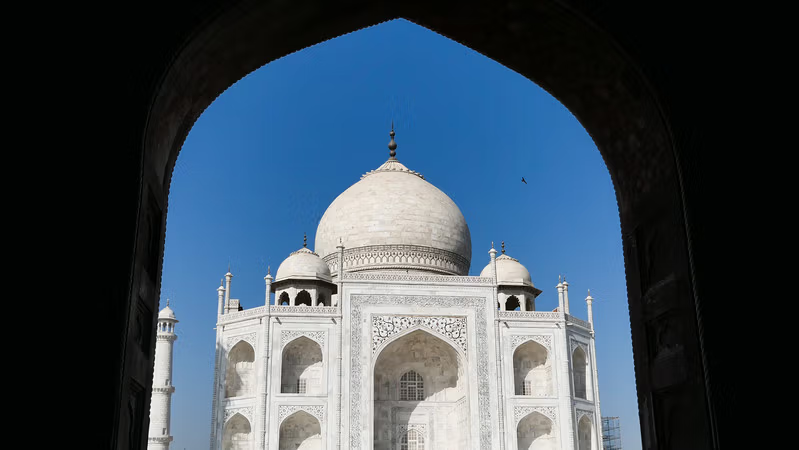
Saniya Palace Rooftop Restaurant calls itself “the restaurant with the best views of the Taj Mahal”, and while I didn’t try every restaurant in town, I can’t really argue with that statement either because the views were pretty spectacular.
This restaurant is located on top of a guesthouse by the South Gate and you have to huff and puff your way up several flights of stairs, but once you reach the top, you can see the Taj Mahal framed by pastel buildings.
The food did take a long time to arrive (we waited 45 minutes) and it’s not going to win any awards (expect standard Indian fare), but if you’re in no rush, the rooftop is a nice place to linger while you enjoy views of the Taj just a little bit longer.
Visit the Taj Mahal itself
And now I’ve saved the best for last: seeing the Taj Mahal up close!
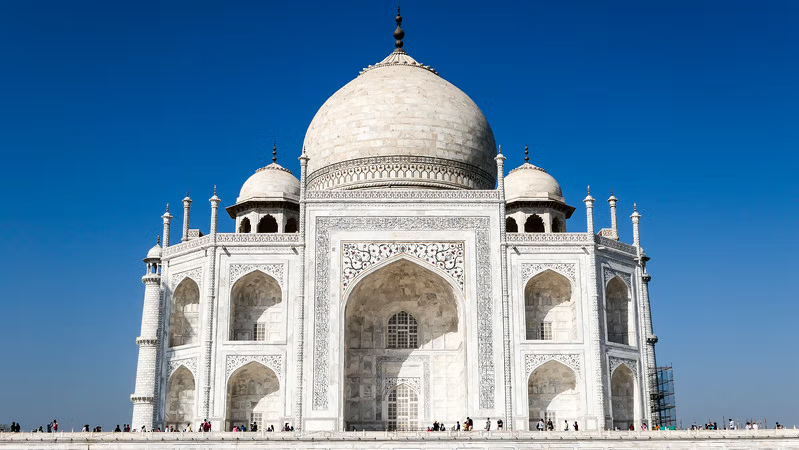
What can I say about the Taj Mahal that hasn’t already been said before? The structure is striking from the minute you first set eyes on it.
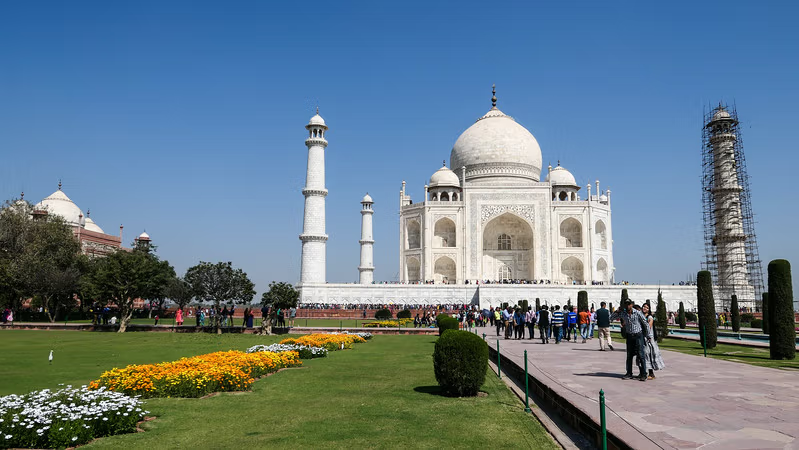
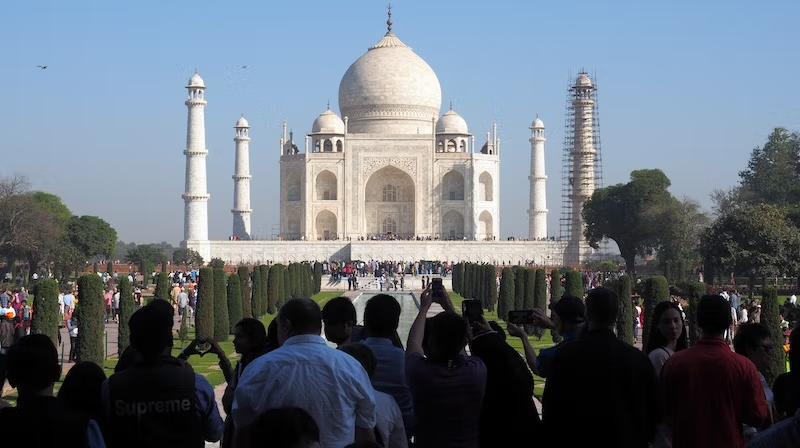
We decided to skip the early morning wake-up call for sunrise, and made our way there at 9:00 a.m. without any rush. We were visiting on a weekend, but there were no lines at the East Gate, so we went through security and were standing in front of the Taj within minutes.
Thus, we spent the entire morning walking along the complex, gawking at the building’s beauty from every angle, and taking a gazillion pictures because you never know when you’re going to be back! If you’re planning on visiting, I would suggest you give yourself at least 2-3 hours to explore every nook and cranny.
Tip: Once a month on the full moon, the Taj Mahal is open for nighttime viewing, so if your trip happens to coincide with that, it’s a pretty rare opportunity to enjoy! Sadly, we missed the full moon by just a few days.
Stay within walking distance of the Taj
Our hotel in Agra was my favourite property of our whole month in India, so I just have to write about it! We stayed at a place called The Coral Court Homestay, which is a boutique hotel with a familiar touch.
The property was run by a travel-loving couple who had a colourful home filled with trinkets from around the world. I loved that wherever I looked there was an unusual artifact with a story, be it embroidered silk pillows with elephants, tinted glass lamps dangling from the ceilings, or shelves and coffee tables piled with books in foreign languages. It was like setting foot in the home I’d like to have one day.
Aside from being a beautiful property, it was also within walking distance of the Taj Mahal while simultaneously being in a quiet area just off of Taj East Gate Road. If you’re looking for a place to stay in Agra, I would highly recommend this hotel!
Lastly, they served breakfast, lunch and dinner in a communal dining area where guests could mix and mingle, while swapping tales from their travels across India.
To wrap things up, I’m really glad I had three full days in Agra to sightsee without rush and tack on some lesser visited attractions. That being said, if you are on a tighter schedule, you can still pack quite a bit into a day or two, especially if you hire a rickshaw driver to take you around, so either way, you’ll enjoy your visit.
Would you add anything else to this Agra travel itinerary?

Planning Your 3 Days in Agra: Itineraries, Logistics and Practical Tips
Everything you need to make the most of your time — from sequencing your days and stacking Taj viewpoints to transport, food, costs and what to pack.
Day 1 — Agra Fort, Baby Taj and Mehtab Bagh
Morning: Agra Fort (arrive at opening)
Start where the Mughals lived before Delhi. The fort is a self-contained world: palaces, hammams, formal courtyards, audience halls and those red-sandstone arcades that make you want to photograph every doorway. Wander with a guide if you love context; otherwise roam at your own pace and follow the breezes. Don’t miss Mussamman Burj, a marble tower where Shah Jahan is said to have spent his final years looking across to the Taj — a great first-peek moment for the trip.
Early Afternoon: Baby Taj (Tomb of I’timād-ud-Daulah)
Light, delicate and covered in inlaid semi-precious stones, it’s often nicknamed a “jewelry box.” Walk the river terrace, lean in close to admire the pietra dura work, then duck into the shady pavilions when the sun gets feisty.
Late Afternoon into Sunset: Mehtab Bagh
Cross the river for the classic rear-view of the Taj. It’s unhurried here: families picnicking, kids flying kites, couples waiting for the sky to turn pink. On hazy days silhouettes are dreamy; on clear days bring a light telephoto for detail shots. (During the rains the gardens can partially flood — have a rooftop viewpoint as a back-up just in case.)
Day 2 — A Full Taj Day
Mid-Morning: Taj Mahal
We arrived around 9 a.m. and breezed through the East Gate with no queue. Take your time: walk the central axis for the postcard shot, then circle. The Taj is all about symmetry, but the off-axis angles — minarets framing the dome, archways layered with shadows — make for surprisingly satisfying photos. Inside the mausoleum it’s hushed and brief; respect the flow and keep moving.
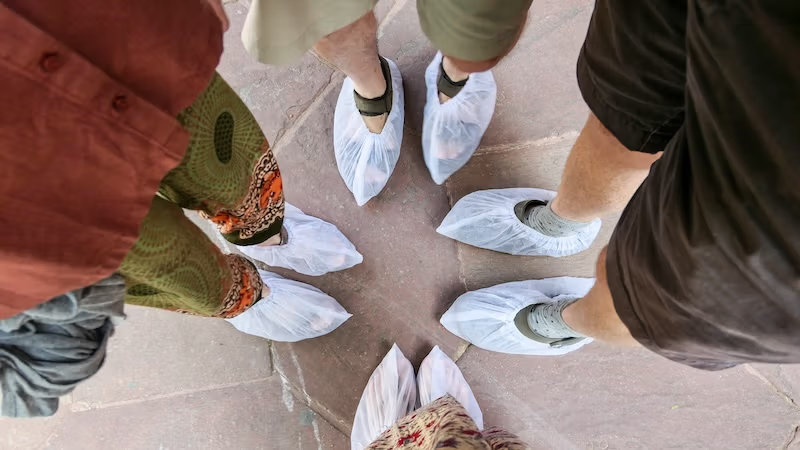
Tip for the marble plinth: you’ll pop on shoe covers or go barefoot. The sun bounces hard here — sunglasses are your friend.
Lunch and Siesta: retreat to your hotel for a breather — Agra heat and marble glare add up fast.
Golden Hour: Taj Protected Forest or Rooftop
If you’re staying near the East Gate, the protected forest gives you elevated knolls and birdlife — peacocks, if you’re lucky. For a lazy option, head to a rooftop like Saniya Palace for masala chai alongside your view.
Optional: Full-Moon Night Viewing
On five nights around the full moon, there are short timed night viewings from the garden — tickets are limited and sold in person the day before. If your dates align, it’s a genuinely rare experience.
Day 3 — Markets, Food and One More Taj Angle
Morning: Markets and Lanes
Wander Taj Ganj for colour and street life, then branch to Sadar Bazaar or Kinari Bazaar for fabrics, bangles and wedding-decor eye candy. If you’re souvenir-curious, ask to see workshop demos of marble inlay (pietra dura) to understand the technique before you buy. Genuine inlay feels flush to the touch; painted pieces feel smooth everywhere.
Afternoon: Food Safari
Agra is a sweet tooth’s city. Look for:
- Petha — candied ash gourd; try the translucent classic or a saffron version
- Bedai and jalebi — puffy fried bread with spiced potato plus swirls of syrupy jalebi; a popular breakfast
- Mughlai classics — rich gravies; vegetarians are spoiled for paneer
- Lassi — creamy, cold, bliss
For a meaningful stop, Sheroes Hangout — run by acid-attack survivors — is inspiring and serves good food.
Sunset: return to your favourite angle — Mehtab Bagh for fading light, the Taj Walk for birdsong or whichever rooftop you loved most.
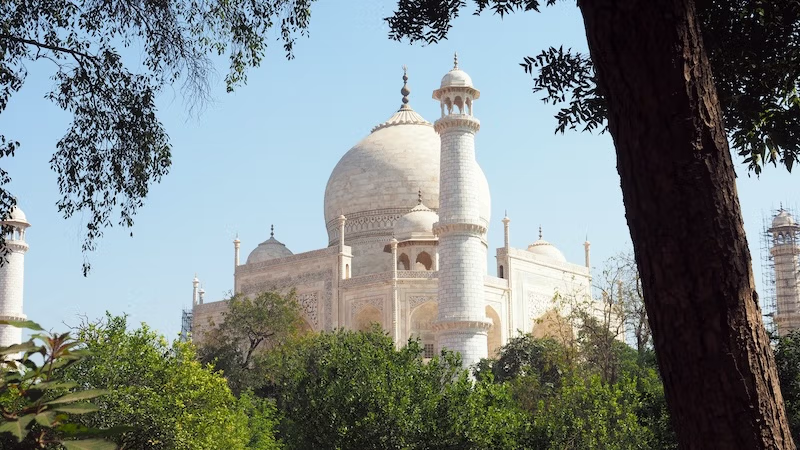
Taj Viewpoints by Time of Day
| Spot | Best Time | Why You’ll Love It |
|---|---|---|
| Agra Fort (Mussamman Burj side) | Late morning | Framed, story-rich view with history under your feet. |
| Mehtab Bagh (across the river) | Sunset | Silhouette possibilities, room to breathe, romantic vibes. |
| Taj Protected Forest (East Gate) | Morning | Soft front-lit Taj plus peacocks and quiet benches. |
| Main Taj Complex (central pool) | Early–mid morning | Symmetry and reflections; crowds still manageable if you’re patient. |
| Rooftop (Taj Ganj/South Gate area) | Golden hour | Tea + skyline + that ivory dome floating above pastel houses. |
Photography note: tripods and monopods are not permitted inside the Taj complex. Travel light and get creative with railings and knees for stability.
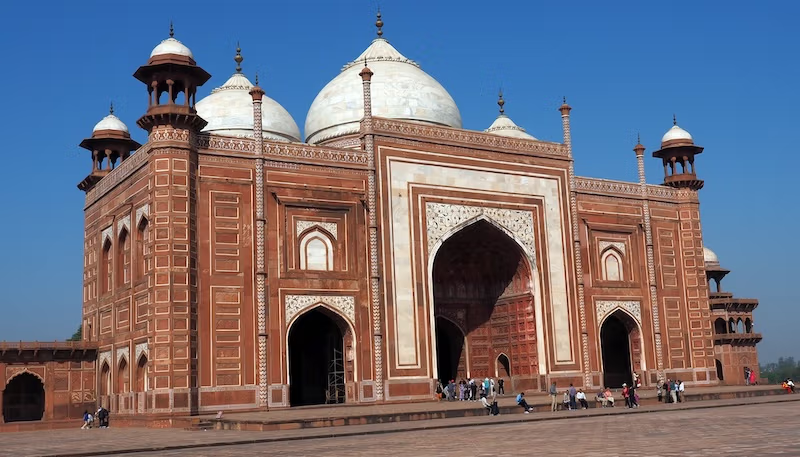
Gates, Entry and Logistics
- Gates:
- East Gate — calmest approach, handy if you’re staying near Taj East Gate Road (we were).
- West Gate — busy with local visitors, especially Fridays and Sundays.
- South Gate — close to bazaars and rooftops; entry hours can be shorter — confirm on the day.
- Closed on Fridays for prayers. Plan your Taj day on any other day and use Friday for forts and markets.
- What you can and can’t bring: small daypack, camera or phone, water and sunscreen are fine. Food, drones, tripods and anything that looks like pro-audio equipment are typically turned away. Simple lockers are available at the gates.
- Dress and comfort: shoulders and knees covered is respectful and keeps the sun off. A light scarf is multi-use: shade, temple cover, dust buffer. The marble gets bright — hats and sunglasses help considerably.
- Getting around: e-rickshaws and cycle rickshaws cover short hops. App cabs work when available for longer runs. Your hotel can arrange a trusted driver for a half-day circuit if you’re stringing together Baby Taj, Mehtab Bagh and a rooftop.
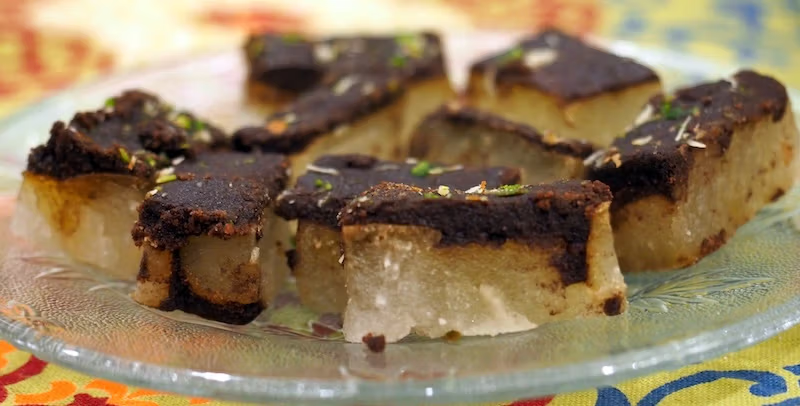
What and Where to Eat in Agra
- Views with bites: Saniya Palace Rooftop (South Gate) for the panorama — order chai and linger.
- Casual Indian: Joney’s Place near Taj Ganj for no-frills curries and good conversation.
- Treats to hunt:
- Petha from a busy local sweet shop — ask your host for their current favourite.
- Bedai and jalebi breakfast near Sadar Bazaar — arrive early, they sell out.
- Kulhad lassi served in a clay cup on hot afternoons.
Culture Notes and Respectful Travel
- Guides and touts: only hire guides at official desks or by hotel recommendation; many “I’m your guide!” approaches at the gates are commission chasers.
- Craft shopping: real inlay work is slow art and priced accordingly. If a full tabletop costs the same as dinner, it’s paint or veneer. Buy smaller genuine pieces — coasters or tiny boxes travel well and verify the craft is authentic.
- Temple and mosque visits: remove shoes, dress modestly and ask before photographing people.
- Animals: don’t feed monkeys around the complex — they’re clever thieves. Keep wrappers secure and pack your litter out.

If You Have an Extra Day
- Fatehpur Sikri (UNESCO): a striking red-sandstone Mughal capital about an hour away — palatial courtyards, the immense Buland Darwaza gate and haunting empty halls.
- Akbar’s Tomb (Sikandra): serene gardens and a monumental tomb with beautiful geometric detail.
- Ethical wildlife stops: rescue centres near Mathura operate visitor programs — book directly and avoid any place offering rides or tricks.
What Will It Cost?
- Taj Mahal ticket: expect this to be the priciest site of your Agra visit. Bring ID and card or cash. Shoe covers are included near the mausoleum area.
- Other monuments: Agra Fort and the Baby Taj are significantly less. Combo options sometimes exist for foreign visitors — your hotel or the official counter can confirm current pricing.
- Getting around: short rickshaw hops are inexpensive — agree the fare before you roll. A half-day private driver costs more but pays off in time saved when you’re stringing several sights together.
Packing for Agra’s Elements
- Heat and glare: breathable layers, hat, compact umbrella (doubles as portable shade).
- Footwear: comfortable closed-toe shoes for forts and dusty lanes; easy on/off helps at temples and the mausoleum.
- Little extras: pocket tissues, hand sanitiser, light scarf, lip balm and a soft cloth to wipe marble dust from your camera or phone lens.
Where to Stay: Three Picks
The core article recommends The Coral Court Homestay near the East Gate — Audrey’s personal favourite of the whole India trip. Here are three further options at different price points:
- Oberoi Amarvilas — the most directly relevant luxury property to this article: every room, every terrace and every restaurant faces the Taj Mahal at a distance of roughly 600 metres. This is the hotel people describe as the single best Taj view available from a bed. If the article’s premise is seeing the Taj from every angle, this property delivers a view that doesn’t require leaving the building. Worth naming even just so readers know it exists.
- Trident Agra — a five-star property set in spacious Mughal-style gardens near the East Gate, with a pool and spa, and consistent reviews for food and service. Well-positioned for the Taj Walk and East Gate entry that the article describes. A step down in price from the Oberoi but still a strong property.
- ITC Mughal — a large resort-style hotel set in extensive landscaped grounds inspired by Mughal garden design. Good choice if you want more space, a variety of dining options and a hotel that can arrange city excursions efficiently. More accessible pricing than the Oberoi while still being a characterful property.
Tours Worth Searching
Agra is manageable independently, but a few specific experiences benefit from a guide or pre-arranged logistics:
- Taj Mahal sunrise guided tour with skip-the-line entry — the early morning window with a guide who can explain the pietra dura inlay, the architectural symbolism and the best photo positions is genuinely worthwhile for first-timers. Skip-the-line tickets are particularly useful on busy weekends and holiday periods.
- Agra Fort and Taj Mahal combined tour — pairing both monuments with a guide on Day 1 (or early Day 2) gives the historical arc from the fort to the mausoleum much more coherence. Guides at Agra Fort in particular elevate the visit — the Mussamman Burj story alone changes how you see the Taj across the river.
- Fatehpur Sikri guided half-day tour from Agra — for anyone adding the Day 4 excursion, joining a guided return trip removes the logistics of navigating buses to an unfamiliar destination and adds context that the site’s own signage doesn’t provide well.
- Agra same-day tour from Delhi — the most searched tour type for this destination. If you’re facing a time crunch this could be a good option.
Agra Trip FAQ
How many days do I really need in Agra?
You can technically dash through in a day, but three unhurried days is the sweet spot. It gives you Agra Fort and the Baby Taj on day one, the Taj Mahal itself plus the Taj Protected Forest or a rooftop on day two, and markets, sweets and a sunset encore at Mehtab Bagh on day three. If you’re on a tight schedule, two days still works — combine Baby Taj and Mehtab Bagh with your Taj day.
What’s the best time of day to visit the Taj Mahal and avoid crowds?
Early morning is calmest and gives you soft, flattering light. We went around 9 a.m. and breezed through the East Gate with minimal queuing. Midday is brightest (bring sunglasses), and late afternoon is lovely but busier. For photos, mornings front-light the facade; afternoons backlight it — great for silhouettes but trickier for detail.
Which gate should I use to enter the Taj?
Use the gate closest to where you’re staying. The East Gate is usually the smoothest and pairs well with the Taj Protected Forest and many hotels. The West Gate is popular with domestic visitors and can be busier on weekends. The South Gate sits near the bazaar and rooftops but keeps shorter hours. All three have security checks and lockers for prohibited items.
What can I bring inside, and are tripods or drones allowed?
Keep it light: phone or camera, small daypack, water, sunscreen and a hat. Food, large bags, tripods, monopods, drones and pro-audio gear are not permitted. Shoe covers for the marble plinth are provided or available to buy. If you accidentally bring a banned item, use the gate lockers before entry.
Is the Taj open every day, and what about full-moon night viewing?
The Taj is closed on Fridays for prayers. On five nights each month — the full moon plus two nights before and after — limited timed night viewings are offered from the garden. Tickets are sold in person the day before and do sell out. If your dates align, it’s a quiet, rare way to see the monument.
How do I get around Agra without wasting time?
For short hops, use cycle or e-rickshaws and agree the fare before you ride. For a cluster of sights — Baby Taj, Mehtab Bagh and a rooftop — hiring a trusted driver for a half day via your hotel saves real time. Walk in Taj Ganj and around the bazaars; use app cabs for longer cross-town runs when available.
Where are the best Taj viewpoints beyond the main complex?
Four easy winners: Agra Fort near Mussamman Burj for a story-rich frame; Mehtab Bagh across the river for sunset silhouettes; the Taj Protected Forest near the East Gate for front-lit morning views and peacocks; and Taj Ganj rooftops (Saniya Palace is the most noted) for tea with a skyline. Mehtab Bagh can partially flood in monsoon season — worth checking conditions before you go.
Should I hire a guide, and how do I avoid touts?
If you enjoy history and context, a guide at Agra Fort or the Taj adds real value. Book via your hotel or the official counters at the gates — avoid people who approach you in the street. A friendly but firm “No, thank you” and walking on works best with persistent touts. For shopping stops, only go if you’re actually interested.
What should I wear and pack for comfort and respect?
Agra is conservative and sunny. Lightweight, breathable layers covering shoulders and knees keep you comfortable and culturally appropriate. Add a hat, sunglasses, sunscreen and a light scarf — useful for shade or temple visits. Closed-toe shoes suit forts and dusty lanes; slip-on styles make shoe removal at temples and the mausoleum easier.
What are the must-try foods and where do I find them?
Start sweet with petha and a breakfast plate of bedai with spiced potato followed by hot jalebi. Cool off with a kulhad lassi served in a clay cup. For a meal that does good, visit Sheroes Hangout (run by acid-attack survivors). For a view as a side dish, a simple curry or chai on a Taj Ganj rooftop works perfectly.
What else can I see if I have an extra day?
Two excellent add-ons are Fatehpur Sikri (the former Mughal capital in red sandstone about an hour away) and Akbar’s Tomb at Sikandra (serene gardens and intricate geometry). Back in Agra, wander Sadar Bazaar or Kinari Bazaar for fabrics and bangles. Carry water, keep valuables close and ask your hotel to arrange reliable transport.
Wow! amazingly described. Taj Mahal is really really beautiful. I visited the monument 2 years ago. Lovely pictures!
This is so stunning….I have been to India once but unfortunately couldn’t visit the Taj Mahal……lovely read.
The Taj Mahal for me is one of the most stunning buildings we have! It is so much better in person. When we visited the place in 2013, I just couldn’t believe it! The experience is surreal!
Hello! I recently had found your videos on YouTube and have since started following your blog. I was wondering if you had a post that kind of explains more about your back-story and how you came to be able to travel as much as you do? Thanks!!
Hi Tabitha, I guess you could say I got started with teaching English overseas. I’ve always enjoyed travelling and I took the opportunity to do so during every winter holiday and summer break when I was in university. Once I graduated, I took a job teaching English in Korea, met my husband, and ended up travelling around Southeast Asia with him. Along the way I started this blog and a YouTube channel, both of which I monetized, and I also got work writing pieces for travel websites. I should probably write a more in depth blog post about it at some point, but that’s the short version!
Fab photos! I thought the Baby Taj was beautiful. Were you disappointed by the scaffolding on the Taj Mahal? Apparently the whole dome will be covered this year which is a shame, but it’ll look stunning when back to it’s original glory.
Ahh, someone had warned me about the scaffolding, so I can’t say I was disappointed since I knew to expect it. It’s not great for photographers looking to get that iconic Taj shot, but the building is beautiful regardless! Apparently they’re also going to be applying mud packs to clean the yellow marble, so at least I missed that.
Beautiful post! Nice to read about places other than Taj in Agra, that provide beautiful views of it. Love reading your blog posts 🙂
I absolutely adored Agra. It’s such a beautiful enchanting place! I could have stayed there all day.
Well, without all the crowds of course, but still!
Beautiful post! Agra really is an oasis of charm and splendor. But the Taj is not a stand-alone attraction. The legacy of the Mughal empire has left a magnificent fort and a liberal sprinkling of fascinating tombs and mausoleums. Wonderfull place to visit!
Hi Audrey, Thank you for sharing your experience in Agra with us in such a wonderful post. I really enjoyed reading it with your tips and recommendations on where to have a good view and stay while travelling in Agra. The monuments that you mentioned are really the most important monuments in Agra but i would like to add to the list, the tomb of Akbar or Sikandra, which is located 15 kms from Taj Mahal. The tomb is built on an area covering 119 acres during early 17th century. This is the mausoleum that Akbar chose for himself but could not finish it during his time. The monument has Mughal elements like red sandstone and marble with inlay works and geometric patterns. The tomb is not a UNESCO’s heritage site but still worth visiting.
Agra is just an amazing travel destination, I have been there twice.
I would love to go back again and again. I love the Taj a lot.
Thanks for your amazing travel guide and your photos are mind-blowing.
Agra is an amazing place to visit and The Taj Mahal is the most beautiful building i have ever seen.
The beauty of The Taj Mahal is just amazing and can’t be explain in words.