
While I am currently travelling through Malaysia (I can’t believe I’ve already been on the road for half a month!) this is a sneak peak at a little cafe I found in Seoul during my last few days in Korea.
Sometimes you just come across a handful of new places you could see yourself frequenting right before you are scheduled to leave town, and that was the case with this cute little cafe.
Traditional Korean Teahouse Experience in Seoul
The first thing I liked about this place? Its name:
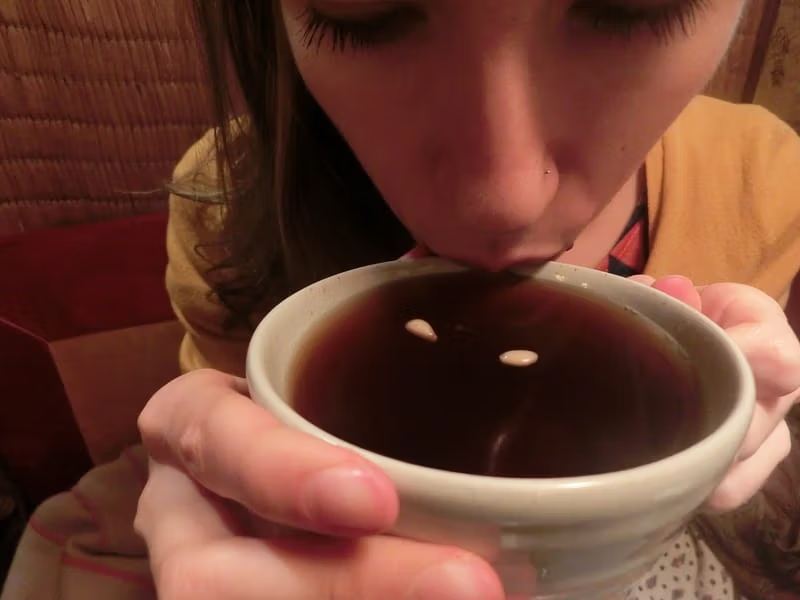
Moon Bird Does Think of Only the Moon
Now isn’t that poetic? Or perhaps something got lost in translation, but I like to think it’s the former.
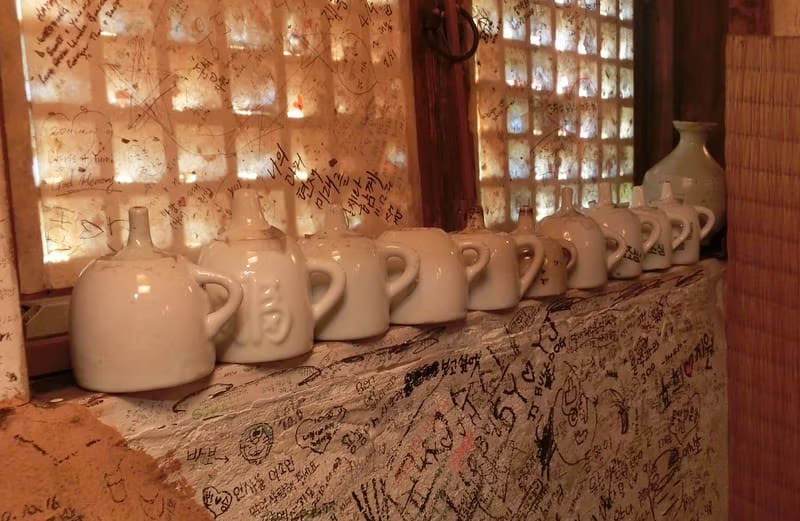
I previously wrote about a traditional tea house in Seoul (Shin Old Tea House) that I really enjoyed visiting. While that particular tea house was what you would expect from a traditional establishment – low tables, floor seating, and dim lighting – Moon Bird Does Think of Only the Moon surprised me its twist on the tea house experience.
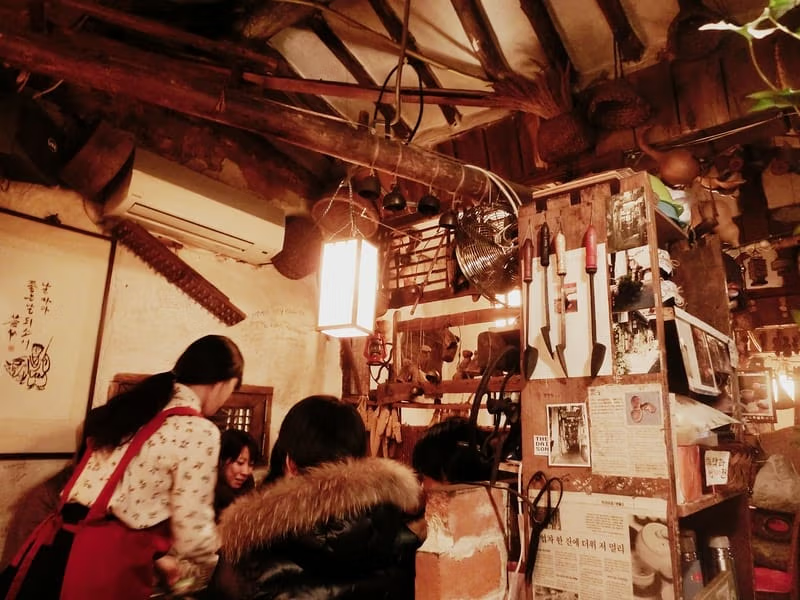
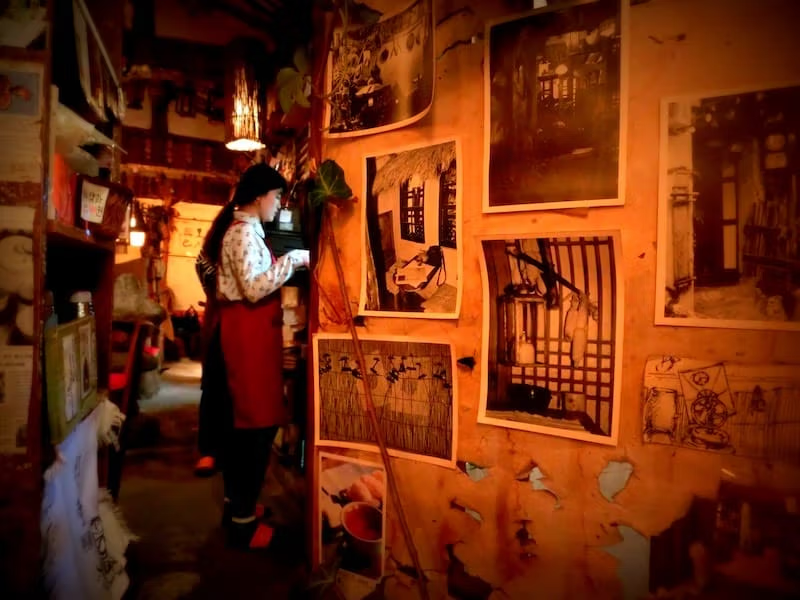
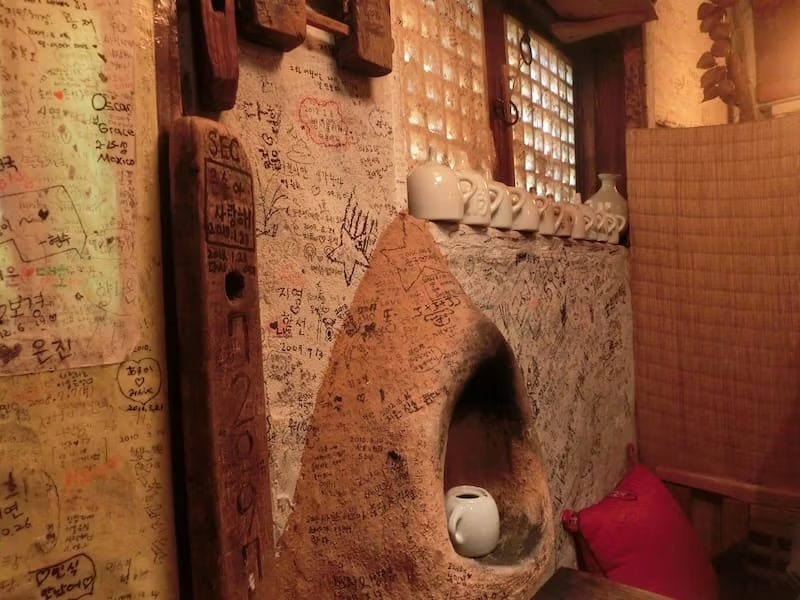
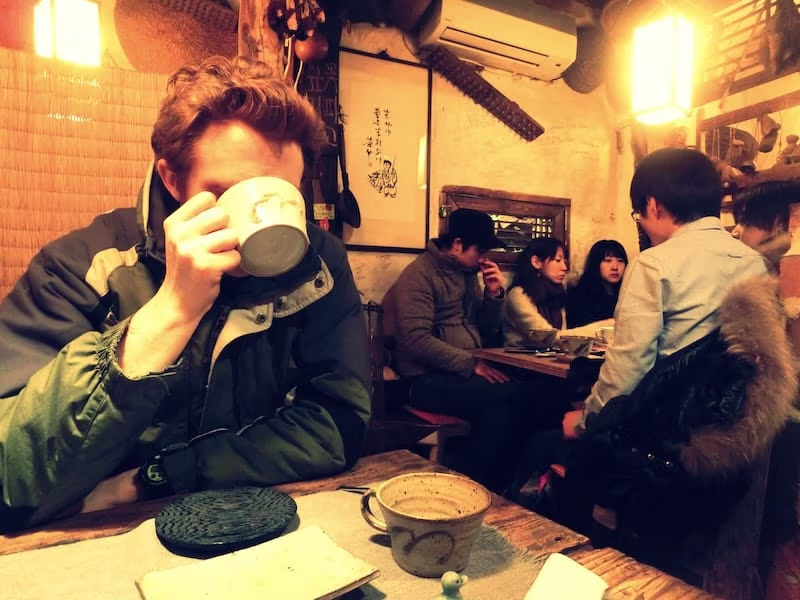
While we were still in a hanok, a traditional Korean building, the inside was quirky and you couldn’t help admiring all the little details that make up this place: gardening tools, newspaper clippings, faded old photographs, oil lamps, drawings, and the names of previous customers written all over the walls.
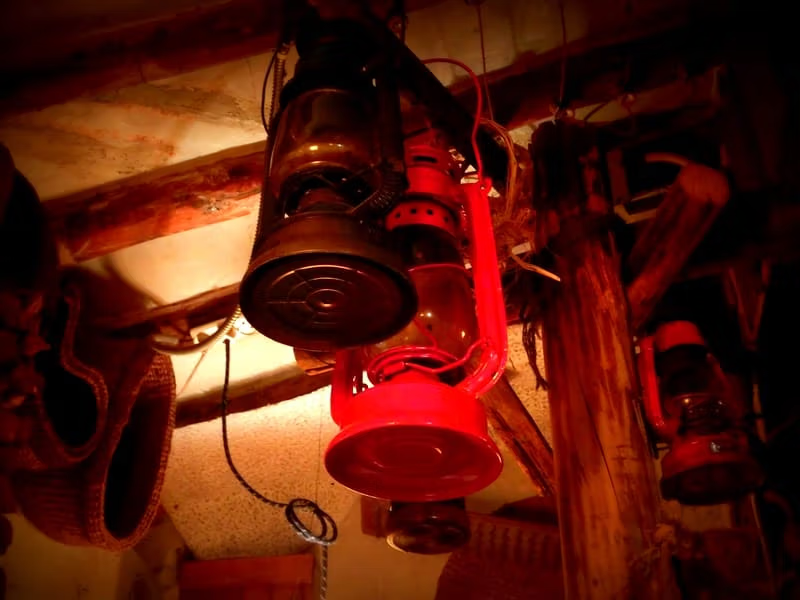
Old fashioned oil lamps and decor in the traditional Korean teahouse in Insadong
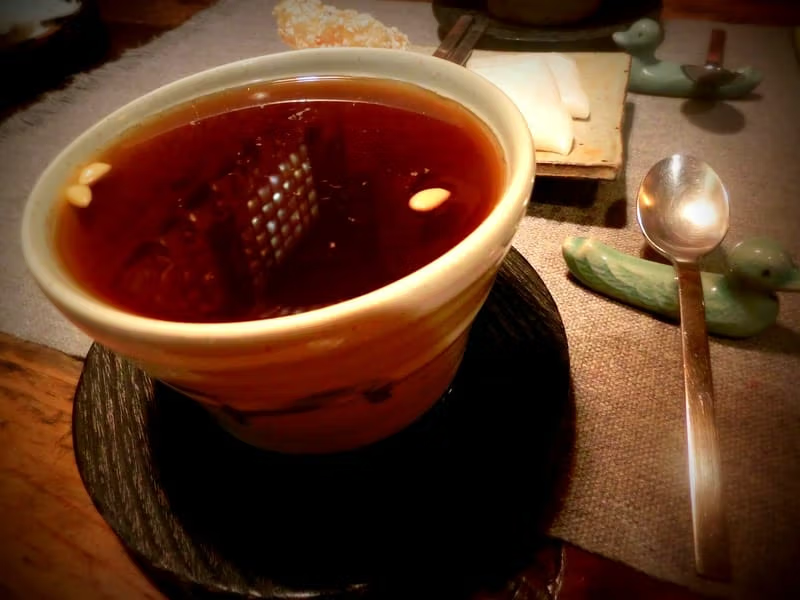
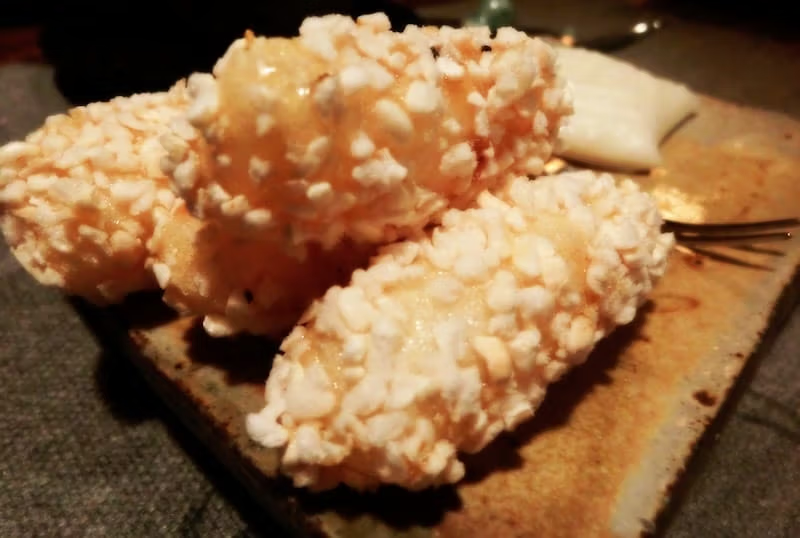
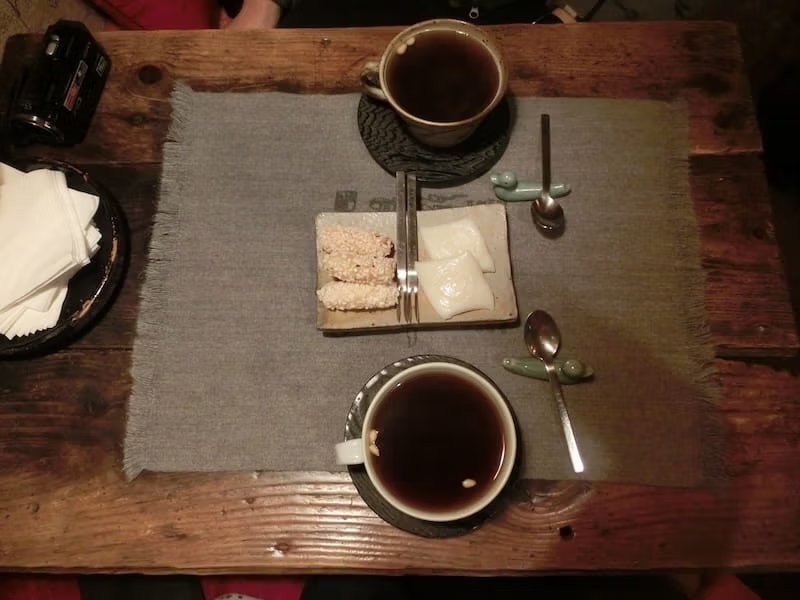
We couldn’t figure out exactly what flavour of tea we were drinking, but the aromas were of winter spice, and the little rice cakes were the perfect accompaniment.
If you’re looking for a new place to frequent in Seoul, Korea, or even if you are looking for a place to visit during your trip there, I highly recommend Moon Bird Does Think of Only the Moon!
Tips for Sipping at Moon Bird Does Think of Only the Moon
Finding an address in Seoul’s warren-like back alleys can feel like a scavenger hunt. And this tea house is no exception.
The Story Behind the Name
The name isn’t a translation quirk — it’s a book title. “달새는 달만 생각한다” (Dalsaeneun dalman saenggakhanda, “The Moon Bird Only Thinks of the Moon”) is a 1994 travel-essay collection by Ryu Shiva, one of Korea’s best-known contemporary poets. Writing under this pen name after abandoning his birth name An Jae-chan, Ryu spent years traveling through India, the US, China, and Tibet, and the book gathers his reflections from those journeys. His poetry and essays became genuine bestsellers in Korea through the 1990s and 2000s, which is part of why a small teahouse borrowing his title still resonates with local visitors decades later.
Getting There Without the Goose-Chase
- Start at Anguk Station (Line 3, Exit 6). Walk straight past the stone wall of Unhyeongung Palace for about 120 metres until you see the giant paintbrush sculpture that marks Insadong-gil, the main pedestrian drag.
- Turn left into Insadong-gil. Ignore the temptation to duck into every calligraphy shop (for now) and stroll until you spot the Starbucks with its famously Hangul-only sign. That’s your landmark.
- Veer right into the first side-alley after Starbucks. The alley is narrow — just wide enough for two people and a line of kimchi pots — and unmarked by English signage. Halfway down you’ll pass a boutique selling hanbok-inspired linen dresses.
- Look up for the crescent-moon sign. The tea house hides behind a low wooden gate with “달새는 달만 생각한다” hand-painted on raw timber. Ascend three stone steps and slide the door; the bell overhead announces your arrival in the softest of chimes.
GPS co-ordinates: 37.574501, 126.985277
Naver/ Kakao Map search term: 달새는달만생각한다

Insadong: 600 Years in the Making
Insadong has been a fixture of central Seoul since the Joseon Dynasty, when the area housed government officials and scholars near the palace. During the Japanese colonial period, aristocratic families sold off heirlooms here, and the neighborhood became Korea’s antiques trade — a legacy that still shows in the galleries and calligraphy shops lining the alleys today. After the Korean War it became a gathering place for painters, poets, and writers, and in 1988 it was officially designated a Traditional Culture Street. One practical detail worth knowing before you go: Insadong-gil closes to vehicle traffic on weekends, turning the main street into a full pedestrian zone with extra craft stalls. Weekday mornings, by contrast, are the quietest time to browse.
What to Order (Beyond the One-Page English Menu)
The staff keep an English menu handy. But it condenses twenty-plus infusions into about six “house specials.” If you want to branch out, memorise (or screenshot) the following handful of Korean names.
| Korean Name | Pronunciation | Flavour Profile | Story / Benefit |
|---|---|---|---|
| 대추차 | dae-chu-cha | Deep, raisin-like jujube with honey | Popular winter tonic; said to soothe a scratchy throat. |
| 유자차 | yu-ja-cha | Bright, marmalade-y yuzu | Served lukewarm; a citrus pick-me-up in summer. |
| 오미자차 | o-mi-ja-cha | “Five-flavour berry” — sweet, sour, bitter, salty, spicy | Taste evolves as it cools; a traditional favourite for circulation. |
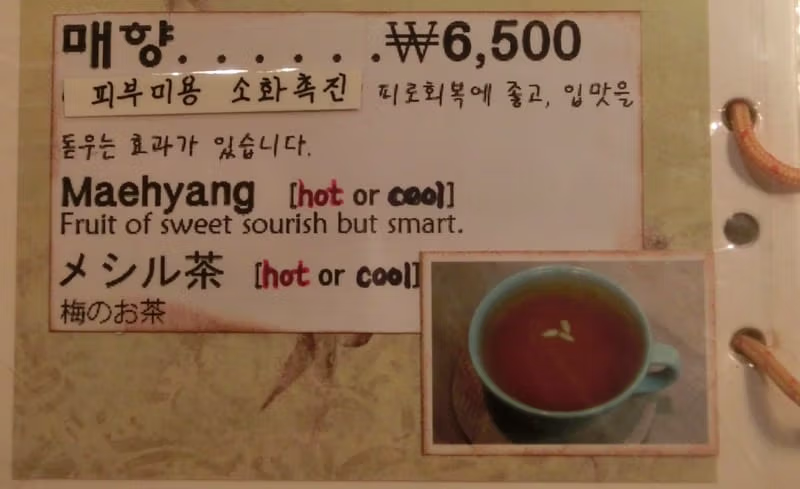
| 매실차 | mae-sil-cha | Delicate green plum, slightly tart | A classic Korean home remedy tea, brewed from fermented green plums. |
| 쌍화차 | ssang-hwa-cha | Herbal, gingery, topped with pine nuts & raw egg yolk | An old restorative recipe, traditionally taken to fight fatigue. |
Prices hover between ₩7,000 and ₩10,000 (worth confirming on arrival, as small independent teahouses adjust pricing over time). Each cup is essentially a small pot, and hot-water refills are typically offered at no extra charge.
Tea-House Etiquette 101
- Shoes Off, Slippers On: If you choose a floor-cushion room, leave shoes in the rack by the threshold. Staff will hand you quilted house slippers when you pad to the restroom.
- One Voice, Softly: The acoustic expectation sits halfway between a library and an indie cinema pre-show. Locals murmur; phones stay pocketed.
- No Tipping Required: Korea’s tipping culture is basically non-existent. A simple “감사합니다!” (gamsahamnida, thank you) and a small bow suffice.
- Don’t Re-Steep Without Asking: Staff gladly add hot water, but they prefer to manage the strength themselves — wave discreetly instead of helping yourself from the service kettle.
- Wall Graffiti Has Rules: Customers are welcome to leave notes on plastered sections only (never on exposed timber). Grab a blunt-tipped pencil from the counter.
Pairing Bites: Rice-Cake Decoder
- Injeolmi (인절미): Chewy, dusted in roasted soybean powder — nutty and not overly sweet. Pair with citrus-forward yuzu tea.
- Songpyeon (송편): Half-moon shape stuffed with sesame-honey; available mainly around Chuseok (mid-autumn harvest festival). Excellent with earthy ssang-hwa-cha.
- Hobaktteok (호박떡): Pumpkin-infused, bright orange rectangles — kid-friendly. Good alongside tart maesil plum tea.
Seasonal Notes & When to Go
- Late March – Early April: Plum-blossom season across Seoul. It’s a popular stretch to visit hanok teahouses generally, and maesil (green plum) tea feels especially fitting.
- Mid-May: Buddha’s Birthday lantern displays light up nearby Jogyesa Temple and spread into the Insadong streets after dark — worth timing a visit around if you’re in the area.
- Autumn: Cooler weather makes a hot cup and rice cakes especially welcome, and Insadong’s weekday mornings stay the calmest time to browse the alleys before or after.
- Winter: Many Insadong teahouses keep floor-heated ondol seating, Korea’s traditional underfloor heating — worth requesting if you want to warm up properly with your tea.
Here is a little video we made of our outing:
What to Pair Nearby: Bites & Little Sights Within 10 Minutes
Insadong rewards wanderers: a paper shop with crisp hanji sheets, a stall folding hotteok (brown-sugar pancakes) in buttery halves, a ceramic studio that lets you paint a cup. If the weather sours, slip into the compact yet charming Kyung-in Museum of Fine Art garden for tea-house-quiet vibes outdoors. When you’re ready for a savory bite, hit a mandu (dumpling) shop just off the main drag; two steamed mandu and a small kimchi order can carry you to dinner. And if you haven’t yet, a short stroll to Bukchon Hanok Village gives you lantern-lined lanes and tiled eaves for days.
- Jogyesa Temple: free, lanterns at dusk, child-friendly.
- Ssamziegil: handicrafts, rooftop, reliable restrooms.
- Hotteok carts: look for the cinnamon-syrup sizzle; eat carefully — molten inside.
- Mandu stops: steamed or pan-fried; grab a small soy–vinegar dip on the side.
- Bukchon lanes: go gently — residents live here; keep voices low.
Walkable Add-Ons
| Place | Walk Time | Admission | Best For |
|---|---|---|---|
| Jogyesa Temple | 6–8 min | Free | Lanterns, peaceful pause |
| Ssamziegil Rooftop | 3 min | Free | View, quick browse |
| Kyung-in Museum Garden | 5–6 min | Small fee | Tiny art fix, quiet benches |
| Bukchon Hanok Village (lower lanes) | 10–12 min | Free | Architecture, stroll photos |
| Street hotteok / bungeoppang cart | 1–3 min | ₩2,000–3,500 | Warm snack after tea |
Where to Stay Near Insadong
Insadong itself is light on hotels, but a short walk in any direction puts you within reach of several solid options spanning every budget and travel style.
- Yehadoye Guesthouse — Tucked near Anguk Station Exit 6, this cozy guesthouse leans into traditional decor and has a rooftop terrace with neighborhood views. Well suited to solo travelers and budget backpackers who want character over polish.
- Dormy Inn Express Seoul Insadong — A comfortable 3-star option with a buffet breakfast, an on-site coffee shop, and a hot-spring-style bath and sauna to unwind in after a day of walking. Good for couples wanting reliable comfort.
- Orakai Insadong Suites — Deluxe serviced apartments roughly a 10-minute walk from Anguk Station, with a swimming pool, fitness center, and full kitchens. A strong pick for families or anyone staying several nights who wants more space.
- Moxy Seoul Insadong — A contemporary, design-forward hotel with a shared lounge and bar, about 6–8 minutes from Jongmyo Shrine. Fits younger travelers or couples who want a social atmosphere within walking distance of the teahouse alleys.
Guided Ways to Explore the Area
If you’d rather have a local guide fill in the history and food recommendations as you go, a couple of options cover this stretch of Seoul well.
- Seoul: Half-Day Insa-dong Walking Gastroventure Tour — A roughly 2.5-hour guided walk through Insadong Street itself, tasting rice cakes and Korean herbal teas along the way. The most directly relevant option if this teahouse is your anchor for the day.
- Gyeongbok Palace and Bukchon Hanok Village Walking Tour — A 3-hour small-group tour pairing Gyeongbokgung Palace with Bukchon’s hanok alleys, ideal for pairing tea-house time with a deeper look at Joseon-era history and architecture.
Building a Tasting Arc: Pairing Teas with Purpose
If you love a tasting arc, choose a citrus first, a spice or herb second, and finish with something lightly sweet. Yuzu wakes your palate and pairs well with injeolmi’s nutty dusting. Ssanghwa feels like a grandmother’s remedy — ginger-rich, pine-nutted — and suits a sesame-stuffed songpyeon if you’re near Chuseok. Maesil is a good tea to end on: refined and faintly floral, especially when fermented in onggi crocks for a full season. Not into caffeine? Most Korean fruit and jujube infusions are naturally caffeine-free and hold up well to repeated steeping.
- Caffeine-free: yuja, maesil, daechu (jujube), omija; skip green/black teas if you’re sensitive.
- Winter warmers: ssanghwa, daechu; both arrive steaming and slightly sweet.
- Summer refresher: iced omija — it shifts from sharp to sweet as it warms in the cup.
- Dessert match: for something rich, pair bitter chocolate with bright yuzu.
- Refill rhythm: when your cup hits half, wave for a top-up — staff prefer topping off before the leaves cool too much.
Tea Flavor & Pairing Reference
| Tea (Korean) | Flavor Profile | Sweetness | Caffeine | Good Pairing |
|---|---|---|---|---|
| 유자차 (Yuja) | Citrusy, marmalade-like, aromatic | Medium | None | Injeolmi (soybean powder rice cake) |
| 오미자차 (Omija) | Five-flavor berry: tart → sweet arc | Low–Med | None | Light sesame cookies |
| 대추차 (Daechu) | Jujube/date, honeyed, cozy | Med–High | None | Songpyeon (sesame-honey filling) |
| 매실차 (Maesil) | Delicate green plum, elegant tartness | Low | None | Hobaktteok (pumpkin rice cake) |
| 쌍화차 (Ssanghwa) | Herbal-ginger, restorative, pine nuts | Medium | None | Nuts/dried fruit plate |
FAQs: Moon Bird Does Think of Only the Moon (Insadong Teahouse)
What (and where) is “Moon Bird Does Think of Only the Moon”?
A quirky, traditional hanok-style teahouse tucked in an Insadong side-alley in central Seoul, named after a 1994 travel-essay collection by poet Ryu Shiva. Expect vintage décor (oil lamps, photos, tools) and wall notes from past guests.
How do I get there without getting lost?
From Anguk Station (Line 3) Exit 6, walk ~120 m to Insadong-gil, turn left, pass the Starbucks with the Hangul-only sign, then take the first right-hand alley. Look up for the crescent-moon sign and a low wooden gate. GPS: 37.574501, 126.985277. Korean name search: 달새는달만생각한다.
Do they have an English menu?
Yes — there’s a concise English menu of house specials. For broader choices, use (or say) Korean names like yuja-cha, omija-cha, maesil-cha, daechu-cha, ssanghwa-cha.
What should I order first time?
- 유자차 (yuja-cha / yuzu): bright, marmalade-like
- 오미자차 (omija): five-flavor berry, tart→sweet as it warms
- 대추차 (daechu / jujube): cozy, honeyed
- 매실차 (maesil / green plum): delicate, lightly tart
- 쌍화차 (ssanghwa): gingery herbal with pine nuts (restorative)
How much does tea cost?
Typically ₩7,000–₩10,000 per cup (effectively a small pot). Hot-water refills are usually offered — just signal staff.
Any snacks or pairings?
Yes — classic rice cakes (tteok) such as injeolmi (soybean-dusted), songpyeon (sesame-honey, seasonal near Chuseok), and hobaktteok (pumpkin). Pair yuzu ↔ injeolmi, ssanghwa ↔ songpyeon, maesil ↔ hobaktteok.
What’s the vibe and etiquette?
Quiet, cozy, and a bit poetic. Shoes off in floor-seating rooms; speak softly; phones away. No tipping — a warm “감사합니다!” (gamsahamnida) is perfect.
Can I re-steep my cup myself?
Staff will top up with hot water — wave discreetly rather than helping yourself; they balance steep strength.
What’s with the writing on the walls?
Guest notes are welcome on plastered sections only (not on exposed wood). Borrow the blunt pencil at the counter.
When is a nice time to go?
- Spring (late Mar–early Apr): plum-blossom season across the city
- Buddha’s Birthday (mid-May): lanterns light Jogyesa Temple and Insadong at night
- Autumn: cooler weather and quieter weekday mornings make for relaxed browsing
- Winter: ondol floor heating makes a hot cup extra cozy
What else is nearby within 10 minutes?
Jogyesa Temple (lanterns), Ssamziegil (crafts + rooftop), Kyung-in Museum Garden, street hotteok carts, mandu shops, and Bukchon Hanok Village lower lanes.
Cash or card?
Most small cafés in Insadong take cards and mobile pay, but keep a bit of cash for tiny snacks/carts on the lane.
Have you ever come across a place you like just as you’re leaving town?
I wish we knew about this place when we were in Seoul. This tea house looks exactly like the kind of place I’d love to stop by, a bit unusual and not boring from what I can see from your photos. Shame we missed it! 🙁
That’s too bad you missed it! Insadong is the perfect place when you’re looking for cute cafes and tea houses. 🙂
Ooh, it looks gorgeous. <3 I can't wait to explore all the tea houses in Korea. 😀
"Sometimes you just come across a handful of new places you could see yourself frequenting right before you are scheduled to leave town" – You've essentially just summed up my life right now btw.
Soak up every last bit of Mexico!
I must admit the only “traditional” tea house I visited was in Beijing. Didn’t find any in Malaysia!
They seem to be quite popular in this side of the world. I’ve never heard of tea houses back in Canada…unless you’re going out for a fancy high afternoon tea. 😉
How wonderfully cute! I do like how “hot” and “cool” are colour coded on the menu, just in case you didn’t get it.
Hehe, just to be safe.
what a nice collection
Your blog has certainly inspired me to add Moonlight Serenade Tea House to my must-visit list when I return to Seoul. Thank you for sharing this charming gem and allowing readers to experience the magic of Insadong through your words!