
After a fun sunrise visit to El Tatio Geysers, Sam and I signed up for yet another tour. This one was a sunset tour of Atacama’s Valley of the Moon and I was pretty excited to see what magical landscapes the desert had to offer. Spoiler alert: sunset did not disappoint!
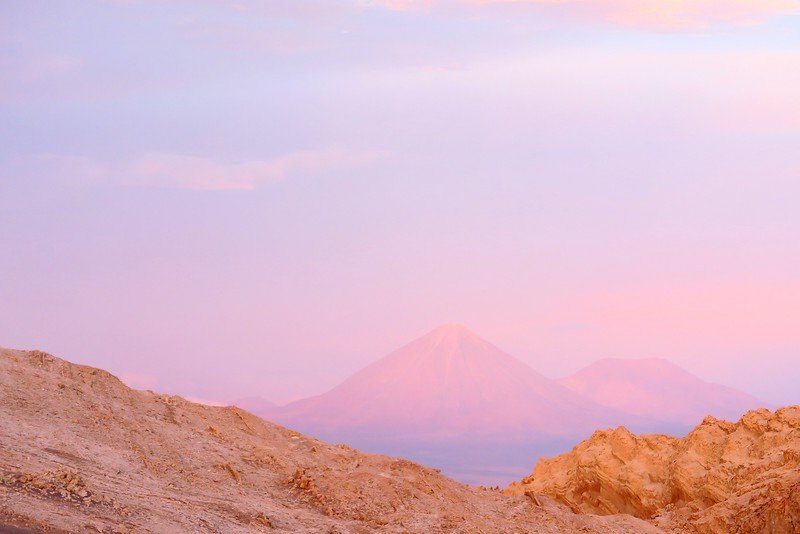
Our tour left San Pedro de Atacama at 4:00 p.m. and we had a very short drive ahead of us. The Valley of the Moon is located just 13 kilometres outside of town, so by the time we got comfortable in our seats, we were already there.
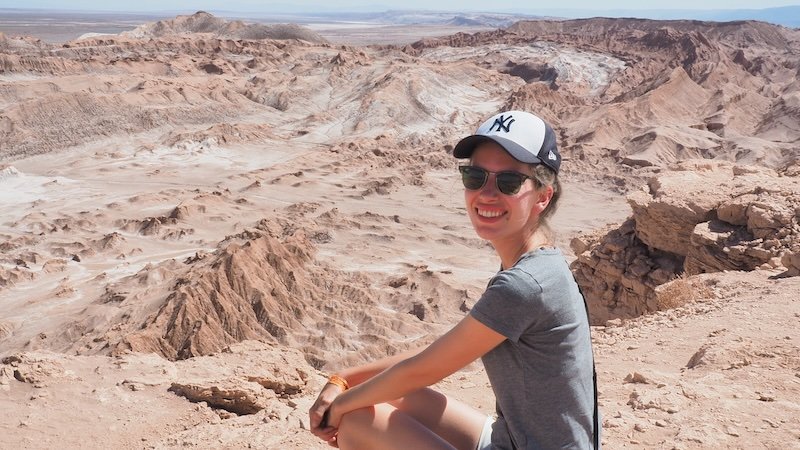
First Impressions of the Moon Valley: Why It’s Called “Moon Valley”
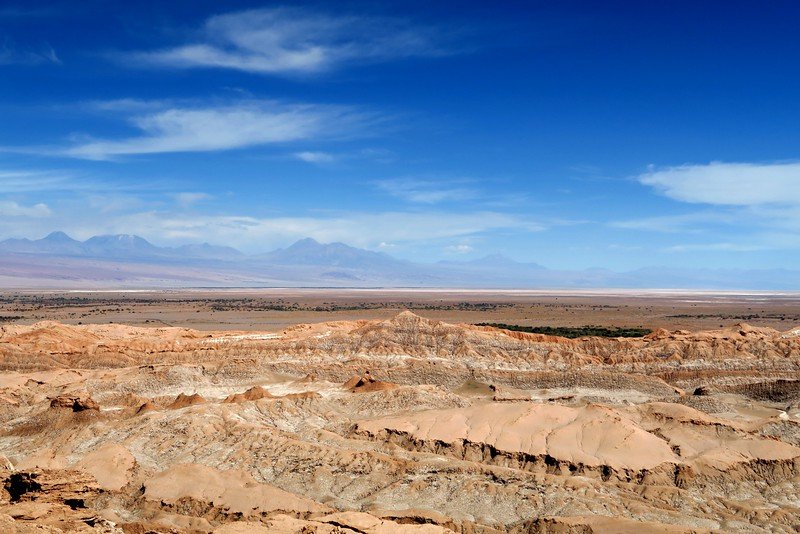
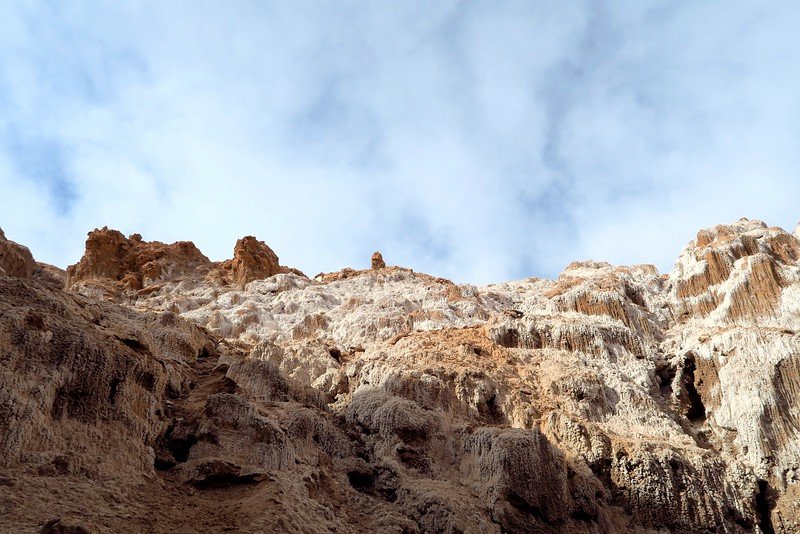
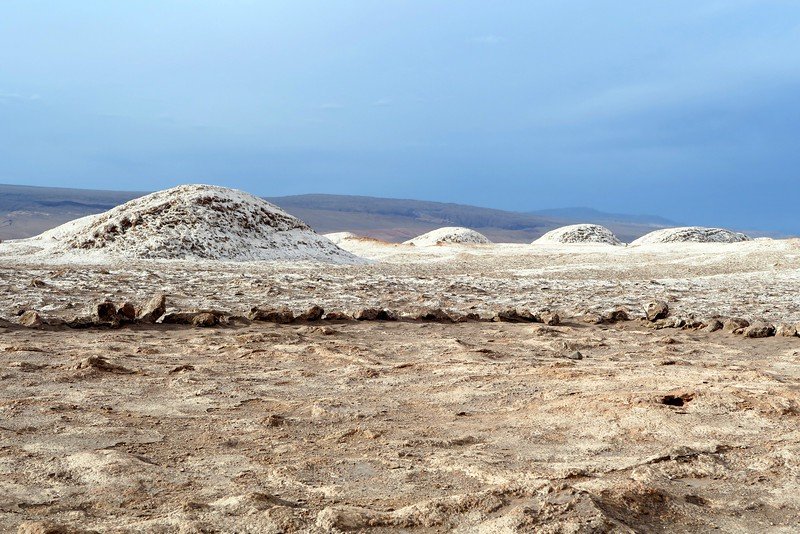
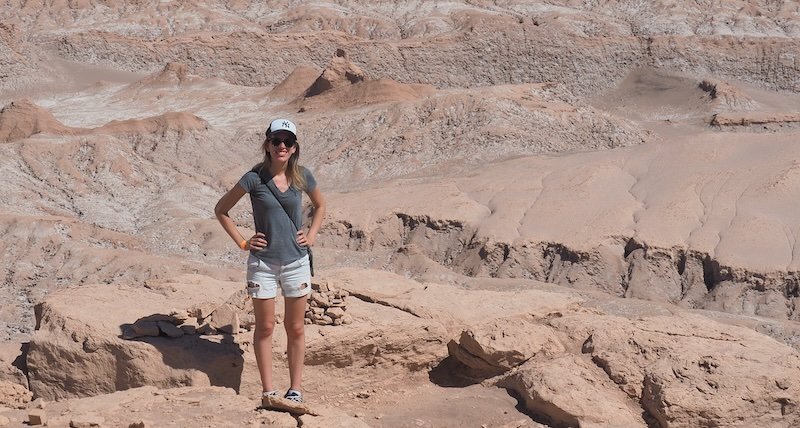
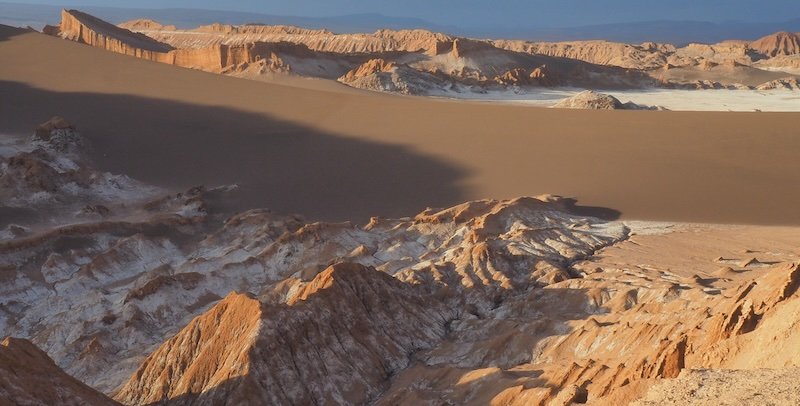
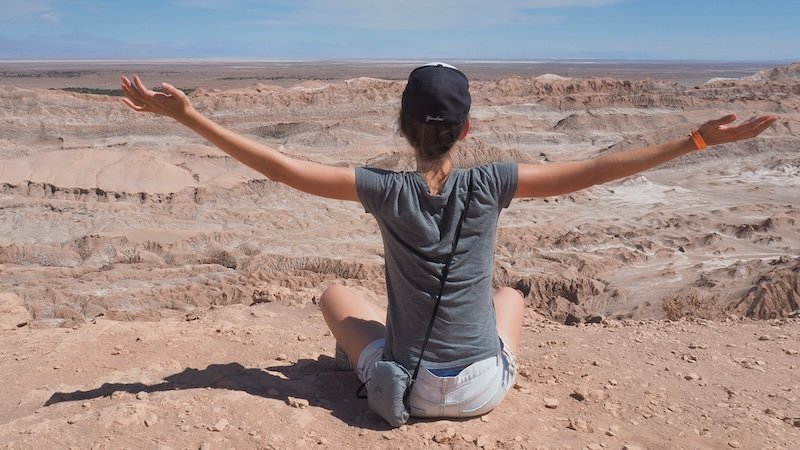
As soon as we climbed out of the truck it became pretty evident how the valley gets its name. In front of us lay an expanse of stone and sand formations carved by millennia of wind and water. Sprinkled like flour in a messy kitchen, there were white patches of salt which marked the remains of ancient lakes that have long since evaporated.
This is your iconic postcard shot of Atacama,” our guide said as we pulled up to the canyon’s ridge and looked out at the Cordillera de la Sal which stretched out before us.
Snap, snap, snap!
Exploring the Salt Caves: Entering the Cañon de Sal
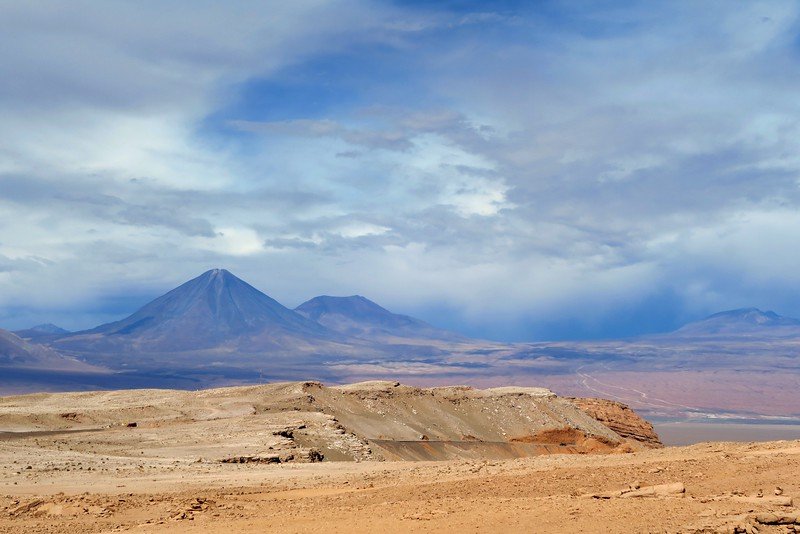
After going trigger-happy at the sight of the canyon, we continued on to the salt caves, also known as Cañon de Sal. When our guide asked us if we were claustrophobic back in town, I thought we might be crawling through some narrow spaces, but then he really downplayed it on the drive over and I completely forgot that the caves were even on the itinerary.
The tour of the salt caves started out easy enough. We entered a gorge that didn’t seem all that impressive at first glance, but it grew narrower and narrower the deeper we walked in, until it finally became a dark tunnel. Our guide had asked everyone on the truck to bring their cellphones along so we could look at the salt crystals, but once we were in the tunnel, it turned out that we really needed the cellphones as flashlights.
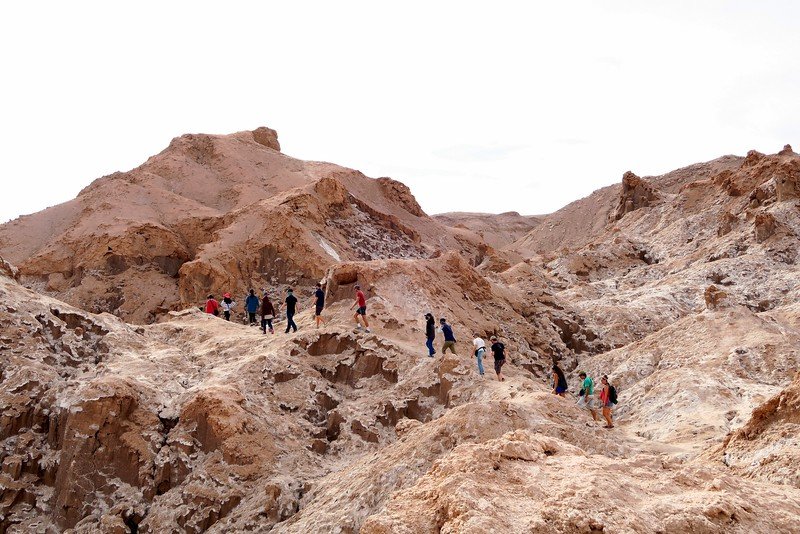
The thing about that tunnel is that once you’re in there, there is no turning back. The space is only wide enough for a group to snake through in a single file, so if you change your mind, you’re blocked in by those behind you. Not all of us had brought our cell phones out to the desert so there was a bit of stumbling, crawling, and blindly feeling our way around, but when we finally emerged we were met with a landscape that resembled Mars (or at least it looked a lot like the scenes from The Martian!)
Pretty dazzling, right?
Watching the Valley of the Moon Sunset: The Final Climb
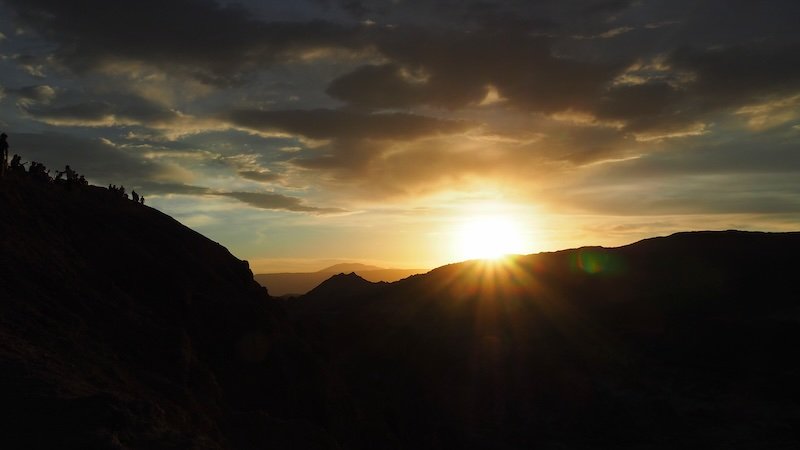
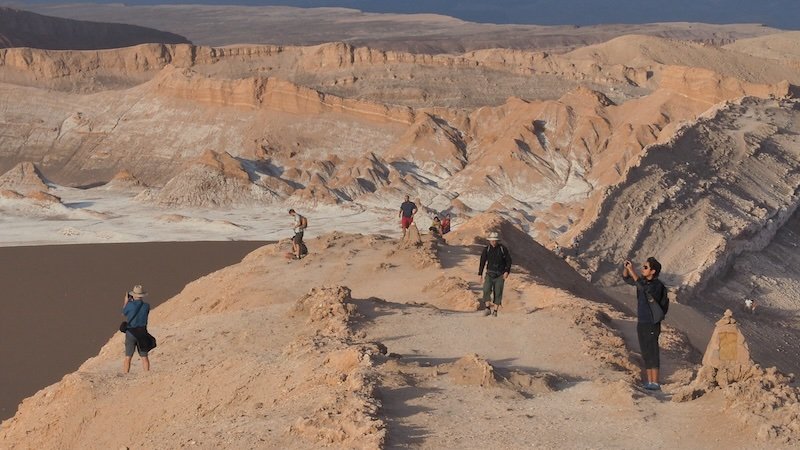
By then, we were getting close to sunset, so it was time to hop back in the truck. We took a short detour to visit some salt flats and from there we hiked up to a ridge to watch the sun do its magic.
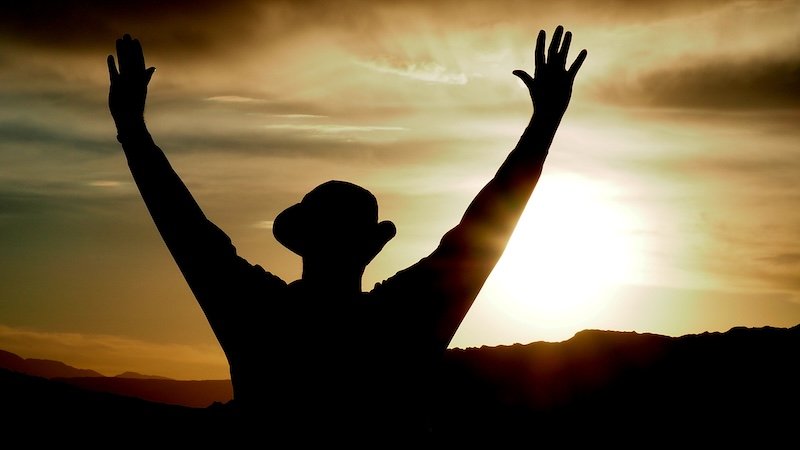
The wind was whipping our hair and blowing sand in our faces by the time we reached the top, but as far as sunsets go it was a pretty spectacular one.
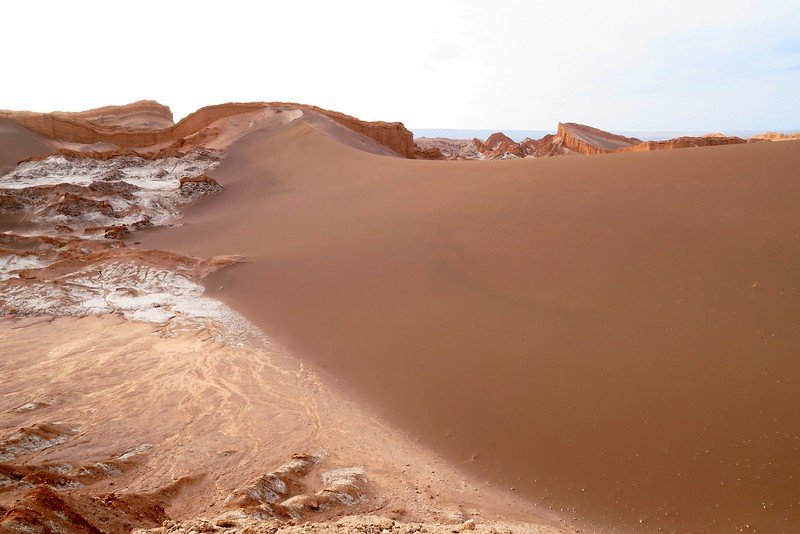
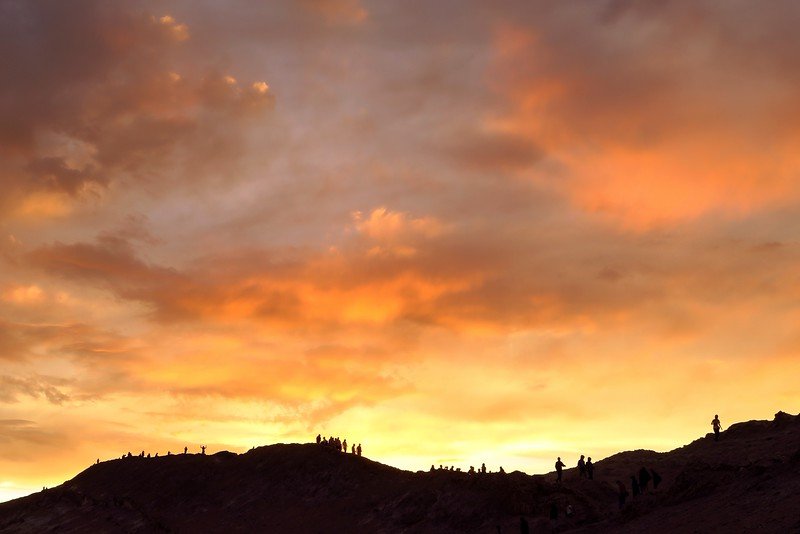
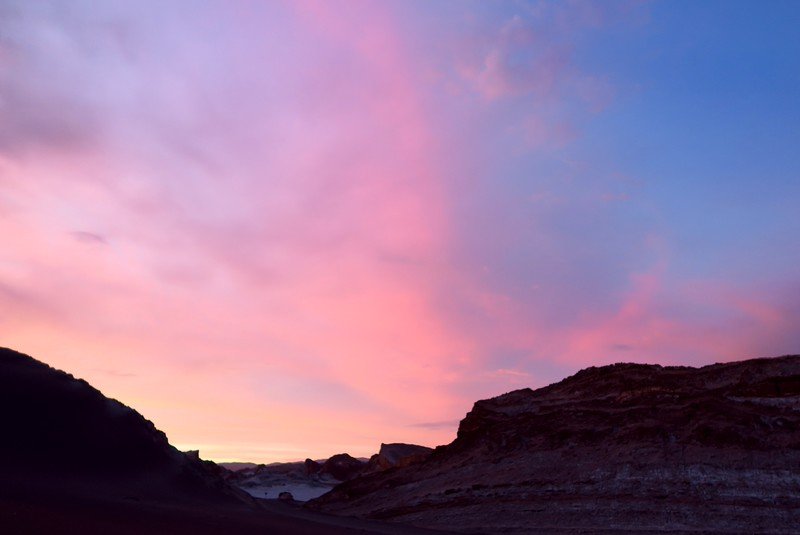
On the way back our guide let us climb on top of the truck and ride with the cool evening breeze blowing in our faces. We had to climb back down once we approached the town, but it was a pretty nice way to finish up our sunset tour of the Atacama Desert, Chile.
Tips for visiting the Valley of the Moon at sunset:
- Wear shorts. Afternoons in Atacama are really hot, and while it does cool down towards sunset, it’ll be nowhere near the freezing temperatures you experience in the desert in the early morning. I was perfectly fine in shorts and I just made sure to bring a sweater for later in the day.
- Bring lots of water. Our guides insisted that we each carry a 1L bottle of water (they even made people run to the convenience store before heading out on the tour), and I was glad we had them. It may seem like a hassle to lug a bit bottle around, but you’ll be glad once you’re out in the scorching sun.
- Shield yourself from the sun. Don’t forget to wear sunblock, a hat, and sunglasses.
- Choose your footwear wisely. Closed shoes are best for this activity. You’ll be crawling through caves, hiking up rubbly slopes, and trekking through a few sandy stretches.
Valley of the Moon Sunset Guide
The four tips above are the ones you really do need — everything else I wish I’d known before our guide handed us water bottles in the car park. Here’s the fuller picture for anyone planning this tour.
Inside Los Flamencos National Reserve: Fees, Hours & Access
Valley of the Moon isn’t a free-standing attraction — it’s a sector of the Reserva Nacional Los Flamencos, a natural sanctuary co-administered by local Atacameño communities alongside Chile’s national forestry service. That matters practically: entry is ticketed, paid mostly in cash, and the money goes toward trail upkeep and the communities who manage the site. Expect a per-adult fee in the low tens of thousands of Chilean pesos, with young children typically paying less or entering free; the exact figure has climbed over the past couple of years, so it’s worth confirming the day you go rather than trusting an old blog post. Access hours shift with the season too — gates generally open mid-morning and close in the late afternoon or early evening, with cyclists restricted to a narrower entry window than vehicles. You also can’t simply walk in; visitors need to arrive by bike, motorcycle, car, or tour vehicle, which is one more reason most people let a guide handle the logistics instead of showing up unannounced.
Why the Sunset Here Is So Spectacular
Valley of the Moon is already otherworldly, but late-day light turns the ridges and dunes into a living painting. As the sun sinks, ochres become ambers, whites turn to blushing pinks, and the Cordillera de la Sal glows like a kiln. Add wind-whipped sand for drama and a bonus afterglow that lingers long enough for photos without harsh shadows. It was genuinely one of the best sunsets I’ve watched anywhere.
How the Valley Actually Formed
The “carved by wind and water” explanation on the postcards undersells what’s actually beneath your boots. Millions of years ago, this entire basin sat under ancient salt lakes that repeatedly flooded and evaporated, leaving thick layers of halite and gypsum sandwiched between volcanic ash and river sediment. As the Andes kept rising — driven by one tectonic plate sliding beneath another along the Chilean coast — that layered rock folded and squeezed upward into the ridges you’re standing on, a process geologists have spent decades mapping across the Cordillera de la Sal. Only after the uplift did wind and the occasional flash flood get to work sculpting those folds into the ravines, amphitheaters, and needle-thin ridgelines you see today. It’s a strange thing to think about at sunset: the light hitting the rock in front of you was once an ocean-adjacent lakebed, bent sideways by the same forces that built the volcanoes on the horizon.
Guided Tour or DIY?
You can hire a tour in San Pedro de Atacama (most leave around 3–4 pm) — trips like the Half Day Tour to Valle de la Luna cover Las Tres Marías, the Duna Mayor, and a walk through the salt canyon in one outing, with several hundred traveler reviews behind them — or head out yourself by bike or rental car. Quick comparison:
| Option | Best For | What You Get | Things to Note |
|---|---|---|---|
| Small-group guided tour | Stress-free travellers, first-timers | Transport, park entry support, guide context, time-saving route | Fixed timeline; quick stops; mixed fitness levels |
| Private tour | Photographers, families, mobility needs | Flexible timing, custom stops, guide attention | Pricier; book ahead |
| Self-drive | Confident drivers, sunrise/sunset flexibility | Total freedom, set your own pace | Gravel/rippled roads; check entrance hours; carry cash and water |
| Bike and walks | Adventurous and budget-minded | Slow travel, scenic approach | Wind can be fierce; bring lights for the ride back |
What a Typical Sunset Tour Looks Like
Exact stops vary by operator, but a common flow looks like this:
- 15:30–16:00 — Hotel pickup in San Pedro, quick headcount and “you brought water, right?” talk.
- 16:15 — Park entry and first vista of the Cordillera de la Sal (cue 200 photos in 2 minutes).
- 16:45 — Cañón de Sal / salt caves walk: squeeze, duck, marvel, emerge into that “are we still on Earth?” amphitheatre.
- 17:30 — Micro-hike to a ridge for changing colours; snack stop if included.
- 18:15–19:30 — Golden hour to sunset to afterglow. Wind picks up — hold onto your hat and your jaw.
- Return — Post-sunset drive, first stars beginning to appear; arrive back in town early evening.
What to Pack
Desert Necessities
- 1–1.5 L water per person (minimum)
- Sunscreen (high SPF) and lip balm with SPF
- Hat with a brim (chin strap if you have one — wind!)
- Sunglasses (polarised work well here)
- Light sweater or windbreaker for the post-sunset chill
- Closed shoes with grip (trail runners or light hikers)
Nice-to-Haves
- Neck gaiter or scarf to shield from blowing sand
- Headlamp or phone light for the caves and afterglow
- Snacks (salty beats sweet at altitude)
- Small first-aid kit (plasters, pain relief)
- Cash for park entry or extras if you’re going DIY
Photo Kit
- One wide-to-mid lens (24–70mm covers most situations)
- Microfibre cloth (wind and dust make a smudgy lens very quickly)
- Mini tripod for blue-hour sharpness
- Extra battery (cooler temperatures drain faster than expected)
- Phone backup with RAW or HDR enabled
What to Wear by Season
- Summer (Dec–Feb): Hot afternoons — a breathable tee and shorts work. Add a long sleeve for the breeze on the ridge.
- Shoulder seasons (Mar–May and Sep–Nov): Layers are essential. Quick-dry pants, tee, light fleece, wind layer.
- Winter (Jun–Aug): Sunny but the wind bites. Base layer, mid layer, shell; a beanie for after the sun drops.
Safety and Etiquette
- Stay on marked paths. Dunes and salt crusts are delicate — one footprint can last months out here.
- Watch the wind. Gusts can be sudden; keep cameras leashed and hats secured.
- No drones. This is a protected area and rangers enforce the rule.
- Carry in, carry out. Even “biodegradable” orange peels don’t belong here.
- Caves: If you get anxious in tight spaces, tell your guide early — there’s usually an alternate path to rejoin the group.
Photography Tips
Work the Light
- Golden hour: Side-light those ridges to bring out the texture; backlight for glowing edges.
- Blue hour: Tripod plus low ISO gives crisp, cinematic layers; the salt turns silvery and beautiful.
Compose for Drama
- Leading lines: Use dune spines and ridgelines to pull the eye towards the volcanoes on the horizon.
- Scale: Include a tiny human on a distant ridge (on-trail only) to show the vastness.
- Foreground interest: Salt crystals, cracked clay, a line of footprints in the sand.
Camera Settings to Start With
- Landscape: ISO 100–200, f/8–f/11, shutter as needed (raise ISO if wind is shaking things).
- Handheld in wind: Aim for 1/250s or faster; brace against rocks and exhale as you click.
- Phone shooters: Turn on grid, tap to lock focus and exposure, use HDR, and prop your phone on a rock for sharp blue-hour frames.
The Main Viewpoint Types
- Drive-up ridges: Sweeping views with minimal walking — maximum wow, accessible for everyone.
- Micro-hikes: 10–30 minutes on uneven ground for unique angles and fewer people in frame.
- Salt canyon walls: Narrow corridors where light bounces into peachy-pink walls — keep that phone light handy.
- Sand dune S-curves: Check for any closures on arrival; when open, stick to existing tracks to protect the crest.
Chile’s Real-Life Mars: Why NASA Studies This Desert
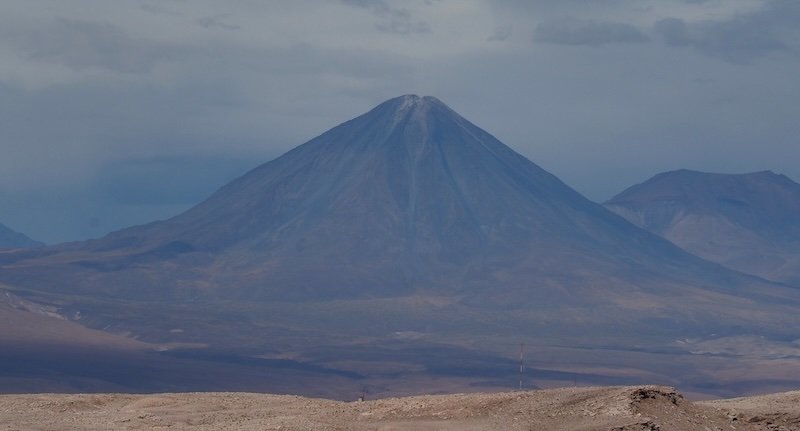
Long before Valley of the Moon earned its nickname from tourists, scientists had already noticed how closely this desert mimics conditions on a planet nobody’s actually stood on. NASA’s Ames Research Center has sent rover prototypes and drilling equipment into the wider Atacama as part of a program aimed at refining the tools that might one day search for life on Mars, using the desert’s extreme dryness and harsh UV exposure as a stand-in for Martian soil chemistry. Researchers study the same hyper-arid, mineral-heavy ground you’re walking past on the ridge trail, looking at how microbes manage to survive in conditions that kill most life on Earth. None of that testing happens inside the tourist-accessible parts of the valley, but it’s part of why the Atacama keeps showing up in space-agency press releases — this is one of the closest things to alien terrain that’s actually reachable by minivan.
Sunset vs. Sunrise
| Time | Pros | Cons | Vibe |
|---|---|---|---|
| Sunset | Warm colours, long afterglow, easier logistics | Windier, more visitors, park exits right after | Buzzing and social |
| Sunrise | Calmer air, fewer people, soft pastels | Colder, early wake-up, limited access pre-opening | Quiet and contemplative |
If you’re a photographer, sunset for colour and sunrise for serenity is the ideal combination if you have two mornings here.
When to Go: Seasons and Moon Phases
- Year-round: The dry desert means a sunset visit is on the table every month.
- Wind: Afternoons can be breezy; spring tends to be gustier — bring a shell.
- Winter nights: Crisp and cold once the sun drops; bundle up.
- Moon phases: For star photos after sunset, aim for a new moon. For silver-lit landscapes, a waxing or waning gibbous can look spectacular.
Budgeting and Booking
- Most tours include: Transport, guide, park logistics, sometimes a snack.
- Usually not included: Your personal water, tips, extra layers — bring your own everything.
- Book early in high season (December to February and July), especially for small groups or private guides.
- Questions to ask your operator before booking:
- How many stops and how long at each?
- Does the tour include the salt caves, and can I skip them if I’m claustrophobic?
- What’s the maximum group size?
- Do you supply lights or snacks, or should I bring my own?
Good Day Combinations from San Pedro
- Geysers and Moon Valley (our day): the El Tatio Geysers Tour from San Pedro de Atacama at sunrise → nap and brunch → Valley of the Moon at golden hour. A full day and completely worth it.
- Lagoons and sunset: Laguna Cejar float or Baltinache in the morning → lazy lunch → Moon Valley glow.
- Culture and craters: Quitor Pukará and Tulor ruins plus a town wander → Moon Valley in the late afternoon.
Leave No Trace in the Atacama
- Stay on durable surfaces.
- Pack out all trash, including tiny wrappers.
- Respect wildlife and other visitors’ space.
- Take only photos; leave the crystals and stones exactly where they are.
- Honour any closures — they protect what you came to see.
Where to Stay in San Pedro de Atacama
Tours depart from and return to San Pedro, so your hotel is genuinely your base of operations for everything in the Atacama. Here’s a spread across budgets and traveler types:
- Backpackers San Pedro Hostel — Split across several apartment blocks with fully equipped shared kitchens and a courtyard campfire most nights. Suits budget travelers and solo backpackers who want to swap tour tips with other guests before booking anything.
- Pascual Andino — Just one block from Caracoles, the main street, with only ten rooms, a buffet breakfast, and free bikes for guests. Suits mid-range travelers who want to be close to the action; children of all ages are welcome.
- Terrantai Lodge — In the historic centre of San Pedro, built from local stone with a small pool and nightly wine tasting in the courtyard. Suits couples and quiet-retreat seekers — the property doesn’t take children under 15, which keeps things calm.
- Hotel Cumbres San Pedro de Atacama — Three pools, two hot tubs, and rooms with private balconies and outdoor showers, about a 15-minute walk from the church. Suits families — kids of all ages are welcome and the buffet breakfast makes early tour departures painless.
- Nayara Alto Atacama — An adobe-built retreat roughly 3 km outside town with its own stargazing platform, a spa built around desert materials, and a llama corral. Suits honeymooners and travelers wanting a genuine splurge.
Valley of the Moon FAQ
How far is Valley of the Moon from San Pedro de Atacama?
Roughly 13 kilometres — about 20–30 minutes by vehicle depending on stops. Minimal transit time means more time on the ridge.
Can I visit without a guide?
Yes. Self-drive is common. Check entrance hours, bring cash and water, and plan your exit to beat closing time. Cycling is possible but wind and darkness after sunset make a return light essential.
Are the salt caves mandatory?
No. If tight spaces aren’t for you, tell your guide — there’s usually an alternate path to rejoin the group for the main views.
Will I feel altitude sickness?
San Pedro sits at around 2,400 m (7,874 ft). Most visitors feel fine, but pace yourself, hydrate, and avoid big exertion if you just arrived. Save harder activities for day two.
What’s the best footwear?
Closed-toe shoes with decent grip — trail runners or light hikers. Sandals and salt caves are a combination that ends in regret.
Can I fly a drone?
No. Drones are prohibited to protect wildlife, visitors and fragile landscapes. Rangers enforce this rule.
How windy does it get?
Afternoon winds are common — sometimes a gentle breeze, sometimes quite persuasive. Bring a wind layer, keep gear strapped, and shield your camera lens when swapping in dusty conditions.
What if the sky is cloudy?
Often even better for colour and texture — clouds catch fire at sunset. Only heavy dust storms or the rare rain would genuinely dampen a visit.
Is there drinking water inside the park?
No. Bring your own — a minimum of 1–1.5 L per person. The desert is dryer than it feels and you’ll be glad you brought it.
What about restrooms?
Expect basic facilities near main entrances or parking areas. There are no mid-trail options, so go when you can.
Can families with children do this tour?
Yes — stick to shorter walks, bring sun protection and snacks, and keep young explorers on designated paths. Cliff edges can be closer than they look.
Is stargazing possible right after sunset?
You’ll catch a few bright stars after civil twilight, but the full Atacama sky show kicks in later. The Roofless Experience stargazing tour, run from a site about 7 km outside town, combines telescope viewing with hot chocolate and blankets and has built up a large base of traveler reviews — worth adding on for a night back in San Pedro.
Where’s the best place you’ve watched the sunset?
Lugging around water is something I have become used to in travelling haha! This place looks so beautiful.
This is awesome! What tour did you go with?
Good question! I forgot to mention that; I went with “Grado 10” and they are the same company I did my sunrise tour of the geysers with.
Oh my goodness this sounds like an amazing experience! Bit creepy to be crawling through such narrow places but I’m sure you’ll remember the experience for ever. Great post, thank you so much for the inspiration!
Love,
Yara
Love this, can’t wait to visit this place. So beautiful and whimsical looking. Can I make a small suggestion? You should add “pinnable” images to your blog posts. I don’t mean add the “pin it” button, but you should format your photos so that they appeal to the Pinterest interface (ie. vertical). I really wanted to pin this so that I could save it to one of my boards (which would get your post more exposure) but since you didn’t have any images formatted for Pinterest I didn’t pin any of them. But I’m sure there are others out there who would also pin your images more if they were formatted (or at least one at the very end of the post) for Pinterest and just imagine how much more traffic that would drive to your blog! Just a tip from one blogger to another! Beautiful photography though! Love that top photo, I just wish it was vertical!
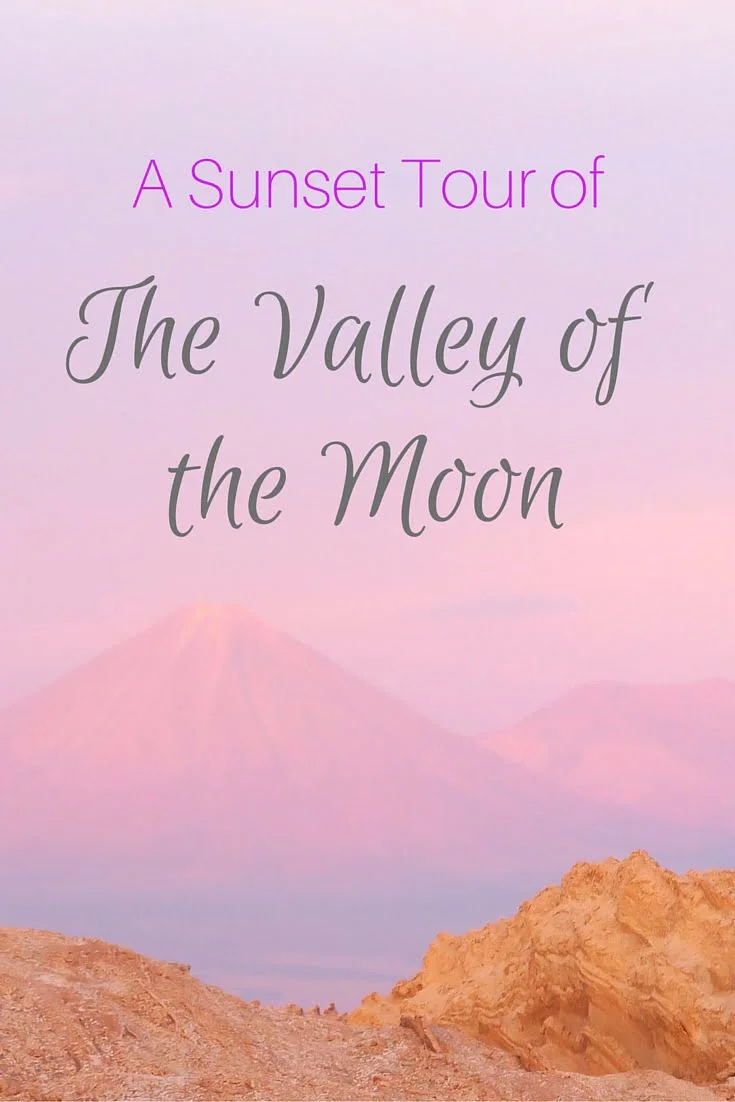
Thanks for the suggestion, Kayti. I’ve slowly started adding pinnable images to my posts (one of my many ongoing projects!), but it’s still a work in progress. I’ve now added a pinnable one to this post too. Thanks for reading along. 🙂
That looks amazing, Audrey. I’ve been to Chile but ran out of time. After seeing your photos and reading your post I wish I had made the time to visit the Valley of the Moon! I really enjoyed cruising around Cape Horn though
http://travel2next.com/stella-australis-cruise-ushuaia-to-punta-arenas-chile/
That’s so cool that you made it to Cape Horn! I feel like I also didn’t have enough time in Chile. I got to see Arica, Atacama, Santiago, Valparaiso and Easter Island, but the Lakes District, Patagonia and beyond got put on hold until next time. Your photos of the place look amazing!
Holy cow the colors, the vastness of the landscape, and the amazing trek make this place so surreal. This is actually my first time reading about this place and it looks absolutely awesome. I just love that vast landscape 🙂
I didn’t know such a place exists!! It’s stunning, and your photos really make me dream. Thanks for sharing all you traveling tips – it inspires me to never stop exploring!
Oh wow, gorgeous gorgeous photos!! To answer your question, I think we have seen the best as in most vibrant sunsets in Thailand! We were lucky that the sky performed there for us every single night!!