
I was really looking forward to visiting the El Tatio Geysers in the Atacama Desert!
Despite having lived and travelled in South America, Chile was a country that I had only ever flown through, and then a few years ago Sam showed me some pictures from his trip to San Pedro de Atacama and I was sold – I wanted to visit this arid landscape dotted with volcanoes and lagoons. It looked out of this world!
When we finally reached the town of San Pedro on this trip, we were overwhelmed with the number of excursions available, but we ended up choosing the sunrise tour of El Tatio geysers complete with a pancake breakfast! It turned out to be a great experience and now we’re going to share it with you.
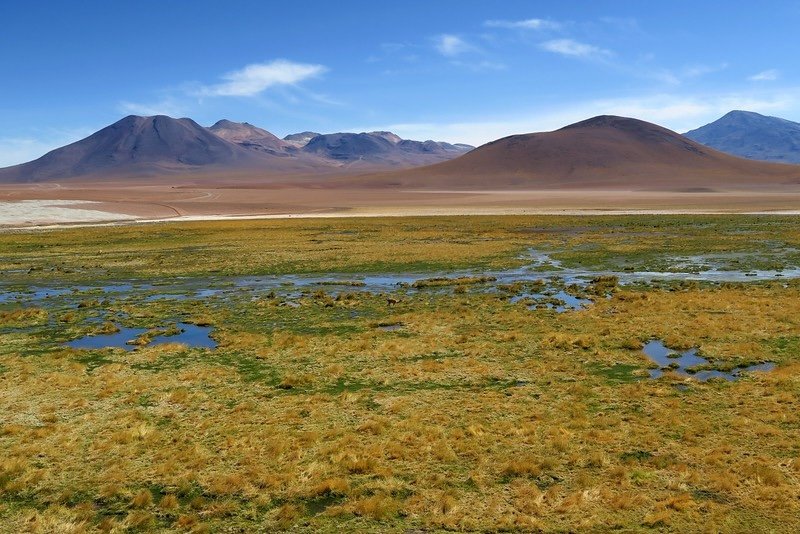
Visiting El Tatio Geysers
El Tatio is a geyser field that sits at 4,320 meters above sea level and it has over 80 geysers scattered around the area. That makes El Tatio the highest geyser field in the entire world, as well as the third largest based on the number of active geysers.
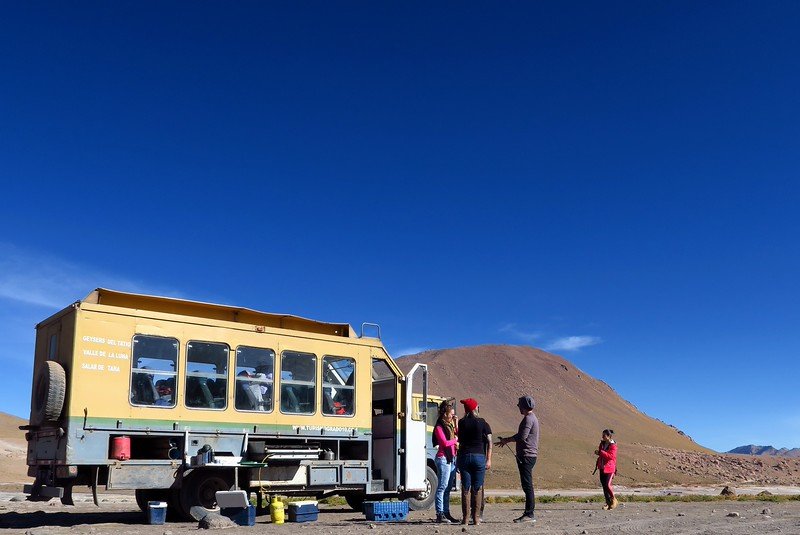
Our morning started bright and early (a little too early if you ask me), with a 5:00 a.m pick-up. I couldn’t tell you much about the drive out to the geyser field since I was napping in the truck, but then again it was pitch black out so I doubt I missed much.
What I can tell you is that on the drive over we had individual fleece blankets to keep warm, and I was more than happy to be able to extend my sleep time by a few more hours. By the time we pulled into the park, the sun was just starting to peek over the mountains and we had a pretty cool scene before us.
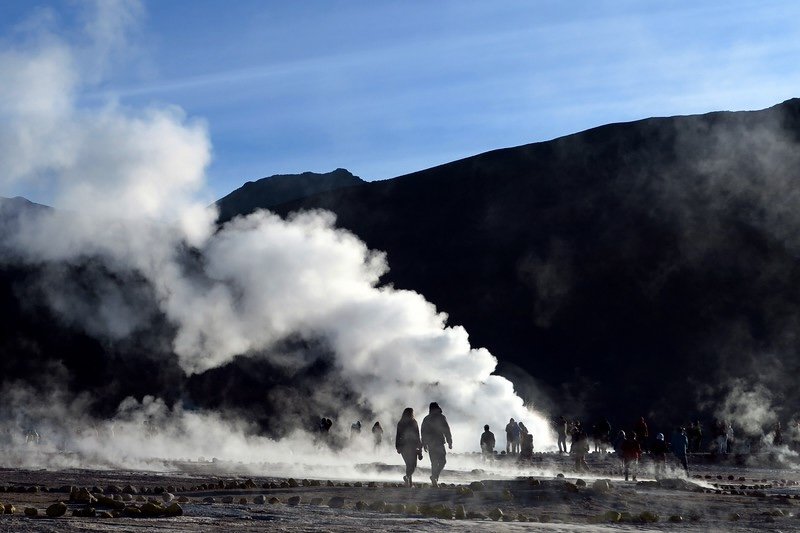
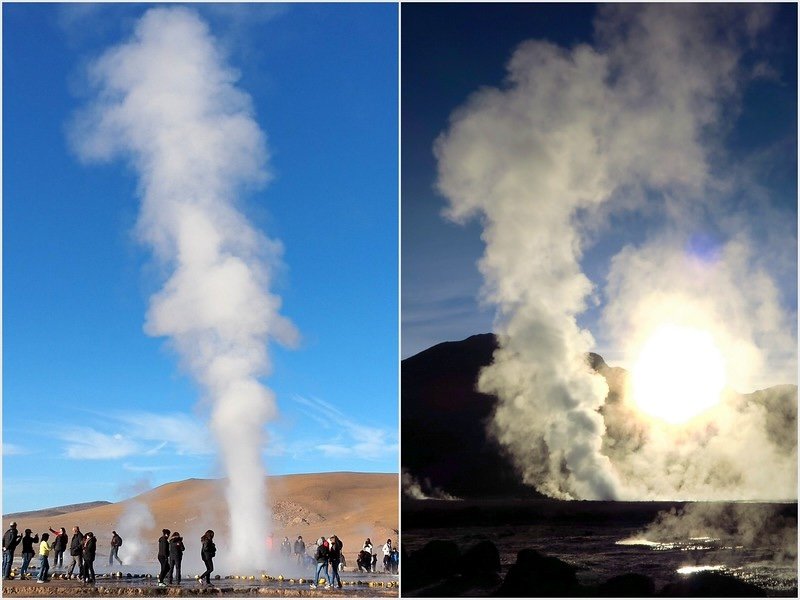
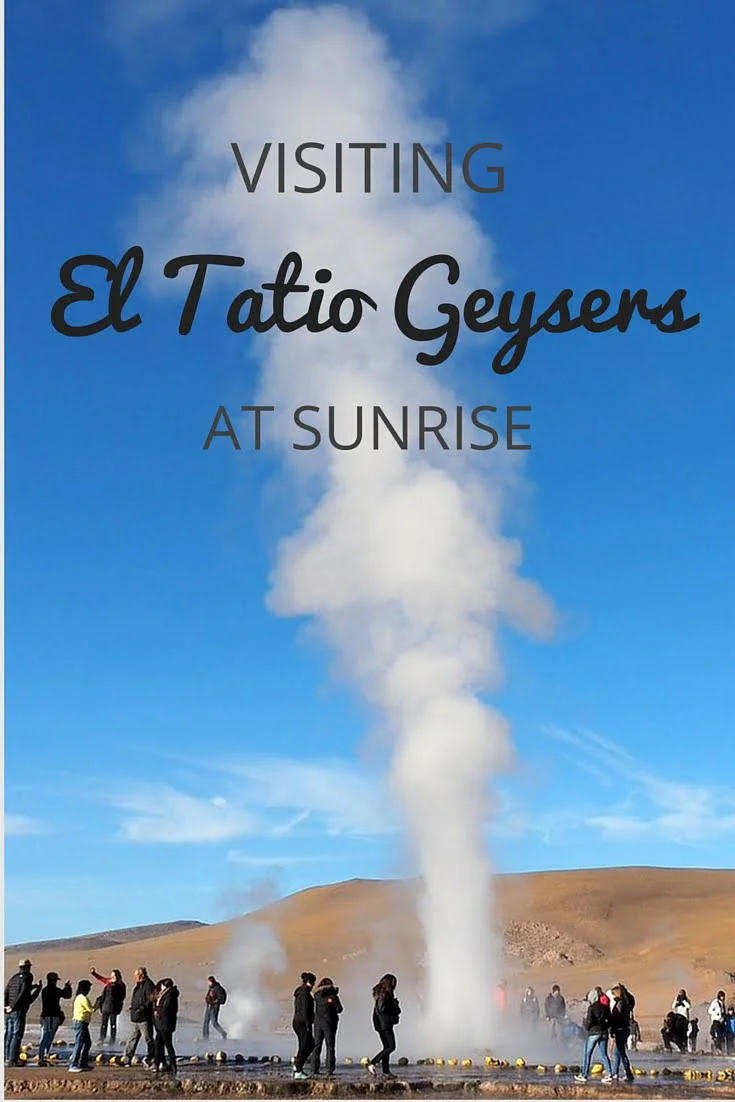
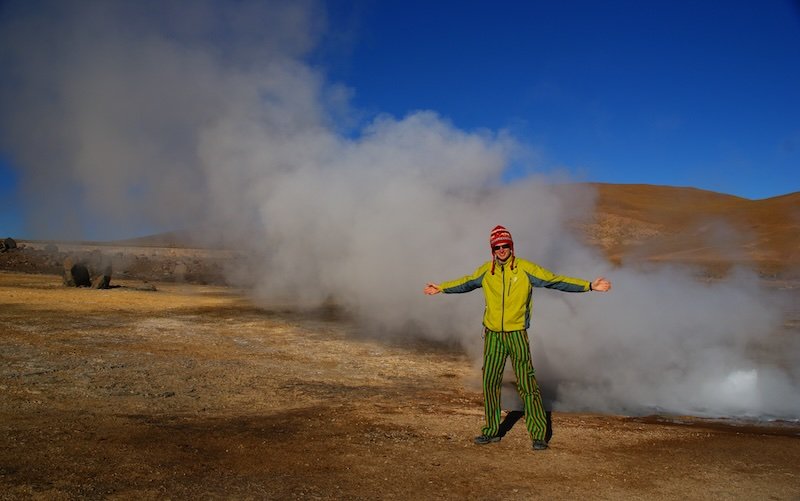
So why were we up so early? Well, the reason for the early visit to El Tatio has to do with temperature. If you go there in the early morning just shortly after sunrise, the temperature usually hovers around the freezing mark, while the heat rising from some of the fumaroles can reach 85° Celsius. That’s when you get really cool towers of steam rising up into the sky, creating a scene that looks a little bit like an inferno.
We had some time to walk around the geysers and soak in this other worldly scene. It was cool seeing giant bursts of water shooting into the air, bubbles gurgling just below the surface of some of the lagoons, and little clouds of steam rising from open pockets in the earth – the latter was a nice way to warm up our frozen fingers.
A dip in the Hot Springs
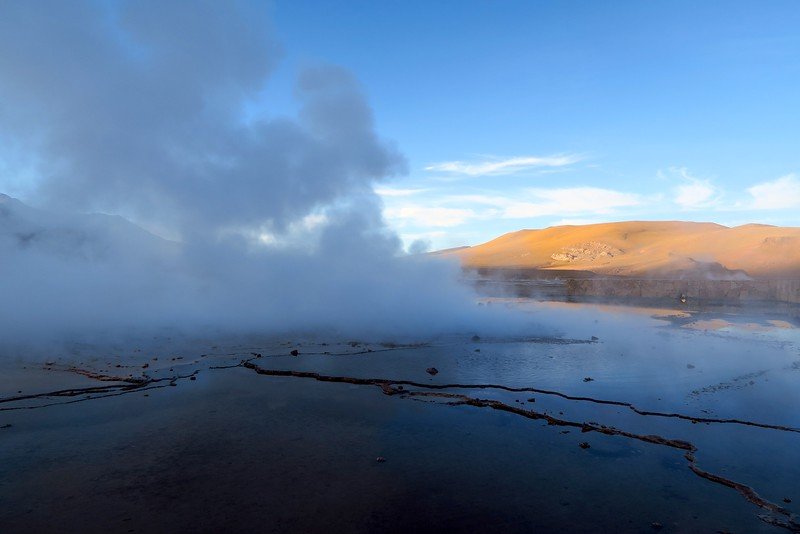
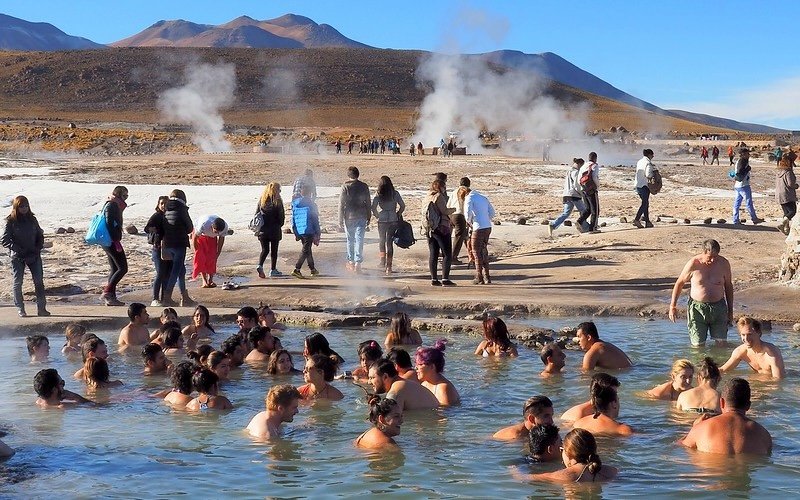
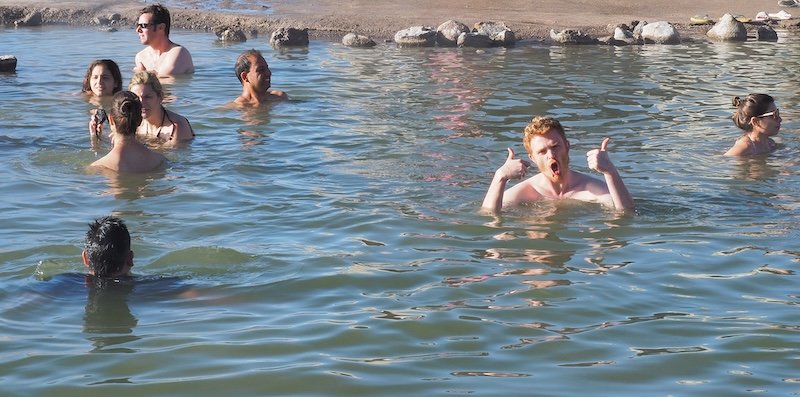
After walking around the geyser field and having fun taking some Dantesque photos, we headed over to the nearby hot springs, where we had the chance to enjoy a hot soak while breakfast was made.
I’d like to say I hopped right in, but I was still wrapped up in my blanket thawing from the early morning walk, and there was no way I was changing into a bikini and braving the cold for those few brief seconds while I tip-toed from the change rooms to the hot springs.
So I sat it out and watched Sam go in instead. Can you spot him in the picture? It’s like Where’s Waldo.
Breakfast of champions
And now for one of the highlights: breakfast!
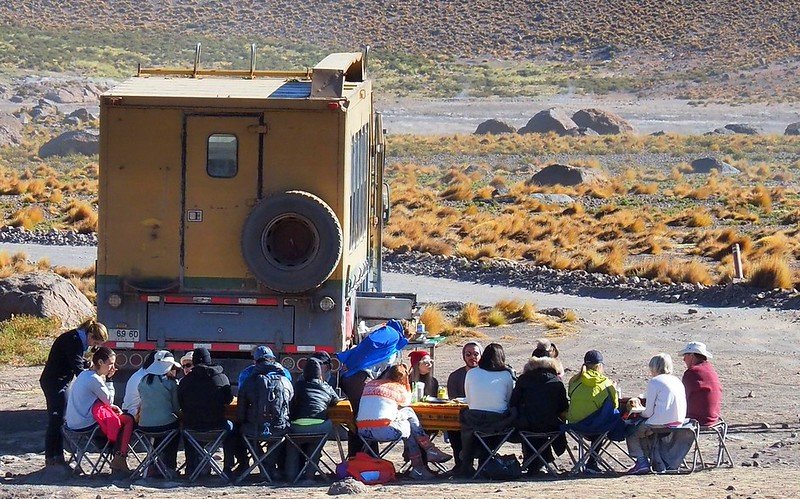
I have to say, our breakfast with Grado 10 was the best of any other tour out there. While other groups had little coffee stations with a few rolls of bread and cookies, our driver-turned-chef and guide-turned-gourmand pulled out all the stops.
Between the two of them they managed to cook up pancakes and grilled ham and cheese sandwiches in the middle of the altiplano, and they didn’t just serve one round, the food kept coming. They also had pound cake, giant bowls of dulce de leche to spread out on just about everything on the table, and lots of juice, coffee and tea. I was a very happy girl! So happy in fact that I forgot to photograph our delicious breakfast because I was too busy eating.
Soaking in the views
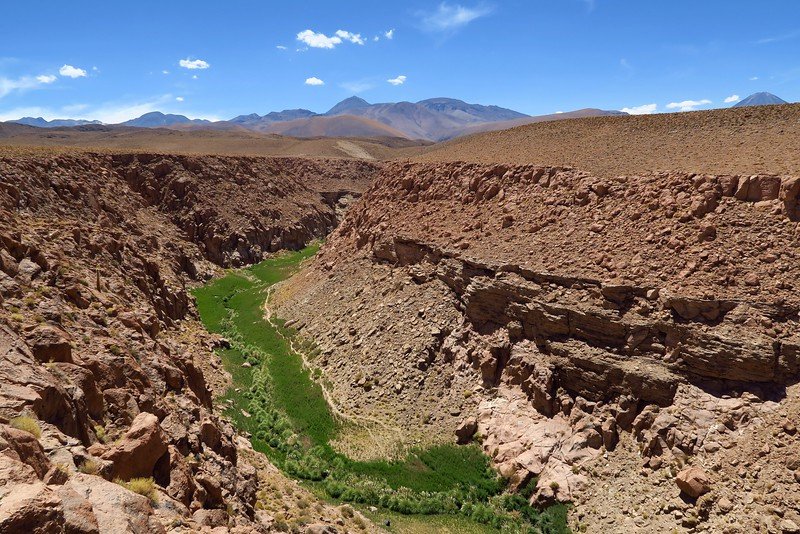
After breakfast we packed up the truck and made a few scenic stops along the way. One of them was this green canyon. There’s a trickle of a river that runs through this dry gorge and apparently that’s enough for this little oasis to exist. Once we drove further down the valley and got closer to the base of the canyon we were able to see just how lush it is and how much wildlife it holds.
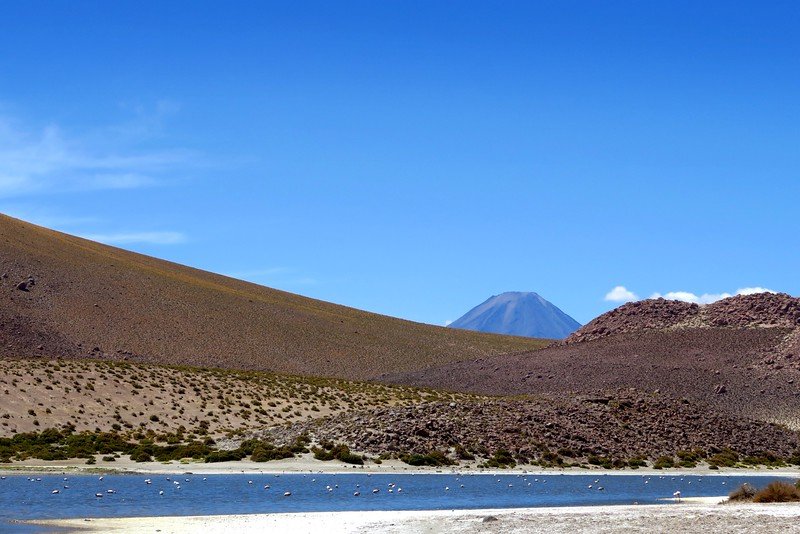
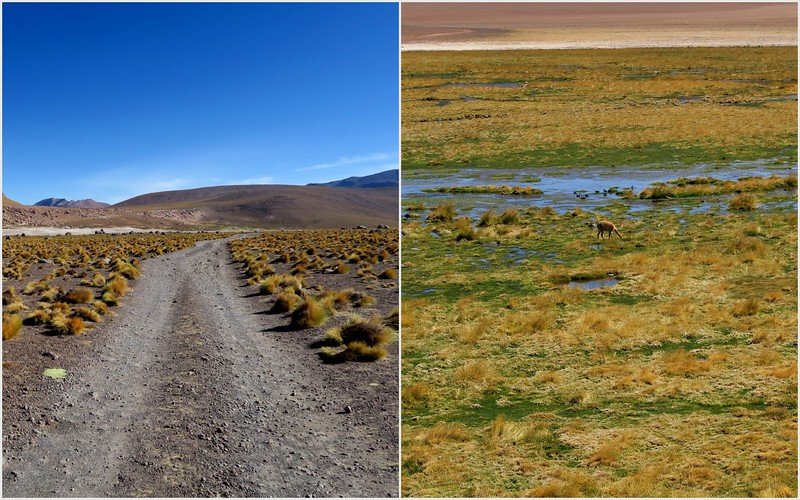
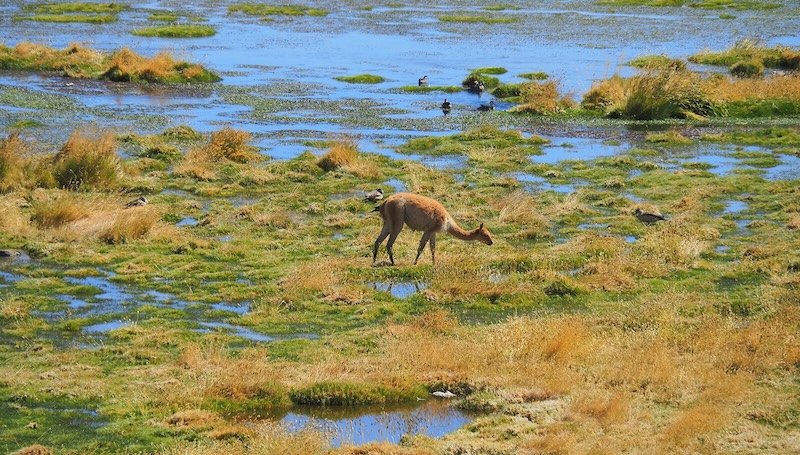
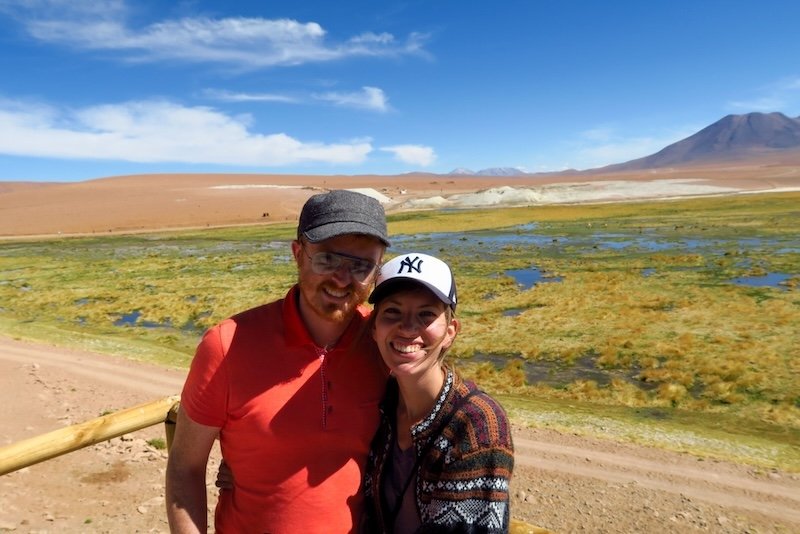
From there we made another stop at Bado Putano, which is a wetland where lots of guanaco roam, and we also had the Putana Volcano towering in the distance.
A visit to Machuca
Our last stop of the day was the village of Machuca. The village is divided into two parts: the ruins which are over 1000 years old and the newer area which still adheres to traditional construction.
We had some free time to explore, so I walked up to the church for some nice panoramic views of the town while others snacked on llama skewers (pretty tasty, but I was still full from breakfast).
The village is quite small, has one street, and holds no more than 20 buildings, so you’ll easily cover it with a 30 minute visit.
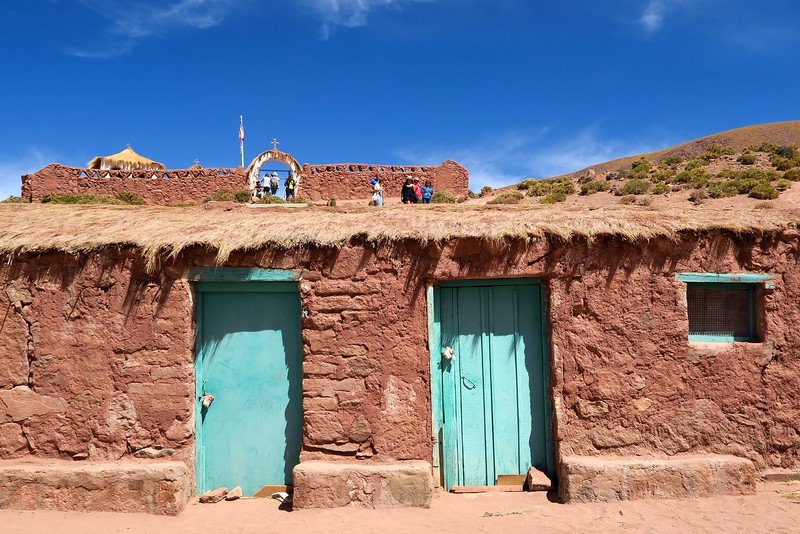
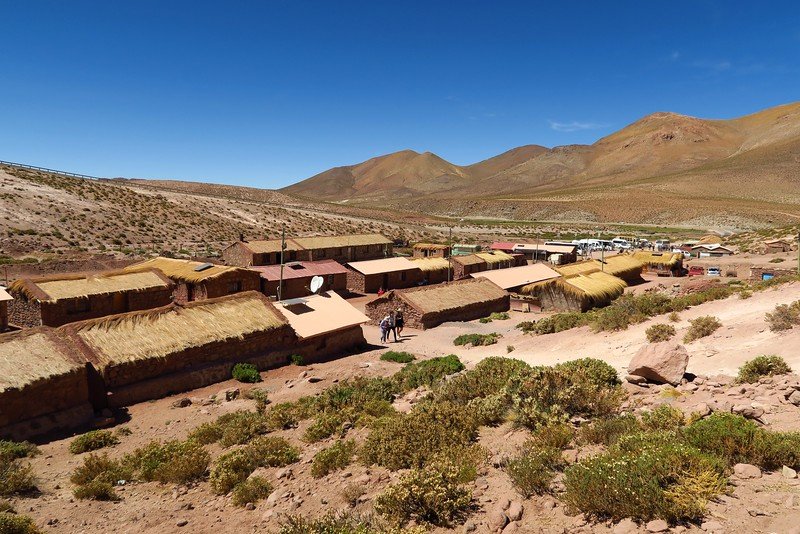
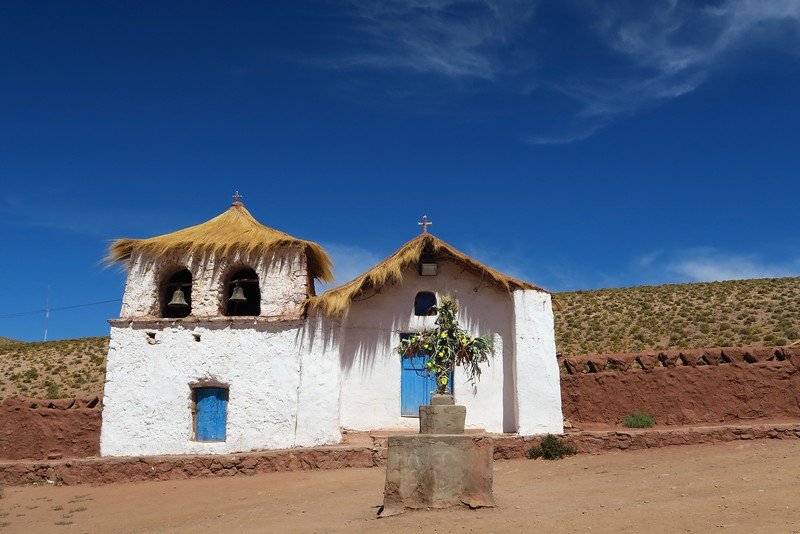
And then it was time to drive back to San Pedro. By the time we hopped back in the truck it was past noon and everyone had already peeled off all the warm layers they had been sporting that morning. It’s fascinating how quickly the temperatures in the desert can change! Now here’s a little video Sam and I made on the trip:
Tips for visiting El Tatio Geysers at sunrise:
- Wear your warmest layers. Mornings in the town of San Pedro aren’t that cold during the summer months, but don’t let that fool you; El Tatio will be freezing. I wore leggings, an alpaca sweater, a windbreaker, and I borrowed a fleece blanket from the truck, and I was still cold.
- Pack a swimsuit and a towel. If you’d like to go for a dip in the hot springs (we got about 45 minutes there), definitely pack a suit and a towel. There are dressing rooms on site, but don’t expect towel rentals.
- Bring lots of water. It’s easy to underestimate just how much water you’ll be guzzling in the desert. Our tour guide recommended bringing at least a 1 Litre bottle, and you’ll easily get through that in half a day.
El Tatio Sunrise: Planning Guide, Packing and Practical Notes
The three tips above cover the essentials. Here’s the fuller picture — from tour options and timing to altitude management, hot springs logistics, photography and what else to pair El Tatio with during a longer Atacama stay.
Why Sunrise Is the Sweet Spot
El Tatio sits at 4,320 m (14,173 ft). At dawn, air temperatures hover near freezing while the vents and fumaroles pulse with heat — that contrast is what produces the tallest, thickest steam plumes. Go later in the morning and the geysers are still active, but as temperatures rise the steam columns shrink and the drama fades. The sunrise window is genuinely the best version of this place.
- Best light: From first glow until around 45 minutes after sunrise.
- Biggest plumes: Right at sunrise, while the air is coldest.
- After the sun clears the ridges: Easier shooting conditions and warmer fingers for the second hour.
Tour, Private or Self-Drive: How to Visit
| Option | Best For | What’s Included | Pros | Cons |
|---|---|---|---|---|
| Small-Group Tour | First-timers, social travellers | Transport, guide, basic breakfast (some operators go considerably further — Grado 10, which we used, produced pancakes and grilled sandwiches in the middle of the altiplano) | Stress-free; guides know the safe paths and best angles | Fixed timelines; more people at each stop |
| Private Tour | Photographers, families, slow travellers | Everything above plus scheduling flexibility | Customise pace, linger longer at viewpoints | Higher price point; book ahead |
| Self-Drive | Confident drivers comfortable with altitude and unpaved roads | Vehicle rental plus your own food and gear | Full control over timing and stops | Pre-dawn driving in cold; verify road and park hours; watch fuel levels |
A Typical Sunrise Morning
- 04:30–05:00 — Pickup in San Pedro de Atacama.
- 05:00–06:00 — Drive to the field. Fleece blanket time.
- ~06:15 — Park entry and brief safety talk.
- 06:20–07:15 — Sunrise walk among the fumaroles and geysers.
- 07:15–08:00 — Hot spring dip (optional) and breakfast.
- 08:15–10:30 — Scenic stops on the return: wetlands, canyon, wildlife.
- 11:00–12:00 — Back in San Pedro; layers off, appetite restored.
What to Pack
Cold-Dawn Essentials
- Insulated jacket (down or synthetic) plus a windproof shell
- Thermal base layer — top and bottoms
- Warm hat and buff or neck gaiter
- Gloves — liner gloves are more useful than heavy ski gloves for camera handling
- Wool socks and closed shoes with grip
Desert and Hot Springs Kit
- Swimsuit and compact microfibre towel — no towel rentals on site
- Flip-flops for the pool edge (the ground is cold)
- 1–1.5 L water per person, minimum
- High-SPF sunscreen and lip balm with SPF — yes, even at dawn once the sun appears
- Sunglasses
Useful Extras
- Headlamp — useful for pre-dawn walking and the change rooms
- Salty snacks — particularly useful at altitude
- Hand warmers — pocket-sized and worth every cent
- Small first-aid kit with basic medications and blister care
- Cash for tips and park odds and ends
Photography (Keep It Light)
- One versatile lens — a 24–70mm range covers most situations
- Spare battery — cold drains charge faster than expected
- Microfibre cloth for mineral-laden steam on glass
- Mini tripod for steam silhouettes in low light
What to Wear by Season
- Summer (Dec–Feb): Cold dawn that warms quickly. Thermals plus fleece plus shell; lightweight pants you can peel off on the return drive.
- Shoulder (Mar–May and Sep–Nov): Similar to summer but slightly cooler mornings. Keep the wind layer handy throughout the visit.
- Winter (Jun–Aug): Coldest pre-dawn. Thermals plus a midlayer plus an insulated puffy plus shell; warm beanie and proper gloves are not optional.
Altitude and Health at 4,320 m
At this elevation, you will feel short of breath sooner than usual and may develop a mild headache. Take it easy and listen to your body — the impulse to move quickly for a photo is one worth resisting.
Good Habits at Altitude
- Hydrate steadily — small sips often rather than large amounts at once.
- Avoid alcohol the night before the tour.
- Snack regularly — bananas, nuts and crackers all help.
- Move slowly between stops.
- Rest if you feel woozy and tell your guide if symptoms get worse.
Mild vs. Red-Flag Symptoms
- Mild and expected: Headache, slight nausea, breathlessness on exertion.
- Red flags — alert your guide immediately: Persistent vomiting, confusion, chest tightness, severe or worsening headache.
Hot Spring Logistics
- Change rooms: Basic. Bring your own towel and a headlamp.
- The transition: Wear your swimsuit under your thermal layers so you only need to remove the outer clothing quickly. Change into flip-flops and walk carefully — stone gets wet and slippery.
- Jewellery and glasses: Steam fogs everything. Leave valuables in your bag.
- After the soak: Dry off fully and layer back up immediately — the air temperature after you get out is a real shock.
Safety and Etiquette in the Geyser Field
- Stay on marked paths — the ground near vents can be thin and brittle.
- Watch the wind. A gust can push hot vapour toward you suddenly.
- Give vents space. Don’t lean in for a closer look.
- Keep the noise down. Other visitors are also there for the atmosphere.
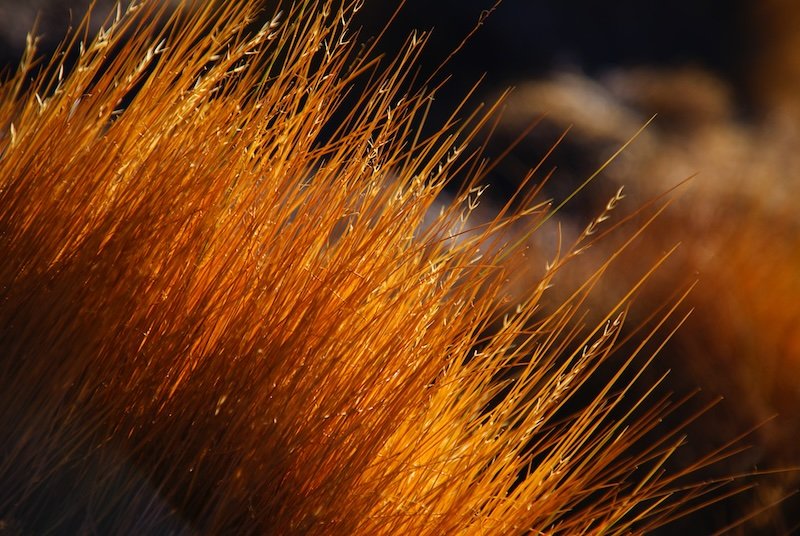
Photography at El Tatio
Timing and Angles
- Backlight the steam at sunrise for dramatic, glowing columns.
- Side-light for textures in mineral crusts and pool ripples.
- Include a human for scale — even a distant figure changes the sense of the steam’s height.
Phone Settings
- Turn on the grid for composition.
- Tap to expose for the brightest part of the steam edge, not the sky.
- Use HDR or RAW if your phone supports it.
- Prop your phone on a rock for sharp low-light shots in the early minutes.
Camera Settings (Starting Points)
- Golden hour: ISO 100–200, f/8–f/11, adjust shutter to taste.
- Blue hour and steam silhouettes: tripod, ISO 200–400, f/4–f/5.6, 1/30–1/125s.
- Keep gear in your bag until ready — thermal shock fogs cold glass immediately.
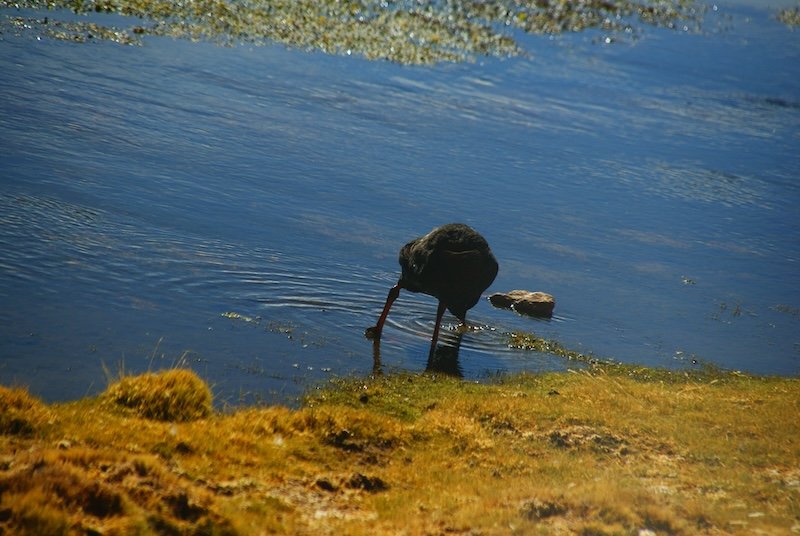
Wildlife on the Return Drive
- Vicuñas and guanacos grazing the wetlands — usually visible at the Bado Putano stop.
- Andean geese and small wading birds along the streams.
- Putana Volcano as a constant backdrop — the morning light on it after sunrise is worth a longer stop.
- Green canyon ribbons — narrow strips of vegetation fed by trickles of river in otherwise bare rock gorges.
Responsible Travel in the Altiplano
- Pack out everything, including small wrappers.
- Stay on durable surfaces — the mineral crust around vents is fragile.
- No drones — this is a protected area and wildlife disturbs easily.
- Keep quiet near wildlife and other visitors.
- Take only photographs, not salt crystals.
Other Atacama Experiences Worth Adding
- Sunrise El Tatio and sunset Valle de la Luna — the classic Atacama double. Rest between them; the altitude adds up. V
- Laguna Cejar or Baltinache — high-salinity lakes where you float effortlessly. An easy morning activity that pairs well with a slower afternoon.
- Quitor Pukará, Tulor Village and San Pedro itself — ruins, archaeological sites and the town’s adobe lanes. Good for a half-day that doesn’t require an early alarm.
Budget at a Glance
- Small-group tour: $$ — transport, guide and basic breakfast. Some operators include a more substantial spread; ask when booking.
- Private tour: $$$–$$$$ — flexible timing and fewer people at each stop.
- Self-drive: $$ — vehicle rental plus fuel, park entry and your own food.
- Extras: Towel, tips and coffee or food back in San Pedro once you return.
Where to Stay in San Pedro de Atacama
El Tatio sunrise tours are bookable tin advance— a useful way to lock in your spot and handle transport logistics before arrival rather than sorting it out in San Pedro. If you’re planning the tour as part of a longer Atacama stay, here are three hotels worth searching:
- Tierra Atacama Hotel & Spa — a well-regarded eco-lodge just outside San Pedro, built in a style that fits the desert landscape rather than contrasting with it. Tour logistics are part of the offering here and the spa makes the evenings after early-morning excursions considerably more pleasant. One of the most consistently praised properties in the region.
- Hotel Altiplanico San Pedro de Atacama — a boutique property with low-lying adobe architecture designed to blend into the Atacama surroundings. Good size, good position, and a more accessible price point than Tierra Atacama while still giving you a proper sense of place rather than a generic hotel experience.
- Casa Atacama — a smaller, more personal boutique option in San Pedro town itself. Well-located for walking to restaurants and the main square, and a good base if you prefer being central rather than slightly outside town. A quieter feel than the larger properties.
El Tatio Geysers FAQ
How cold is it at sunrise?
Expect temperatures around freezing at dawn, even in summer. With wind chill it can feel colder. Layers, a warm hat and gloves are essential — not optional extras.
Do I need to acclimatise before visiting?
If you’ve just arrived in San Pedro, a day or two at town altitude (2,400 m) helps significantly before heading to 4,320 m. Hydrate, avoid alcohol the night before and take it slowly once you’re in the field.
Can I swim in the hot springs and stay warm?
Yes, if you plan the transitions carefully. Wear your swimsuit under your thermal layers, bring a microfibre towel and flip-flops, and layer back up immediately after your soak. The air temperature after getting out is a genuine shock.
Is the geyser field safe to walk around?
Yes, on marked paths. The ground near vents can be thin and brittle, and the steam is scalding. Follow your guide’s route and don’t cross safety ropes — not even briefly for a photo.
Are drones allowed at El Tatio?
No. Drones are typically prohibited to protect wildlife and visitor safety. Rangers do patrol the area.
What kind of breakfast should I expect?
It varies considerably by operator. Some offer basic coffee and bread; others go considerably further — we ate pancakes and grilled sandwiches made fresh in the middle of the altiplano with Grado 10. If breakfast matters to you, ask what’s included when you book.
Can I visit El Tatio without a tour?
You can, provided you’re comfortable driving pre-dawn on cold, potentially icy roads and have confirmed park hours. Bring extra water and warm layers, keep a full tank, and carry lights.
What footwear is best for the geyser field?
Closed shoes with decent grip — trail runners or light hikers. The ground is uneven and sometimes damp or icy. Sandals are for the pool edge only.
Will my camera fog up from the steam?
It can. Keep equipment in your bag until you’re ready to shoot, avoid breathing on cold glass, and wipe gently with a microfibre cloth. Mineral-laden steam is not camera-friendly — don’t lean over vents.
What wildlife might I see on the way back?
Vicuñas and guanacos are common at the wetland stops. Andean geese and small wading birds appear along the streams. Morning light after the geyser visit is generally good for wildlife — give animals space and keep voices low.
Is there anywhere to buy food or water near El Tatio?
Treat the geyser field as bring-everything-you-need territory. Tours include breakfast; if you’re self-driving, pack your own. Shops and cafés are back in San Pedro.
What should I combine with El Tatio on the same day?
Keep it light — a relaxed lunch, a siesta and maybe a short stroll or sunset viewpoint. If you want a big second act, the Valle de la Luna sunset is the classic pairing; just rest properly between them. The altitude accumulates across a full day.
Have you visited El Tatio Geysers?
Are there any other trips around the Atacama Desert you’d recommend?
How cool! I’ve never heard of these geysers, but adding them to my travel list here in South America! I would probably not want to get unbundled to get in the hot springs either! Great pictures.
It’s a beautiful place, I made a motorhome trip through the Atacama Desert and it was awesome! If you want to travel to Chile, I recommend you rent a camper or motorhome in AndesCampers, a very friendly company, and they have a lot of different routes in their website!
So cool! I will be in Chile around July so will definitely try to go here. Worth the early rise for sure!
Which tour come did you use? I cannot see this in your blog. Thanks