
One month in Chile sounds like a long time, but when you’re talking about a country that is 4,300 kilometres in length, that’s a whole lot of ground to cover!
When we were first planning our trip to Chile I naively thought a month would be plenty of time to travel the full length of the country. I really wanted to make it all the way down to Patagonia (and beyond) and looking at a map it seemed doable; in reality, one month was barely enough time to cover half the length of the country.

Our travels primarily focused on Northern and Central Chile with a quick hop over to Easter Island, and while I may not have gotten to see the majestic mountain ranges further south, I feel like I got a pretty good taste of the country. For anyone planning a similar trip, here’s a breakdown of my month-long Chile travel itinerary:
Chile Travel Guide: Top Things To Do, See, Eat, Drink & Experience in Chile
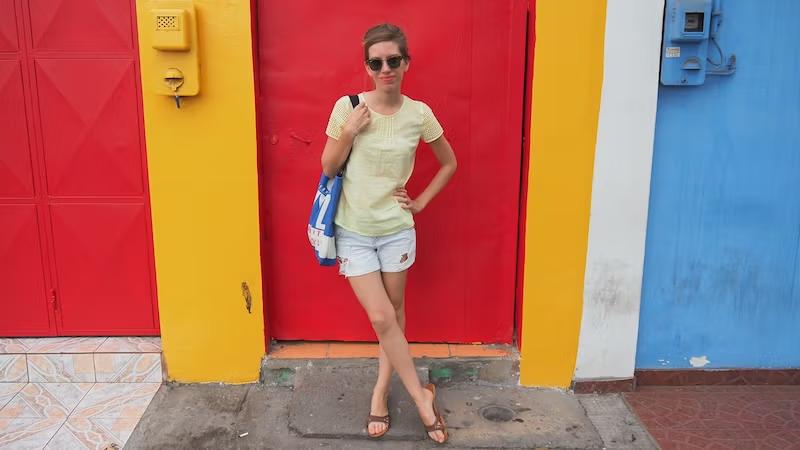
Arica
// 2 days //
We crossed over to Arica from Bolivia by bus and used our 2 short days in the city to catch up on rest and enjoy the warm temperatures. After a few weeks braving the altitude with cups of coca tea and woollen alpaca sweaters, we were ready to enjoy the ocean breeze and bask in the sunshine. Since Arica sits right on the shores of the Pacific Ocean, this proved to be the perfect place to unwind.
As you can probably tell from the lack of photos from Arica, we weren’t feeling particularly ambitious in terms of sightseeing, but if you are up for some exploring, you can climb El Morro de Arica, a hill that looms 110 meters over the city; visit Iglesia San Marcos, which was designed by Gustave Eiffel (yes, the same one responsible for the Eiffel Tower); or stop by Museo de Sitio Colon 10, which is a small museum featuring 32 mummies that were excavated on site.
Another alternative is getting a taxi to drive you out to Museo Arqueologico San Miguel de Azapa, which is located 12 kilometres outside of Arica. This museum is home to some of the oldest mummies in the world!
We filled our brief visit to the city with lots of walks and foodie outings, and coincidentally ended up discovering one of the best restaurants we have ever eaten at! If you find yourself in Arica, you have to go to El Chalan. They specialize in Peruvian food, and after eating dinner here on my first night, I ended up coming back again and again. Their shrimp risotto is to die for – so rich and creamy – and I also loved their ceviche which was made to perfection and transported me right back to Lima.
San Pedro de Atacama
// 4 days //
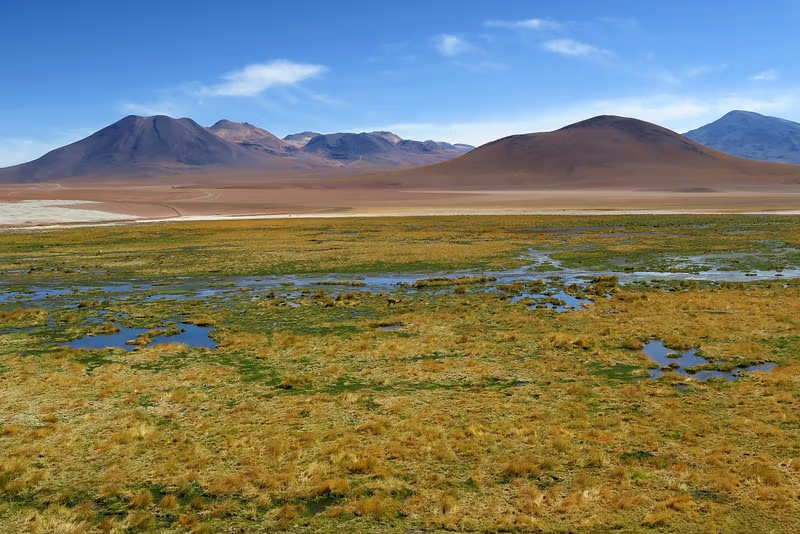
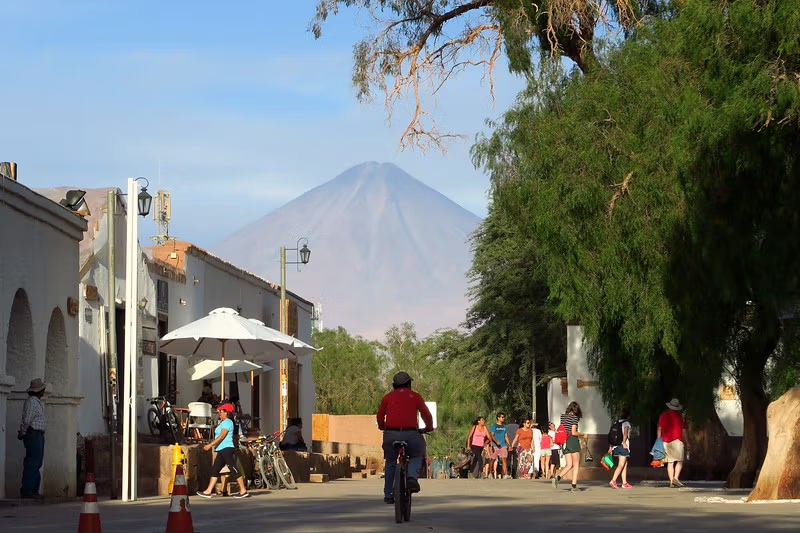
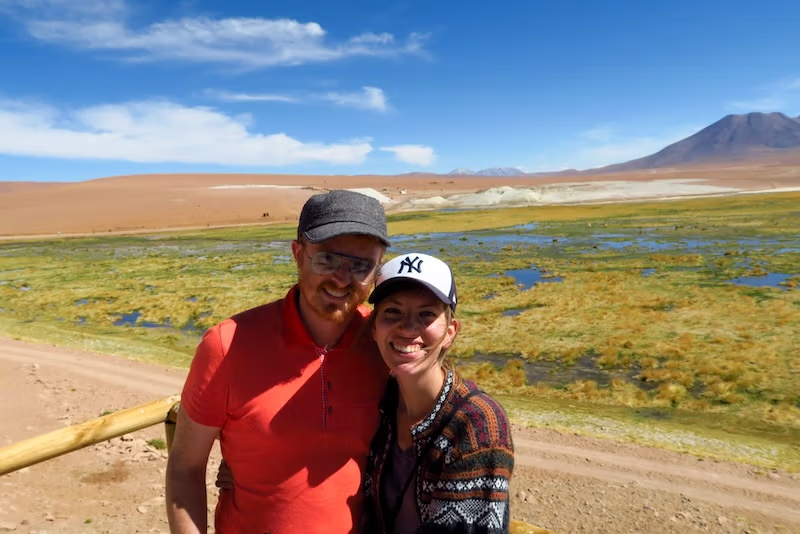
From there it was onwards to the Atacama Desert. The town of San Pedro is quite sleepy and there isn’t a whole lot to do here aside from enjoying the cafes, people watching in the square, and visiting the adobe church. That being said, you don’t come to San Pedro to spend your time in the town! This place is meant to be used as a base while you enjoy some really cool day trips around the desert.
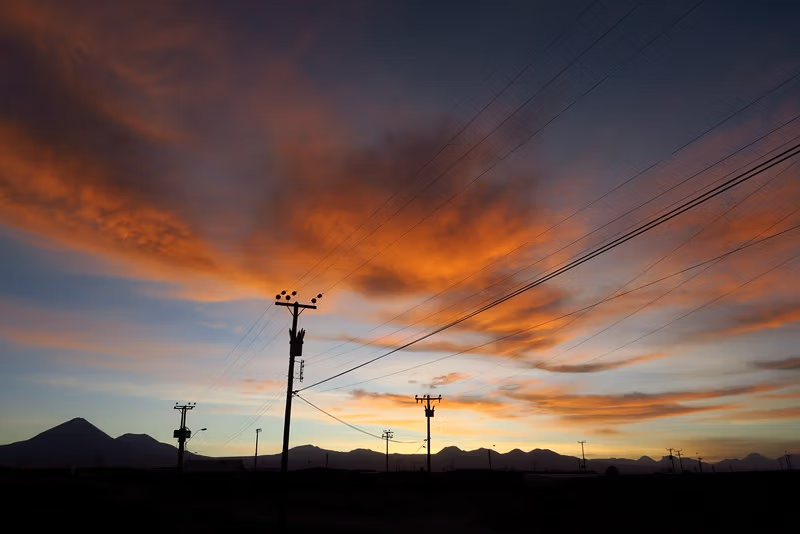
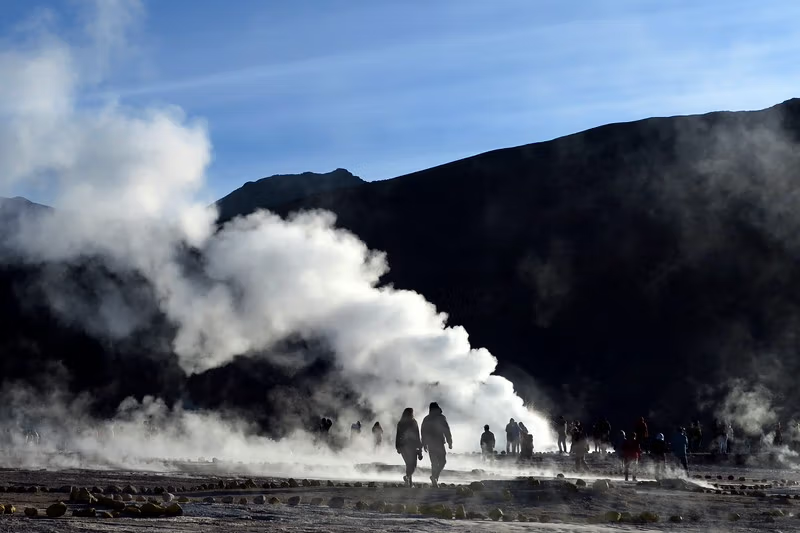
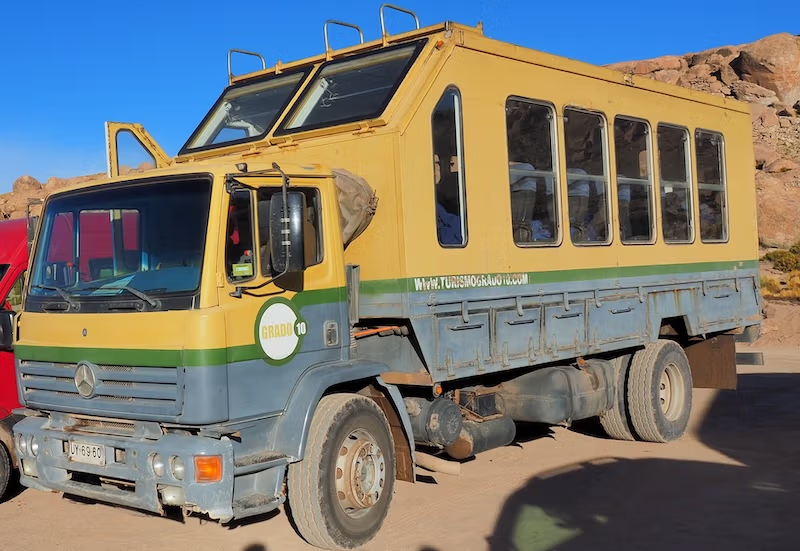
Some of our favourite day trips included a sunrise tour of El Tatio Geysers, complete with a soak in the hot springs and a delicious pancake breakfast; a sunset tour of The Valley of the Moon, featuring breathtaking landscapes set aglow by the setting sun; and Sam also did a full day tour of the Altiplanic Lagoons, where he got to see white and pink flamingoes.
If you luck out with clear skies you can also consider a Stargazing Tour, where you get to spot stars, planets, and constellations using fixed telescopes. Just keep in mind that these tours are weather dependant and they tend to fill up fast.
Santiago
// 7 days //
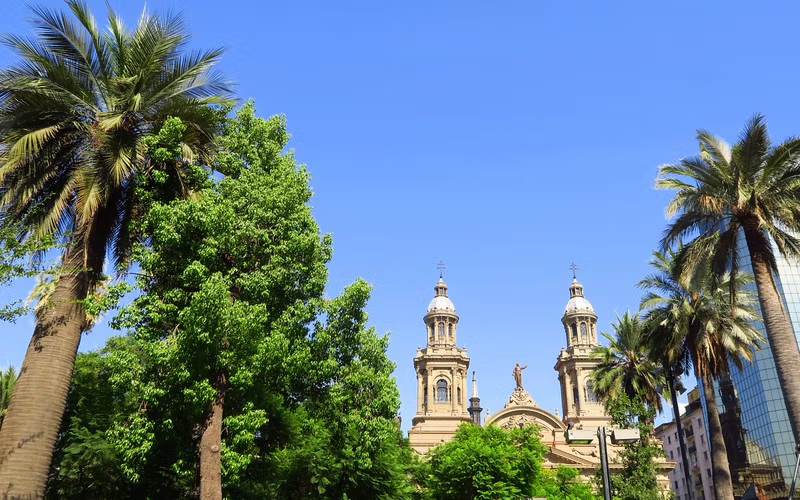
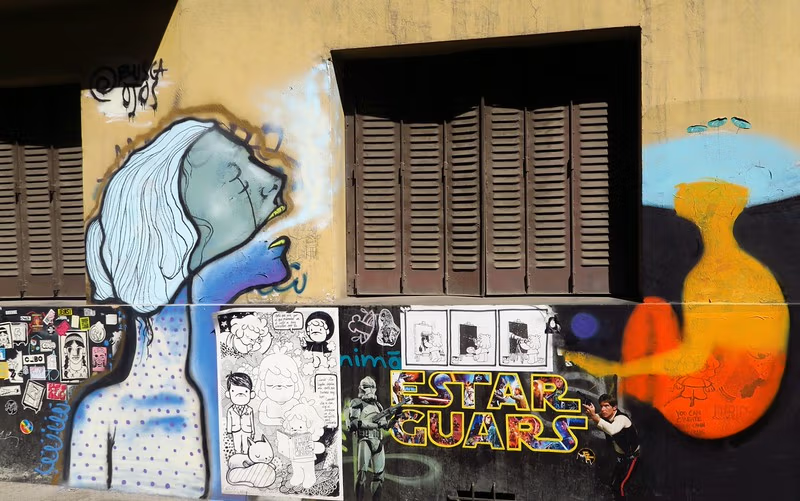
We passed through Santiago a total of 3 times on our travels through Chile – mostly to catch buses and planes. Our time in the city amounted to about a week, but in retrospect, I’d argue you can cover most of Santiago in 3-4 solid days.
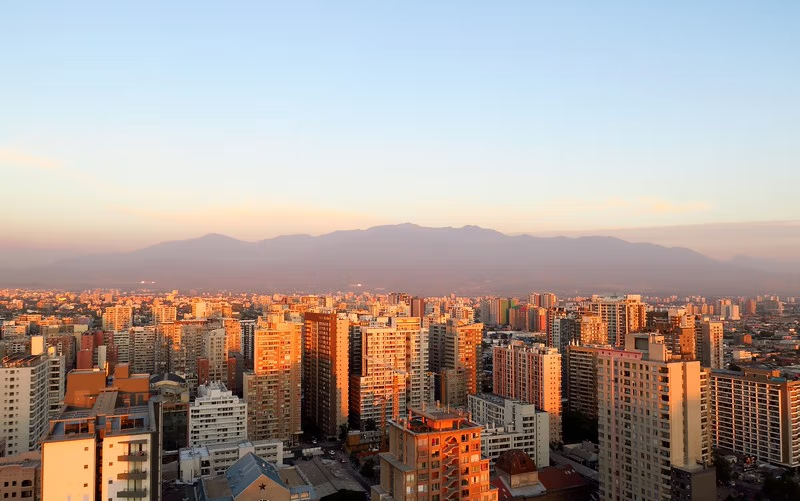
First up, let’s start with the views. Santiago boasts the Andes in the horizon (and while the air can be quite smoggy!) you can still get some pretty cool panoramic views of the mountain range from either Sky Costanera or by riding the funicular to the top of Cerro San Cristobal.
I would also recommend visiting Cerro Santa Lucia, an ancient volcano turned park in the heart of the city. The hill is home to Neptune’s Fountain, Hidalgo’s Castle, and plenty of spiralling staircases and winding trails. Another option for a green escape in the heart of the city is Parque Forestal, an urban park that runs along the Mapocho River.
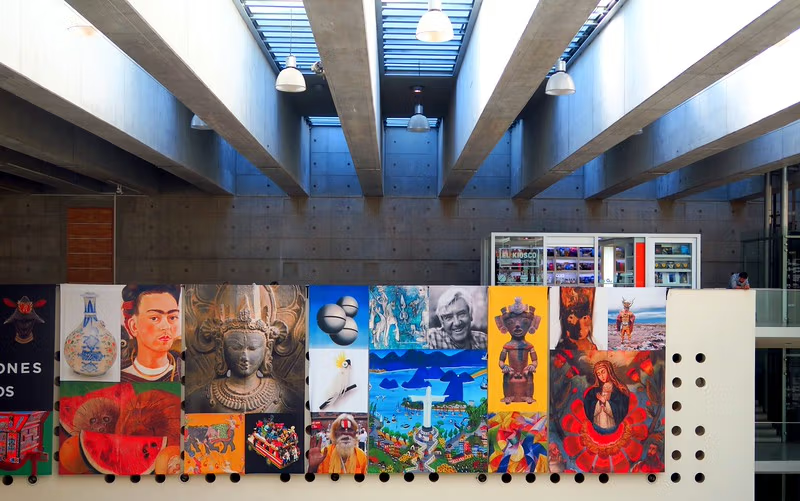
For the art lovers, there’s no shortage of museums including the National Museum of Fine Arts and the Museum of Contemporary Art, which are back to back. Or if it’s history you crave, you can choose from the National History Museum, the Museum of Pre-Columbian Art, or the Museum of Memory and Human Rights.
As for food experiences, one of our favourite dishes we tried in Santiago was the chorrillana. To me, this is the Chilean version of a Canadian gourmet poutine. Just picture a heaping plate of french fries topped off with fried onions, sausage, shaved beef, olives, eggs and just about anything you can imagine.
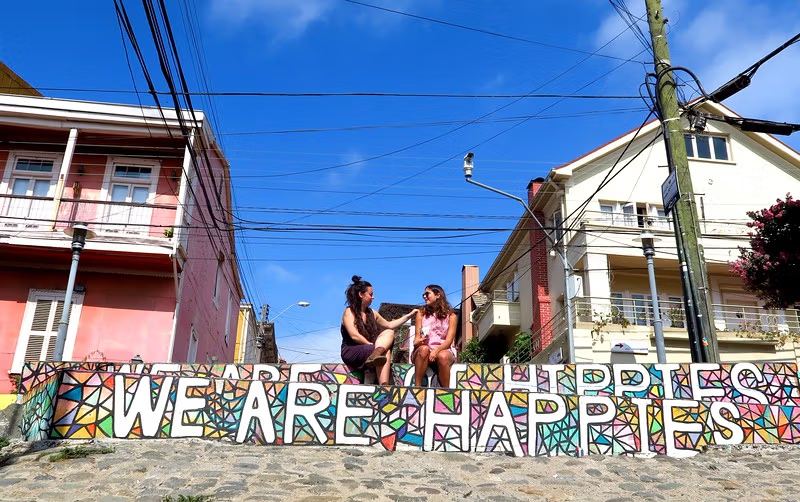
Valparaiso
// 4 days //
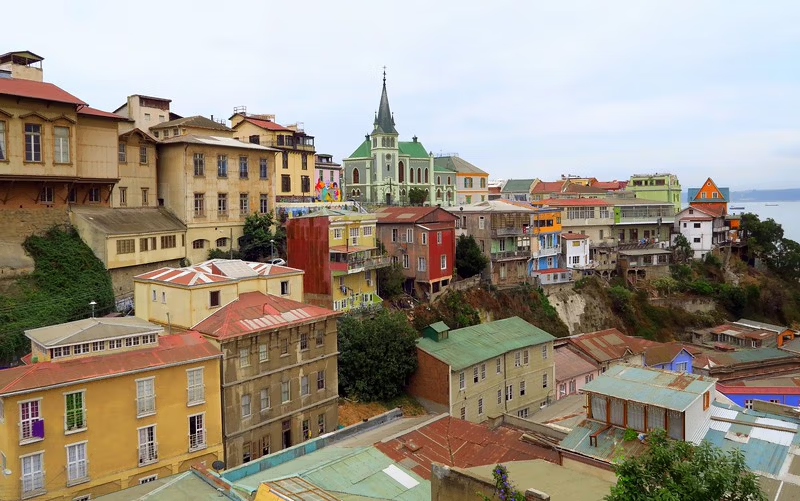
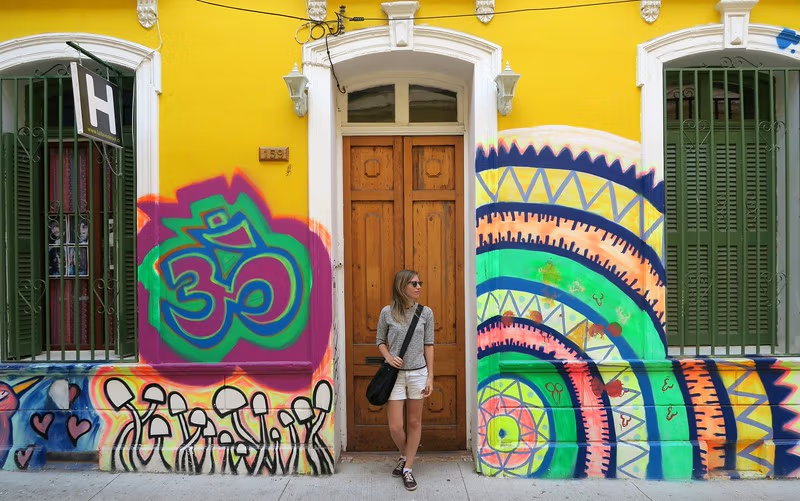
Visiting Valparaiso felt like floating through a rainbow. This has got to be one of the most colourful cities in the world!
Since Valparaiso is all about the street art, we started our visit by joining the Free Walking Tour to help us get familiar with the city. The tour mainly focused on Cerro Concepción and Cerro Alegre, where we spotted some really cool murals.
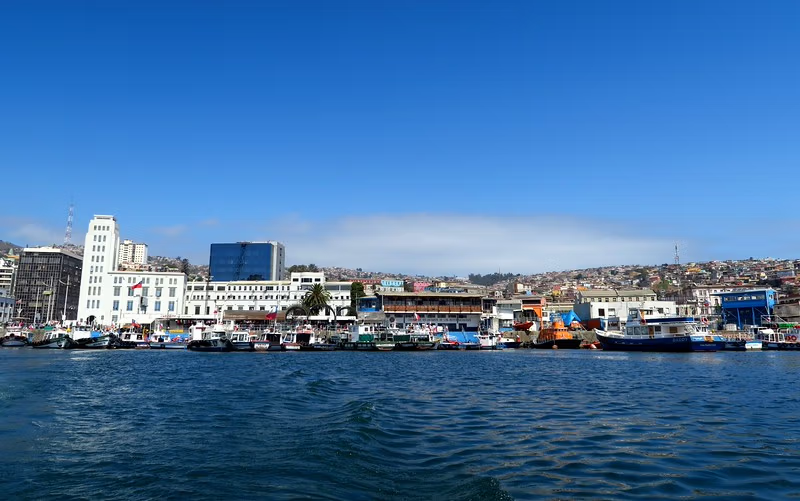
No visit to a port city would have been complete without a tour of the harbour, so we also managed to squeeze that into the schedule. We lucked out with a few unusually sunny days, so we decided to do the 30 minute tour that departs from Muelle Prat. The cost was 3,000 Chilean Pesos and we got to see giant container ships, tug boats, and navy vessels, while the guide talked about the port’s history.
Another cool place to check out in Valparaiso is La Sebastiana. This was the home of Pablo Neruda, Chile’s most famed poet and writer, and it has a pretty eclectic decor. La Sebastiana is 5 stories high and it’s quite artsy and eccentric inside. Upon admission you’ll get a headset, so make sure you turn it on to hear all about Neruda’s dress-up dinner parties where he would often go through several costume changes to stump his already inebriated guests.
Viña del Mar
// 1 day //
Since Viña del Mar is only 8 kilometres away from Valparaiso, we hopped on the metro and took the 15 minute ride out to the popular seaside resort.
We opted for a super relaxed day, so instead of ticking off attractions, we just walked along the Costanera with the sea breeze whipping in our hair, enjoyed the cool sand at the beach, and then grabbed seafood for lunch. Once again, you can probably tell we weren’t feeling particularly ambitious by the lack of photos here!
If you come with more time, you may also want to visit Wulff Castle, which is perched right by the sea; go for a walk through Parque Quinta Vergara, one of the many parks that gives Viña del Mar its status as a Garden City; or spend an afternoon at the Museum of Archaeology and History Francis Fonck, which boasts a moai and an extensive collection of artifacts from Easter Island.
But now let’s talk about music; every year during the third week of February, Viña del Mar hosts the largest and best known music festival in all of Latin America: Festival Internacional de la Canción de Viña del Mar. They’ve had singers like Shakira, Ricky Martin, Chayanne, Marc Anthony, and Carlos Santana grace the stage, so if you’re into Latin music it might be worth planning your visit to coincide with this event (just keep in mind you’ll have to book things really far in advance!)
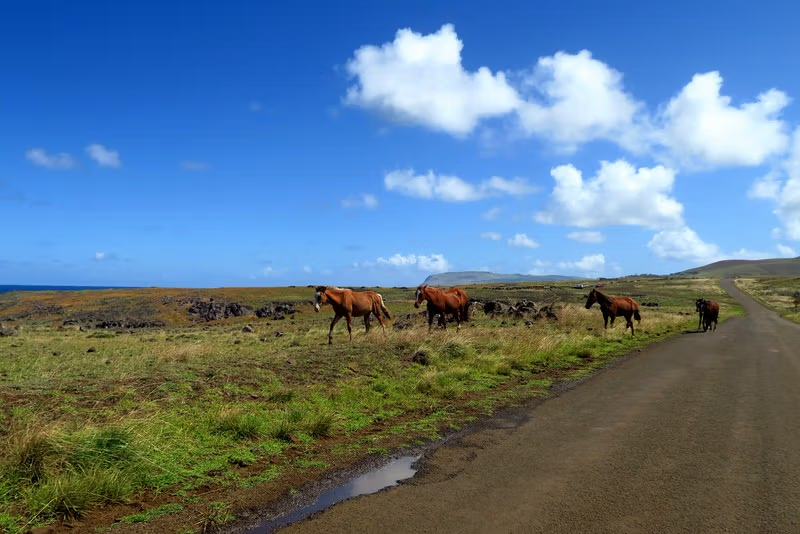
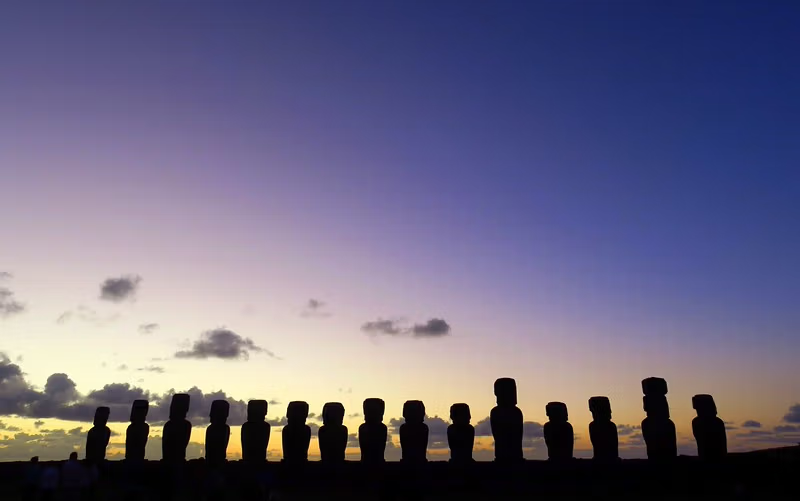
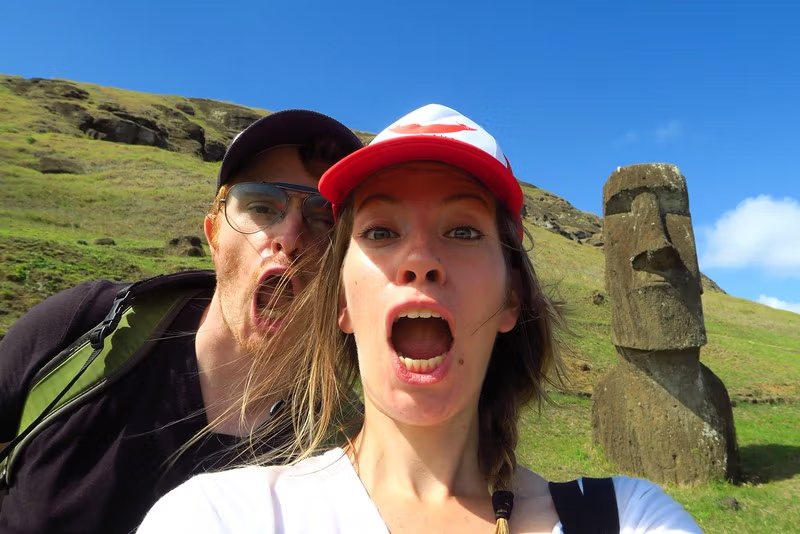
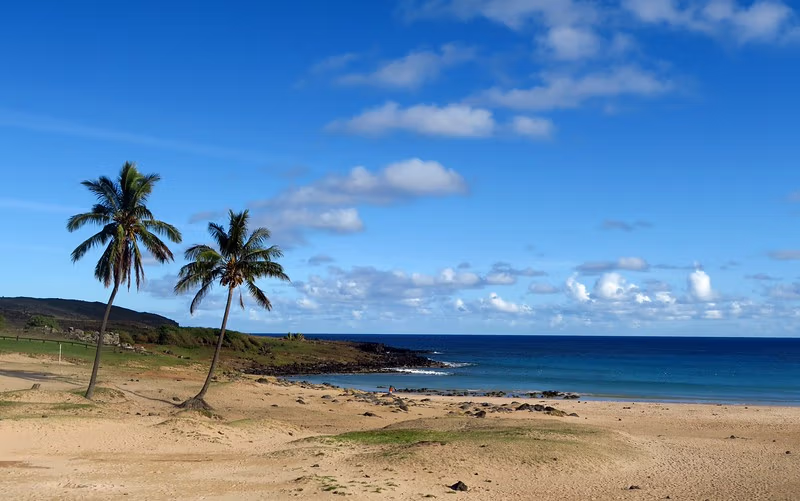
Easter Island
// 7 days //
And now for one of the absolute highlights, let’s talk about the magical place that is Easter Island. I’ve already written about how you can travel Easter Island on a budget and I’m working on another massive post that breaks down my one week itinerary, but in the meantime, here’s a look at what we got up to.
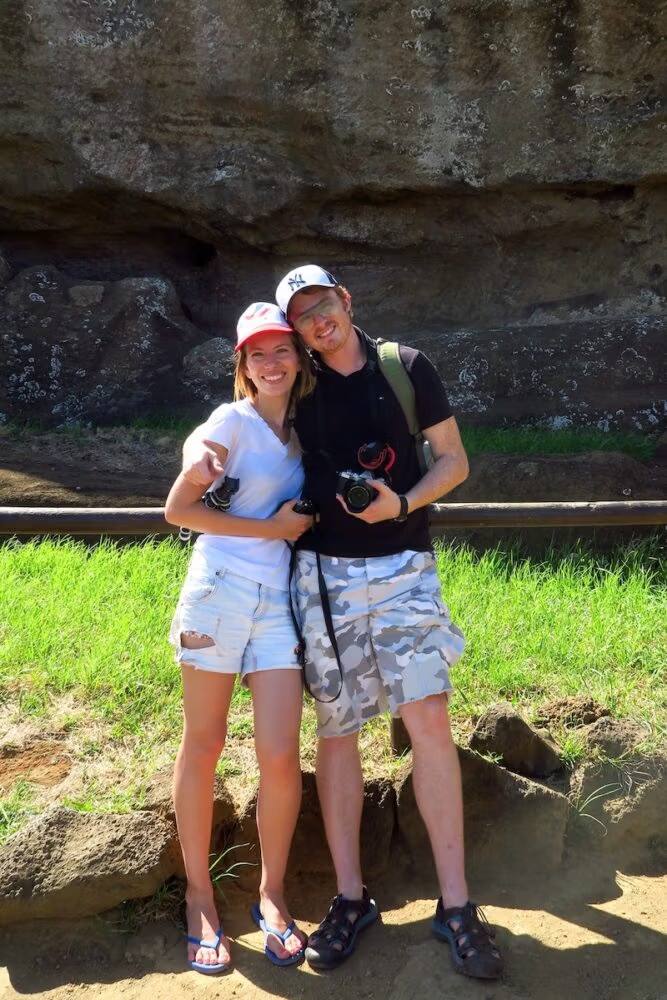
Aside from seeing moai, I wanted to climb volcanoes (duh!), so on our first day on the island we walked to the outskirts of town and found the trail that leads up to Rano Kau. This extinct volcano sits on the southern tip of the island and it’s one of the coolest things I have ever seen. While you can’t set foot inside the crater – that’s a protected area – you can get some amazing views of the wetlands. Rano Kau has its own microclimate and its own vegetation which differs from the rest of the island. From here, you can continue on to Orongo Village, a stone village and ceremonial centre which is just a bit further up the road.
One of the best decisions we made on Easter Island was renting a car for a few days. This gave us the mobility and flexibility to cruise around the island wherever and whenever we wanted. We drove out to Rano Roraku to see the moai quarry, we went to Ahu Tongariki to watch the sunrise over the 15 moai, we visited Ahu Akivi to see the only moai on the island that look out to sea, we dipped our toes in Anakena Beach, and so much more.
Add in a few travel days to get from place to place, and just like that one month was gone! We may not have made it all the way down to Patagonia like I initially wanted to, but I have to admit that our month was full of surprises. Also, this gives me an excuse to come back and explore Southern Chile another time – hopefully with more than a month to spare!
Planning Your Month in Chile: Practical Notes From the Road
How to Approach a Country This Long
The most important thing to understand before planning a Chile trip is that the distances are genuinely deceptive. I learned this the hard way. On a map, northern and central Chile look manageable; in reality, Arica to Santiago alone is 2,000 kilometres, and that’s before you’ve even thought about Easter Island, the Lake District, or Patagonia. A month is enough time to do one section of Chile well, or the whole country at a pace that will leave you exhausted and wishing you’d stayed longer in one place.
If I were planning this trip again, I’d choose depth over ticking boxes every time. Four days in San Pedro properly is better than one rushed day each at six different Atacama sites, and we came home wishing we’d stayed longer in some spots rather than shorter. Santiago is worth treating as a hub rather than just a stop: we passed through the city three times over the month and found something new each time, so it’s worth building in a proper stay rather than only using it for transit. Book Easter Island flights as early as you can, too — LATAM is the sole carrier on the route, and prices climb steadily as the date approaches, which makes it the one transport booking worth locking in before anything else. Beyond that, leave some white space in the itinerary. Some of the best moments in Chile came from wandering without a plan, and Valparaíso’s hills especially reward that kind of aimless walking. A little Spanish goes further than you’d expect, too: outside the major tourist zones English isn’t widely spoken, and basic phrases for ordering food, asking directions, or buying bus tickets will serve you better than any translation app.
Packing for Chile’s Contrasts
The Atacama desert and the Pacific coast are technically in the same country, which means you need to pack for two completely different climates — plus Easter Island’s tropical humidity. Here’s what actually matters by region:
| Region | What to Pack |
|---|---|
| Atacama Desert | Layers for cold mornings (El Tatio at dawn is genuinely freezing), sun hat, SPF 50+, sunglasses, reusable water bottle — hydration in the desert is not optional |
| Santiago and Valparaíso | Comfortable walking shoes, light jacket, casual city clothes; Valparaíso’s hills mean proper footwear matters more than you’d think |
| Coastal cities | Swimsuit, windbreaker (the Pacific wind is relentless), flip flops, light layers |
| Easter Island | Reef-safe sunscreen (the island is environmentally protected), strong insect repellent, hiking shoes for Rano Kau, headlamp for Tongariki sunrise |
| All regions | Type C or L plug adapter, power bank, offline maps downloaded, Spanish phrasebook or translation app |
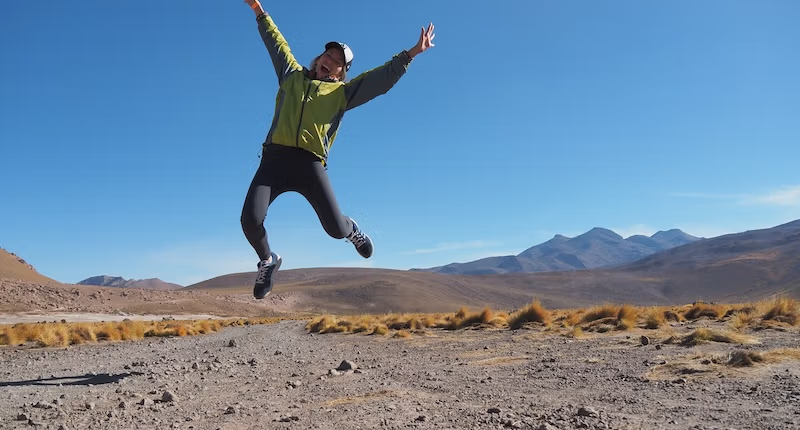
One thing worth flagging: Atacama nights get properly cold. Even in summer, temperatures near El Tatio can drop to near zero at dawn. Don’t leave the down jacket at home because it looks sunny out.
Getting Around Chile
Flights
For long hops — and in Chile, most hops are long — flying is usually the right call. The main domestic carriers are LATAM, Sky Airline, and JetSmart. JetSmart and Sky are ultra-low-cost, which means stripped-back base fares; factor in checked luggage and the total typically lands around $50–130 one-way for routes like Santiago–Calama, depending on how far ahead you book.
Easter Island: LATAM is the only carrier flying to Hanga Roa, and it holds that route as a genuine monopoly — there’s no competing airline to shop against. Round-trip fares typically run $550–900, with the lower end reachable by booking 8–12 weeks out in shoulder season; peak December–January travel can push well past $900. Book this first, before hotels, before tours, before anything else. Prices move in one direction the closer you get to departure.
Buses
Chile’s intercity bus network is excellent. Turbus and Pullman Bus are the main reliable operators. For overnight or long hauls, upgrade to cama class (fully reclining) — worth the extra cost, and it saves a night’s accommodation. Bus is currently the only way to travel directly between Santiago and Valparaíso/Viña del Mar, since there’s no passenger rail on that route.
Trains
Chile’s passenger rail network is limited but worth knowing about. EFE (Empresa de Ferrocarriles del Estado) runs a regular Santiago–Chillán service with stops at Rancagua, Talca, and Linares — a pleasant, affordable way to see the central valley if your route heads south, and EFE has been steadily increasing frequency on this line. EFE also runs seasonal tourist wine trains (branded “Sabores,” with routes to the Cachapoal, Colchagua, and Maule valleys) — check efe.cl for current dates if wine country is on your list.
Worth knowing if you’re planning further ahead: the Santiago–Valparaíso passenger line closed in 1987 and has sat freight-only ever since, which is why bus is currently the only direct option. That’s set to change — the Chilean government has committed funding to revive it, with EFE targeting a new Santiago–Viña del Mar passenger service (roughly 90 minutes end to end) opening later this decade. It won’t affect a trip booked today, but it’s a route worth watching if you’re the sort of traveller who returns to a country more than once.
Car Rental
Not necessary in cities, but a complete game-changer on Easter Island — renting a car for 2–3 days is how you get to Tongariki at sunrise and Anakena for sunset without depending on tour groups. Roads are good; just be prepared for narrow stretches and confident local drivers. Book the car in advance during peak season, since availability is limited on the island.
Local Transport
Santiago’s metro is excellent and covers most tourist destinations cheaply. Valparaíso connects to Viña del Mar via the Merval commuter train in about 15 minutes — a quick, easy back-and-forth. In small Atacama towns, taxis and arranged transfers are standard.
| Segment | Best Option | Worth Knowing | Book Ahead? |
|---|---|---|---|
| Arica → San Pedro (11 h) | Turbus overnight cama coach | Lie-flat seats save on a night’s accommodation; desert sunrise from upper deck | Yes — popular route, especially Jan/Feb |
| San Pedro → Santiago | Sky Airline or JetSmart from Calama (CJC) | Base fares from ~$40 but add luggage; Calama shuttle ~3,000 CLP one-way | Book 3–6 weeks ahead for best prices |
| Santiago ⇆ Valpo / Viña (90 min) | Pullman or Condor bus, frequent departures | No train option — bus only; drops near Valpo centre | Buy at the terminal; rarely sells out |
| Santiago ⇆ Easter Island (5.5 h) | LATAM only | Book as early as possible — LATAM is the sole carrier; midweek departures are often cheapest | Yes — 8–12 weeks minimum for reasonable fares |
What to Eat and Where
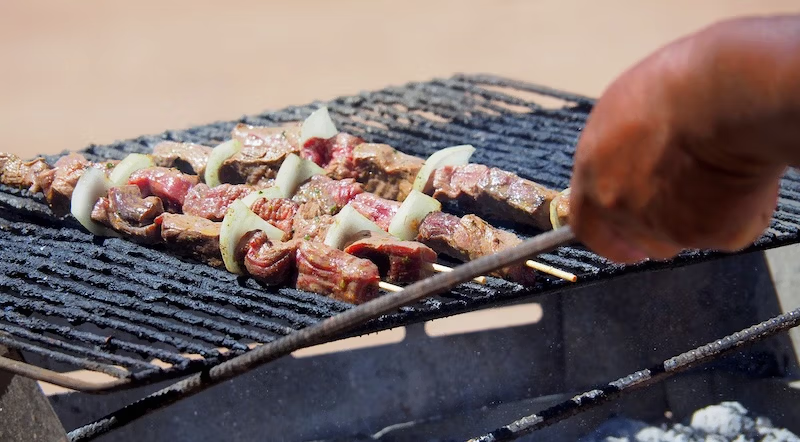
Chile’s food is genuinely underrated as a travel draw. Our most memorable meal of the entire trip was at El Chalán in Arica — a Peruvian restaurant we stumbled onto by accident and kept returning to, night after night, for the shrimp risotto alone.
Beyond that discovery, a handful of dishes define the trip. Chorrillana is the closest thing Chile has to a national hangover cure: a heaping plate of fries topped with fried onions, sausage, shaved beef, olives, and egg, with Santiago’s Barrio Italia doing some of the best versions. Pastel de choclo is a corn pie filled with beef, chicken, olives, raisins, and hard-boiled egg — hearty, sweet-and-savoury, and about as Chilean as food gets. Cazuela, a comforting stew of potatoes, corn, pumpkin, and meat, is exactly what you want after a cold Atacama morning. On the coast, empanadas de mariscos are everywhere and best eaten standing at a market stall rather than seated at a restaurant, and mote con huesillo — a sweet cold drink of husked wheat and dried peaches — is what fills Santiago’s parks on any warm afternoon. On Easter Island, the tuna-based dishes and empanadas de atún are genuinely excellent and easy to find at almost any local restaurant in Hanga Roa. Vegetarian travellers will find solid options in Santiago and San Pedro; smaller towns are more limited, though most kitchens will adapt a dish if you ask.
Sample Month: How to Structure Your Time
This is roughly how I’d structure 30 days covering northern Chile, the centre, and Easter Island — based on what worked, what I’d change, and what I’d add:
| Destination | Days | Highlights |
|---|---|---|
| Arica | 2 | Beach recovery, El Morro, El Chalán restaurant, Azapa mummies (optional) |
| San Pedro de Atacama | 4 | Valle de la Luna (sunset), El Tatio (sunrise), Altiplanic Lagoons/flamingos, stargazing |
| La Serena and Elqui Valley | 3 | Beaches, pisco distilleries, world-class observatories, vineyard dinners |
| Santiago | 4 | Cerro San Cristóbal, museums, Lastarria, day trip to wine country or Cajón del Maipo |
| Valparaíso | 3 | Free walking tour, street art on Cerros Concepción and Alegre, La Sebastiana, harbour tour |
| Viña del Mar | 2 | Costanera walk, beaches, seafood, gardens |
| Isla Negra (day trip) | 1 | Neruda’s coastal house, poetry, dramatic sea views |
| Easter Island | 7 | Rano Kau, Rano Raraku, Ahu Tongariki sunrise, Ahu Akivi, Anakena Beach |
| Travel and buffer days | 4 | Long bus/flight connections, weather contingency, unhurried mornings |
Budget Snapshot
Chile is honest about being one of South America’s more expensive countries — think closer to Western Europe than to Bolivia. That said, it rewards smart spending: the menú del día at local restaurants, overnight buses instead of hotels, and free hiking mean you can have an extraordinary trip without an extraordinary budget.
| Category | Budget Backpacker | Mid-Range | Notes |
|---|---|---|---|
| Accommodation | $15–25 pp/night (hostel dorms) | $60–100/room/night | Easter Island significantly higher than mainland |
| Food and drink | $15–25/day (markets, menú del día) | $40–70/day (mix of restaurants) | Menú del día lunch is the best value in the country |
| Transport (total) | $700–900 (buses + key flights) | $1,000–1,400 (buses + more flights) | Easter Island return adds $550–900 minimum |
| Activities and tours | $300–400 | $600–900 | Atacama tours are the biggest activity spend |
| 1-month total per person | ~$1,800–2,500 | ~$3,500–5,000 | Two people travelling together save on room costs |
Biggest cost drivers: Easter Island return flights (~$550–900), the Atacama tour package, and Easter Island accommodation (~$100–200+/night mid-range). Budget for these three separately — they’re the ones that move the total significantly.
Practical Notes
- Currency: Chilean Peso (CLP). ATMs are widespread in cities; bring cash for small towns, market vendors, and Easter Island (ATMs on the island can run out). Withdraw larger amounts in cities to avoid repeated transaction fees.
- SIM cards and connectivity: Entel and Movistar offer the best coverage for the routes on this itinerary. Buy at official stores in Santiago or Calama — airport kiosks charge more. WiFi is reliable in hotels and cafés on the mainland; Easter Island connectivity is genuinely limited, so download offline maps before you fly.
- Tap water: Generally safe to drink in cities; double-check in smaller towns and rural areas.
- Safety: Chile is one of the safer countries in South America, but standard precautions apply in bus terminals and busy markets — keep phones zipped away and bags in front in crowds.
Weather and What to Expect
| Region | Day / Night Temperature | Key Notes |
|---|---|---|
| Arica and northern coast | ~23°C / 17°C year-round | One of the driest places on Earth; almost zero rainfall. Year-round swimming. |
| Atacama Desert | ~24°C day / near 0°C at dawn | The temperature swing is extreme. Always pack a warm layer even in summer. Sunburn risk is very high at altitude. |
| Central Valley (Santiago area) | ~28°C / 12°C (Nov–Mar) | Warm Mediterranean summers; mild winters. Santiago’s smog is worse June–August. |
| Easter Island | ~26°C / 20°C (humid) | Tropical year-round. Dec–Mar is busiest; shoulder seasons (May, Oct) offer better pricing and fewer crowds. Rain can come from any direction at any time. |
If You Have Extra Time: Southern Chile
I never made it to Patagonia on this trip — a fact I’m still thinking about — and southern Chile honestly deserves its own separate month rather than a rushed add-on to this itinerary. Puerto Varas and the wider Lake District, around Puerto Montt and Chiloé, offer lakes, volcanoes, Germanic-influenced architecture, and salmon farming, and Puerto Varas in particular is one of the more underrated towns in the country. Further south, Torres del Paine is the trek that anchors most people’s South American bucket list: the W Trek runs 4–5 days and the full O Circuit 8–10, and huts and campsites sell out months ahead for the October–March season, so that’s not a trip you book on a whim. Closer to this itinerary, the Elqui Valley near La Serena is easy to add between San Pedro and Santiago and is one of the more overlooked three-day stops in the country, known for pisco distilleries, world-class observatories, and microclimate vineyards. Isla Negra, Pablo Neruda’s coastal house, is a short bus from Santiago and offers a different window into the poet’s life than La Sebastiana, with a more dramatic ocean backdrop. And Chile’s wine valleys — Maipo, Colchagua, Casablanca — are all within a day trip or overnight of Santiago; EFE’s seasonal Sabores wine trains run to several of these regions if the dates line up with your visit.

Where to Stay: Audrey’s Picks by Destination
Chile’s accommodation quality varies significantly between destinations and price tiers. Here’s a breakdown based on where we stayed and what I’d recommend for different budgets — anchored around the specific properties we tried and additions I’d consider for a return trip.
Arica
Arica is a relaxed coastal city where you don’t need to spend much to stay comfortably. Most decent options are within walking distance of the beach and the main square.
- Budget: Arica Surf House — near the city’s main surf breaks, social, relaxed atmosphere suited to the city’s vibe
- Mid-range: Panamericana Hotel Arica — solid, central, with a pool that is very welcome in the northern heat
- Comfort: Diego de Almagro Arica — reliable chain right on Las Machas Beach, with sea-view rooms worth asking for
San Pedro de Atacama
San Pedro has a wide range of accommodation but the top-end desert lodges are genuinely exceptional — if there’s anywhere on this itinerary to splurge on accommodation, this is it. The desert light at dusk from a proper lodge property is something else.
- Budget: Hostal Cactus or similar guesthouses on the central streets — simple, clean, and genuinely affordable given the location
- Mid-range: La Casa de Don Tomás — well-established, good location, hacienda feel without the full luxury price tag
- Splurge: Nayara Alto Atacama Desert Lodge and Spa (formerly Alto Atacama) — a stunning property set into the desert landscape with pools, a stargazing terrace, and all-inclusive tours. Or Explora Atacama for the ultimate all-in desert experience — one of the best lodges in South America.
Santiago
Stay in Lastarria or Barrio Italia if you can — these are the most interesting and walkable neighbourhoods, and most of the good restaurants are here or nearby.
- Budget: La Chimba Hostel — a long-running Bellavista classic with a strong social scene, a well-known bar, and an easy walk to the Baquedano metro; suits solo travellers especially well
- Mid-range: Hotel Magnolia Santiago — boutique, design-forward, excellent Lastarria location; one of the better value mid-range options in the city
- Splurge: The Singular Santiago — a converted early-20th-century building on the edge of Lastarria; striking architecture, exceptional service, and a location that makes the whole city accessible
Valparaíso
Stay on the hills rather than the flat port district — waking up above the city with those views is what Valparaíso is actually about. Cerro Concepción and Cerro Alegre are the best base hills.
- Budget: Casa Aventura or similar hill-based guesthouses — basic but atmospheric and exactly where you want to be
- Mid-range: Fauna Hotel — art-forward boutique on Cerro Alegre with sea views and a good breakfast; genuinely characterful
- Splurge: Casa Higueras — a restored 1920s manor on Cerro Alegre with an infinity pool and panoramic Pacific views; one of the more beautiful small hotels in Chile
Easter Island (Hanga Roa)
Easter Island accommodation is expensive relative to the rest of Chile — budget accordingly. The island has everything from backpacker cabañas to genuinely world-class eco-resorts. Given the distance and cost to get here, it’s worth considering a mid-range stay at minimum.
- Budget: Tekena Inn or similar family-run cabañas — central Hanga Roa, breakfast included, genuinely friendly hosts, and the more personal side of Easter Island hospitality
- Mid-range: Hotel O’Tai — well-located, comfortable, with a garden; reliable and consistently well-reviewed
- Splurge: Nayara Hangaroa (formerly Hangaroa Eco Village and Spa) — the island’s flagship property, right on the coastline with direct ocean views, a spa, and excellent guided cultural experiences. If you’re going all the way to Easter Island, this is worth the upgrade.
Tours Worth Booking in Advance
Some of Chile’s best experiences are difficult to do independently — either because they require a guide, because spaces are limited, or because having local knowledge genuinely makes the difference between a good experience and a great one.
Atacama (San Pedro de Atacama)
- El Tatio Geysers sunrise tour — the early departure (leaving around 4am) is brutal but worth every minute. Includes a soak in the hot springs and usually a pancake breakfast on-site. Book through your hotel or a local agency in San Pedro.
- Valle de la Luna sunset tour — watching the light change across those dunes is one of the most memorable things we did in all of Chile. The tour adds good context on the geology, but the landscape speaks for itself.
- Stargazing tour — the Atacama has some of the clearest skies on Earth, and a good guided session with telescopes is a completely different experience from just looking up. Book early — these fill fast and are weather dependent.
- Altiplanic Lagoons and flamingos day tour — Sam did this one and the flamingo sightings were exceptional. Not as visually dramatic as the Valley of the Moon, but a fascinating contrast.
Santiago
- Free walking tour of Lastarria and the historic centre — an excellent way to orient yourself and understand the layers of Santiago’s history. Tip generously; these guides are excellent.
- Concha y Toro or Casas del Bosque wine tour — easily the best day trip from Santiago for wine lovers. Concha y Toro’s main winery is only 45 minutes from the city; Casablanca Valley is about 90 minutes and produces excellent whites.
- Cajón del Maipo rafting or hiking day trip — a stunning Andean canyon less than two hours from the city centre. Easy to book through hotels or Viator’s Chile listings.
Valparaíso
- Free walking tour of Cerros Concepción and Alegre — the street art context you get from a good local guide transforms what you’re looking at from “colourful walls” into a living narrative about the city’s history and politics.
- Harbour boat tour from Muelle Prat — 30 minutes among container ships and navy vessels; inexpensive, and a very different perspective on the city from water level.
Easter Island
- Guided full-island circuit — for the first day especially, a guided tour of the major ahu and moai sites adds enormous context you simply won’t get from reading alone. Book at least one guided day before going fully independent by car.
- Ahu Tongariki sunrise visit — better done independently by rental car if you’re comfortable driving, but guided sunrise tours are widely available in Hanga Roa if not. Either way, don’t miss it.
- Snorkelling at Anakena and the cave swims — the underwater visibility around Easter Island is extraordinary. Local operators in Hanga Roa run half-day snorkelling trips; dive tours are also available for certified divers.

1-Month Chile Itinerary FAQ
How should I split a month between North, Central, and Easter Island?
A workable split is North (Arica + San Pedro) ~10–12 days, Central (Santiago + Valparaíso/Viña + optional La Serena/Elqui) ~10–12 days, and Easter Island ~6–7 days. Keep 1–2 buffer days for long connections and the inevitable missed bus.
What’s the best order to travel these regions?
North → Central → Easter Island is the most logical: Arica first (coming from Bolivia as we did, or flying directly from Santiago), then San Pedro, then south to Santiago and the coast, finishing with Easter Island as a grand finale. Flying Calama → Santiago → Hanga Roa cuts out backtracking.
How many days do I need in San Pedro de Atacama?
Four days is the right amount — El Tatio sunrise, Valle de la Luna sunset, a lagoons day for the flamingos, and one clear evening for stargazing. Less than three and you’re rushing through the best part of northern Chile.
Is Easter Island worth a full week?
Yes. Seven days gives you time to rent a car and do multiple sunrise/sunset runs at different sites, hike Rano Kau and Orongo, explore Rano Raraku at a proper pace, swim at Anakena, and genuinely absorb the place. Two days is not enough — the journey is too far and too expensive to spend 48 rushed hours there.
How much time do I need in Santiago?
Three to four solid days. A viewpoint day (Cerro San Cristóbal, Cerro Santa Lucía), a museum day (Pre-Columbian Art and the Museum of Memory are the ones I’d prioritise), and a day trip to wine country or Cajón del Maipo. You’ll pass through Santiago at the start, middle, and end of this itinerary anyway — spread the city time across those stops.
How do Valparaíso and Viña del Mar fit together?
Base yourself in Valparaíso for 3–4 days and take the Merval train to Viña for a day or afternoon. They’re 15–20 minutes apart and serve completely different purposes — Valparaíso for art, history, and atmosphere; Viña for beaches, seafood, and a calmer pace. Don’t try to base in Viña and day-trip to Valpo; it’s the wrong way around.
What’s the smartest way to get around?
Fly the long hops — especially Calama→Santiago and Santiago→Easter Island. Use comfortable intercity buses (Turbus, Pullman) for medium distances. Rent a car on Easter Island. Santiago to Valparaíso/Viña is bus-only for now — frequent, cheap, and about 90 minutes.
When is the best time to visit?
October to April for warm weather on the coast and pleasant Atacama conditions. The Atacama is good year-round; the difference is mainly crowd levels and flight prices. Easter Island is tropical year-round; shoulder seasons (May and October) offer the best combination of weather, fewer tourists, and more reasonable accommodation pricing.
What should I budget for a month as a couple?
At mid-range: roughly $7,000–10,000 USD total for two people over 30 days, including Easter Island return flights. Budget travellers sharing dorms and taking buses can get down to $4,000–5,500 for two. Chile is significantly more expensive than Peru or Bolivia — plan accordingly rather than arriving expecting South American prices across the board.
How do I avoid over-scheduling?
Pick two or three anchor experiences per destination and leave the rest open. In San Pedro, the anchors are El Tatio, Valle de la Luna, and one lagoons day. Everything else is a bonus. The buffer days on this itinerary aren’t wasted — they’re when the best unplanned things happen.
What food experiences shouldn’t I miss?
Chorrillana in Santiago (the Chilean poutine), empanadas de mariscos at a coastal market, mote con huesillo in a city park, pastel de choclo anywhere it’s made fresh, and tuna-based dishes on Easter Island. And if you’re near Arica — El Chalán for Peruvian food is worth a dedicated trip.
Is southern Chile worth adding?
Completely — but honestly, it needs its own trip. Torres del Paine alone deserves 8–10 days. The Lake District (Puerto Montt, Puerto Varas, Chiloé) is another week at minimum. I didn’t make it and I’ve been regretting it ever since. Consider a return trip specifically for the south rather than rushing it at the end of this itinerary.
Share your dream Chile stops or travel tips below — let’s keep the conversation going!
Have you travelled in Chile? Which places captured your heart? Let us know your best finds or hidden gems in the comments below!
Chile looks fabulous in your pictures! I’d like to visit Santiago and Easter Island. Love the gorgeous colors captured.
Thanks, Renuka! The landscapes were a dream to photograph. 🙂
What a trip… That part of the world that is so mysterious and unknown to me… Thanks for making me dreaming while I’m in the other part of the world!! 🙂
It’s quite the opposite of bustling Hong Kong, that’s for sure! I hope you get to visit sometime, Marie.
I lived in Chile for 3 years there are so many places to see especially in the South if you like nature and hiking. Sounds like you got to see a lot though.
That’s cool! Any places you’d recommend in particular? I’d love to do some of the hiking loops around Patagonia and also make it all the way down to Punta Arenas.
What a cool trip! I feel like not enough people make it a point to visit Chile. Love the photos!
I hear ya! Aside from Patagonia, travel in the rest of the country seems quite underrated.
The Maipo Valley is a really special place – mostly because of the great wineries to tour but there’s some spectacular scenery as well. And it’s really close to Santiago!
Thanks for the tip! It sounds like the ideal day trip.
Yes, Chile is a lot bigger than it looks! There really is a lot to do. Sounds like you have a great itinerary planned out. Can’t wait to read about your adventure 🙂
Being a Chilean and from Santiago specially, all I can say is… great pictures!! I loved your post. You should’ve definitely have gone to a winery as they are top class in the world. Maybe for the next time?
Hello! Your trip looks amazing! I’ve been trying to plan a month long trip to Chile as well, but am puzzled on how much to save for the trip. Do you mind sharing how much you spent for the month?