
Chile may not be known for its cuisine, but that doesn’t mean you shouldn’t be excited to sample some different food when you visit! The foods I’ll be mentioning in this post aren’t exactly fancy, but they are the typical things that I see people eating while perusing Santiago. I myself get particularly excited about Chilean desserts (see #4 & #5!).

Lomito – Fuente Alemana
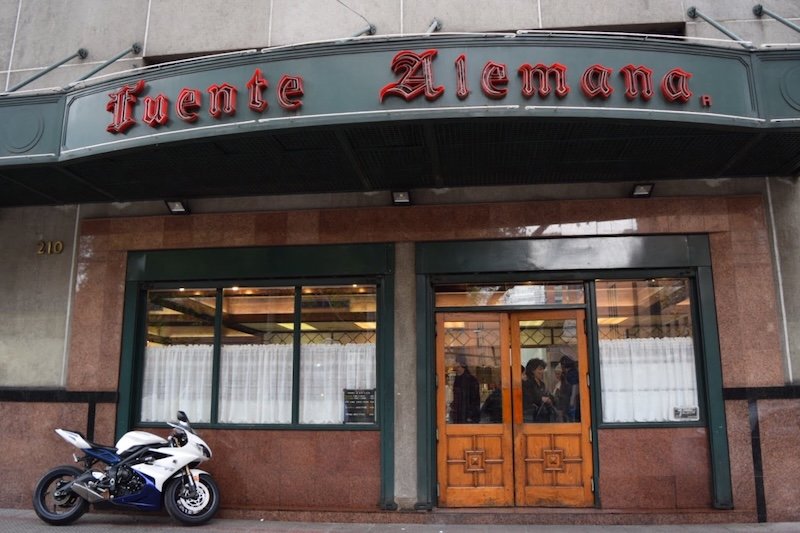
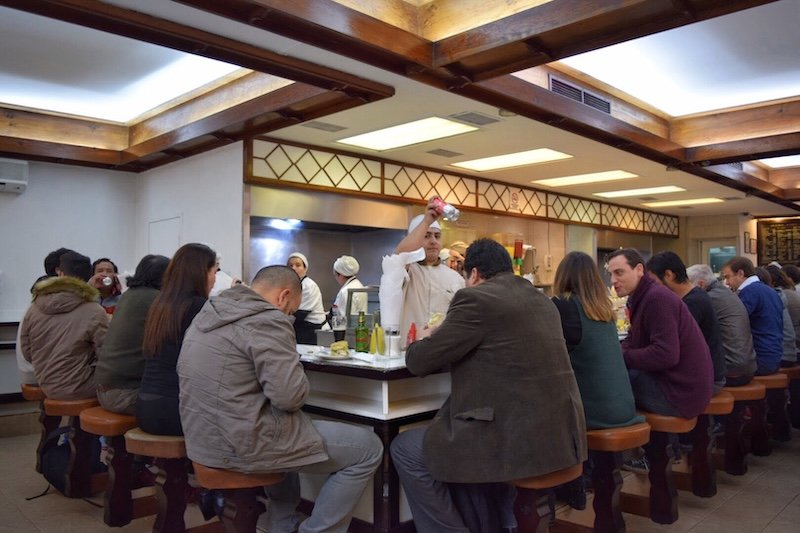
Fuente Alemana, meaning “German Fountain” in Spanish, is one of the most typical restaurants in Santiago. There are two locations in the area: one in Providencia close to the Pedro de Valdivia metro station and the other between Baquedano and La Católica stations. “Lomo” is pork, leading a “lomito” sandwich to be the gigantic combination of a hamburger-like bun with pork slapped on top of it along with tons of avocado and mayonnaise. Yep, I’m unsure as to why they use the diminutive “-ito” to describe this whopper of a sandwich (see photo). Due to this restaurant’s German influence, you can even get “chucrut” (sauerkraut) on your lomito.

Completo Italiano – Dominó
Dominó is basically Chile’s version of a soda fountain shop, where you sit at the counter to order. I wouldn’t try to go during peak lunch hours (12:00 – 2:00 p.m.), because you most likely won’t even find a place to sit. Dominó is quite a big chain so you’ll be able to find these restaurants all over town, including locations by Manuel Montt, Pedro de Valdivia, and Tobalaba. The most popular fast food in Chile has to be the “completo italiano”, which is a hotdog covered in avocado, mayonnaise (are you noticing a trend?), and tomatoes. So why is this called “italiano” (Italian)? Let’s look again at the ingredients: avocado (green), mayonnaise (white), and tomatoes (red).
Barros Luco – Confitería Torres
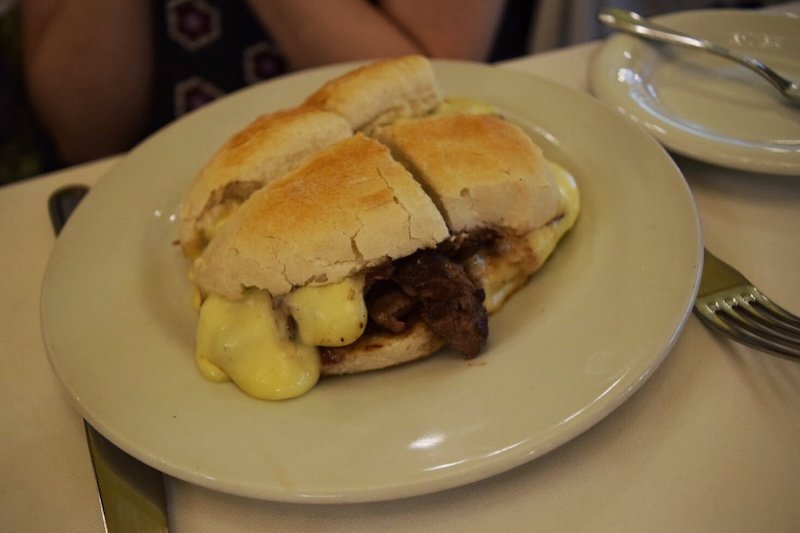
Barros Luco is basically a more awesome version of grilled cheese. Per South American fashion, meat needed to be included into this dish. Confitería Torres in Santiago is home to the Barros Luco as previous Chilean president, Ramón Barros Luco, would frequent this restaurant and almost always request this order to be made especially for him. The combination of tender beef and melted cheese atop fresh-baked marraqueta bread is enough to make anyone’s mouth water (my apologies, vegetarians). Furthermore, Confitería Torres is one of my favorite buildings in Santiago for its old timey feel, making it Santiago’s version of Buenos Aires’ famous Café Tortoni.

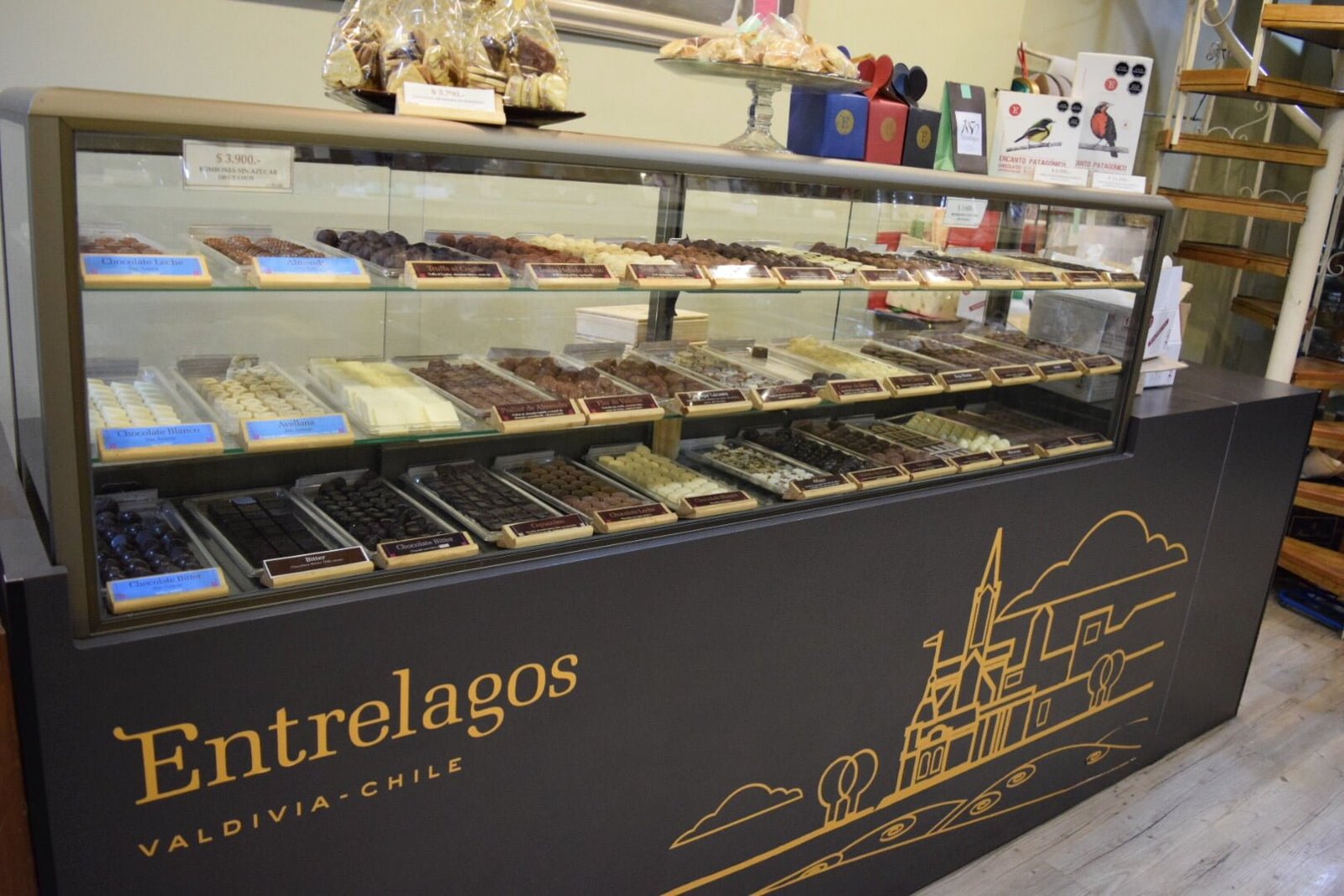
Alfajores – Entrelagos
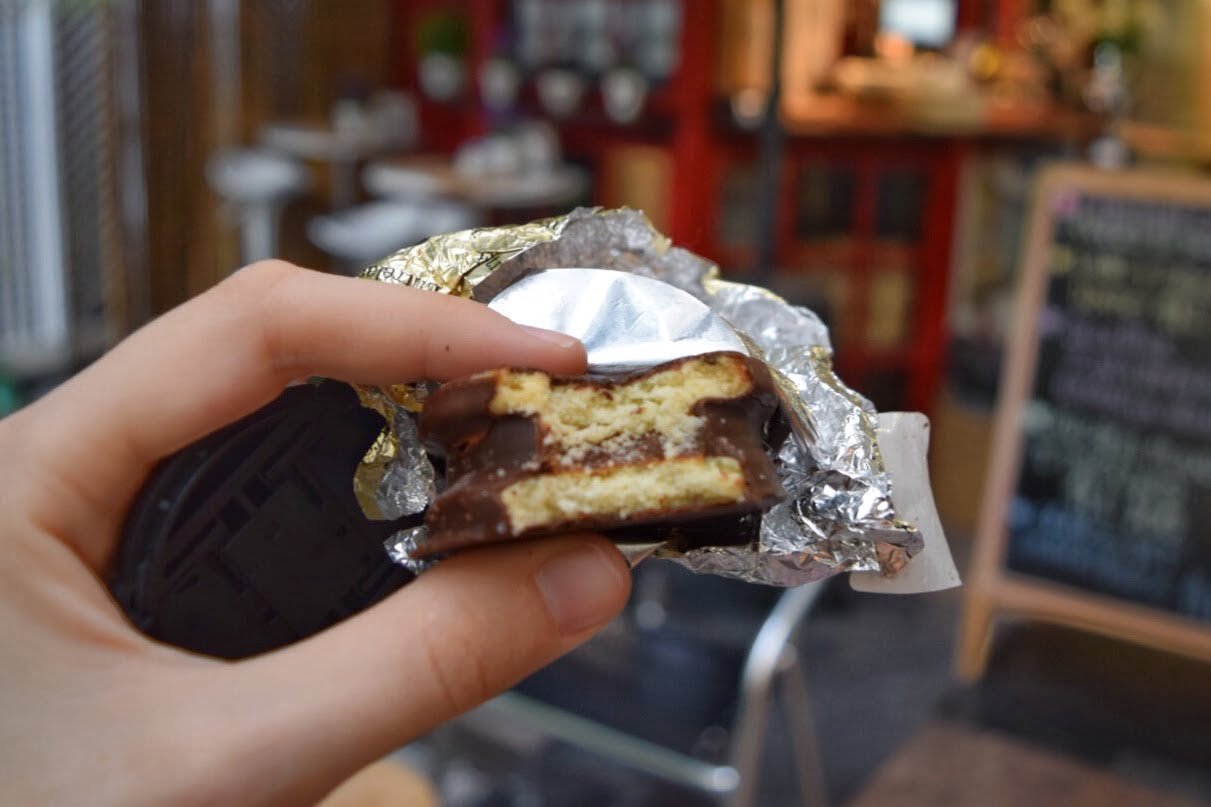
Alfajores are pretty much the best cookies of all time. While an alfajor may look pretty plain in comparison to a Funfetti cake or a chocolate chip cookie at first, wait until you bite into this sweet treat before making a final judgement. Manjar, also known as Dulce de Leche in other countries, fills the inside of this cookie, making it a bit of a sticky manjar sandwich. The cookies making up the top and bottom layers taste a bit like a sugar or butter cookie, and if you’re lucky, you can even find an alfajor covered in chocolate!
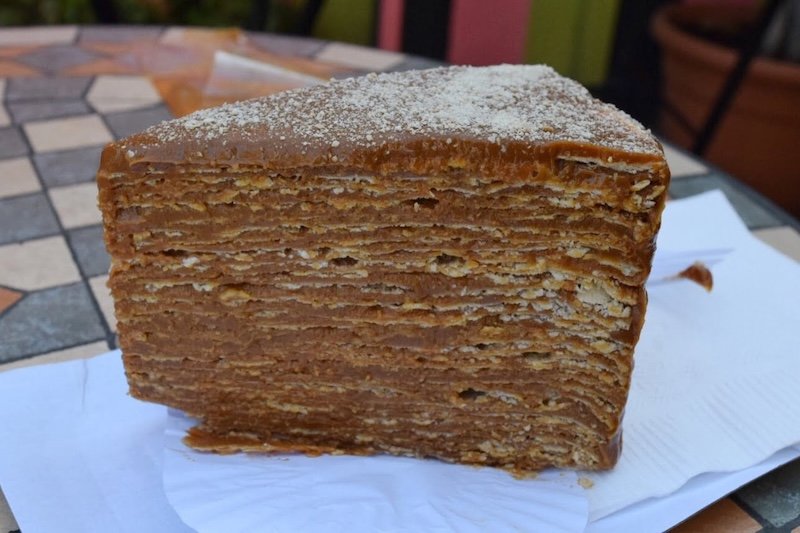
Torta de Mil Hojas – Pastelería Angélica
If you liked the manjar in the alfajor, just wait until you try a “torta de mil hojas”. I myself am typically not a huge fan of cakes in South America as they tend to include a lot of “mermelada” (jam). However, torta de mil hojas is the one cake in Chile that I can’t get enough of. “Mil hojas”, meaning “a thousand leaves” is representative of the shape of the cake, made up of very thin layers of cake and manjar. These thin layers create a wonderful sensation upon biting into this magical creation.
More Chilean Eats Worth Seeking Out in Santiago
Those five are the classics — the ones you’ll see everyone eating and the ones worth knowing by name before you arrive. But Chilean food goes deeper than sandwiches and manjar cake, and Santiago’s neighbourhoods each have their own eating culture worth exploring. Here’s what else is on the menu.
Savoury Dishes You Shouldn’t Leave Without Trying
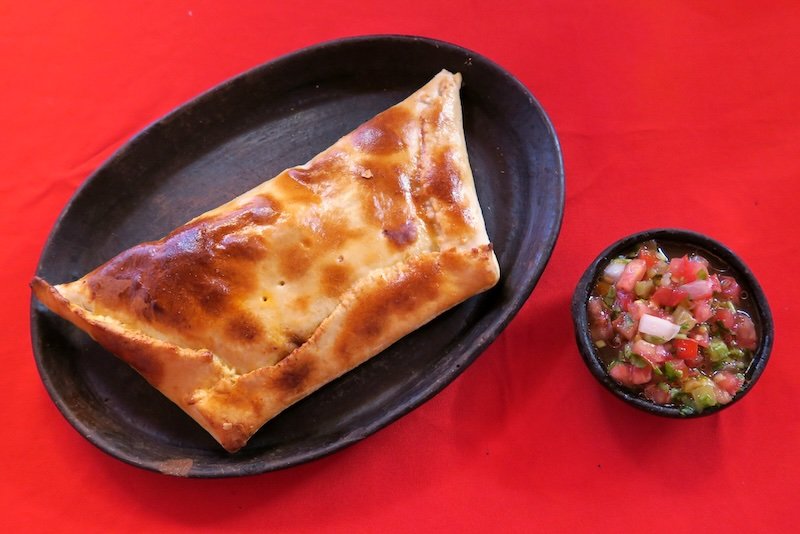
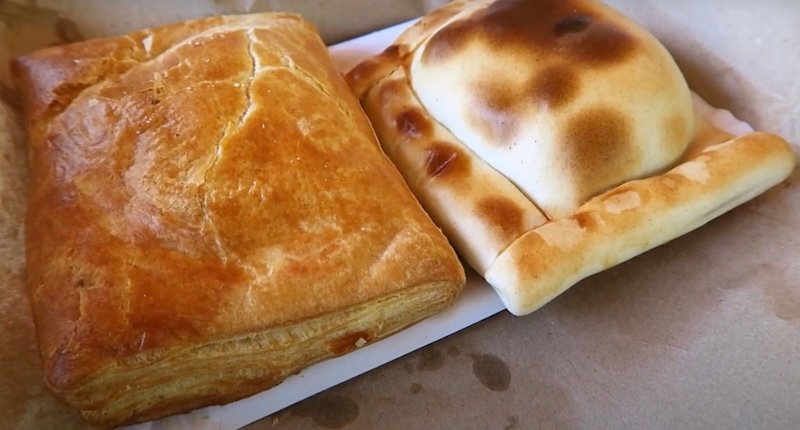
Empanada de Pino
Chile’s national hand pie: a hefty, oven-baked triangle stuffed with seasoned beef, onion, a wedge of hard-boiled egg, a plump black olive, and sometimes a raisin or two.
Where: Old-school panaderías around Barrio Brasil and Yungay, or market stalls inside La Vega Central (Recoleta). Ask for it al horno (baked), not fried, if you want the traditional crust.
Pastel de Choclo
Think shepherd’s pie meets summer corn. A clay dish layered with pino (the same beef-and-onion mix), chicken, a hard-boiled egg and olives, all under a sweet-savory mash of puréed fresh corn that caramelises on top.
Where: Family restaurants (picadas) in Ñuñoa and Maipú; seasonal favourite from December through March.
Cazuela
A clear, golden broth that arrives with generous chunks of beef or chicken, a whole piece of corn on the cob, squash, potato, and rice or noodles. Chile in a bowl, particularly on drizzly winter days.
Where: Menú del día diners around La Vega and fondas during national holidays in September.
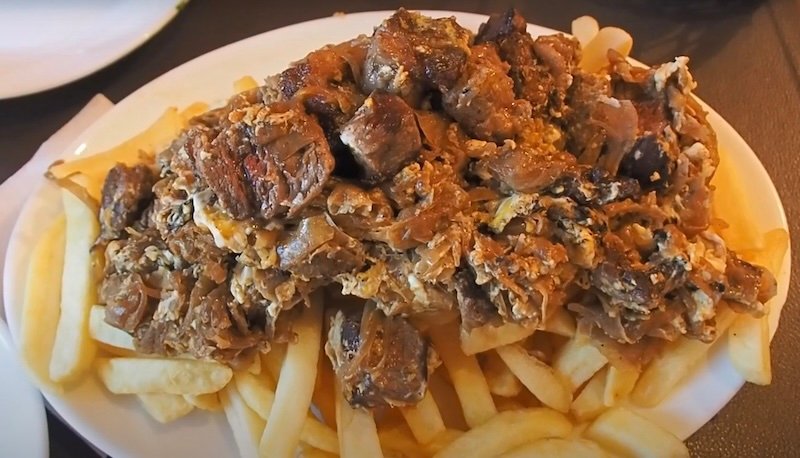
Chorrillana
Post-museum fuel: a messy mountain of fries topped with sautéed onion, thin-sliced beef and fried eggs. Share it. Really.
Where: Pubs in Bellavista and Barrio Lastarria; goes well with a local lager.
Churrasco and Chacarero
If the Barros Luco is your grilled-cheese-with-beef moment, meet its cousins. A churrasco is thin-sliced steak on marraqueta with tomato and palta (avocado). A chacarero adds porotos verdes (green beans) and spicy ají — a refreshing, crunchy twist.
Where: Counter bars in Santiago Centro, many open since the 1940s and 60s.
A lo Pobre
Order any protein “a lo pobre” and you’ll receive a fried egg crown plus caramelised onions and fries alongside it. Steak, chicken, even fish — Chile loves this upgrade.
Where: Available widely; classic versions near Plaza de Armas and Estación Central.
Sopaipillas (con Pebre o Pasadas)
Rainy-day street snack: round golden discs (some recipes add squash to the dough) enjoyed savoury with pebre — Chile’s version of pico de gallo — or sweet as sopaipillas pasadas, dunked in hot chancaca syrup.
Where: Street carts on stormy afternoons; sit-down versions in comfort cafés in Barrio Italia.
Porotos Granados
A hearty summer bean stew with cranberry beans, corn, pumpkin and basil — often vegetarian by default.
Where: Daily-special boards in Ñuñoa and Providencia during summer.
Seafood to Know
Santiago is inland, but Chile’s coastline does the heavy lifting.
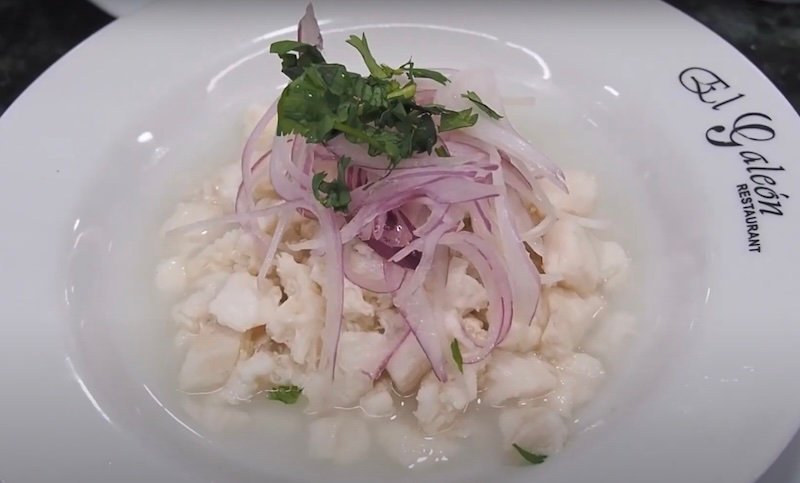
- Caldillo de Congrio: Pablo Neruda wrote an ode to this eel soup — silky, briny and restorative.
- Paila Marina: Mixed shellfish stew; the ocean’s answer to almost any situation.
- Machas a la Parmesana: Razor clams baked with butter, parmesan and a squeeze of lemon.
Where: Mercado Central (Puente Cal y Canto metro) and marisquerías in San Miguel. Go early and pick the busiest stalls.
Merkén and the Mapuche Roots of Chilean Spice
Long before the Spanish arrived, the Mapuche people of southern Chile were already smoking and grinding chili peppers into merkén, a seasoning that shows up quietly across several dishes on this list. The base ingredient is ají cacho de cabra, sun-dried, smoked over a wood fire, then ground with coarse salt and toasted coriander seed on a stone. That smoky heat is what gives a spicier pebre its backbone at a sopaipilla cart, and it’s increasingly what a modern Santiago kitchen reaches for when a dish needs depth rather than raw heat. For decades merkén barely registered outside Mapuche households — it doesn’t appear in most 20th-century Chilean cookbooks — but chefs around Barrio Italia and Lastarria have brought it back into wider circulation over the last fifteen years or so, dusting it over empanada filling, working it into aioli, even folding it into chocolate. If a waiter offers you ají “con merkén” instead of the usual bottled chili sauce, say yes. It’s a different flavour altogether, and one with a much older story than the sandwich in front of you.
Got a Sweet Tooth?
Kuchen and Berlines
Southern German immigration left Chile a pastry legacy. Kuchen (fruit tarts) with berries or apple are everywhere, and berlines (custard-filled donuts) sell out by late morning.
Where: Barrio Italia bakeries and café rows in Providencia.
The Real Story Behind La Once
The kuchen you just read about belongs to a bigger ritual than an afternoon treat: la once, Chile’s daily pause for bread, cheese, jam and tea that generally replaces a formal dinner altogether. Nobody fully agrees on where the name comes from. One version ties it to British merchants who settled Chile’s port cities in the 1800s and brought their eleven o’clock tea break with them, which “once” — eleven, in Spanish — is meant to echo. The other, more colourful version claims Chilean miners disguised their aguardiente drinking with a code word: the liquor’s name has eleven letters, so calling for “once” let them order a shot without saying so out loud. Whichever story is true, la once has drifted from a literal eleven o’clock habit to a spread that usually lands between six and eight in the evening, and it still shows up in roughly four out of five Chilean households. If a Santiago friend invites you to “tomar once,” expect bread, avocado, cheese and jam with a pot of tea rather than a proper sit-down meal — and don’t be surprised if it includes a slice of the same kuchen sitting a few paragraphs up.
Leche Asada and Flan
Home-style baked custards you’ll often find on the postres caseros blackboard.
Where: Traditional diners (fuentes de soda) across Santiago Centro.
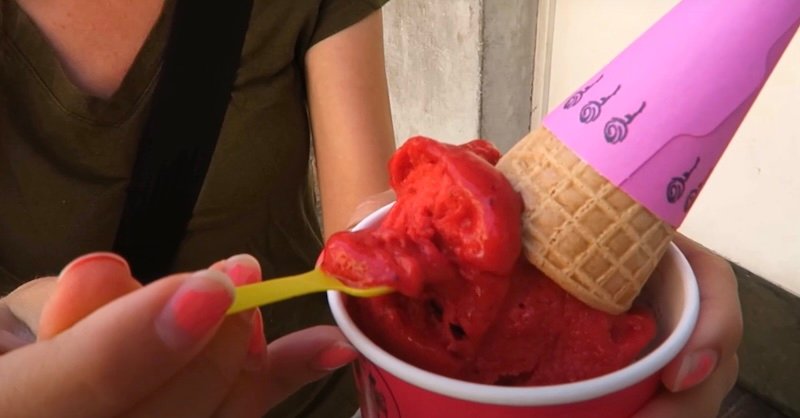
Helado de Lúcuma
Ice cream from a beloved Andean fruit — caramelly, maple-like and uniquely Chilean.
Where: Artisan gelato shops in Lastarria and Vitacura.
Mote con Huesillos
Technically a drink, sneaky as dessert: stewed dried peaches in spiced syrup with a scoop of cooked wheat (mote), served cold in a tall glass. Summer in Santiago in a cup.
Where: Carts around Parque Forestal, the base of Cerro San Cristóbal, and Plaza de Armas.
Markets and Neighbourhoods for Food Wandering
- La Vega Central (Recoleta): Produce wonderland plus tiny kitchens turning out stews, empanadas and fresh juices. Go hungry, bring small bills, and weave the aisles.
- Mercado Central (Centro): Seafood central. Yes, it’s touristy; yes, the fish is still excellent. Walk the perimeter for simpler, cheaper stalls.
- Barrio Lastarria: Post-museum grazing — wine bars, helado stands, and modern takes on Chilean classics.
- Bellavista: Night-owl territory: chorrillanas, completos, pisco sours.
- Barrio Italia: Brunch, bakeries, design shops — a slow afternoon well spent.
- Ñuñoa and Plaza Ñuñoa: Local Santiago: set lunches at picadas, craft beer for sunset.
Book a Guided Food Experience
If you’d rather have a local do the ordering for you on your first day, a guided food experience is worth the money in Santiago. You’ll cover more ground in a few hours than you would wandering alone, and every guide has a story to go with each stop.
- Santiago Best Street Food Tour With a Local Guide — a walking tour through Barrio Lastarria and the city centre that stops for humitas, sopaipillas and other street classics while your guide fills in the history behind each one. Suits solo travellers and couples looking for a first-day orientation.
- Small-Group Santiago Food and Market Tour Including Mercado Central — a four-hour tour built around the city’s most famous seafood market, with tastings woven in as you move through the stalls. Good for anyone who wants the Mercado Central experience without guessing which counter to trust.
- ChileCooks Food Tours — starts with a shopping trip through La Vega Central and Mercado Central, then moves to a home kitchen for a hands-on class making empanadas, ceviche and pisco sour. Best for families or small groups who want to leave with a recipe as well as a full stomach.
How to Order Like a Local
| Word | What You’re Asking For |
|---|---|
| Palta | Avocado (ubiquitous and glorious) |
| Sin mayo | Hold the mayo (you’ll thank yourself by day three) |
| Ají | Chili; con ají means spicy by Chilean standards |
| Menú del día | Set lunch (soup or salad + main + drink) — the value option |
| Para compartir | To share; portions are often generous |
| A punto / bien cocido | Medium / well-done (for steak or burgers) |
| Marraqueta / Hallulla | Crusty or soft bread — your sandwich base choice |
| Propina | Tip; 10% is customary and often suggested on the bill |
Eating Well on a Budget
- Chase the menú del día at lunch — weekday value is hard to beat.
- Sit at counter seating (fuente de soda) for sandwiches; faster and cheaper.
- Share the big plates — chorrillana and pastel de choclo are made for two.
- Hit bakeries in the late afternoon when deals appear.
- Carry small cash for markets and street carts; most sit-down places take cards.
Rough price guide (per person)
Sandwich at counter: CLP $3,500–6,500
Set lunch: CLP $6,500–9,500
Seafood main at Mercado Central: CLP $9,000–16,000
Bakery treat and coffee: CLP $3,000–5,000
Mote con huesillos (large): CLP $1,200–2,000
(Prices fluctuate; exchange rates vary; these are ballpark ranges to help you plan.)

A One-Day Santiago Food Crawl
| Time | Focus | Where | Tip |
|---|---|---|---|
| 09:00 | Coffee and a sweet start | Barrio Italia café | Split a berlín and a slice of kuchen |
| 10:30 | Market wander | La Vega Central | Buy fruit; try an empanada de pino |
| 13:00 | Set lunch | Picada in Recoleta | Order cazuela or porotos granados with house juice |
| 15:30 | Museum break | Lastarria | Gelato — try lúcuma |
| 17:00 | Iconic refresher | Parque Forestal | Mote con huesillos from a cart |
| 19:00 | Sandwich hour | Santiago Centro | Barros Luco or chacarero at a counter bar |
| 21:00 | Nightcap | Bellavista | Pisco sour or a local craft beer — see my Chilean drinks post! |
Where to Stay in Santiago for Food Lovers
If the food crawl above appeals, Barrio Lastarria is the single best neighbourhood to base yourself — it puts you within walking distance of Parque Forestal, Mercado Central, and Santiago Centro’s counter bars, while being a comfortable taxi or metro ride from La Vega and Bellavista. Two options in Lastarria both deliver on location, and three more nearby give you a base to match your budget and travel style, whether that’s a family kitchen, a backpacker’s dorm bed, or a boutique room in Barrio Italia:
- The Singular Santiago Lastarria — a luxury boutique hotel in the heart of Barrio Lastarria with 64 individually designed rooms, a spa, and a rooftop bar with Andes mountain views. The on-site restaurant takes French technique and applies it to Chilean ingredients — worth a dinner even if you’re staying elsewhere. Suits couples and honeymooners. Confirmed on Booking.com.
- Hotel Cumbres Lastarria — the more accessible option in the same neighbourhood, with individually styled rooms, a rooftop restaurant with a pool, and immediate access to the wine bars, gelato stands and modern Chilean kitchens that make Lastarria a natural food home base. Suits mid-range travellers who still want a rooftop view. Confirmed on Booking.com.
- Maison Italia 1029 — a six-room boutique hotel tucked into Barrio Italia, the neighbourhood built for the bakery-hopping, brunch-loving side of this food crawl. Each room opens onto its own small terrace, and the attached café serves the same kind of fresh juice and egg dishes you’ll find at the brunch spots nearby. Suits couples and anyone who prioritises character over room size. Confirmed on Booking.com.
- Apart Hotel Providencia — self-catering apartments near Manuel Montt in Providencia, each with a full kitchen, a short walk from Salvador metro and close enough to Bellavista and Barrio Italia to explore both on foot. Suits families or anyone who wants to store market finds from La Vega in their own fridge rather than eat everything in one sitting. Confirmed on Booking.com.
- Pariwana Hostel Santiago — set in a converted century-old house in Bellavista, a few minutes’ walk from Patio Bellavista and the pisco-sour bars mentioned in the nightcap stop above. Dorms and private rooms are both available, with a shared kitchen and a communal patio. Suits solo travellers and budget-conscious backpackers who want to be in the middle of the city’s liveliest food-and-drink strip. Confirmed on Booking.com.
How Carménère Became Chile’s Own Grape
The Carménère in the pairing list below has a stranger history than most of the food on this page. It’s originally a Bordeaux grape, one of six varieties the French used in their classic blends, until a louse called phylloxera wiped out Carménère’s vines across Europe in the 1860s and French growers never bothered replanting something so difficult to ripen. Chile had already imported cuttings in the 1850s, though, and because the country’s isolation kept phylloxera out entirely, those vines survived — quietly mislabeled as Merlot for well over a century. It wasn’t until November 1994 that a visiting French ampelographer noticed something off about the leaves on a “Merlot” vine in a Maipo vineyard and traced it back to the grape everyone assumed had gone extinct. Chilean winemakers then spent the better part of a decade figuring out how to actually make wine from a grape nobody had vinified on purpose in a hundred years, and Carménère is now considered the country’s signature red. So when a Barros Luco or a pastel de choclo comes with a glass of Carménère on the side, you’re drinking a grape that survived by accident, in the one country that never noticed it had gone missing.
Order and Pairing Reference
| Dish | What It Is | Order Like This | Pair With |
|---|---|---|---|
| Lomito | Pork sandwich, avocado, mayo | “Lomito italiano, sin mayo” (if you prefer) | Local lager |
| Completo | Hotdog with avocado, mayo, tomato | “Italiano” or “dinámico” (with sauerkraut and sauces) | Soda or mote on a hot day |
| Barros Luco | Beef and melted cheese | “En marraqueta, por favor” | Light red (País) or a cola |
| Empanada de pino | Baked beef empanada | “Al horno, por favor” | Pebre on top and a berry juice |
| Pastel de choclo | Corn-topped casserole | “Sin azúcar arriba” if you prefer it less sweet | Carménère or mint lemonade |
| Cazuela | Brothy meat and veg soup | “De vacuno / de pollo” | Ají on the side and marraqueta |
| Chorrillana | Fries, beef, onions, fried eggs | “Para compartir” | A pitcher of beer |
| Torta de mil hojas | Manjar-layered cake | “Una porción para compartir” | Espresso or herbal tea |
Santiago Food FAQ
What are the three must-try Santiago sandwiches and where do I find them?
- Lomito (pork, avocado, mayo; add chucrut): Fuente Alemana (Providencia; Centro).
- Completo Italiano (hotdog with avocado, mayo, tomato): Dominó (multiple branches; counter seating).
- Barros Luco (beef and melted cheese on marraqueta): Confitería Torres (Alameda; classic old-world dining room).
I’m craving sweets — which Chilean desserts should I prioritise?
- Alfajores stuffed with manjar — look for chocolate-dipped versions at Entrelagos counters.
- Torta de Mil Hojas (ultra-thin layers and manjar): Pastelería Angélica and traditional bakeries around Providencia and Ñuñoa.
Beyond sandwiches, which savoury dishes are worth seeking out?
- Empanada de pino (baked, not fried)
- Pastel de choclo (corn-topped casserole)
- Cazuela (brothy meat and veg soup)
- Chorrillana (fries, beef, onions, fried eggs — share it)
Find all of these at La Vega Central, neighbourhood picadas in Ñuñoa and Providencia, and pub menus in Bellavista and Lastarria.
Where should I go for seafood in Santiago?
Mercado Central (Puente Cal y Canto metro) and the surrounding marisquerías for caldillo de congrio, paila marina and machas a la parmesana. Go early and choose the busiest stalls.
What’s a good one-day food crawl through the city?
Barrio Italia for a bakery start → La Vega Central (empanada and juice) → Lastarria (gelato, a stroll) → Parque Forestal (mote con huesillos) → Centro for a counter sandwich → Bellavista for a pisco sour or craft beer.
How much cash should I plan per person?
- Counter sandwich: CLP $3,500–6,500
- Set lunch (menú del día): CLP $6,500–9,500
- Seafood main at Mercado Central: CLP $9,000–16,000
- Bakery treat and coffee: CLP $3,000–5,000
- Mote con huesillos (large): CLP $1,200–2,000
Cards are widely accepted at sit-down places; carry small cash for markets and carts.
Which neighbourhoods are best for grazing?
- La Vega Central (Recoleta): hearty staples, produce, fresh juices.
- Mercado Central (Centro): seafood.
- Lastarria: wine bars, gelato, modern Chilean cooking.
- Barrio Italia: bakeries, brunch, creative cafés.
- Bellavista: night bites — chorrillana, completos, drinks.
- Ñuñoa: local picadas and craft beer around Plaza Ñuñoa.
How do I customise my order like a local?
- Palta = avocado. Sin mayo = hold the mayo. Con ají = with chili.
- Bread: marraqueta (crusty) or hallulla (softer).
- Steak doneness: a punto (medium) or bien cocido (well-done).
- Big portions? Ask para compartir (to share).
What is mote con huesillos and where do I find it?
A summer icon: stewed dried peaches in spiced syrup with cooked wheat (mote) — sweet, cold and surprisingly filling. Carts around Parque Forestal, the base of Cerro San Cristóbal, and Plaza de Armas.
I’m vegetarian — what are my best options?
Porotos granados (summer bean stew), ensalada chilena (tomato and onion), sopaipillas con pebre or as sweet sopaipillas pasadas, vegetarian versions of pastel de choclo, all the bakery sweets, and gelato (lúcuma is essential). Ask for “sin carne/pollo/pescado” and “sin caldo de carne” when ordering soups.
Tipping, market hygiene and etiquette?
Ten percent is customary at sit-down restaurants and is often suggested on the bill. At markets, pay first, then find a stool on the perimeter; busy stalls mean fresher turnover, and hand gel is useful. For empanadas, look for the posted “al horno / frito” signs and choose according to your preference.
Quick pairing suggestions?
- Lomito → light lager
- Completo italiano → soda or mote on hot days
- Barros Luco → a cola or light red (País)
- Empanada de pino → pebre and berry juice
- Pastel de choclo → carmenère or mint lemonade
- Torta de mil hojas → espresso or herbal tea
Are there guided food tours or cooking classes worth booking?
Yes — a street food walking tour through Lastarria and the city centre, a market-focused tour through Mercado Central, and a hands-on cooking class that starts with shopping at La Vega Central are all solid options. Pick based on what you want out of it: tastings and history on the street food tour, market context on the Mercado Central tour, or a recipe to take home from the cooking class.
Where should I stay if I’m visiting Santiago specifically for the food scene?
Barrio Lastarria puts you closest to Mercado Central and the Centro sandwich counters — The Singular Santiago Lastarria and Hotel Cumbres Lastarria both work well there. Barrio Italia (Maison Italia 1029) suits bakery-and-brunch mornings, Providencia (Apart Hotel Providencia) works if you want a kitchen for market finds, and Bellavista (Pariwana Hostel Santiago) keeps you close to the nightcap stops on the food crawl.
If you enjoyed this post, you may want to check out these Chilean drinks and their recipes too.
What’s your favourite Chilean dish?
What is the most common Chilean dish?
That’s a difficult question! Sopaipilla is really common on the streets and cazuela is common in the winter. It changes on who you ask, the region of Chile, and the time of year 🙂