
It’s probably a good thing we were riding on horseback because the trek began after lunch; a very very big lunch, set in a yurt, with a spread that made it feel like Thanksgiving. On the table before us were plates of tomato and cucumber salad with dill, a hearty soup with carrots and cabbage, and plov, a staple at Kyrgyz dinner tables featuring rice with fried beef, onions and carrots. And because we weren’t yet bursting at the seams after that three course meal, there were also little pieces of fried dough known as boorsok, which we enjoyed with jam, as well as little cookies and chocolate bars. Some riders may have needed a little push in the derriere to mount their horses once the meal finished, but let that be a testament to Kyrgyz hospitality.
Your Adventure Travel Guide To Song Kol Lake
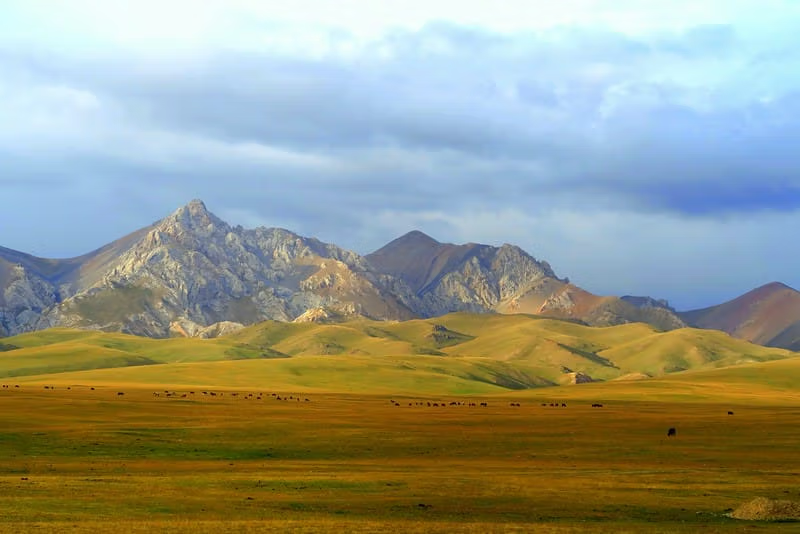
Launching the Song Kol Journey from Kochkor
But let’s back up a little bit. The adventure began the previous night in the town of Kochkor. This would be our launching pad for the 2-day horse trek to Song Kol, a beautiful alpine lake set in Kyrgyzstan’s northern Naryn Province.
We arrived at Mira Guesthouse where we unloaded our bags and were soon called to dinner. Here we were treated to a traditional music performance by a band that spanned three generations. We may not have understood the words as they were singing in Kyrgyz, but at the start of each song the leader of the troupe would tell us what each song was about; there were songs about taking the animals up to the summer pastures, songs about young love, and songs about legends and national epics.
Having just arrived in Kyrgyzstan the previous night, this was our first foray into the culture and we all watched with wide eyes and intrigue as the musicians pulled out instruments we’d never seen before and even used their throats to produce guttural sounds which mixed with the music.
Independence Day Festivities & The Mountain Ascent
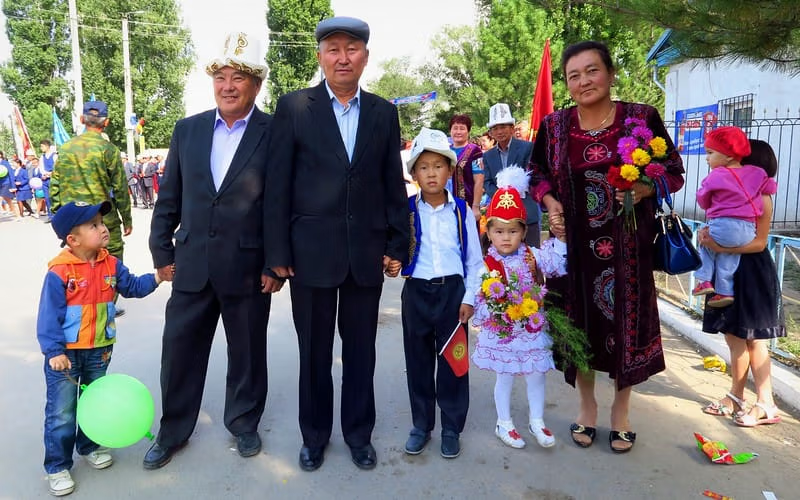
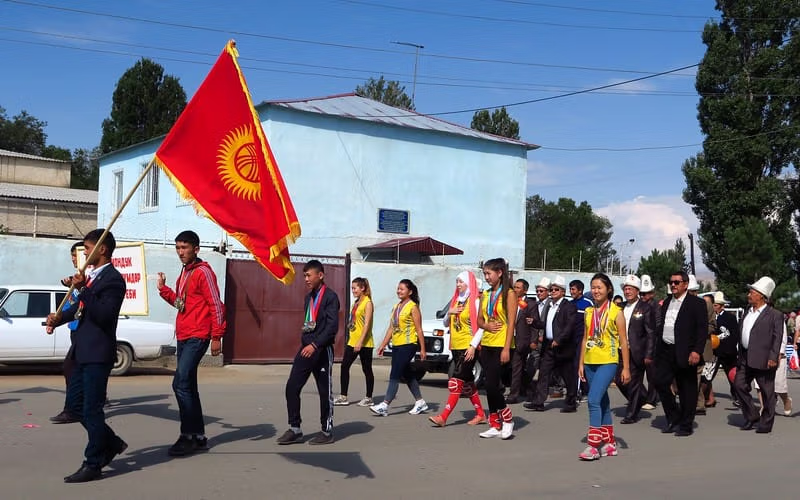
The following morning, we woke up to the Independence Day celebrations, so we headed into Kochkor to check out the festivities. Even though it was only mid-morning, music was blaring from giant speakers on the side of the road, the back streets were filling up with vendors selling everything from shashlik to cotton candy, and the parade was already in full swing.
We spent some time taking photos – this is one country where people love to have their photo taken and they’re not shy about asking! – and then it was time to head into the mountains. After a short drive, we arrived at our first camp where our host family stuffed us with the aforementioned meal. Then, hauling the few possessions that we had managed to cram into our daypacks, we bid our hosts farewell and rode into the valley where we began the slow ascent up the mountains.
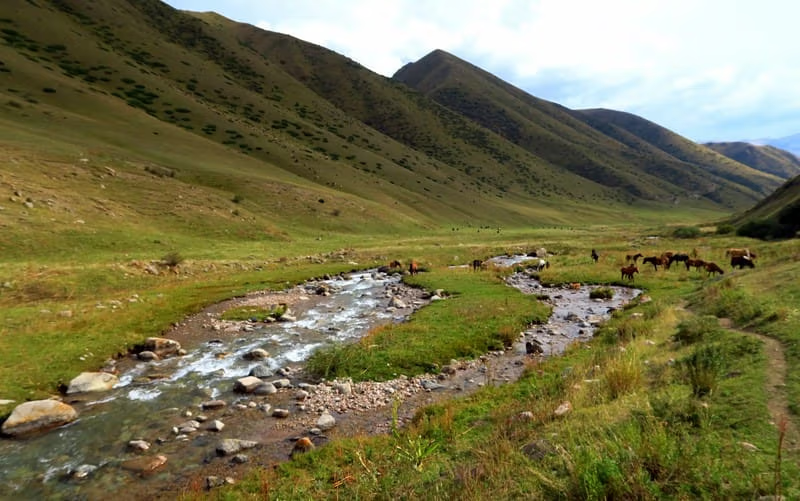
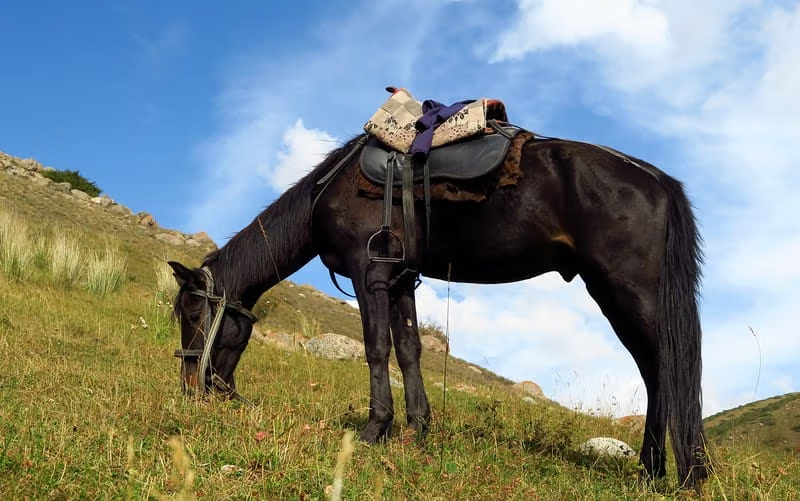
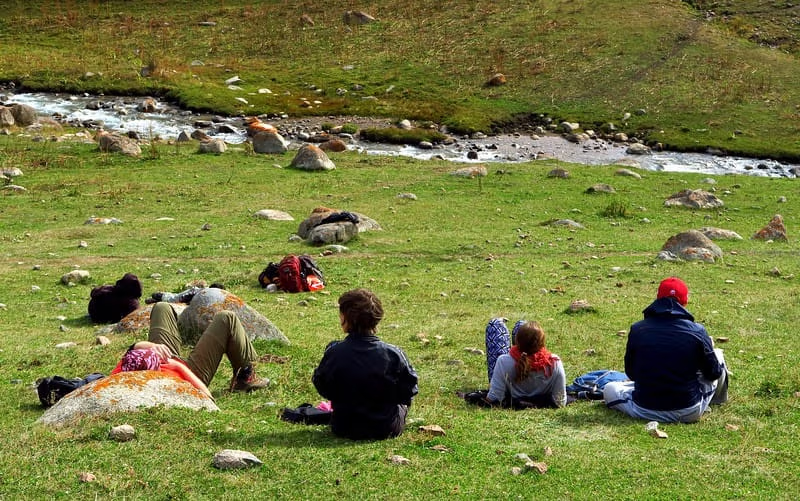
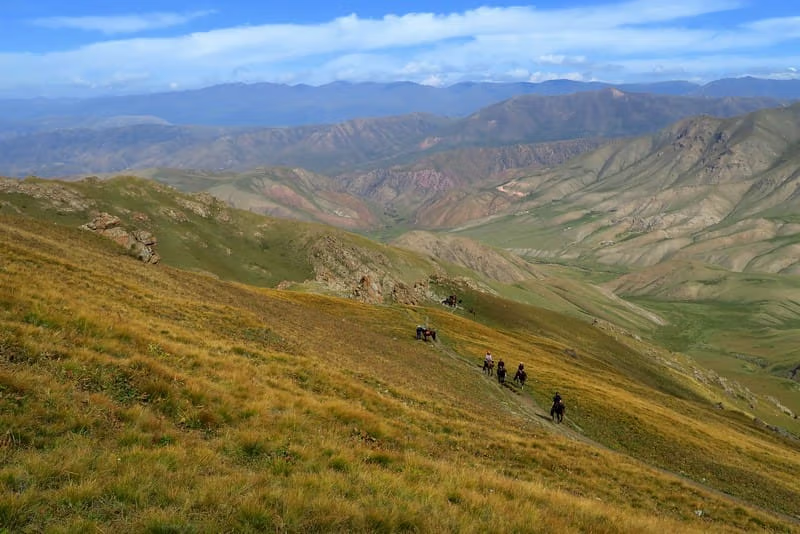
On our first day, we rode for roughly 5 hours. It was a slow ride with a lot of zig-zagging up and down switchbacks, but it was a great pace to enjoy the surrounding scenery. The ranges we crossed reminded me of a mix of the Scottish Highlands, the Drakensberg Range in South Africa, and the dreamy landscapes of Iceland I’ve only ever seen in photos. And you know what was even more amazing? Seeing eagles flying through the valleys right at home in their natural habitat!
Life in a High‑Altitude Yurt Camp
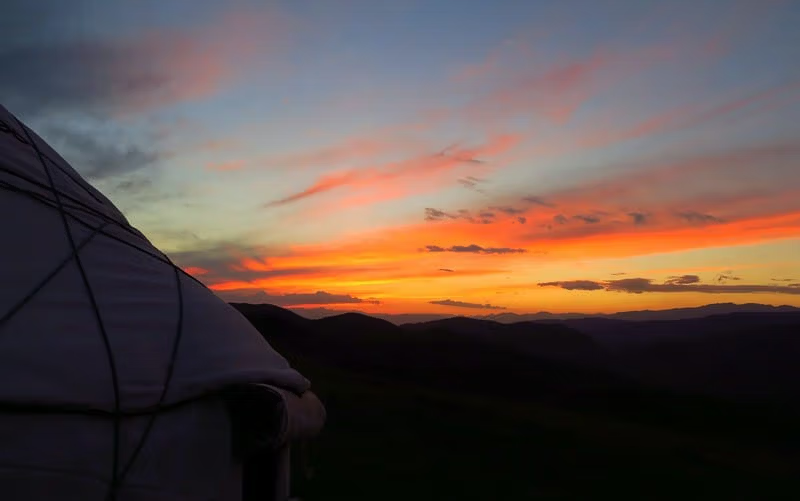
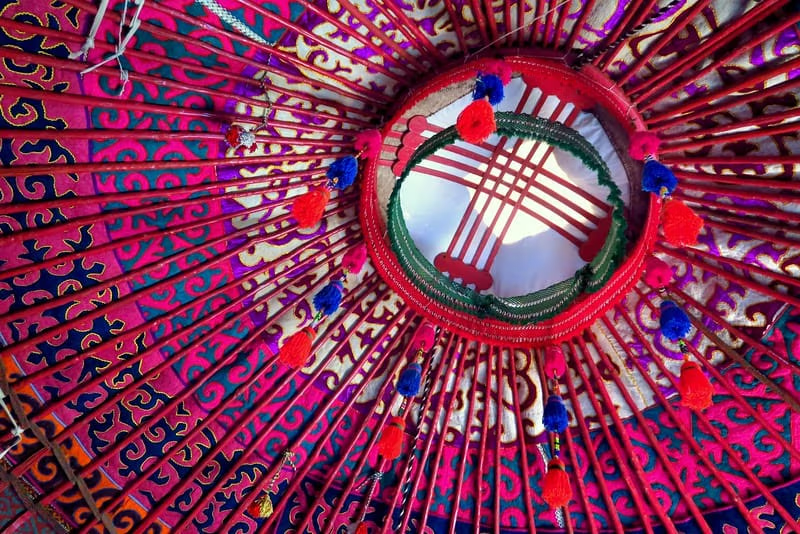
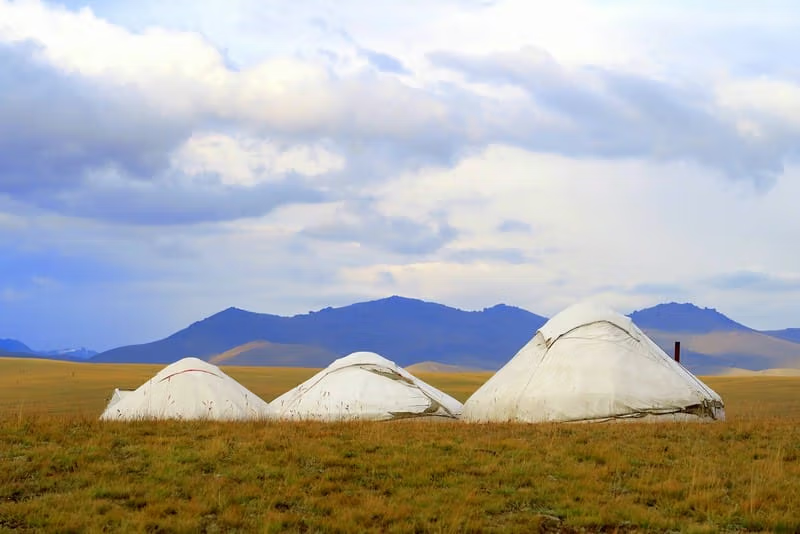
After a long afternoon of riding, we arrived at our yurt camp just as the sun was setting. Our camp was small with only 3 yurts: 1 for our nomadic host family and the other 2 for guests.
You’re probably wondering what a family is doing living in the middle of a mountain range a 6-hour horse ride from the nearest settlement, am I right? Nomadism was once a traditional way of life in Kyrgyzstan, and while many people have settled into life in urban centres, there are still families that pack up their homes and spend the summer months up in the pastures so that their animals can graze and fatten up for the winter. Life up in the pastures is basic and it brings its own set of challenges, but it’s also quiet and peaceful, and I think this is what draws travellers all the way out there.
Yurt Life
In our yurt, we were treated to yet another delicious dinner, where the cups of tea kept flowing and the plates of food kept on coming. By the time the sun set, we were all ready for bed so we crawled under the blankets for the night even though it was still relatively early.
This was my first time sleeping in a yurt and it was one of the best sleeps I’ve had. There were no mattresses, just layers upon layers of blankets that offered both padding and warmth. I don’t know how, but I managed to sleep a solid 10 hours and I awoke the following morning to the sound of goats hoarking which is a strange way of waking up – I was blaming it on the boys next door until I walked out the door!
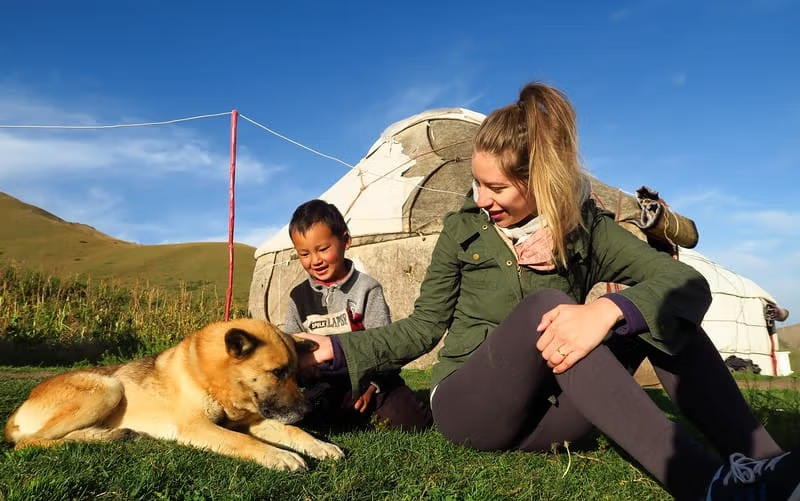
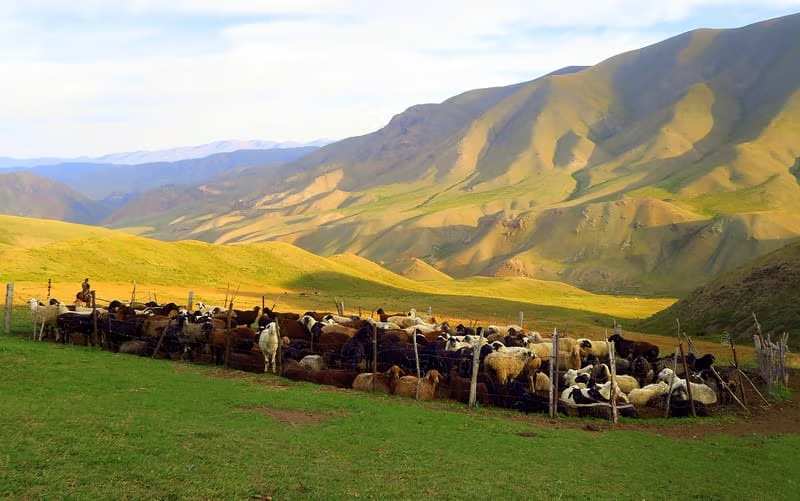
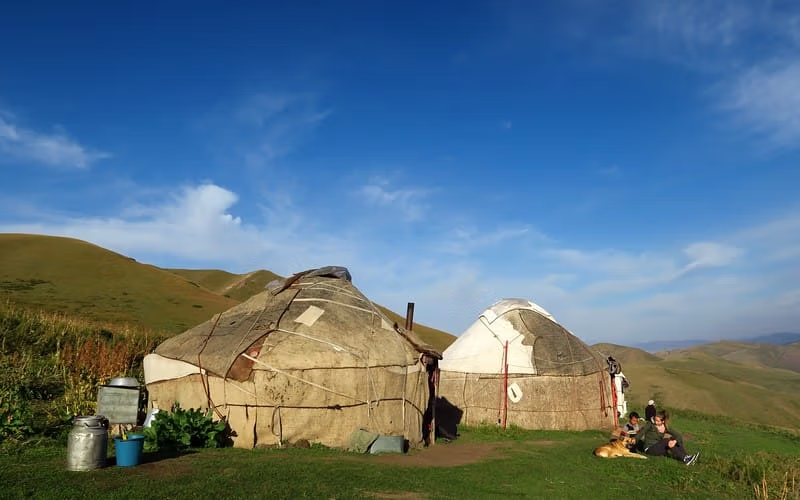
After a hot breakfast, it was time to get back on our horses and continue the journey. The funny thing is that our horses had hopped away overnight even though their front legs were tied, so our guides had to wander down the valley and then bring them all back to camp.
Since we had a bit of time in our hands, I befriended the family’s dog and then the family’s young boy also came over. We didn’t speak each other’s language but the young boy was able to teach me how to say ‘whiskers’ in Kyrgyz – while tugging at the dog’s whiskers! – and then I taught him how to say ‘horse’ in English.
Crossing Kimliche Pass to the Shores of Song Kol Lake
The second day of riding brought us across the Kimliche Pass where we had sweeping views of the surrounding valleys. That morning was probably the hardest day of riding for me as the downhill stretches were destroying my knees, so I gave my legs and my horse a break and ended up walking a few kilometres.
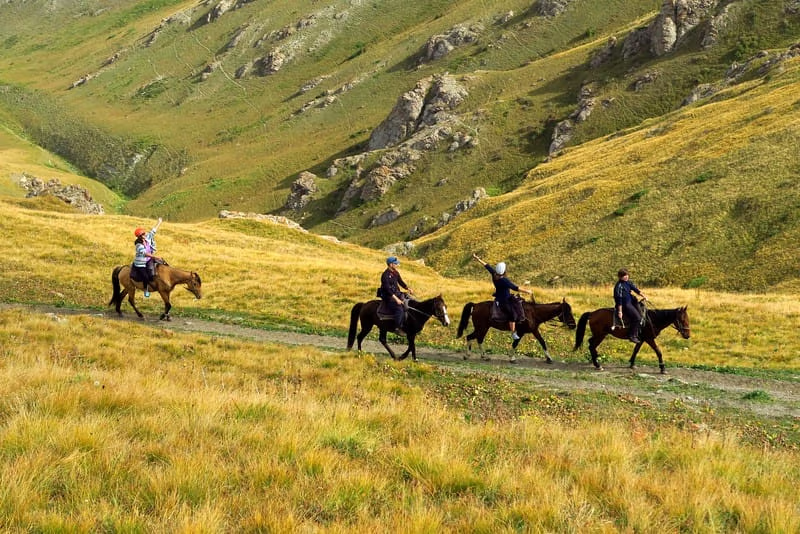
By the time we reached our lunch stop at yet another yurt camp, we were all famished and finished everything that was put in front of us. This camp is also were I had the best meal of the trip! Picture a loaf of bread being pulled out of a wood-burning stove, and then add a dollop of home churned cream with raspberry jam. It was like afternoon tea nomad style. My mouth waters every time I think of it!
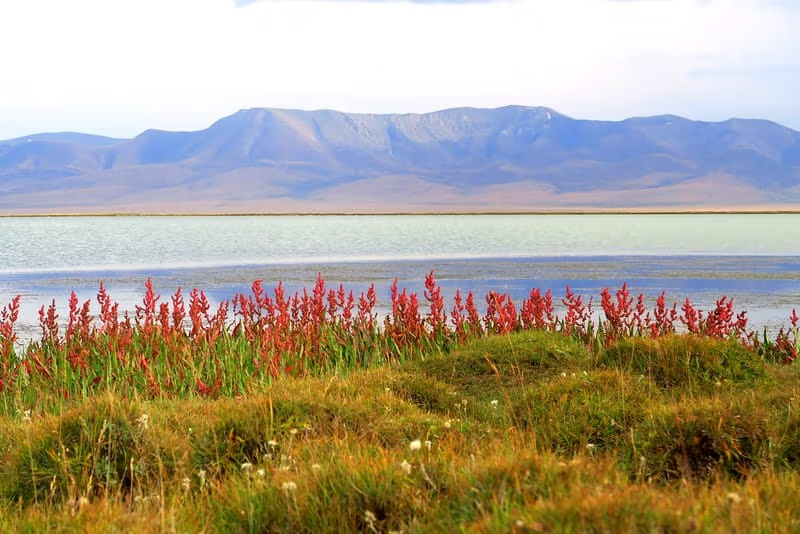
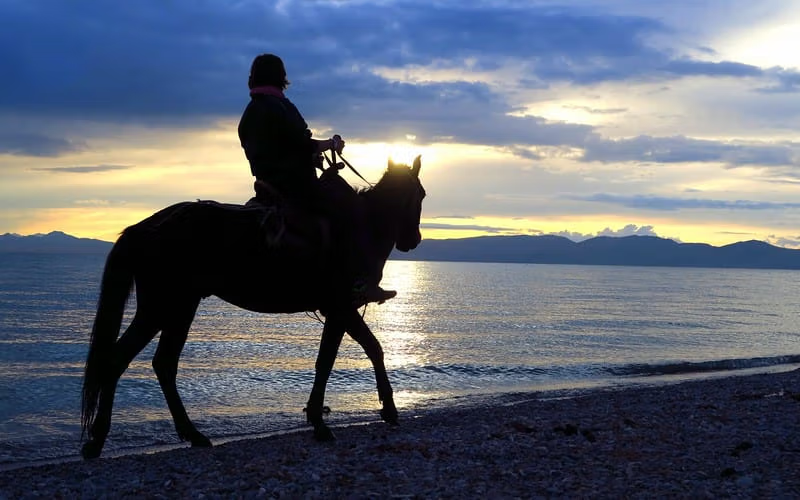
I reluctantly hopped back on the horse after that meal and then we rode the remaining 2 hours along the shores of Song Kol Lake. We followed the edge of the lake as the clouds turned darker and started rolling in on us, but we made it to camp just before the rain hit.
Sunset Reflections, Farewell Feast, and the Road Home
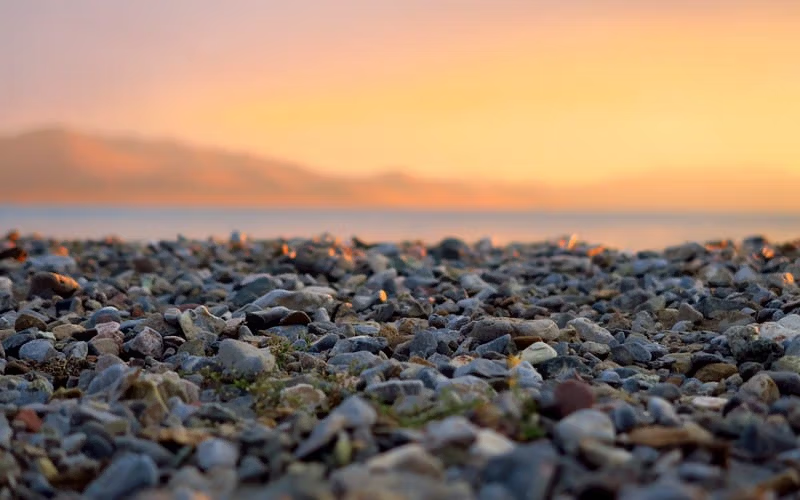
In total, I spent 3 weeks in Kyrgyzstan, but I have to say my favourite spot was here on Song Kol Lake. We had jagged mountains to one side, the lake with a row of snow-capped mountains to the other side, and nothing but a vast plain with a sprinkling of white yurts in between. It was already postcard perfect, but then sunset hit and the mountains started glowing in the soft light, and it was the most beautiful thing I have ever seen. We all hung around the lake’s edge until our fingers froze and the sun slowly began to dip behind the clouds; even the dogs we had befriended at the camp joined us.
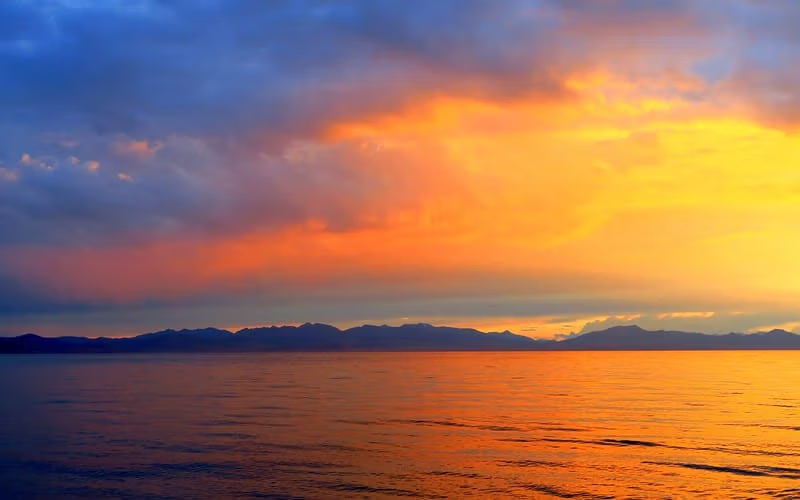
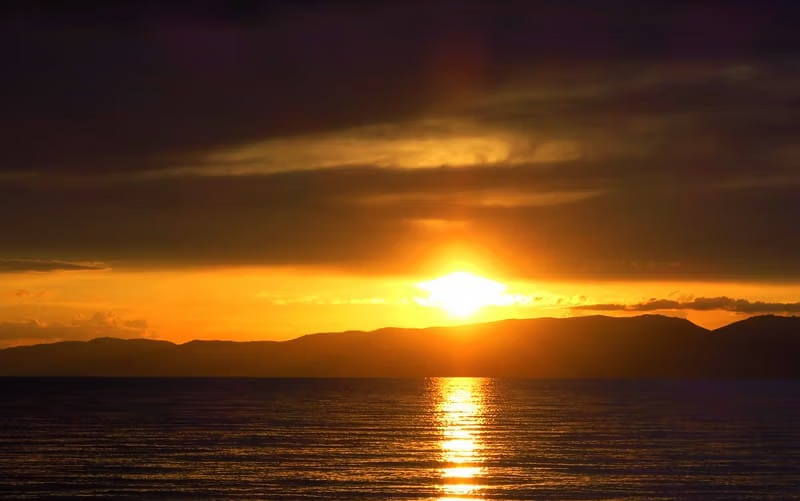
That evening we had yet another feast, this time sharing some vodka and cognac with our host family. We also had a crackling stove inside our yurt, so it was toastier than our previous night and it wasn’t long before we were all asleep.
When we woke up the following morning, we enjoyed one last breakfast, and just like that our 2-day trek to Song Kol Lake was over. We packed our bags, said our goodbyes to everyone, and hopped in a van that drove us out of the valley and down the steep mountain range back to the town of Kochkor, where we resumed our travels around Kyrgyzstan.
If this sounds like your type of adventure, you can check out Feel Nomad’s tours, which include Song Kol Lake.
And if you want to tackle an even lesser known trail, there’s the Panorama Trek outside Bokonbayevo, which is a 3-day trek that does a big loop through the valley. Picture yurt stays, an alpine lake, ancient petroglyphs, and meals shared with your host family.
Happy travels!
Planning Your Song Kol Horse Trek: What You Need to Know
If reading all of that has you plotting your own route to Song Kol, here’s the practical side of things — everything we learned from ours, plus what I wish someone had told us before we arrived in Kochkor.
Getting to Kochkor
Kochkor is your launching pad and getting there from Bishkek is straightforward. The most common option is a marshrutka (shared minibus) departing from Bishkek’s main intercity bus terminal — the long-running West Bus Station closed permanently, so confirm the current departure point when you book, since Bishkek’s terminals have shifted around in recent years. The ride runs roughly 3 hours and is very cheap per seat. Shared taxis do the same run faster and for a little more; drivers congregate at the same terminal, and you pay per seat. Either way, sort out your cash before you leave Bishkek. International cards are unreliable at Kochkor ATMs and essentially useless once you’re on the trail — withdraw Kyrgyz Som in the capital and bring more than you think you’ll need.
There is no public transport to Song Kol itself. The final stretch from Kochkor (or nearby Kyzart village) is by horse or 4×4 only — which is, frankly, exactly as it should be.
Timing Your Trek
| Month | Weather | Pros | Cons |
|---|---|---|---|
| June | 10–18°C days, chilly nights | Wildflowers blanket the meadows; baby foals everywhere | Trails still muddy from snowmelt; yurt camps open from mid-June |
| July–Aug | 15–22°C, crisp evenings | Peak nomad season — yurt camps lively, lake warm enough for a frigid dip | Highest prices and busiest trails |
| Sept (1st half) | 8–15°C, golden grasslands | Fewer visitors, dramatic autumn colours | Nights drop below zero — pack thermals |
| Sept (2nd half)–May | Sub-zero, snowbound | None for first-timers | Yurt camps close October; lake inaccessible until following June |
Fitness and Saddle Reality Check
- Riding skill: Absolute beginners manage fine — the horses know the path better than any of us did. You will ache after five hours in the saddle, though. If you can get even a short practice ride at a stable before you go, your knees will thank you later.
- Altitude: Song Kol sits at 3,016 m. Spend at least a full day in Kochkor at around 1,800 m first, drink plenty of tea, and keep a slow pace on the ascent. Mild headaches are common and usually pass if you hydrate well and don’t push it.
- Daily distance: Expect 18–25 km on Day 1 and around 15 km on Day 2. Most of it is a gentle plod, but two steep passes have sections where dismounting and walking is genuinely the right call — for your knees and for your horse. I walked a few kilometres on Day 2 and have no regrets about it.
Choosing a Trustworthy Outfit
Song Kol’s popularity has a cost the brochures don’t mention: it’s now one of the most heavily ridden trekking corridors in the country, and not every horse coming off that trail has had an easy season. Guides and outfitters will openly admit that demand during July and August pushes some animals into back-to-back trips with too little rest between groups. None of that showed up on our own trek — our horses were well-fed and clearly cared for — but it’s worth asking a direct question before you book: how many trips has this horse done this month, and does it get days off between them? A reputable outfitter won’t flinch at the question. If you notice saddle sores, protruding hip bones, or a horse favouring a leg partway through the trek, say something to your guide right away rather than waiting until you’re back in Kochkor — most will swap in a fresh horse without argument if you raise it early. Booking through CBT Kochkor or an established local guesthouse remains the safer bet precisely because their reputation depends on repeat referrals, not a one-off sale to a reseller who never sees the horses at all.
What to Pack (and What to Leave Behind)
Must-haves:
- Wind-proof shell and a puffy jacket: Weather at altitude flips from T-shirt to hail in minutes. This is genuinely non-negotiable.
- Riding gloves: Reins chafe and temperatures bite. Worth it.
- Neck gaiter or buff: Doubles as a dust mask when the horses ahead kick up grit on drier sections of trail.
- Headlamp: Yurts go completely dark once the dung-stove embers die. One of the most useful things I had with me.
- Power bank: Zero electricity at the camps. A 10,000 mAh block keeps cameras and phones alive for the whole trip.
- Eco-soap and wet wipes: The lake is sacred — no soap in the water, please. Wet wipes become invaluable when the nearest proper shower is back in Kochkor.
Leave behind:
- Sleeping bag: Most operators provide thick quilts. Extra liners are supplied in autumn.
- Full DSLR kit: One sturdy mid-range zoom is enough — you will be ducking under low saddle bags all day long.
- Formal clothes: Your only evening event is stargazing the Milky Way.
Money Matters
- Cost range: If you arrange locally through the CBT Kochkor office or a guesthouse in Kochkor, a 2-day trek typically runs around $80–120 per person all-inclusive (horse, guide, meals, yurt overnight). Full packages arranged from Bishkek run higher — $150–250+ per person depending on group size and operator. Prices vary and have been rising, so treat any figure as a rough guide and confirm when you book.
- Booking: The CBT (Community Based Tourism) office in Kochkor is the established local network and the most reliable starting point — they work directly with vetted guide families and yurt camps. Any guesthouse in Kochkor can also arrange treks for you, sometimes at slightly lower rates. If you’d rather have everything confirmed before you land, a 3-Day Horseback Riding Adventure to Song-Kul Lake departing from Kyzart village can be booked in advance and runs year-round in small groups. For a shorter window, the Song-Kul Lake Horseback Ride with Yurt Stay and Burana Tower packs two days in the saddle together with a stop at the 11th-century Burana Tower on the way back to Bishkek. Feel Nomad’s tours are also worth looking at for fully arranged packages from Bishkek, including the eagle hunter demonstration add-on.
- Cash only: Settle everything in Kochkor before heading out. There are no payment facilities on the jailoo. Withdraw Kyrgyz Som in Bishkek — don’t count on Kochkor ATMs for international cards.
- Tipping: Guides appreciate 5–10% of the tour cost, handed discreetly at drop-off.
Kyrgyzstan’s Horseback Game You Might Catch Along the Way
If your visit lines up with a village festival — and across the Naryn region in summer, there’s a decent chance it will — you might catch a glimpse of Kok-Boru, sometimes called Ulak Tartysh, the horseback game Kyrgyz riders have played for centuries and that UNESCO recognized as intangible cultural heritage in 2017. Two teams on horseback compete to carry a goat carcass — a rubber mould stands in for it at most matches staged for visitors — into the opposing team’s scoring circle, and the speed of it is startling: riders lean almost sideways off the saddle at a full gallop to scoop the carcass off the ground without dismounting. It’s often compared to polo, and several historians argue polo actually descended from it. Community-based tourism groups around Kochkor and Naryn sometimes stage smaller matches for visiting groups outside of festival season, so it’s worth asking your guide whether anything’s on nearby during your trek — it’s a far better introduction to Kyrgyz horsemanship than anything you’ll read in a guidebook.
Yurt-Side Etiquette
- Step over, never on, the wooden threshold — it carries genuine cultural significance and nomadic families notice.
- Decline with an open palm rather than a pointing finger, which reads as rude.
- Drink at least one cup of kumis (fermented mare’s milk) if it’s offered — it’s polite to sample, and perfectly fine to decline refills after that.
- Ask before photographing — especially elders. People were genuinely lovely about photos when we asked directly rather than assuming.
Optional Add-Ons
- Extended lake circuit: Some operators offer longer 3-day routes continuing west along Song Kol’s northern shore and exiting via a different mountain pass — worth asking about when you book if you have the time and the legs for it.
- Eagle-hunter demonstration: A local berkutchi (eagle hunter) can meet your group en route for a display — coordinate through Feel Nomad or your CBT guide when booking. Ask about current pricing when you arrange it.
- Sheep-shearing workshop (June): Hands-on session with nomad families as they prepare wool for felting. A memorable way to understand what the summer pasture season actually involves beyond the riding.
The Carpets Under Your Feet
Look closely at the floor of your yurt and you’re standing on centuries of craftsmanship. Those thick, geometrically patterned rugs are shyrdaks, made with a technique — cutting contrasting sheets of felt and stitching the pieces together in mirrored patterns — that Kyrgyz women have passed down for so long that UNESCO listed it as heritage in urgent need of safeguarding back in 2012. A single shyrdak can take a small group of women months to finish: the wool is sheared in autumn, washed, dyed, and felted by hand with hot water and pressure before anyone even starts cutting the pattern. Ala-kiyiz, the shaggier, less structured cousin made by pressing dyed wool straight into a base layer rather than piecing it together, is rarer still — most practitioners today are older women, and the craft is genuinely at risk of dying out as younger generations move to the cities. If a family offers to walk you through the process during your stay, it’s a rare thing to see up close, and buying a small piece directly from the maker does more for the tradition’s survival than picking one up at a souvenir stall in Bishkek.
Leave-No-Trace Reminders
- Pack out all non-organic rubbish — there are no bins at 3,000 m.
- Use the pit latrine at camp; if there isn’t one, dig a small cat-hole at least 70 m from any water source.
- Keep drones at least 100 m from livestock — sudden buzzing panics herds and causes real problems for the families whose livelihoods depend on those animals.
Where to Stay: Kochkor and Bishkek
The yurt camp is the accommodation on the trek itself, but most travellers need a night in Kochkor on the way in, and at least one or two nights in Bishkek before and after the trip.
In Kochkor: Mira Guesthouse is where we stayed the night before our trek and it was genuinely excellent — home-cooked dinner, warm hosts, and the traditional music performance that first evening was one of the highlights of the entire Kyrgyzstan trip. The CBT office can recommend other family-run guesthouses if Mira is full. Prices in Kochkor are very reasonable by any standard.
In Bishkek (where most international flights arrive, and where you’ll likely want a night each side of the adventure):
- Hyatt Regency Bishkek — the city’s most reliably international standard property, recently renovated; central location, outdoor pool, and excellent service for a recovery night after coming off the mountain
- Ramada by Wyndham Bishkek Centre — a solid mid-range option in a central location, well-placed for Ala-Too Square and the bazaar; comfortable without the full five-star price
- Silk Road Lodge Bishkek — a characterful boutique option popular with overlanders and adventure travellers; the atmosphere suits the trip perfectly and the staff are helpful for planning onward routes around Kyrgyzstan
- Apple Hostel Bishkek — a family-run hostel with private family rooms alongside dorms, a seasonal outdoor pool, and a genuinely social atmosphere; a good fit for backpackers, solo travellers, or families keeping costs down before or after the trek
If you’ve built an extra day into your Bishkek stay, an Ala-Archa National Park Tour with Cable Car is an easy half-day trip from the city — dramatic alpine scenery around 40 minutes from Bishkek, without needing to commit to a multi-day itinerary.
Song Kol Horse Trek: Your Questions Answered
Is the Song Kol horse trek suitable for complete beginners?
Yes. The horses are trail-wise and guides keep a patient pace. Plan for 4–6 hours in the saddle per day with breaks; basic comfort around horses helps but prior riding experience isn’t required. Some sections can be walked if your knees need the break.
How many days do I need?
The classic is 2 days and 1 night — Kochkor to yurt camp to Song Kol and back. Three days gives you slower ascents, more time on the lake shore, and a richer experience of yurt life overall. If you can afford the extra day, it’s worth it.
When should I go and will the altitude cause problems?
Late June to early September is the window — the yurt camps open from mid-June and close by October. July and August are the liveliest, with nomad families in full summer mode; early September is quieter but colder at night. Song Kol sits at 3,016 m, so spend at least one night in Kochkor first to acclimatise. Mild headaches are common and usually pass with water and rest — keep moving slowly and you’ll be fine.
What do yurts provide — and what don’t they?
Expect thick quilts, mats, a low table for meals, hot tea on repeat, and a dung or wood stove on cold nights. Don’t expect electricity, showers, or private bathrooms — pit latrines are standard and the “shower” is a wet wipe situation. I slept better in a yurt than I have in many hotels, for the record.
What’s typically included in the price?
Horse, guide and handler, all meals, and yurt accommodation are standard inclusions. Not covered: tips, personal snacks, transfers to Kochkor unless specifically bundled, and optional add-ons like the eagle hunter demonstration. Always confirm what’s included when you book — packages vary.
What will we eat and drink?
Hearty home cooking — soups, plov, bread with cream and jam, simple salads, and tea that keeps appearing regardless of whether you asked for it. You may be offered kumis (fermented mare’s milk): it’s polite to try a sip and fine to decline refills if the taste isn’t for you. The best meal of our entire trek was a loaf pulled straight from a wood-burning stove, eaten with homemade cream and raspberry jam. I still think about it.
How tough is the riding, and can I walk sections?
Expect switchbacks, some rocky traverses, and open steppe. Guides are entirely happy for you to dismount and walk steeper bits — it’s easier on your knees and on your horse. Day 2 over the pass was the hardest part for me and I walked a couple of kilometres. No drama, no judgment.
Is there phone service or charging?
Assume no. Coverage is patchy to nonexistent and yurts have no power. Bring a fully charged power bank, set your devices to aeroplane mode to conserve battery, and embrace the disconnect — it’s a big part of what makes Song Kol feel so far from everything.
How do I book and what does it cost?
Most travellers arrange in Kochkor through the CBT office or directly with guesthouses — local arrangements typically run $80–120 per person for a 2-day trek all-inclusive. Full packages from Bishkek run $150–250+ depending on operator and group size. Peak season dates book up; shoulder season is more flexible. For a fully arranged experience from Bishkek including transfers, Feel Nomad’s tours are worth checking.
Have you been to Kyrgyzstan?
Would you do the trek to Song Kol Lake?
This trip was made possible with the support of Discover Kyrgyzstan and USAID. As always, all opinions expressed here are my own.
These pictures are unreal! Sounds like an incredible experience!
It was! The landscapes were majestic and we got to experience everything from mountain ranges to valleys along the trek.
We have been in Mongolia recently and had pretty much the same activities. We had throat singing, yurt living and good food. We have been reading a lot of posts about Kyrgyzstan and the World Nomad Games. We have already put that on our list to do in 2018. I think a trek like yours by horse would be a great addition to the trip. That is one thing we did not do in Mongolia. I loved the pictures esepcially the last one by the lake
That’s cool! I just read your post about Naadam. I heard a few people comparing it to the World Nomad Games, so I’m now kind of curious to check it out. I’d highly recommend the World Nomad Games if you get the chance. I have the feeling it’s only going to be bigger and better two years from now.
What was the riding difficulty level – how much of trot/canter/gallop did you do on either day?
Also, how much luggage did you have to carry along – as in, is this the kind of trip that a non-backpacker/camping person could do?
Hi Anna,
It was a very low level of difficulty. Because of the terrain, the horse kept a steady walking pace, but technically you could gallop once you reach the open plains. As for packing, we all took small day packs that we could carry on our backs. You don’t need a whole lot aside from warm layers and a few toiletries since food and accommodations are taken care of.
What an incredible adventure! I would love to do this some day. I tried horseback riding in Yunnan, China hoping for a similar experience, but it was tailored to Chinese tour groups and a lot less authentic. (Paved paths, riders texting while guides led the horses, etc.) This looks much more up my alley!
Hey Audrey,
It just looks incredible! My flatmate and I are going to Kyrgyzstan this July and since I’m so excited I already started planning 😉
Unfortunately we don’t have so much time in Kyrgyzstan and we’re no experienced riders at all so we would like to do this 2 day trek instead of a three day one. But I just find the 3 day horse treks online. Could you tell me if you booked it in advance or directly in Kochkor and if you did that with a cbt or rather someone private?
Thank you for your answer!
Hi Inken,
I’m not sure you can do the whole thing in 2 days since you have to cover quite the distance. Depending on the roads, it’s about a half day of travel from Bishkek to Kochkor, a half day riding to the first yurt camp, a full second day of riding to reach the camp by Song Kol Lake, and then another half day of travel the third morning to get out of there. I would try to contact CBT Kochkor via email to see what kind of hikes and horse treks they have available with a 2-day window.
Best,
Audrey
Hey Audrey,
Sounds amazing trip! I’m looking for a trek to in Kyrgyzstan! With who have you done it?
Thanks!
Matthieu
Hey Audrey – this sounds amazing and exactly what I’m planning to do in July! Can I ask, where in Song Kol did you end up, the north shore maybe? Or perhaps the south/east (which I hear is more ‘touristy’). Would love to hear what your yurt was like on the lake as well! 🙂
Hi!
The pictures are stunning!
Could you let me know how much time it took to get back to Kochkor at the end of the trek?
We are planning on leaving for Kochkor in the morning from the last stop and then travelling to Cholpon Ata on the same day. Is that possible?
Hi Suparna, I’ve just had a look on GoogleMaps and it seems to be 1.5 hours from the camp to Kochkor, and then another 2 hours from Kochkor to Cholpon-Ata.
Awesome post. I like the way you described. I did this as a trekking in 2018 and the best thing I enjoyed most was the food at lunch time in a yurt at Jaman Echki after we had descended from them pass
Could you remember the name of Kylie host in a yurt on your first night?
Wow the pictures looks amazing, I visited last year in july. It was amazing did 3 days horse riding to Song Kul lake. Booked tour with Pegas Adventure. I think june and july best time to visit. More green and not lots of tourists.