
Japan’s futuristic 9 Hours Capsule Hotel feels a bit like a spaceship and it was the perfect way to end our trip to Tokyo. This is a review of that experience so you know exactly what to expect from sleeping in a pod!
If there’s one activity that was at the top of my Japan travel bucket list, it was to stay in a futuristic capsule hotel! Yes, I’m talking about those small individual pods that are cheaper than a hotel room yet offer more amenities than you’d expect to find in such a confined space. They’re all over Japan.
Because we spent a whole month in Tokyo, there was no way Sam and I were going to be sleeping in a capsule for that long, but our final night in the city seemed like the perfect opportunity to test out sleeping in a pod.
Since I’m in charge of booking accommodations when we travel, I made it my mission to find the coolest, most modern, and futuristic capsule hotel in Tokyo! My pick:
The 9 Hours Capsule Hotel
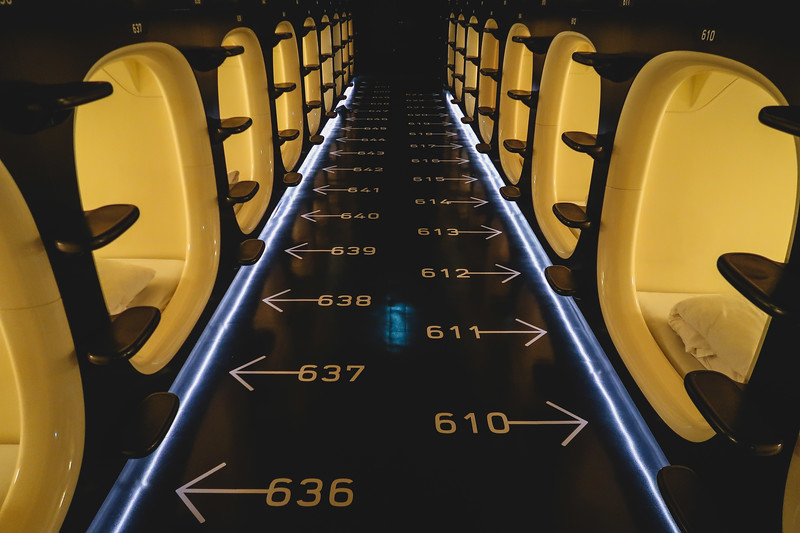
What is a capsule hotel exactly?
So, what exactly is a capsule hotel, you ask?
Well, this is a type of hotel that originated in Japan with the purpose of providing cheap and basic overnight accommodations. Instead of rooms, guests sleep in capsules, which are spaces large enough to hold a mattress and not much else. There is enough room to comfortably crawl in and sit upright, but it’s far from a hotel room.
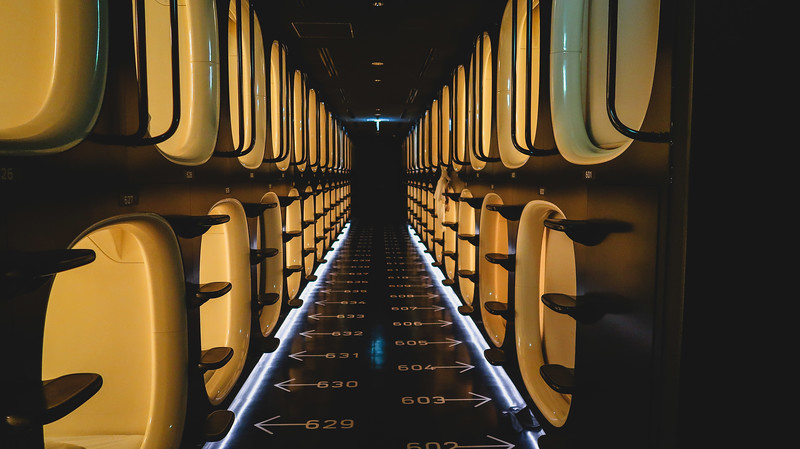
The capsules are stacked side-by-side, two units high, similar to bunk beds. They have either steps or a ladder for those guests staying on the second level pods, and sliding doors or curtains that offer privacy.
In some aspects, capsule hotels are similar to hostels because you do have shared spaces like toilets, showers, dining rooms and living areas, but instead of bunk beds, you get capsules.
As for the name 9 Hours, the idea is that that’s all the time you really need in a capsule hotel: 1 hour to shower, 7 hours of sleep, and 1 hour to get ready in the morning…though I may have done a little more sleeping and a little less getting ready.
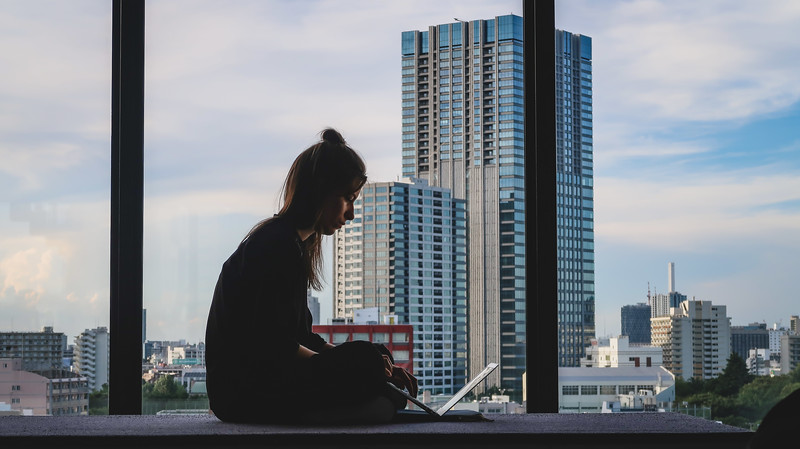
My experience at 9 Hours
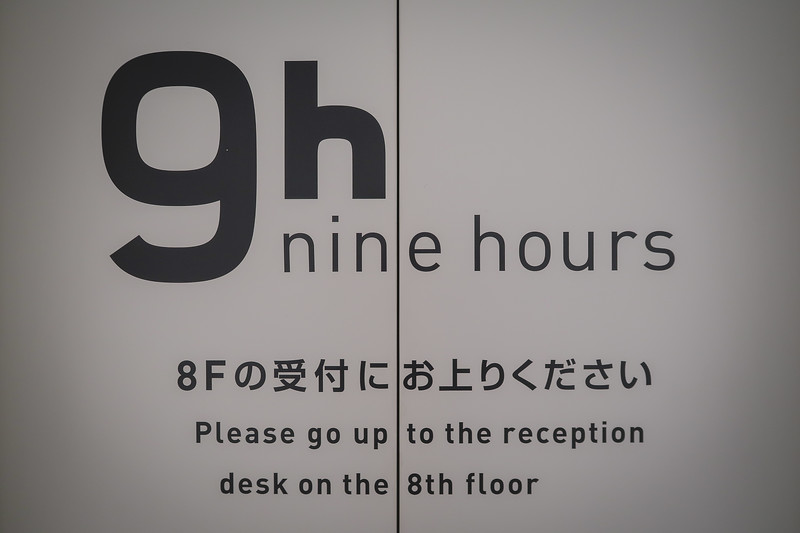
We arrived at the capsule hotel in Shinjuku in the early afternoon and made our way up to the reception which is located on the 8th floor.
During check-in, we were each given a card with a QR code. This was our key for the duration of our stay and we needed it to access our lockers and store our belongings.
This is where Sam and I went our separate ways since men and women have separate dorms on different floors.
I went over to my locker which had enough space for 1 piece of luggage and 1 daypack. (My Osprey Sojourn was a bit plump, but I still managed to squeeze it in!)
Inside my locker I also found an overnight kit containing:
- 1 pair of slippers
- 1 pyjama set
- 1 toothbrush
- 1 mini tube of toothpaste
- 1 bath towel
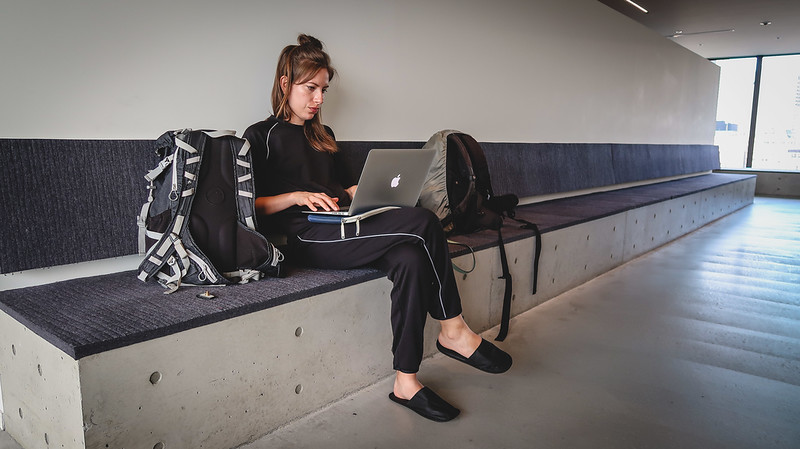
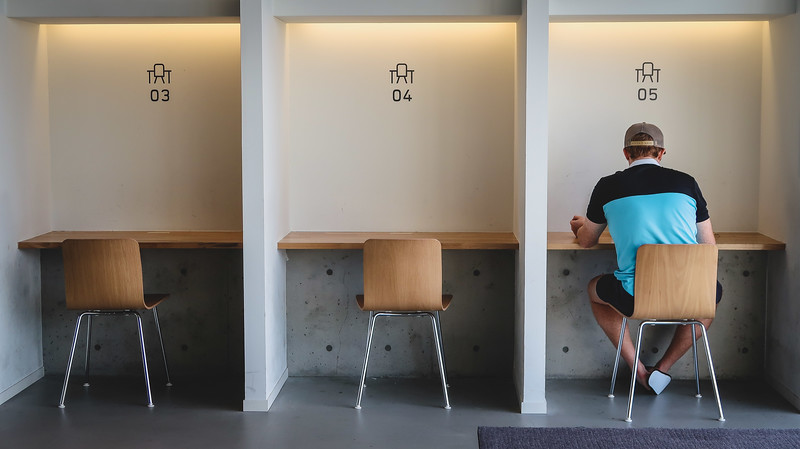
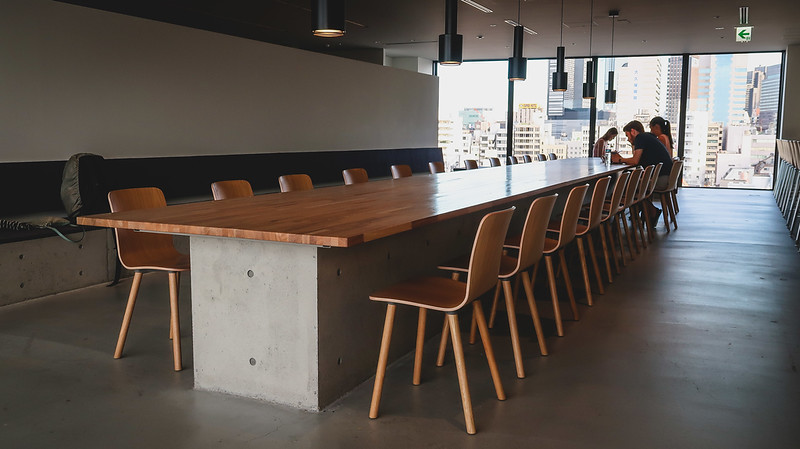
It was nice having a common space to hang out in, because once you come back from a day of sightseeing, you don’t necessarily want to crawl straight into a capsule. The common area had benches, individual working desks, and a long shared table.
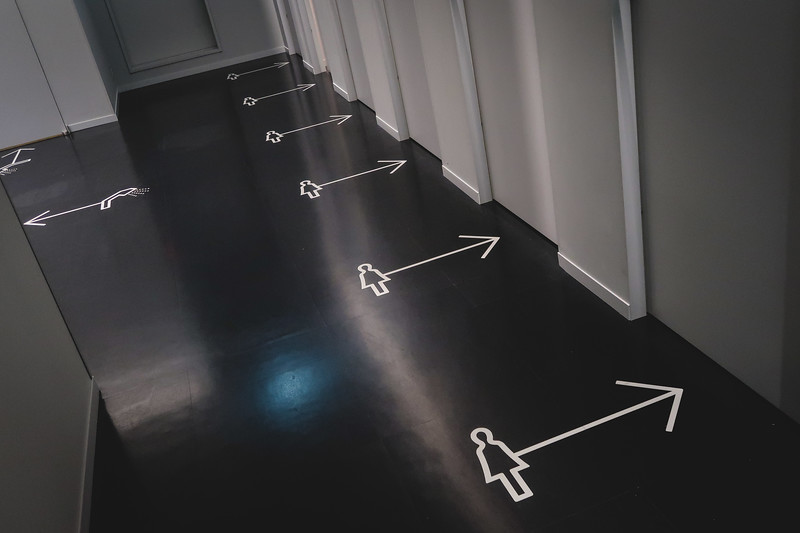
The bathrooms took up an entire floor and there were rows of toilet stalls and shower stalls. The shower stalls had shampoo, conditioner and body wash, which is great if you’re not travelling with a full toiletry kit. Then in the middle of the bathroom, there was a long counter with a row of sinks and mirrors.
It was all very efficient and there were enough stalls that you never had to wait in line.
What’s it like inside a capsule?
Some people worry that it might feel claustrophobic inside the capsule, but personally, I found them to be surprisingly spacious.
Considering the whole premise behind a capsule hotel is to be as space efficient as possible, I found I was able to sit up straight without bumping my head on the ceiling, and there was plenty of room to stretch my arms and legs. You can’t stand upright, but it’s not Dracula’s coffin either!
This wasn’t the most pimped out capsule out there (some have TVs and radios!), but there was a USB port to charge my phone, two tiny shelves, and a light switch.
While I couldn’t control the temperature inside the capsule, there was air flowing in so I found it comfortable. Not too hot, not too cold, and that prevented the pod from getting stuffy.
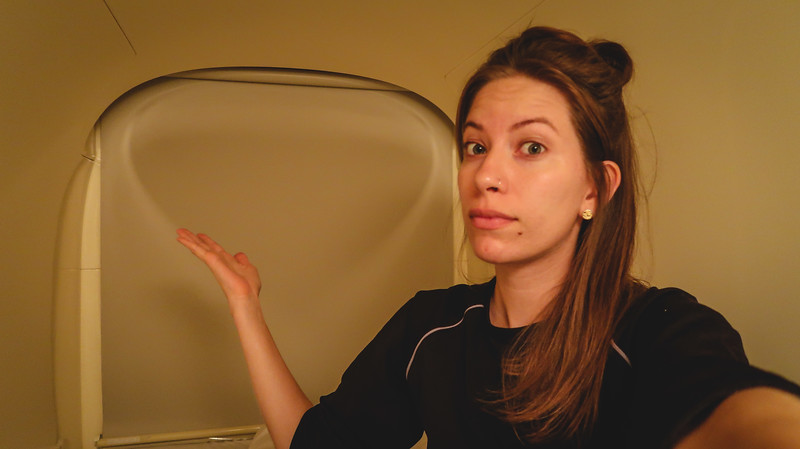
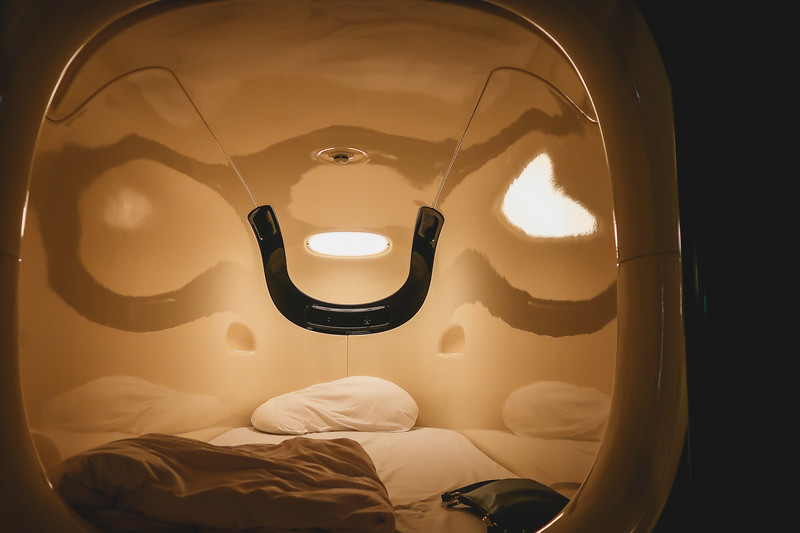
As for comfort, the bed consisted of a thick mat with a bedsheet, a half-moon shaped pillow, and a warm duvet.
I had a good night’s sleep. I didn’t wake up during the night, and the following morning Sam had to text me to ask if I was up yet. I guess I had a bit of a longer snooze than I thought.
We filmed a video of the whole experience:
What should you bring to a capsule hotel?
The 9 Hours capsule hotel provides you with an amenity kit, so there’s not a whole lot of extra stuff that you need to bring.
The two things I would suggest are: a pair of flips flops for the showers, and some earplugs if you’re a light sleeper and are planning to spend a few nights in a pod.
Also, while pyjamas are provided, they’re one size fits all and made for a smaller frame, so you might be more comfortable in your own.
Would I recommend staying in a capsule hotel?
Yes, for the experience, but not long term!
As you may already know, I love booking unique stays when I travel, and while I enjoyed the novelty of sleeping in a capsule hotel, I felt like one night was enough.
Perhaps my younger self would have been okay spending a week in one, but the truth of the matter is that a capsule hotel is a lot like a hostel, albeit with a bit more privacy.
There were still minor annoyances like the sounds of people talking/snoring/farting through the night (Sam tells me it was especially symphonic in the male dorm).
Plus, because of the limited amount of space in the capsule, all our belongings had to be stored in the lockers so there was a lot of going back and forth to retrieve things.
I think staying in a capsule hotel is something I would only do for short stays (1-3 nights max), but I wouldn’t want to spend my whole trip living out of locker and sleeping in a pod.
Also, because Sam and I travel as a couple, it’s often cheaper to book an AirBnB rather than pay for two individual capsules. So that’s my take on it.
Lastly, speaking of unique accommodations in Japan, I definitely think staying in a ryokan for the night is worth the splurge!
Other 9 Hours Capsule Hotels in Japan
In case you’re interested in this chain of futuristic capsule hotels (because who wouldn’t want to feel like they’re in a spaceship?), at the time of writing this, 9 Hours has locations across 4 cities in Japan.
There’s an especially large selection in Tokyo, with branches in different neighbourhoods. One of the capsule hotels is female only, and there is also an airport location if you’re looking for convenient accommodations at the end of your trip. Here’s the full list:
Tokyo:
Nine Hours Narita International Airport
***
***
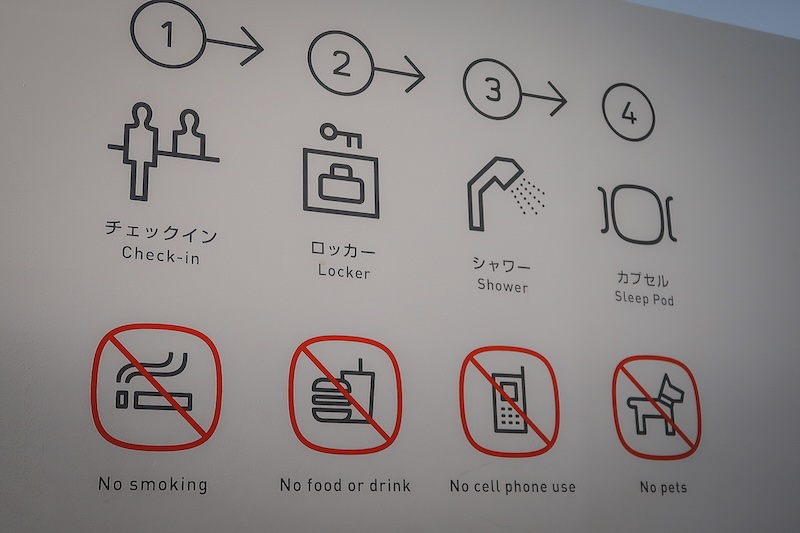
Before Your First Capsule Hotel Night in Tokyo
A night in a pod leaves you with plenty of questions. Where did capsule hotels come from? Why do they all look like they belong on a spaceship? And can you still stay in the same one we did? Here’s what we’d want you to know before booking your own pod night in Tokyo, including a few things that have changed since we checked out.
The Hotel We Stayed In Is a Nine Hours Again
If you’re hoping to sleep in the same pods we did, good news. The building didn’t stay a 9 Hours the whole time. In 2021 it was rebranded and ran under a different capsule hotel name for a few years. Then, in June 2026, 9 Hours moved back in and reopened it as Nine Hours Shinjuku-North, with 206 capsules.
The layout hasn’t budged. Lockers and capsules are still on the third to sixth floors, the showers are still on the seventh, and reception and the lounge are still up on the eighth, which is exactly how we remember it.
What’s new is the focus on sleep. 9 Hours has been rolling out sleep pods that can track how well you slept without you wearing anything, a service the company has offered since 2021. The reopened Shinjuku-North is also the brand’s first branch run in partnership with a university, with a health space set up with Tokyo Women’s Medical University.
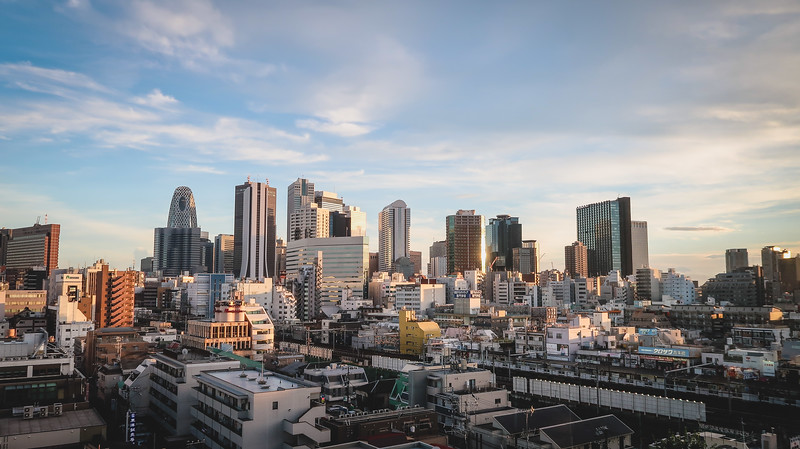
The other thing worth knowing is exactly where this hotel is. It’s in Shinjuku ward, but it sits a two-minute walk from JR Shin-Okubo Station, right in the middle of Tokyo’s Koreatown. Shin-Okubo is just one stop from Shinjuku on the Yamanote Line, so the bright lights are close by, but step out the front door and you’re surrounded by Korean barbecue spots, cafés, cosmetics shops and K-pop stores.
That suited us perfectly. Korea is where Samuel and I met, back when we were both teaching English there, so Koreatown always feels like a little trip down memory lane. After checking in, we went out for cheese dak-galbi, the same dish we’d ordered on an earlier visit to the neighbourhood that month. It’s spicy stir-fried chicken with rice cakes and vegetables, and ours came smothered in melted mozzarella and cheddar. It seemed to be the local favourite, because we spotted it on most of the menus around us. Dak-galbi originally comes from the Korean city of Chuncheon, but the cheesy version has become one of Shin-Okubo’s signature dishes.
If you go, know that the neighbourhood has its own rules. The streets get so busy that Shinjuku City asks visitors to queue without blocking the pavement, to eat inside the shop or at designated spots such as Nishi-Okubo Park, and not to litter or smoke on the street. Grab your snack, then find somewhere to sit down with it.
Where Capsule Hotels Came From (and Why They Look Like Spaceships)
When Samuel first stepped onto the men’s capsule floor, he felt like he’d walked into the sleeping quarters of a rocketship. He’d been bracing for something closer to a coffin, so he was happy to find he could sit up and stretch his arms out. That space-age look is no accident.
It goes back to the architect Kisho Kurokawa. He showed a “capsule house” at Expo ’70 in Osaka, and in 1972 he completed the Nakagin Capsule Tower in Tokyo’s Ginza district, a stack of replaceable living pods attached to two central towers. The tower was dismantled in 2022, but 23 of its capsules were saved, and one was fully restored for an exhibition at New York’s Museum of Modern Art.
The very first capsule hotel came out of the same thinking. In 1977, Kurokawa’s office was commissioned to design a hotel for a men-only sauna and bathhouse in Osaka. Capsule Inn Osaka opened in the Umeda district in 1979, with double-decker capsule beds that each came with a control panel for the air conditioning, a TV and an alarm. It’s still in business today.
For decades, capsule hotels were mostly for budget business travellers and anyone who’d missed the last train home, and many were men-only. That has changed a lot. Most mixed hotels now keep men and women on separate floors, women-only capsule hotels have opened, and some older men-only places have carved out women’s areas as more women started booking.
9 Hours was part of that shift. Its first branch opened in Kyoto in December 2009, with capsules and interiors by the product designer Fumie Shibata, who set out to give capsule hotels a whole new image. That original Kyoto branch closed in 2020, but the chain kept growing, opened its first women-only branch in Kanda, and now calls itself a sleep-tech company as much as a hotel brand.
One thing hasn’t changed. Legally, capsule hotels are licensed as shared “simple lodging,” the same category as hostels and mountain huts, and the capsules generally close with a blind or curtain rather than a lockable door. That’s why your locker matters so much.
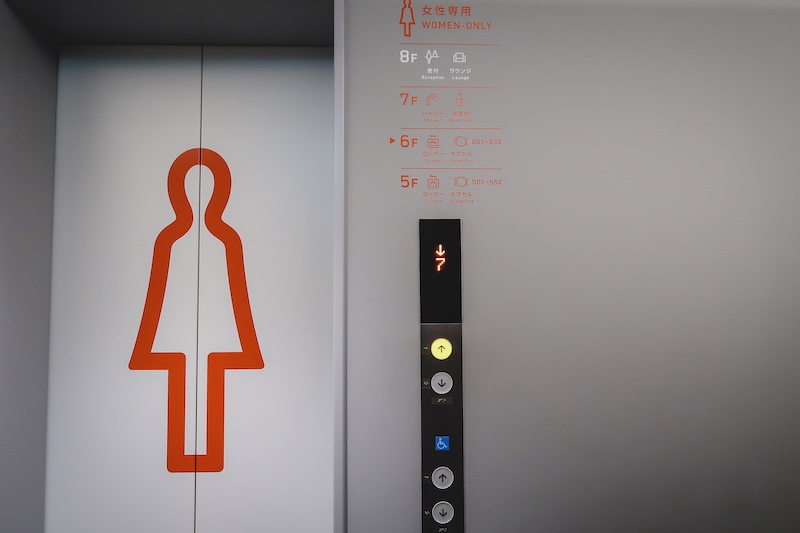
How a Night Actually Works
Once your bags are in your locker, a few habits make the night go smoothly. Shoes come off before you enter the capsule floor, and you pad around in slippers from then on. When you check out, the slippers go in a bin, since they’re single-use.
The capsule floors are seriously quiet. There were signs everywhere asking guests to keep their voices down, and even though we checked in around one in the afternoon, some of the capsule blinds were already pulled down with people sleeping inside. Day sleepers are normal here, so keep things hushed at any hour. Many 9 Hours branches also sell short nap stays, usually in the afternoon and early evening, plus shower-only visits, which is handy if you just need a reset between a day of sightseeing and a night bus or late flight.
The night itself felt a little different on each of our floors. On mine, lots of women were chatting on their phones in different languages before lights out, and every time someone climbed into a nearby capsule, mine shifted and shook a little. It took me a while to drift off. If you’re a light sleeper, 9 Hours hands out free earplugs at the front desk, so grab a pair when you check in.
Samuel, meanwhile, slept straight through from about 11pm to 5am, men’s-floor soundtrack and all. His other discoveries: the pyjamas were a little short in the arms and legs on him, and in the morning, the toilet greeted him. (Yes, really.)
A couple of rules catch people out. 9 Hours doesn’t allow large luggage on the capsule floors, and the capsule and locker areas close for several hours each day for cleaning, starting mid-morning. Check-out is in the late morning too, so have everything packed before you head out for the day.
The Luggage Problem
Our bags were the one real hassle of the night. My suitcase was a squeeze, and I’m convinced those lockers weren’t designed for square, rectangular bags. Samuel’s bag didn’t fit at all until he’d pulled half his things out and turned it upside down.
You don’t have to wrestle with it the way we did. At 9 Hours, if your luggage won’t fit in the locker, the front desk can hold it for you, except at the Narita Airport branch, which has no room for large bags. There’s no luggage storage after check-out, though, so you can’t leave a suitcase behind while you sightsee on your last day.
9 Hours also accepts luggage shipped ahead, as long as it arrives on your check-in date with your name in Roman letters on the label. Japan’s “Hands-Free Travel” counters at airports and major stations can also send your bags on to your next hotel, which makes a lot of sense if your capsule night falls between two longer stays. Either way, pack what you need for the night in a small bag and you’ll skip the locker-room tug-of-war completely.
Choosing a Capsule Hotel in Tokyo
Over dinner that night, we got talking about how basic our pod was compared with some of the capsule hotels we’d seen, the ones with TVs, radios and headphones in every pod, or a full sauna and spa downstairs. Tokyo now has a capsule hotel for almost every kind of traveller, so it’s worth deciding what you want from the night before you book.
Bathhouse-style capsule hotels are the closest thing to the original. Anshin Oyado Tokyo Man Shinjuku, a short walk from Shinjuku Station, is a men-only capsule hotel with a sauna and hot-spring baths, and breakfast is included. It’s a great pick if you want the full soak-then-sleep experience. Just keep in mind that many capsule hotels with shared baths don’t let guests with tattoos use them, so check the policy first.
For women travelling solo, a women-only capsule hotel adds an extra layer of privacy. Anshin Oyado Tokyo Woman Ginza Shiodome is a women-only capsule hotel a short walk from Shimbashi Station, handy for both Ginza and the Shiodome business district.
If you’re after something more sociable, The Millennials Shibuya swaps classic capsules for app-controlled “smart pods” whose beds can tilt up into a sofa, and it hosts a free beer hour every evening. It also sells pairs of neighbouring pods, which makes it an easy option for couples who still want the pod experience.
For an early flight or a long layover, First Cabin Haneda Terminal 1 sits inside the airport and styles its pods as first-class and business-class cabins, and even the business-class ones are tall enough to stand up in. You can book it by the hour as well as overnight.
And if you’re travelling as a couple and simply want to share a room, the easiest plan is to book a private room at one of the hotels around Shin-Okubo for the rest of your stay and treat the pod as a one-night adventure.
Whichever pod you end up in, travel light, tiptoe on the capsule floors, and enjoy the novelty of it all.
Have you slept in a capsule hotel?
Would you do so after reading this review?
Thank you for sharing your this post.
Wow!I didn’t know this kind of hotel exists. Architecture and style is so awesome and is really futuristic. Technology is really upgrading as years pass.
Amazing post! I really didn’t know about this place. I will surely add this to my bucket list. Thanks for sharing your experience
Thank you for sharing this! It’s really interesting, and inspiring, to see how Japanese businesses have expanded the concept of capsule hotels. What was once cheap overnight accommodation is nowadays practically a traveler’s attraction.
Thanks for the great informative article on the pods. I’ve always wondered about them. I think I’d probably manage for an airport catnap but I don’t think would work for me as an overnight accomodation option thanks so much for the insights!
Great post! I have always been curious about these pods and I would love to try one out for a night, especially after your post!
This is such a unique concept and I think they are slowly coming up in many cities. Glad to know that you had a good experience. This seems like a great idea for people who book hostels or dorm rooms and maybe only for a couple of nights. I would surely like to try this someday.
I’ve stayed at a capsule hostel in Malaysia. It was a very interesting experience. Bus as it looks, Japanese capsule hostels are completely on another level. Waaaay cooler!
I know you spent only one night. I would have liked to have known what the option was for multiple nights in terms of where to store your stuff. In hostels, you have to pack up every day and store your stuff until check-in time again, unless you take a family room or all the beds in a small dorm. That would be the mulitple-day annoyance to me.
Are you able to lock the pods from the inside for safety reasons?