
Japan’s futuristic 9 Hours Capsule Hotel feels a bit like a spaceship and it was the perfect way to end our trip to Tokyo. This is a review of that experience so you know exactly what to expect from sleeping in a pod!
If there’s one activity that was at the top of my Japan travel bucket list, it was to stay in a futuristic capsule hotel! Yes, I’m talking about those small individual pods that are cheaper than a hotel room yet offer more amenities than you’d expect to find in such a confined space. They’re all over Japan.
Because we spent a whole month in Tokyo, there was no way Sam and I were going to be sleeping in a capsule for that long, but our final night in the city seemed like the perfect opportunity to test out sleeping in a pod.
Since I’m in charge of booking accommodations when we travel, I made it my mission to find the coolest, most modern, and futuristic capsule hotel in Tokyo! My pick:
The 9 Hours Capsule Hotel
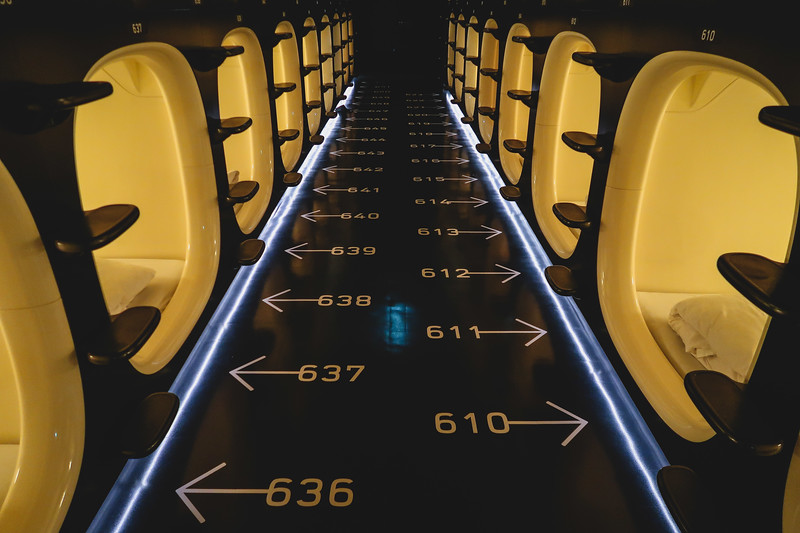
What is a capsule hotel exactly?
So, what exactly is a capsule hotel, you ask?
Well, this is a type of hotel that originated in Japan with the purpose of providing cheap and basic overnight accommodations. Instead of rooms, guests sleep in capsules, which are spaces large enough to hold a mattress and not much else. There is enough room to comfortably crawl in and sit upright, but it’s far from a hotel room.
The capsules are stacked side-by-side, two units high, similar to bunk beds. They have either steps or a ladder for those guests staying on the second level pods, and sliding doors or curtains that offer privacy.
In some aspects, capsule hotels are similar to hostels because you do have shared spaces like toilets, showers, dining rooms and living areas, but instead of bunk beds, you get capsules.
As for the name 9 Hours, the idea is that that’s all the time you really need in a capsule hotel: 1 hour to shower, 7 hours of sleep, and 1 hour to get ready in the morning…though I may have done a little more sleeping and a little less getting ready.
My experience at 9 Hours
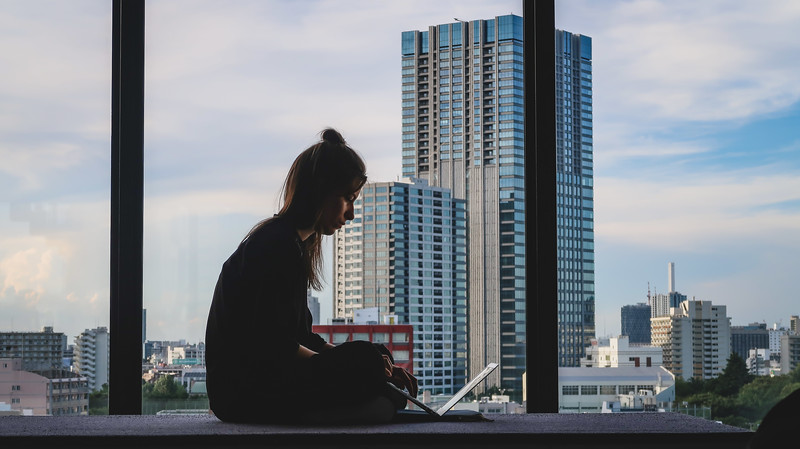
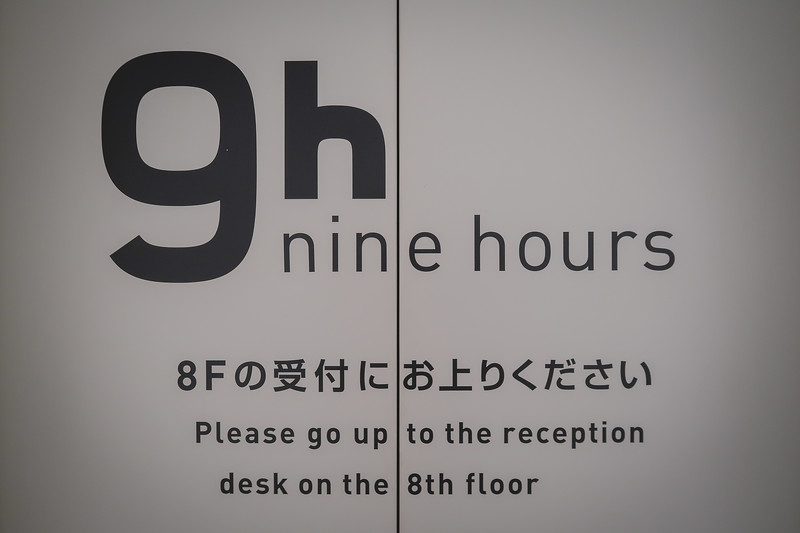
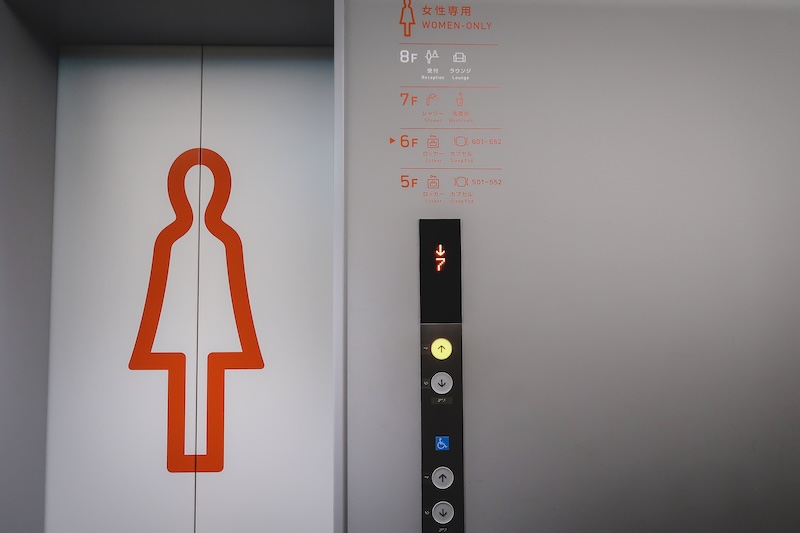
We arrived at the capsule hotel in Shinjuku in the early afternoon and made our way up to the reception which is located on the 8th floor.
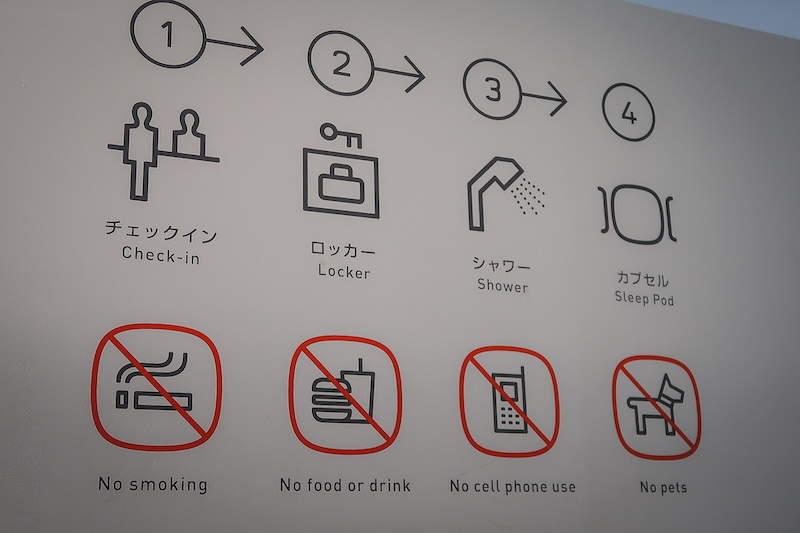
During check-in, we were each given a card with a QR code. This was our key for the duration of our stay and we needed it to access our lockers and store our belongings.
This is where Sam and I went our separate ways since men and women have separate dorms on different floors.
I went over to my locker which had enough space for 1 piece of luggage and 1 daypack. (My Osprey Sojourn was a bit plump, but I still managed to squeeze it in!)
Inside my locker I also found an overnight kit containing:
- 1 pair of slippers
- 1 pyjama set
- 1 toothbrush
- 1 mini tube of toothpaste
- 1 bath towel
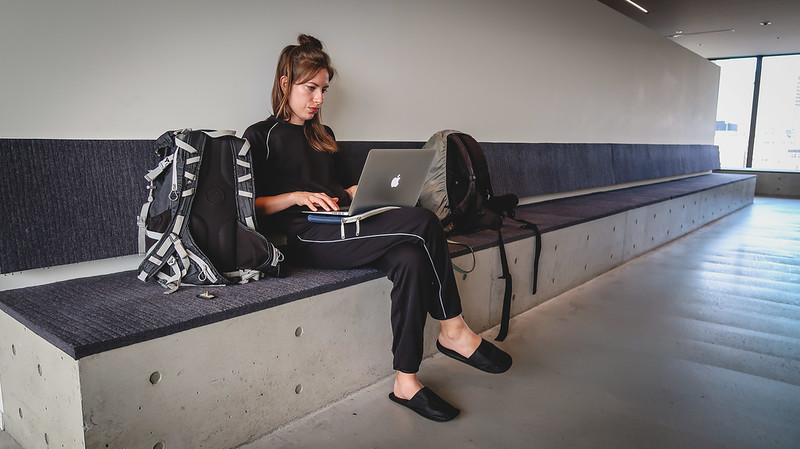
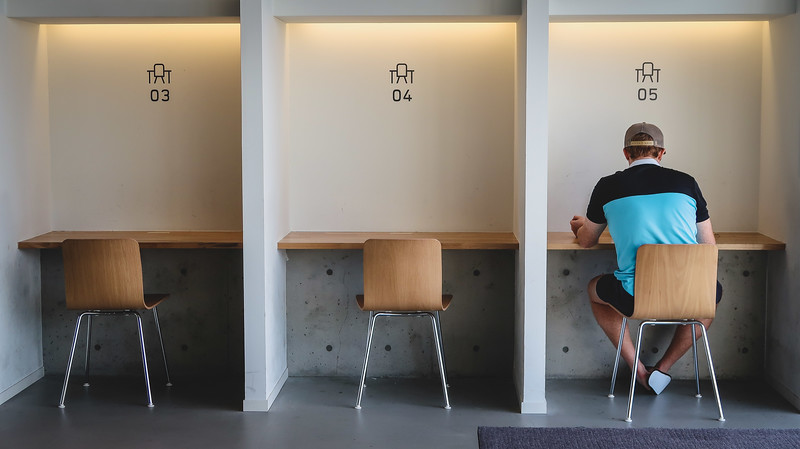
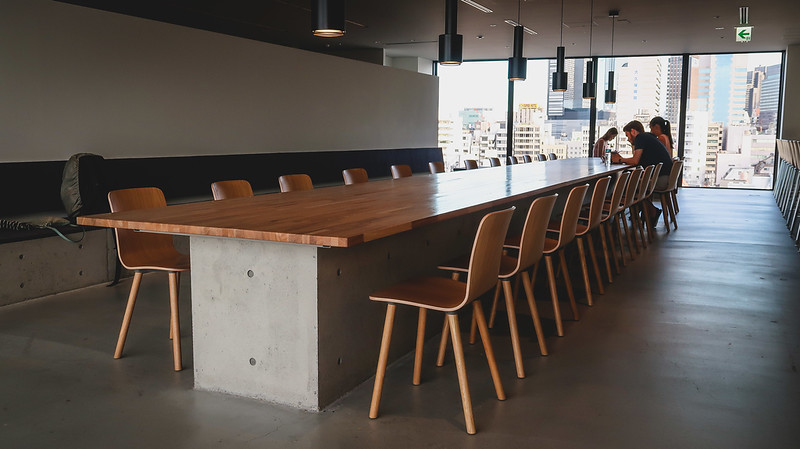
It was nice having a common space to hang out in, because once you come back from a day of sightseeing, you don’t necessarily want to crawl straight into a capsule. The common area had benches, individual working desks, and a long shared table.
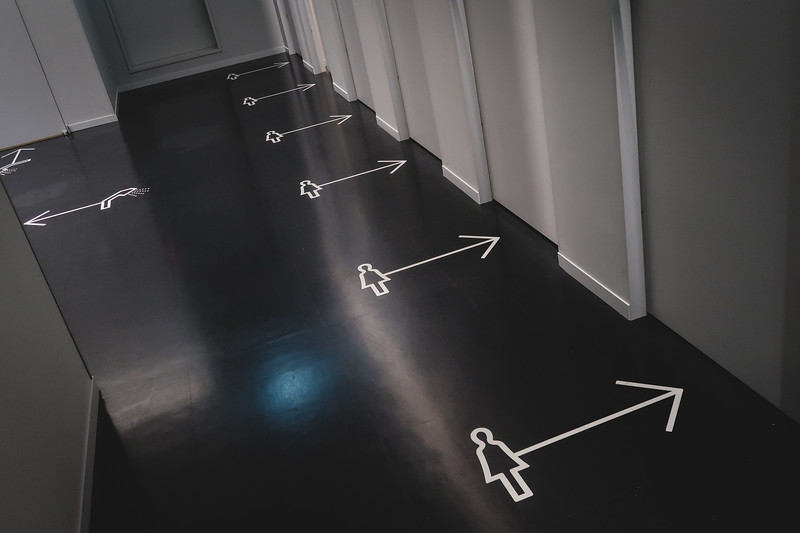
The bathrooms took up an entire floor and there were rows of toilet stalls and shower stalls. The shower stalls had shampoo, conditioner and body wash, which is great if you’re not travelling with a full toiletry kit. Then in the middle of the bathroom, there was a long counter with a row of sinks and mirrors.
It was all very efficient and there were enough stalls that you never had to wait in line.
What’s it like inside a capsule?
Some people worry that it might feel claustrophobic inside the capsule, but personally, I found them to be surprisingly spacious.
Considering the whole premise behind a capsule hotel is to be as space efficient as possible, I found I was able to sit up straight without bumping my head on the ceiling, and there was plenty of room to stretch my arms and legs. You can’t stand upright, but it’s not Dracula’s coffin either!
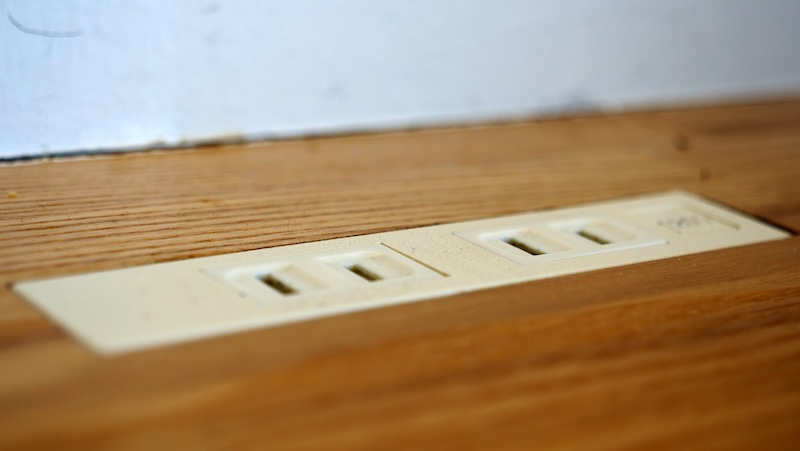
This wasn’t the most pimped out capsule out there (some have TVs and radios!), but there was a USB port to charge my phone, two tiny shelves, and a light switch.
While I couldn’t control the temperature inside the capsule, there was air flowing in so I found it comfortable. Not too hot, not too cold, and that prevented the pod from getting stuffy.
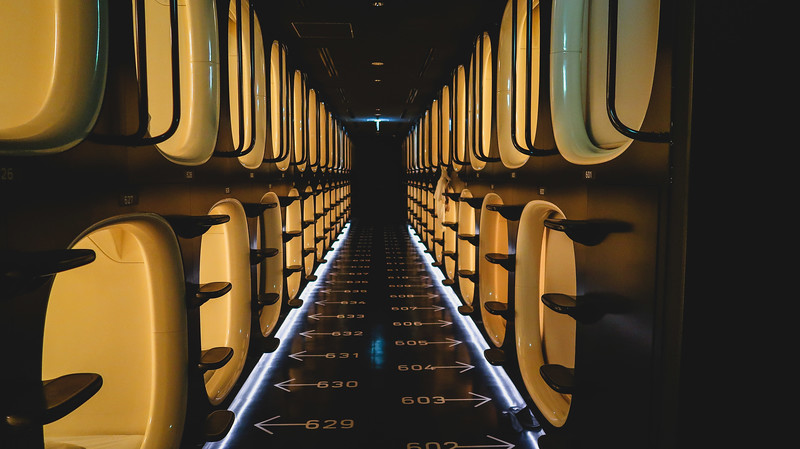
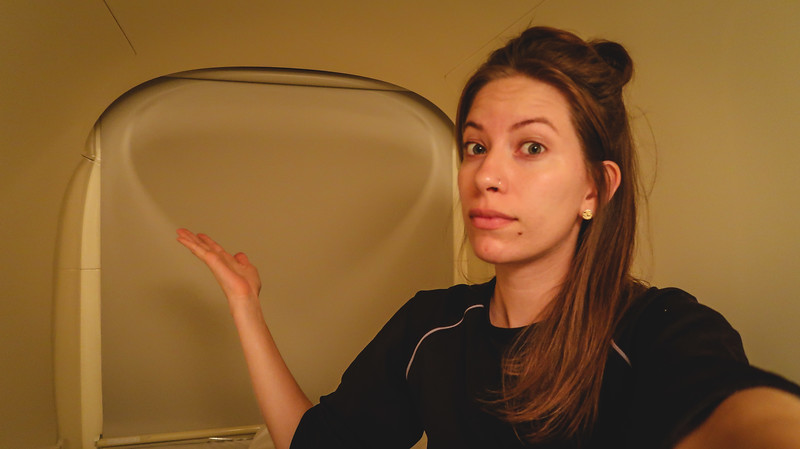
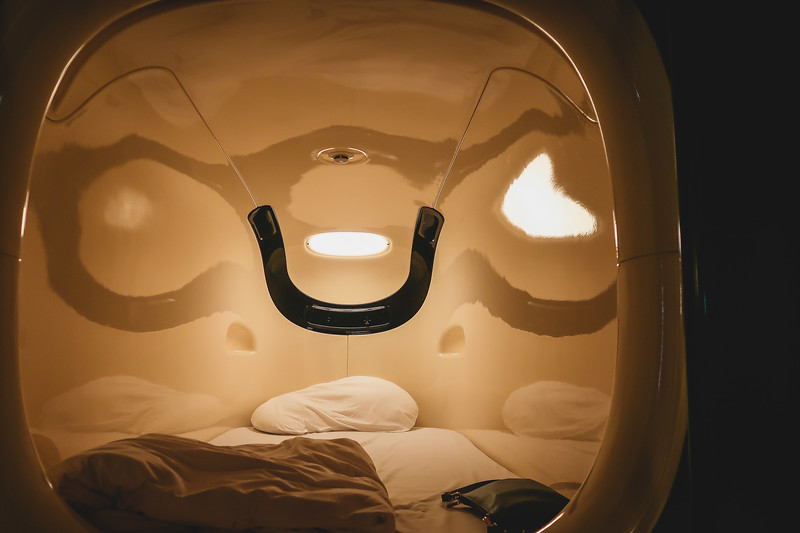
As for comfort, the bed consisted of a thick mat with a bedsheet, a half-moon shaped pillow, and a warm duvet.
I had a good night’s sleep. I didn’t wake up during the night, and the following morning Sam had to text me to ask if I was up yet. I guess I had a bit of a longer snooze than I thought.
We filmed a video of the whole experience:
What should you bring to a capsule hotel?
The 9 Hours capsule hotel provides you with an amenity kit, so there’s not a whole lot of extra stuff that you need to bring.
The two things I would suggest are: a pair of flips flops for the showers, and some earplugs if you’re a light sleeper and are planning to spend a few nights in a pod.
Also, while pyjamas are provided, they’re one size fits all and made for a smaller frame, so you might be more comfortable in your own.
Would I recommend staying in a capsule hotel?
Yes, for the experience, but not long term!
As you may already know, I love booking unique stays when I travel, and while I enjoyed the novelty of sleeping in a capsule hotel, I felt like one night was enough.
Perhaps my younger self would have been okay spending a week in one, but the truth of the matter is that a capsule hotel is a lot like a hostel, albeit with a bit more privacy.
There were still minor annoyances like the sounds of people talking/snoring/farting through the night (Sam tells me it was especially symphonic in the male dorm).
Plus, because of the limited amount of space in the capsule, all our belongings had to be stored in the lockers so there was a lot of going back and forth to retrieve things.
I think staying in a capsule hotel is something I would only do for short stays (1-3 nights max), but I wouldn’t want to spend my whole trip living out of locker and sleeping in a pod.
Also, because Sam and I travel as a couple, it’s often cheaper to book an AirBnB rather than pay for two individual capsules. So that’s my take on it.
Lastly, speaking of unique accommodations in Japan, I definitely think staying in a ryokan for the night is worth the splurge!
Other 9 Hours Capsule Hotels in Japan
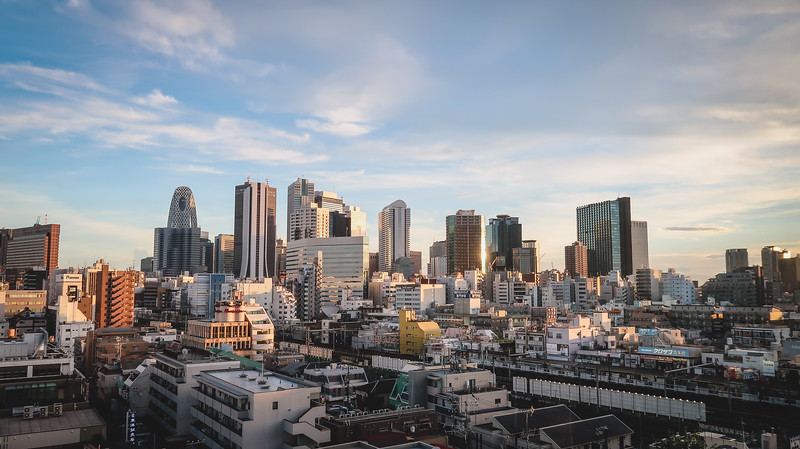
In case you’re interested in this chain of futuristic capsule hotels (because who wouldn’t want to feel like they’re in a spaceship?), at the time of writing this, 9 Hours has locations across 4 cities in Japan.
There’s an especially large selection in Tokyo, with branches in different neighbourhoods. One of the capsule hotels is female only, and there is also an airport location if you’re looking for convenient accommodations at the end of your trip. Here’s the full list:
Tokyo:
Nine Hours Narita International Airport
***
***
Have you slept in a capsule hotel?
Would you do so after reading this review?
Read more about Japan
Capsule Hotel Culture in Japan
If you’re curious about capsule hotels more broadly — or want to know exactly what to expect before booking — here’s the practical context: who thrives in pod life, how to be a respectful guest, and what to pack for the smoothest stay possible.
Why the Capsules Look Like Spaceships
The spaceship look isn’t accidental. It traces back to a single architect: Kisho Kurokawa, a founding figure of Japan’s Metabolist movement, a group of 1960s designers who believed buildings should function like living organisms — modular, replaceable, built to adapt rather than stay fixed. Kurokawa had already explored the idea with a residential concept called Capsule House K in the early 1970s, and in 1979 he turned it into something bookable: Capsule Inn Osaka, in the city’s Umeda district. The person who actually commissioned it wasn’t a hotelier at all. Yukio Nakano ran a sauna nearby and wanted somewhere better than his own floor to put customers who’d missed the last train home. Kurokawa’s fiberglass pods, stacked two-high with just enough room to sit upright, were the result. Within a few years the format had spread to Tokyo, and the aesthetic — white, modular, vaguely extraterrestrial — became the template every capsule hotel since has riffed on, 9 Hours included.
Who Should Stay in a Capsule Hotel?
Capsule hotels are a bucket list experience for many, but are they right for you? Here’s a clear breakdown of who will thrive in pod life and who might want to book something else.
Capsule hotels are perfect for:
- Solo travellers wanting a private sleep space at a hostel price
- Backpackers needing a budget-friendly base in a central neighbourhood
- Business travellers or commuters who missed the last train (the original capsule hotel customer)
- Tech lovers, minimalists, and anyone curious about Japanese design innovation
- Travellers wanting a short, memorable and affordable urban stay
- Early or late-night flyers who need a few hours’ sleep at an airport — 9 Hours Narita is purpose-built for exactly this
Capsule hotels might not suit you if:
- You’re claustrophobic or dislike confined, windowless spaces
- You’re a light sleeper (earplugs are non-negotiable, not optional)
- You’re travelling as a couple or a family who want to share a room — most pods are single-occupancy and gender-separated by floor
- You have a lot of luggage (locker space is genuinely limited)
- You want in-room amenities like a private bathroom, TV or work desk
If you’re unsure, book one night. That gives you the experience without committing your entire trip to locker runs and shared bathrooms.
The Salaryman Culture Behind the Concept
Capsule hotels exist because of a very specific, very Tokyo problem: the trains stop running around 1am, and Japanese work culture doesn’t. A night out with colleagues, called a nomikai, tends to move through rounds — an izakaya first, then a bar, sometimes a third stop — with the group only breaking up once someone checks the time and realizes the last train is close. Miss it, and a taxi across Tokyo can cost more than a week of capsule stays. For decades this was solved by a very specific customer: salarymen who’d rather sleep in a pod near the station than explain to a spouse why they rolled in at 6am. That history is still visible in how a chain like 9 Hours operates. The whole 1-hour-shower, 7-hour-sleep, 1-hour-prep philosophy was built around getting a commuter back to the office, not around tourism. Travelers now make up a growing share of the guests, but the bones of the system — the locker instead of a wardrobe, the fast checkout, the no-frills efficiency — are still shaped by the guest it was originally built for.
Capsule Etiquette: How to Be a Considerate Guest
Japan values quiet courtesy in general — multiply that by ten inside a shared pod corridor.
| Do | Don’t |
|---|---|
| Slip off shoes at the locker entrance and change into the provided slippers. | Wear outdoor shoes on the pod floor. |
| Whisper in corridors — treat them like library aisles. | Conduct FaceTime calls or anything audio-heavy outside your pod. |
| Switch your phone to vibrate and dim the screen brightness in bed. | Scroll with brightness turned up — it lights the whole bunk. |
| Pack an eye mask and earplugs; you’re responsible for your own comfort. | Complain that someone is snoring — it’s not a rule violation. |
| Close the screen or door gently — slamming it echoes badly. | Hang laundry off the railing or treat the capsule like a hostel bunk. |
If in doubt, watch what other guests are doing or ask the staff — they’re used to helping first-timers.
Why the Doors Don’t Lock (And What That Means for You)
One detail catches almost every first-time guest off guard: capsule doors don’t lock. Under Japan’s regulations for this category of simplified lodging, capsules are fitted with a curtain, a screen, or a roller shutter — never a door with a key — which is exactly why the locker system matters more here than it would at a regular hotel. Whatever won’t fit in your assigned locker needs to stay with you or stay behind; leaving a phone or wallet inside an unlocked pod is your own risk, not a security gap the hotel is responsible for. It sounds less secure than a hotel room, and technically it is, but in practice capsule floors are quiet, monitored, and single-gender, and theft is genuinely rare. The bigger everyday issue is habit — it’s easy to forget there’s no lock and leave the capsule half-open out of muscle memory. Get your charging cable, earplugs, and anything you’ll want overnight sorted before you climb in, because once the lights are down, nobody wants to be the person clattering back out to the locker room at 2am.
What to Pack (and What to Leave Behind)
As described above, 9 Hours and most capsule hotels provide a solid amenity kit — pyjamas, slippers, toothbrush, towel, shower toiletries. Here’s what else to bring for the best experience:
Worth packing:
- Earplugs or noise-cancelling headphones
- A lightweight sleep mask for extra darkness
- Flip-flops for the showers (if you prefer your own over the provided slippers)
- Minimal luggage — only what fits in a carry-on plus a daypack
- A small toiletry bag for shower room runs
- A short USB cable and portable charger
Leave at home:
- Bulky suitcases — the locker space is fixed and limited
- Your own hairdryer (usually provided in the communal bathrooms)
- Valuables you can’t fit in your locker and feel comfortable leaving there
Other Capsule Hotel Chains Worth Knowing
If the 9 Hours experience leaves you wanting to explore further, Japan has plenty of alternatives with their own distinct character:
First Cabin
A cross between a capsule and a business-class airplane suite, First Cabin offers “First Class,” “Business Class” and “Premium Economy” pods — just a bit more space for those who want it. Particularly good for airport stays.
The Millennials
High-tech and designed with the digital nomad in mind. Adjustable pod beds, smart controls, co-working spaces and free beer hours in the lounge make this a step above the standard capsule.
Book and Bed Tokyo
For book lovers: each capsule is tucked into a wall of bookshelves. Fall asleep surrounded by Japanese and English titles in Shinjuku, Asakusa or Kyoto.
Nine Hours Airport Hotels
Available at Narita, Kansai and Fukuoka airports. Perfect for layovers or late-night arrivals — shower, nap, continue journey.
Women-Only Capsule Hotels
Several cities offer women-only floors or entirely women-only properties — Nadeshiko Hotel Shibuya being one of the best-known — which provide extra privacy and security for solo female travellers.
Where to Stay in Shinjuku Beyond the Capsule
The honest verdict on 9 Hours above is that one night is plenty, and it’s often cheaper for couples to book a private room elsewhere anyway. Here’s where to look in Shinjuku across a few different budgets and travel styles.
Onsen Ryokan Yuen Shinjuku is the pick for couples or anyone chasing a splurge night. Tatami rooms, futon-and-bed combinations, and a rooftop hot spring bath on the 18th floor with sweeping views over the Shinjuku skyline — the water is piped in from Hakone rather than drawn locally, which is part of why it’s genuinely alkaline, soft-on-skin onsen water rather than a treated hotel bath. English-speaking staff cover the 24-hour front desk. It’s a good way to balance one futuristic pod night with one traditional one on a first trip to Japan.
For solo travellers and backpackers who still want capsule-style privacy without going the 9 Hours route, UNPLAN Shinjuku is worth a look. It’s a hostel rather than a pure capsule hotel, but the dorm pods have soundproofed walls, privacy curtains, and their own reading light and outlet — closer in spirit to a capsule than a bunk bed — and it sits a few minutes from Golden Gai, so the nightlife is a short stumble home.
MIMARU Tokyo Shinjuku West is the one to book for families. It’s an apartment-style hotel rather than a standard room, with a full kitchen, more floor space than almost anything else in this price range in Shinjuku, and units that comfortably sleep four. West Shinjuku also keeps you a short walk from the station without landing you in the middle of Kabukicho’s nightlife.
Hotel Gracery Shinjuku — the one with the giant Godzilla head on the 8th-floor terrace — is a solid mid-range option for first-timers who want a proper hotel room with a view, right in the thick of Kabukicho’s restaurants and neon. Rooms are compact by Western standards but come with the usual full-service extras: real beds, blackout curtains, and an actual bathtub, which after a night in a capsule can feel like a genuine luxury.
Shinjuku Washington Hotel Main covers the practical, business-traveller end of things: efficient rooms, a direct underground connection to Shinjuku Station so you can skip the weather entirely, and multiple on-site restaurants for evenings when you don’t want to go looking for dinner. It’s not glamorous, but it’s dependable, central, and easy to book last-minute.
Tours and Experiences Worth Booking Near Shinjuku
A few bookable extras make sense to slot in around a capsule hotel stay, especially since most of them start or end within walking distance of Shinjuku Station.
The Shinjuku Golden Gai Bar Hopping Night Tour is a natural follow-up to a first capsule hotel night — a small-group evening walk through Golden Gai’s maze of matchbox-sized bars with a local guide, including a couple of stops that are effectively locals-only or reservation-required for solo walk-ins.
For daytime, a teamLab Planets TOKYO ticket suits the same crowd curious about 9 Hours’ design-forward, sci-fi aesthetic. It’s a barefoot, walk-through digital art museum in Toyosu where you wade through shin-deep water among projected koi and stand inside rooms of shifting light. It’s genuinely one of Tokyo’s most photographed attractions, so book the timed-entry ticket a few days ahead rather than turning up on the day.
If there’s a spare day in the itinerary, the Mt. Fuji Day Trip Bus Tour from Tokyo covers the classic viewpoints — Chureito Pagoda, Lake Kawaguchiko, and the wider Fuji Five Lakes area — with round-trip coach transport from central Tokyo, which removes the hassle of stringing together trains and buses to see the mountain up close in a single day.
9 Hours Capsule Hotel FAQ
What exactly is a capsule hotel, and why “9 Hours”?
A capsule hotel swaps private rooms for individual sleep pods plus shared bathrooms and lounges. “9 Hours” refers to the ideal guest flow: 1 hour to shower, 7 hours to sleep, and 1 hour to get ready. It’s streamlined, clean, and delightfully sci-fi.
Are the pods claustrophobic?
For most people, no. You can sit upright, stretch out, and there’s steady airflow. If you’re prone to claustrophobia, choose a lower pod, spend time in the common area before bed, and bring a sleep mask to create a cozier feel.
What do you actually get at 9 Hours?
At check-in you’ll receive a QR key for your locker and an amenity kit: slippers, pyjama set, toothbrush, mini toothpaste, and a bath towel. Inside the pod: reading light, USB charging port, two small shelves, and a proper mattress with duvet and pillow.
How secure is it, and where does luggage go?
Each guest gets a personal locker accessed by QR — large enough for a carry-on plus a daypack. Sleeping floors are gender-separated. Keep valuables in your locker; the pods are for sleeping, not storage.
What are the bathrooms like?
Modern and well-maintained. Expect rows of sinks, toilet stalls and shower stalls stocked with shampoo, conditioner and body wash. Capacity is generous enough that queues are rare even at peak times.
Can couples stay together?
Pods are single-occupancy and most floors are single-gender, so couples will sleep on separate floors. For a “together” experience, book a minimalist business hotel, a boutique property, or a ryokan on the other nights of your trip.
Is the pod comfortable to sleep in?
Yes — firm mattress, crescent pillow, proper duvet, and steady ventilation that stops things getting stuffy. The light switch is within arm’s reach. Light sleepers should bring earplugs, since communal environments mean the odd snoring symphony overnight.
How long should I stay?
One to three nights is the sweet spot — enough to enjoy the novelty or bridge a late flight and an early train. Beyond that, the locker runs and shared facilities start to feel like more effort than they’re worth.
What should I pack or skip?
Pack earplugs, a sleep mask, shower flip-flops, a compact toiletry pouch and a short USB cable. Skip bulky suitcases (space is fixed), your own hairdryer (usually provided), and anything you won’t realistically use in a shared environment.
What’s the etiquette inside a capsule hotel?
Think library quiet. Whisper in corridors, set devices to vibrate, dim your phone screen, and close the pod screen gently. No calls or video chats near the pods. Pack the night before to avoid late-night zipper concerts.
Who will love 9 Hours — and who won’t?
It suits solo travellers, commuters, carry-on minimalists and design enthusiasts. Less ideal for couples wanting one room, very light sleepers, or anyone arriving with multiple bags and expecting private bathroom facilities.
Where else can I try capsule or pod stays in Japan?
Beyond 9 Hours (multiple Tokyo locations plus Narita Airport), look at First Cabin for larger cabin-style pods, The Millennials for smart beds and a co-working lounge, Book and Bed for book-themed pods, and women-only properties in major cities like Nadeshiko Hotel Shibuya.
Thank you for sharing your this post.
Wow!I didn’t know this kind of hotel exists. Architecture and style is so awesome and is really futuristic. Technology is really upgrading as years pass.
Amazing post! I really didn’t know about this place. I will surely add this to my bucket list. Thanks for sharing your experience
Thank you for sharing this! It’s really interesting, and inspiring, to see how Japanese businesses have expanded the concept of capsule hotels. What was once cheap overnight accommodation is nowadays practically a traveler’s attraction.
Thanks for the great informative article on the pods. I’ve always wondered about them. I think I’d probably manage for an airport catnap but I don’t think would work for me as an overnight accomodation option thanks so much for the insights!
Great post! I have always been curious about these pods and I would love to try one out for a night, especially after your post!
This is such a unique concept and I think they are slowly coming up in many cities. Glad to know that you had a good experience. This seems like a great idea for people who book hostels or dorm rooms and maybe only for a couple of nights. I would surely like to try this someday.
I’ve stayed at a capsule hostel in Malaysia. It was a very interesting experience. Bus as it looks, Japanese capsule hostels are completely on another level. Waaaay cooler!
I know you spent only one night. I would have liked to have known what the option was for multiple nights in terms of where to store your stuff. In hostels, you have to pack up every day and store your stuff until check-in time again, unless you take a family room or all the beds in a small dorm. That would be the mulitple-day annoyance to me.
Are you able to lock the pods from the inside for safety reasons?