
If you’ve ever dreamt of staying in a jungle treehouse like Tarzan and Jane, let me tell you, there is a place in the middle of the Amazon that can make your dreams come true!
After spending a few days in Iquitos, it was time to leave the city behind for some time closer to nature. Sam and I still had a few days before our Amazon River cruise would set sail, so going deeper into the jungle seemed like the reasonable thing to do.
We drove two hours from Iquitos to Nauta, loaded our luggage onto a boat, travelled upstream for another hour until we reached the black waters of the Yarapa River, and that’s when we finally arrived at a place that looked straight out of The Jungle Book: The Treehouse Lodge.
How’s that for an introduction to the Amazon?
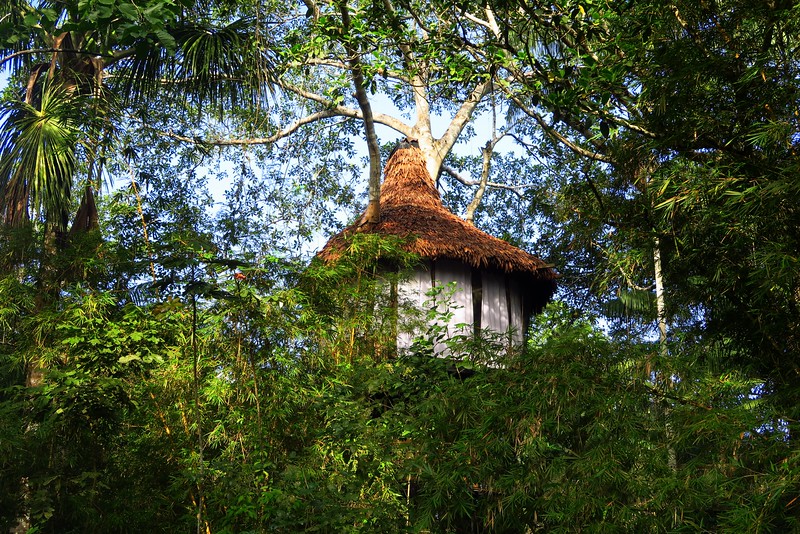
Staying in a Jungle Treehouse
As far as accommodations in the Amazon Jungle go, this is one of the most unique places to stay!
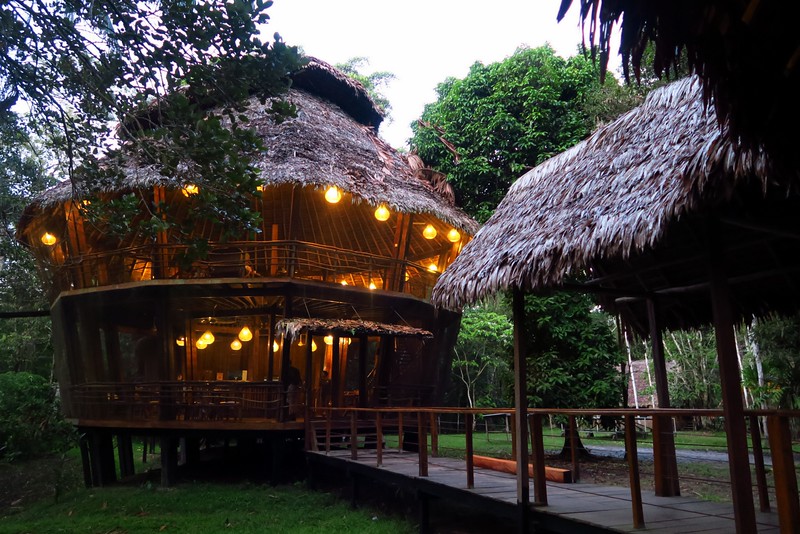
Once we set foot on the wooden ramp that leads towards the Common Hall, the sounds of the boat engines quickly faded and our ears tuned to the calls of birds and the chirps of crickets hidden in our midst.
We dropped our bags, guzzled the fresh passionfruit that was handed to us, and looked at each other giddy with excitement at the thought we’d be spending the next two days living in the trees.
Our Jungle Treehouse
As we walked around the property and peeked at the various treehouses in the distance, we noticed that no two looked the same!
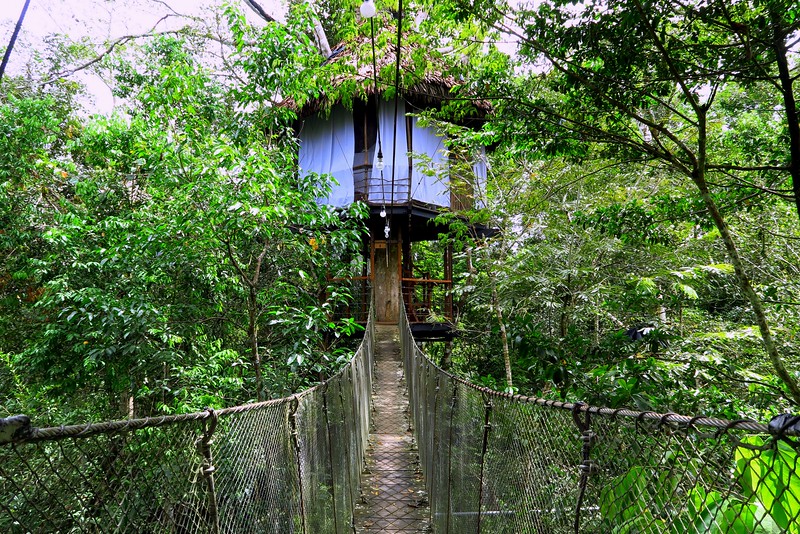
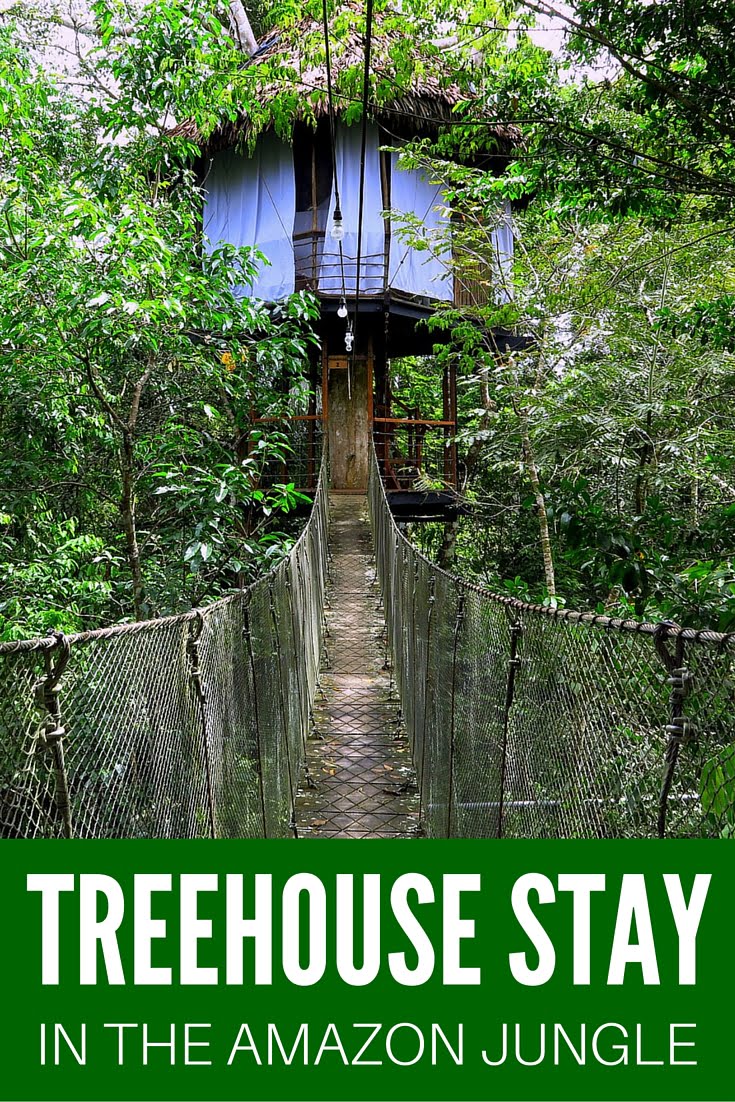
The cool thing about staying at the Treehouse Lodge is that each treehouse works with the natural shape of the trees, meaning each construction has its own unique design. Some treehouses were accessed via hanging bridges while others had spiralling staircases that wrapped around the tree trunks. We stayed in Treehouse #1, so that’s the one I’ll be telling you about in this blog post.
Our particular jungle treehouse was called Dos Ramas, meaning ‘two branches’, and it had two large branches running up the middle of the structure.
In order to reach Treehouse #1, we had to go up to the second floor of the Common Hall, take the first hanging bridge, and climb the wooden ladder located on the first platform. Once we were there, it was just a matter of pushing open the trap door and climbing into our new abode amidst the trees.
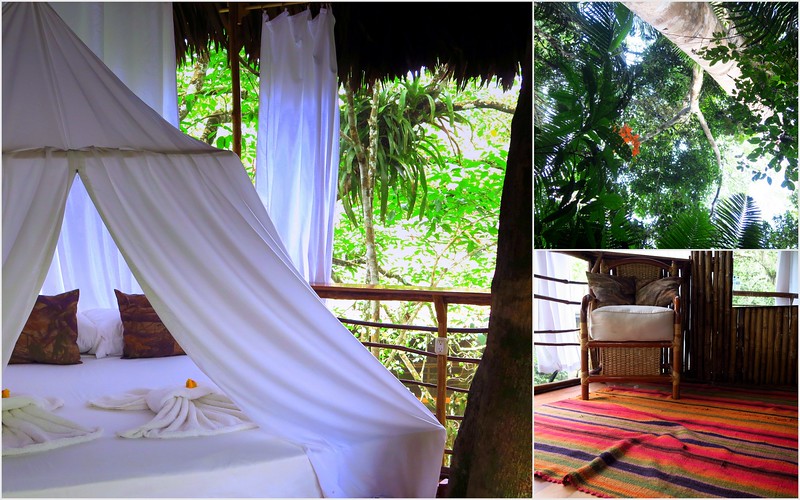
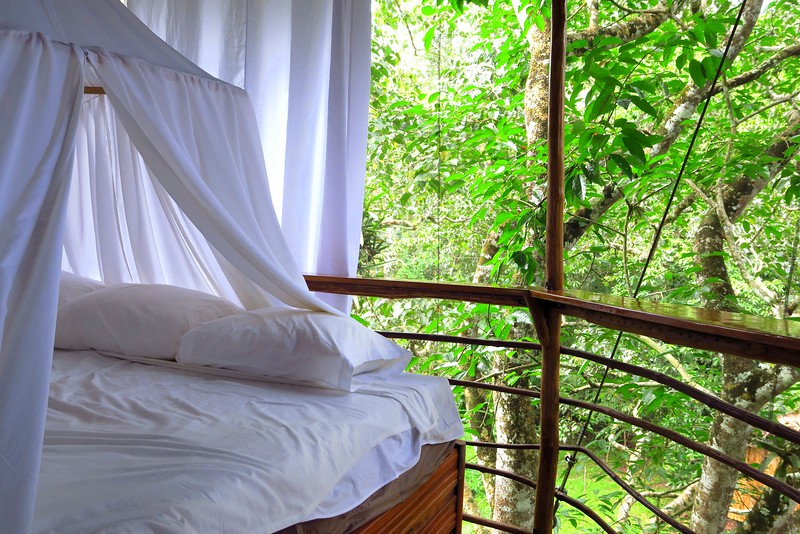
Inside our jungle treehouse there was a cozy little sitting area with a colourful woven rug – the perfect place to settle in with a book or to simply enjoy the landscape. There was also a double bed with white linens (with chocolates on the bed!) and a canopy draped over top to keep out any pesky mosquitoes.
Then towards the other side of the treehouse we had our bathroom sectioned off with bamboo shoots; here we had the toilet, a glass lavatory, and a shower. I didn’t love that it was only a cold shower (Sam said it was refreshing), but I’m pretty sure Jane and Tarzan didn’t have hot water either – I mean, this is the jungle!
The Excursions
The experience at the Treehouse Lodge was very personalized and this meant that each couple or travelling group had their own private guide. Sam and I got paired with Alan as our guide and Andres as the captain of our small vessel.
Every day we had the option of going for an early morning excursion, a mid-morning excursion, an afternoon excursion, and then an evening excursion. Since I was so fascinated with our jungle treehouse I only ended up doing 2 excursions per day, but if you really wanted to make the most of your stay, you could be out exploring with your guide all day long.
It’s also a good idea to bring some long breathable layers for the jungle excursions – my complete Amazon packing list can be found here.
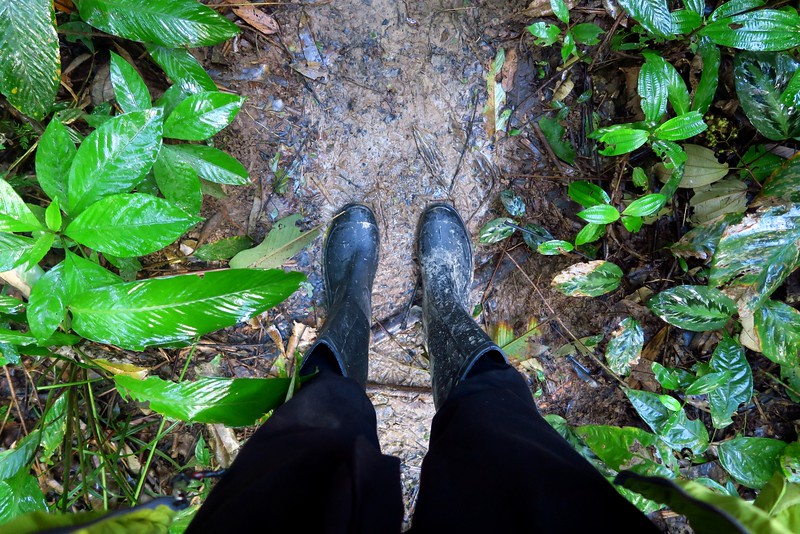
Some of the excursions we went on included:
A medicinal jungle walk
This walk took place on the lodge’s property, so we didn’t have to go very far. In total, the walk lasted about an hour and our guide taught us some of the different uses for plants in the jungle; these ranged from pain suppressants to after-bite ointments. It was like walking through your very own pharmacy, except instead of pulling down bottles from shelves, we were dealing with leaves, roots and tree bark.
Going dolphin watching
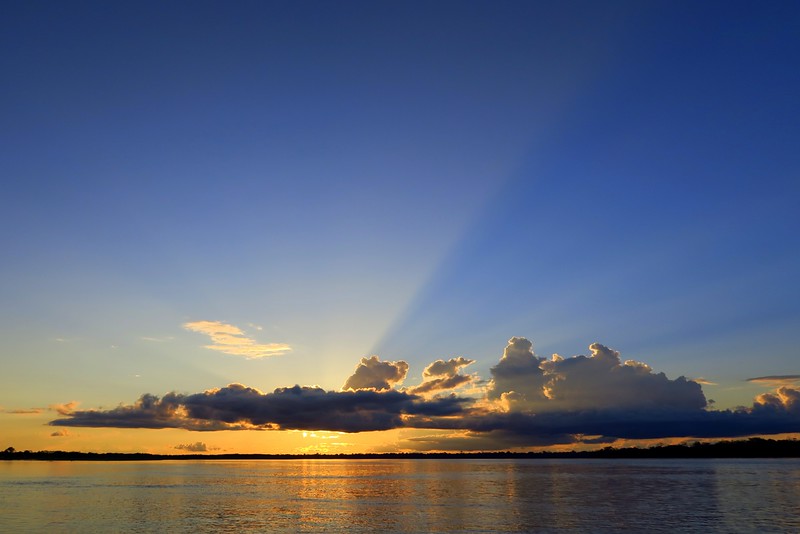
The Amazon River is home to 2 types of dolphin: the pink dolphin and the grey dolphin. Tell anyone back home you saw a pink dolphin and they might look at you like you said you saw a unicorn, but seriously, these creatures are real and they are fascinating!
Local folklore says that the pink dolphins were known to transform into humans and kidnap beautiful women to bring back to their kingdom under the Amazon River. If you’re brave enough, you can even go swimming with them.
Fishing for piranhas in the Amazon
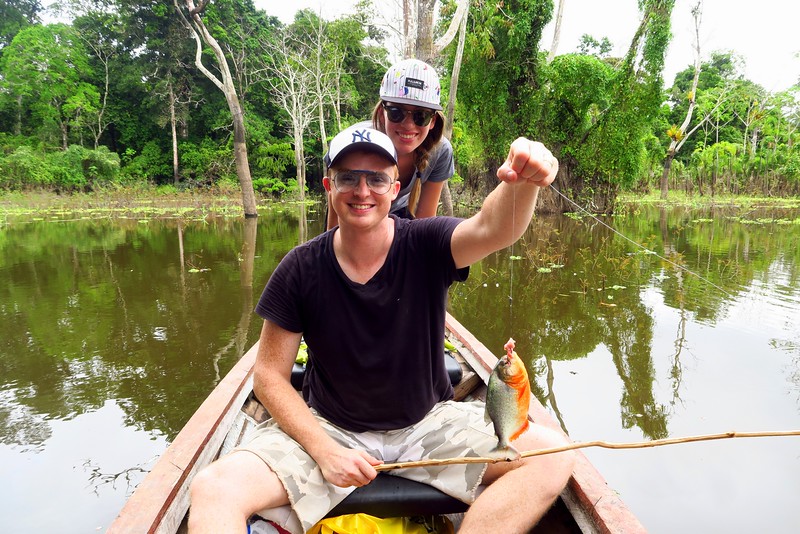
So I’ve never considered myself much of a fisher, but sitting in a boat above piranha-infested waters was kind of fun!
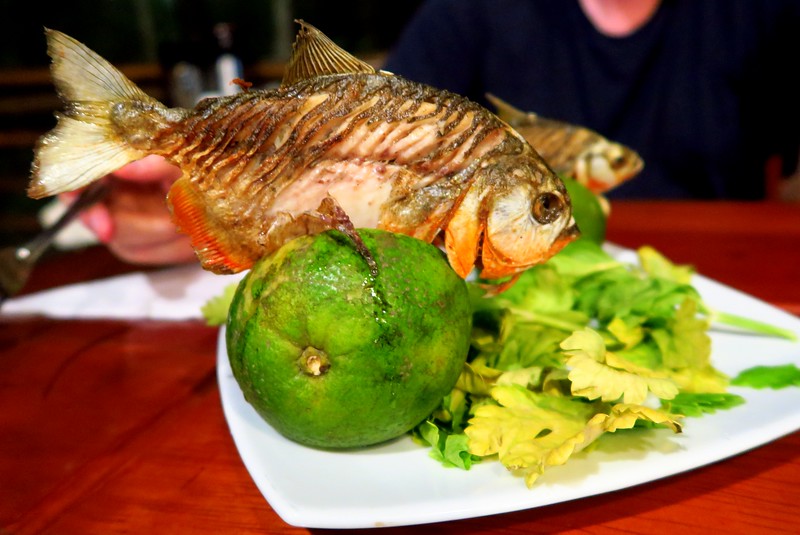
I didn’t catch a single fish – those piranhas sure know how to eat the bait without catching the hook! – however, Sam, the guide, and the captain were all able to catch a piranha for us to enjoy at dinner time.
So what does piranha taste like?
Pretty much the same as any other fish out there, except with lots of bones and very little meat. But tasty!
Bird watching and wildlife spotting
I really enjoyed this outing because it was a bit of a surprise in terms of what we got to see.
Whenever you go out into nature, you just never know what you’re going to find, but during our visit we lucked out with pink dolphins, sloths, macaws, water snakes, parakeets, and all sorts of monkeys.
Monkey Island and giant lily pads
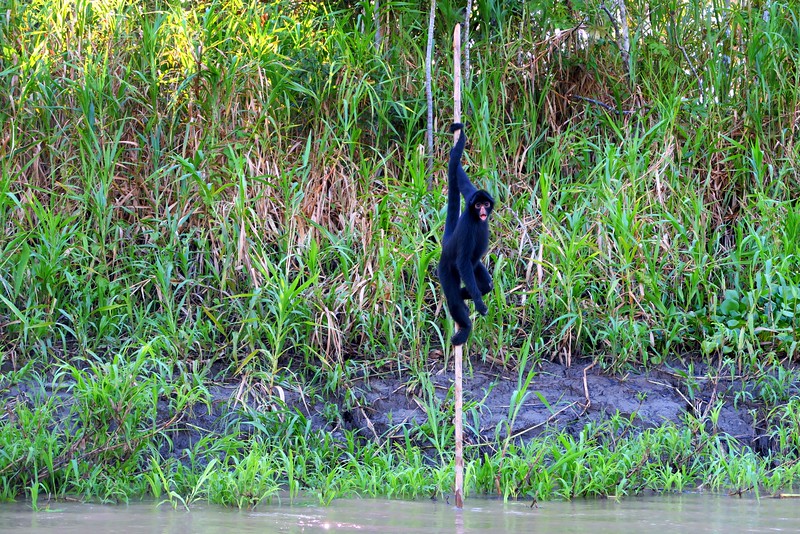
Monkey Island is an area where they have released monkeys that were once being sold in the black market. Because these monkeys experienced quite a bit of human contact in the past, they are not afraid of people and they also associate with monkeys outside of their species.
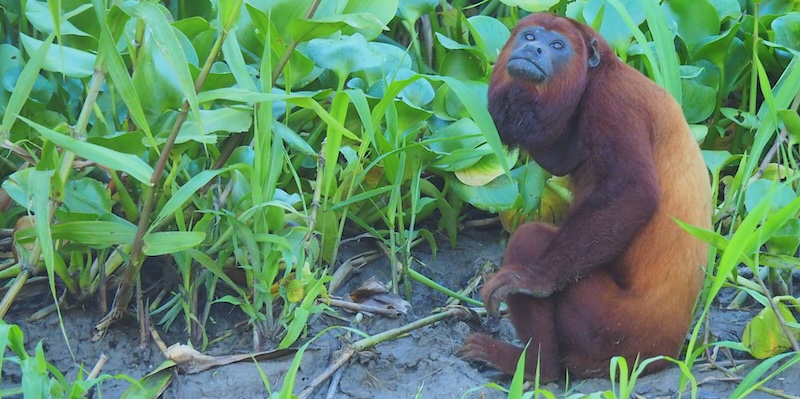
We only admired the monkeys from our boat, but we managed to see a spider monkey, a howler monkey, a white capuchin monkey and a brown capuchin monkey all hanging out together!
After our visit to Monkey Island we went to see the giant lily pads known as Victoria Amazonica, which were made famous centuries ago when someone photographed a small child sitting on top of them (yes, they are pretty strong).
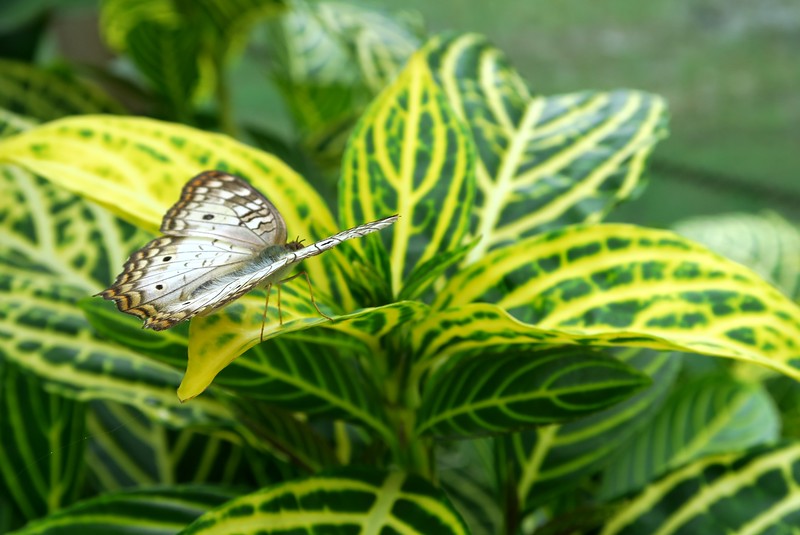
Butterfly farm and a visit to Vista Alegre
On our final morning at the Treehouse Lodge we visited the community of Vista Alegre, where the locals have partnered with a Peruvian NGO to create a butterfly farm that allows them to reproduce and protect species from the region while also attracting tourists to their community.
We toured the butterfly farm and also visited with one of the women in the village who taught us the art of rice husking (FIY – it takes a whole lot of muscle!)
The meals at the Treehouse Lodge
One of the absolute highlights staying at the Treehouse Lodge were the meals. They had an in-house chef who served up a delicious mix of beautifully plated Amazonian dishes and Peruvian classics.
During our stay we ate things like causa, a yellow mashed potato pie served with a layer of avocado, chicken, eggs and mayonnaise; lomo saltado, a beef and vegetable stir-fry accompanied with rice and potatoes; ceviche, a raw fish dish cured in citrus and served with a side of yellow corn, red onions, and sweet potato; patarashca; a steamed fish dish that’s prepared in the leaf of the bijao plant, and many, many more.
Then in the evenings, there was live music in the Common Hall, so we had the option of lounging around or going back to the treehouse where we could still hear the guitarist playing softly in the distance.
The verdict?
We loved our jungle treehouse stay! As far as unusual accommodations go, this one is right at the top.
If you’re not used to being out in nature and encountering a critter or two, this experience might not be right for you, but if you’re up for an adventure and you’re looking for an unforgettable experience, then this will be right up your alley.
Now for one final suggestion, if you’re also planning to do a mid to high-end cruise down the Amazon, I would say it’s a good idea to do the treehouse stay first and then finish off with a cruise where you can get a bit more pampering (ie. hot showers, AC in the rooms, and less mosquitoes).
Getting to the Treehouse Lodge
If you’re starting out in Iquitos, reaching the Treehouse Lodge involves a 2 hour drive to the port town of Nauta, and then a 1 hour boat ride down the Marañón River, across the Amazon River, and up the Ucayali River before connecting to the Yarapa River.
The Treehouse Lodge offers pick-ups, so it’s just a matter of coordinating with them and they’ll take care of the rest.
Here are more details on how to book your treehouse.
Where to Stay in Iquitos Before or After Your Treehouse Stay
Since flights in and out of Iquitos don’t always line up neatly with the lodge’s boat transfers, it’s worth padding your trip with a night in the city on either end. If you want a proper bed with air conditioning and a pool to ease back into after a few days of cold showers and mosquito nets, DoubleTree by Hilton Iquitos is the most-booked hotel in the city and sits right on the Amazon River, which makes it an easy, no-stress base for a pre- or post-jungle night (good for couples or anyone who wants a bit of comfort bookending the adventure).
If you’re travelling on a tighter budget, El Dorado Classic Hotel is a solid pick in the city centre, with an indoor pool and breakfast included, and it’s popular with backpackers stringing together the Iquitos-to-Amazon leg of a longer Peru trip.
And if the treehouse has you craving even more time immersed in the jungle rather than back in the city, Amazon Muyuna Lodge is worth a look for a second stay elsewhere in the region. It’s an ecolodge inside the Tamshiyacu Tahuayo Communal Reserve, about three hours from central Iquitos, and it runs on the same small-group, guide-led model as the Treehouse Lodge, just deeper into a different stretch of forest (a good option for solo travellers who want more time with a private guide before heading home).
A Treehouse Built for Every Kind of View
You’ll arrive expecting a unique place to sleep, but what you get is more of a full sensory reset. The rainforest doesn’t really let you check your phone or half-pay-attention to anything; it’s the kind of place where “living in the moment” actually means something, mostly because there’s a family of monkeys staring at you through the mosquito net.
What Makes This Kind of Stay Different
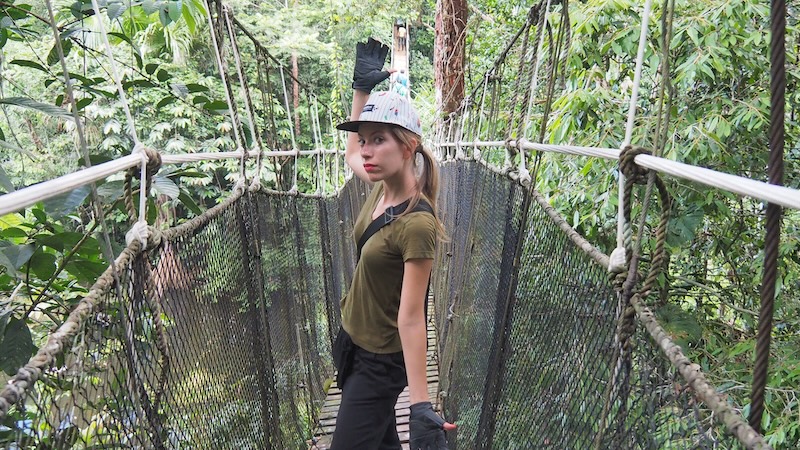
- No two treehouses are alike. Ours wrapped around two living branches; others are reached by wobbly rope bridges or spiral staircases. Along the lodge’s own listings, the tallest unit, Casa Alta, is built roughly 80 feet up in the canopy — high enough that the lodge has been named one of National Geographic’s Top 10 Most Unusual Hotels.
- Total immersion. There’s no glass between you and the jungle, just mesh and bamboo, so the sounds of the forest are your soundtrack all night.
- A little bit of adventure built in. Even a trip to the bathroom feels like a small expedition when you’re balancing on a platform above the jungle floor.
Wildlife Starts the Moment You Wake Up
Your entertainment here is nature itself. I hadn’t heard such a racket greeting a sunrise before this trip. One morning a family of squirrel monkeys came swinging past, tails curled, peering in through the netting. Sloths hang like brown hammocks, macaws chatter overhead, and if you’re lucky you’ll catch the electric blue flash of a morpho butterfly going past your window.
Wildlife tip: bring binoculars and set an early alarm. The jungle is loudest and busiest right at sunrise, and it’s easy to sleep through the best of it.
Who You’ll Share the Forest With
- Monkeys: capuchins, howlers, squirrel monkeys, each with its own call.
- Birds: macaws, toucans, hoatzins, and the occasional kingfisher.
- Pink river dolphins: best spotted at dusk or dawn on the Yarapa or Amazon River.
- Insects: yes, plenty. Under the canopy net over your bed, you won’t notice them once the lights are out.
A Wildlife Bingo Card Worth Printing
| Row A | Row B | Row C | Row D | Row E |
|---|---|---|---|---|
| Pink Dolphin | Squirrel Monkey | Three-toed Sloth | Blue-and-yellow Macaw | Caiman |
| Hoatzin (“stink bird”) | Red Howler | Bullet Ant | Amazon Kingfisher | Capuchin |
| Morpho Butterfly | Leaf-cutter Parade | Piranha Catch | Anhinga (“snake bird”) | Giant Lily Pad Flower |
Whoever calls “bingo” first buys the table a round of Inca Kola back at camp.
Excursions and Jungle Life
Some excursion highlights:
- Night safari: out by boat after dark, watching for caimans, nocturnal birds, and the odd pair of glowing eyes along the riverbank. The jungle feels completely different at night, more mysterious and a lot louder.
- Sunrise canoe ride: your best shot at rare birds and the morning mist coming off the water.
- Jungle medicine walk: our guide could point to a vine for headaches, a root for stomach aches, and leaves that worked better than bug spray. The Amazon really is a living pharmacy.
- Piranha fishing: worth doing even if you’ve never held a fishing rod, if only for the story afterward.
- Community visits: a chance to see daily life along the river and support responsible tourism directly. A handmade basket or bracelet makes a good souvenir.
If you want to stretch your Amazon time beyond the lodge’s own excursions, a couple of Iquitos-based day trips fill that gap nicely without overlapping with what your treehouse guide already covers. The Iquitos: Native Community Experience & Amazon River Tour sails the Itaya, Amazon, and Nanay rivers to visit the Kukama community and Pilpintuwasi, a butterfly farm that doubles as a rescue centre for animals once kept illegally as pets — a nice pairing if you’re spending an extra day in the city either side of your treehouse stay. For a longer add-on, the Iquitos: Amazon River Full Day Guided Tour heads out through Nauta to the confluence of the Marañón and Ucayali rivers and into Pacaya Samiria National Reserve, with a picnic lunch built in, and works well as a standalone day if you’re not doing a multi-night lodge stay at all.
Dining in the Jungle
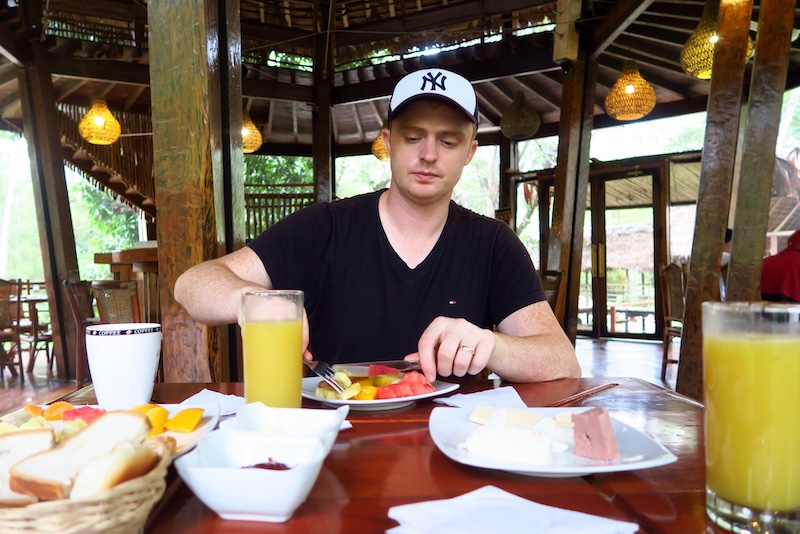
Meals here are an event of their own, full of regional flavour and friendly faces. There’s something quietly funny about eating beautifully plated ceviche or causa while cicadas drone outside and the dining room glows with lantern light.
- Breakfasts: fresh fruit, strong Peruvian coffee, eggs with Amazonian spices.
- Lunch and dinner: fish (including whatever piranha you caught), plantains, yucca, colourful salads, and tropical desserts like passionfruit mousse.
- Special diets: tell the staff in advance if you’re vegetarian, vegan, or have allergies — they’re used to accommodating it.
Tip: don’t skip the fresh juices. Camu camu, maracuya, and guava will ruin regular juice for you for a while.
Why Your Stay Matters for Conservation
Eco-lodges like this one play a real role in supporting conservation and local communities. Choosing this kind of stay helps create an economic alternative to logging or poaching, and many staff come from nearby villages, so your visit ends up funding things like reforestation and wildlife rescue work.
- Be a mindful guest: use biodegradable toiletries, be careful with water and electricity, and always follow your guide’s lead around wildlife and plants.
- Support local artisans: buy souvenirs from community-run co-ops rather than mass-produced trinkets.
What to Pack
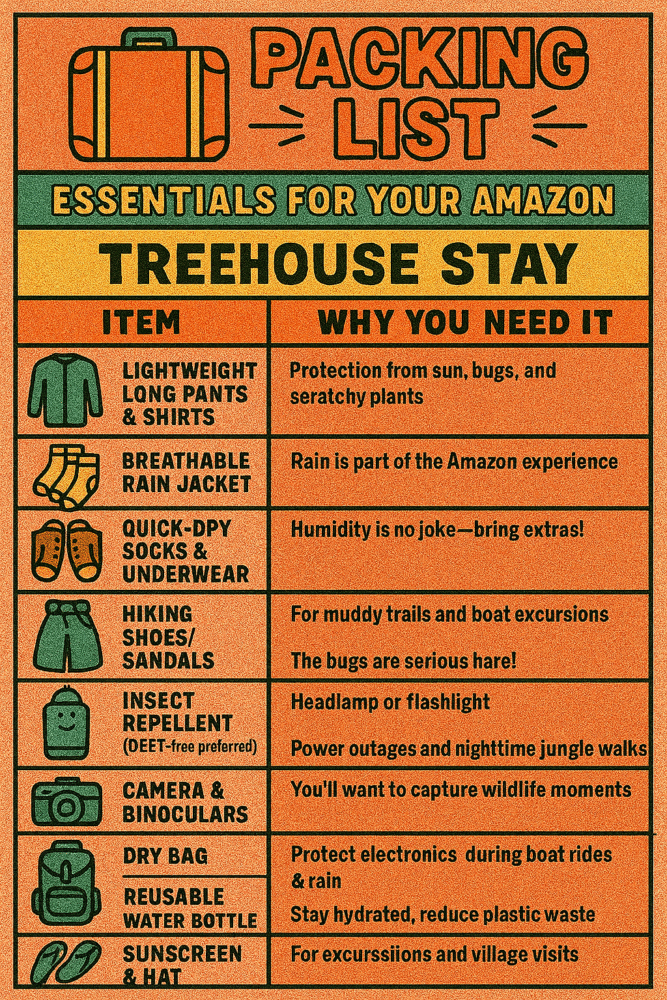
| Item | Why You Need It |
|---|---|
| Lightweight long pants & shirts | Protection from sun, bugs, and scratchy plants |
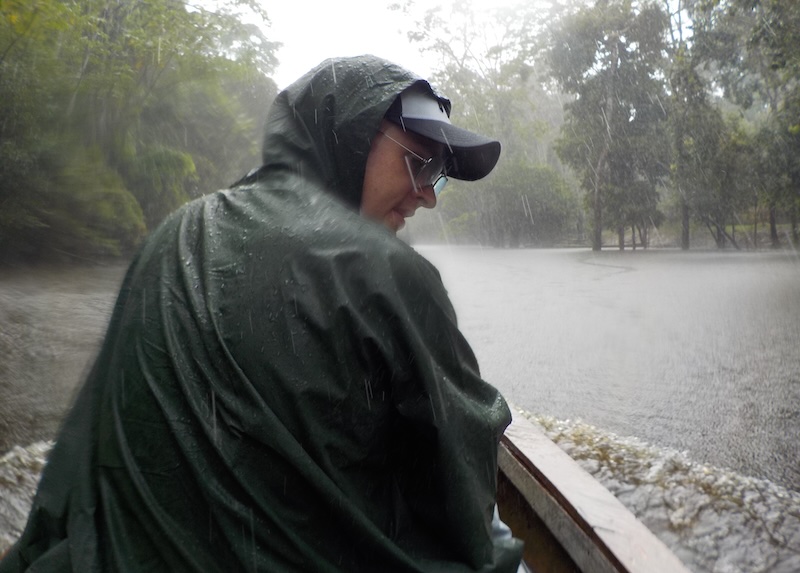
| Breathable rain jacket | Rain is part of the experience here |
| Quick-dry socks & underwear | Humidity is no joke — bring extras |
| Hiking shoes/sandals | For muddy trails and boat excursions |
| Insect repellent | The bugs are serious here |
| Headlamp or flashlight | For power windows and nighttime jungle walks |
| Camera & binoculars | You’ll want to catch the wildlife moments |
| Dry bag | Protects electronics during boat rides and rain |
| Reusable water bottle | Stay hydrated, cut down on plastic |
| Small backpack or daypack | For excursions and village visits |
| Sunscreen & hat | The equatorial sun is strong even under the canopy |
| Flip-flops | For lounging in your treehouse or showering |
| Swimsuit | For a dip in the river |
| Travel journal | You’ll want to remember the small details later |
A Sample 3-Day Rhythm
Day 1 — Settling in and a night safari: lodge van picks you up in Iquitos, then it’s a boat ride spotting herons and river dolphins, a passionfruit welcome, treehouse check-in, piranha fishing as the light turns gold, dinner, and a caiman-spotting outing after dark.
Day 2 — Culture and canopy: dawn birdwatching, a jungle-harvest breakfast, a visit to Vista Alegre’s school and artisan workshop, a patarashca lunch wrapped in bijao leaves, and a night hike looking for poison-dart frogs and owl monkeys.
Day 3 — Medicine and dolphins: a medicinal plant trek in the morning, an optional swim with pink dolphins at a river confluence, a farewell lunch, then the boat and van ride back to Iquitos.
Weather and River Levels by Season
River levels here shift a lot more than the temperature does, and that changes what your excursions actually look like more than the weather forecast will.
| Season | River Level | What Changes |
|---|---|---|
| Roughly December–May | High (wet) | Rivers can rise 20+ feet, boats reach flooded forest, more rain days, lusher scenery |
| Roughly June–August | Falling | Fewer rain days, sandbar beaches start to appear |
| Roughly September–November | Low (dry) | More hiking trails open up, fish concentrate in oxbow lakes |
A Few Things Worth Knowing Before You Go
Yellow fever vaccination isn’t officially required to enter Peru, but the CDC does recommend it for anyone travelling to Loreto and the wider Peruvian Amazon, along with typhoid and hepatitis A. It’s worth a visit to a travel clinic four to six weeks before you fly, since the vaccine needs time to take effect and some clinics only stock it on certain days.
- Rubber boots are provided at the lodge for muddy walks — worth trying them on as soon as you arrive rather than the morning of a hike.
- Life vests are mandatory on the skiffs, and guides carry a satellite phone and first-aid kit.
- Treehouses have safety lines and a whistle for emergencies — never needed one, but it’s reassuring at 2am.
Frequently Asked Questions About a Jungle Treehouse Stay
How do I actually get there from Iquitos?
Most treehouse stays near Iquitos start with a roughly two-hour drive to Nauta, followed by about an hour by boat along the Amazon tributaries. Transfers are usually arranged by the lodge itself, so just confirm your pickup time and location when you book.
Should I go in the wet season or the dry season?
Wet season (roughly December–May) floods the forest and lets boats push deeper into the canopy edges, which is great for wildlife, but expect more rain. Dry season (roughly June–November) opens up hiking trails and sandbars, with warmer, sunnier afternoons. Either way, pack for humidity and sudden showers.
What are the treehouses actually like inside?
Elevated, screened structures with mosquito-net beds, simple furnishings, and a jungle-view deck. You’ll reach yours via hanging bridges or spiral stairs, and no two are built quite the same. Most have an ensuite bathroom, though showers are often cold-water only — part of the deal when you’re sleeping in the trees.
Is it actually safe to sleep that high up?
Yes. Walkways are secured and staff run through safety basics on arrival. Stick to the marked paths, keep your net closed at night, and only approach wildlife with your guide. Boats carry life vests, and it’s worth paying close attention to instructions on night outings when visibility is low.
Do I need vaccines or malaria tablets?
Expect insects regardless. Wear long, breathable layers, use repellent, and sleep under the netting provided. For vaccines and malaria prophylaxis, talk to a travel clinic — yellow fever, typhoid, and hepatitis A are commonly recommended for this region, though none are officially mandatory for entry.
What excursions should I expect?
Typical outings include jungle medicine walks, pink and grey dolphin watching, piranha fishing, sunrise birding, night safaris, giant lily pads, and community visits like butterfly farms. What you get each day depends a bit on water levels, so your guide will adjust the plan as you go.
What should I pack?
- Clothing: light long sleeves and pants, quick-dry socks and underwear, a breathable rain jacket, a hat.
- Gear: a headlamp, a dry bag for your camera and phone, a power bank, binoculars.
- Toiletries: reef-safe sunscreen, repellent, hand sanitiser, any personal medication.
- Footwear: sturdy trail shoes plus easy sandals or flip-flops for the treehouse itself.
Will I have Wi-Fi or phone signal?
Expect little to no Wi-Fi and patchy mobile signal — treat it as a forced digital detox. Electricity often runs on generator or solar during set hours, so bring a power bank and charge things whenever the lights are on.
What’s the food like, and can they handle dietary restrictions?
Expect Amazonian-Peruvian dishes like ceviche, patarashca, plantains, yucca, and fresh juices. Vegetarian, vegan, and gluten-free diets are usually accommodated with advance notice, and filtered water, tea, and coffee are generally available throughout your stay.
How many nights should I stay, and should I pair it with a cruise?
Two to three nights hits a good balance of treehouse time and a mix of day and night excursions. A lot of travellers do the treehouse first for the adventure, then finish with a cruise or a higher-comfort lodge for AC and hot water.
Is this trip kid-friendly and accessible?
Nature-loving families tend to love it, but keep in mind the ladders, bridges, and height involved. Minimum-age rules vary by lodge. For travellers with mobility limitations, the elevated walkways and uneven paths can be genuinely difficult, so it’s worth confirming accessibility with the lodge directly before booking.
What costs extra, and how much cash should I carry?
Extras usually include premium drinks, add-on activities, and community crafts. Bring small bills in soles for tips and local purchases — most remote spots are cash-first even if the lodge itself takes cards for your main bill.
Final Thoughts
A treehouse stay in the Amazon isn’t really about the sleeping arrangement. It’s about stepping into a world that feels ancient and constantly changing at the same time, and being reminded you’re a guest in one of the planet’s great ecosystems.
So if you’re on the fence about booking a night (or three) in the trees, take the plunge. The jungle is waiting, and it’s very good at surprising people.
Do you dream of staying in a jungle treehouse?
What’s the strangest or most unusual hotel you’ve ever stayed in?
Many thanks to the Treehouse Lodge and Rainforest Cruises for hosting me during my stay.
You guys are truly brave & adventurous to stay in tree house along the Amazon River 🙂
Looks like fun! Also what a beautiful place to stay!
WOW! This place looks amazing! I’d love to go there myself one day! I’ve always had the dream of staying in a tree house!
Looks like you guys are the luckiest people in the world and the bravest as well. How did you handle yourselves staying in the jungle? Well, I guess you enjoyed it a lot. Please share us more pictures! Thanks. 🙂
Looks fantastic. I think I need to add “Fish & eat piranha” to my already 1,000+ item bucket list. My biggest issue is my outright phobia of snakes – kind of keeps the Amazon off limits until I can find a way to break that! Looks like a wonderfully cozy setup.
This look seriously amazing. Other than the butterfly thing (I have a weird thing about butterflies and moths…) this looks like my perfect trip. Might be adding this one to the list this year! 😉
Dreamy. I think my favorite part was just reading your description on how to get to the treehouse…ie…push open the trap door, etc. Loved it!
The treehouse stay looks incredible! I would love to take a week to live like Tarzan.