
I’ll admit it, China and I got off to a bit of a rough start, but once I reached the Guangxi province and swapped tall buildings for karst mountains and traffic jammed avenues for bamboo rafts on a river, my outlook on China changed. Yangshuo proved to be the highlight of my time in China and here are just a few reasons why I liked this place so much:

It still has a small town feel
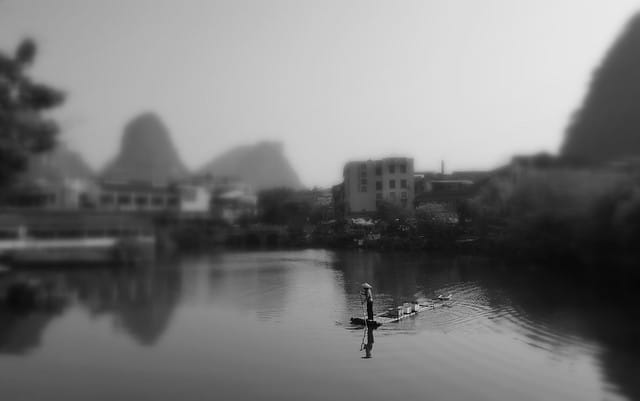
Even though Yangshuo is a very popular tourist destination with foreigners and Chinese alike, the old part of the city still maintains a bit of a small town feel. Yes, there may be a McDonald’s and plenty of international dining options, but there are also historic buildings with ancient roof tiles, cobbled streets that have been smoothed over by centuries of pedestrians walking over them, quiet temples by the water’s edge, and you’ll even spot the odd man transporting his goods aboard a bamboo raft. Yangshuo may be booming with tourism, but part of what makes it so appealing is that its small town charm hasn’t been entirely lost.
The lively night markets
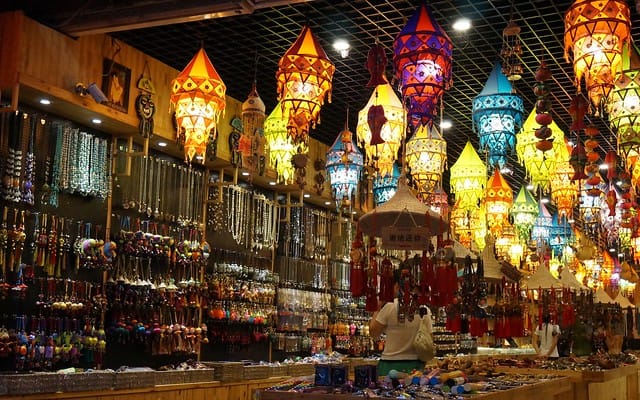
West Street is the main pedestrian road in Yangshuo and the place really comes to life once the sun goes down. This is the place to sample lots of street food, plus you can also find lots of quirky souvenirs: combs made out of ox bone, stamps with your name carved in Chinese characters, and fake Chinese passports (I was kind of tempted by those!)
Biking through the countryside
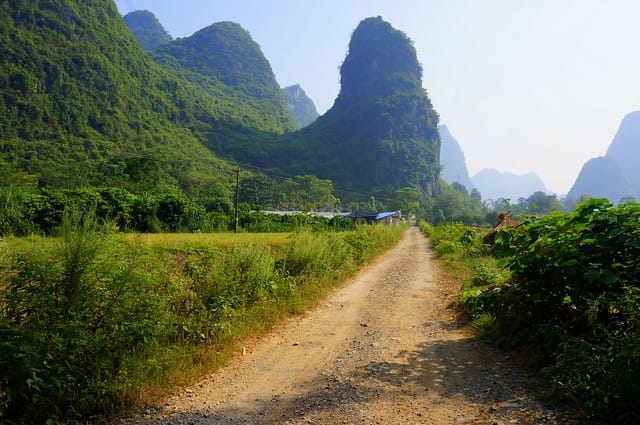
On our last day in Yangshuo, Sam and I decided to rent some bicycles and bike out to the countryside. Maneuvering our way out of the city was an adventure in itself – imagine a mixture of scooters carrying live ducks and toddlers riding shotgun – but once we reached the outskirts of town, it was desolate dirt roads for miles on end. Seriously, if you come to Yangshuo, you need to hop on a bike and explore what’s out there!
Fun hostels that are budget friendly
I ended up staying at Monkey Jane and what I liked about this place is that it really catered to budget travellers. Say you are a backpacker travelling on a dime, well, this hostel was advertising free room and board in exchange for some of your time. Care to re-paint one of the dorm rooms? Don’t mind bartending for a couple of hours at night? Willing to carry crates of beer up to the 5th floor? Monkey Jane was willing to strike up a deal. While I personally didn’t take them up on that offer, I can see how this would be appealing to many travellers.
My only advice: don’t stay on the 4th floor if you’re hoping to get some shut eye. The bar is right above and I could hear everything from Ricky Martin’s “Livin’ la vida loca” to the Bloodhound Gang classic “let’s do it like they do on the Discovery Channel”. Amusing? At first, but not at 3 a.m. when the party is no closer to being over.
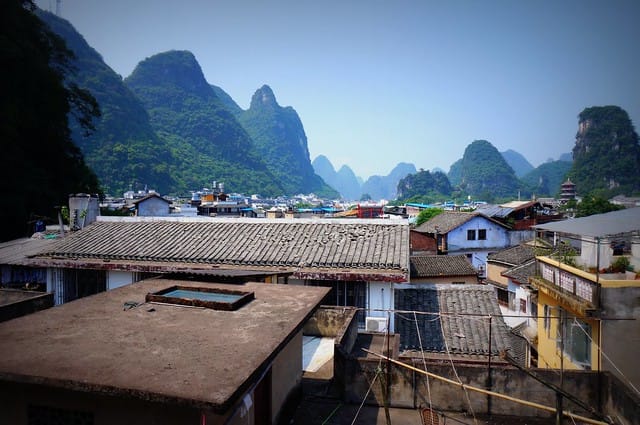
The rooftop views
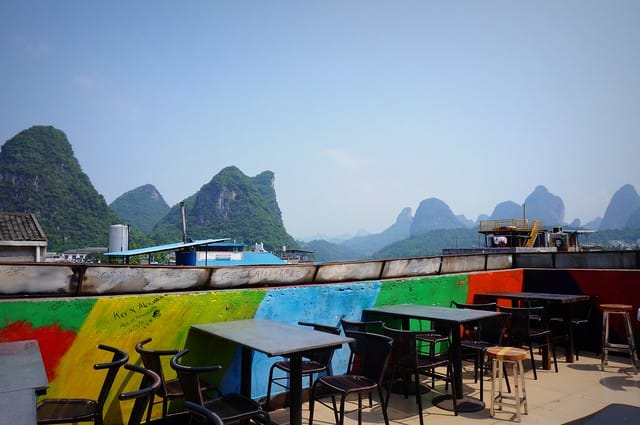
Every rooftop in Yangshuo has breathtaking views like this one. Need I say more?
All the international food!
Going out for food in Yangshuo was like country hopping. My first afternoon there I found myself having lunch at a German restaurant. Cheesy Oktoberfest tunes with lots of accordion were playing overhead, while a waitress clad in a dirndl took my order. I was happy to see that the meals on their menu were hearty and authentic, and I was beyond pleased with the Käsespätzle (egg noodles smothered in cheese) I ordered. Das ist gut!
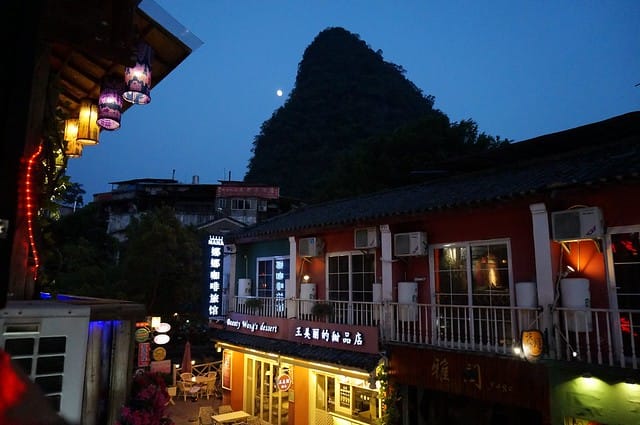
Another favourite of mine turned out to be Cafe Mimosa which specializes in Israeli food. (Yes, Israeli food in China!) The women running this place sure knew what they were doing – thick, fluffy pitas always baked fresh, hummus with a garlic kick, and the best chicken shawarmas I’ve had in a long time. This was my go to place, and they had a pretty great view to boast.
Morning exercise in the park
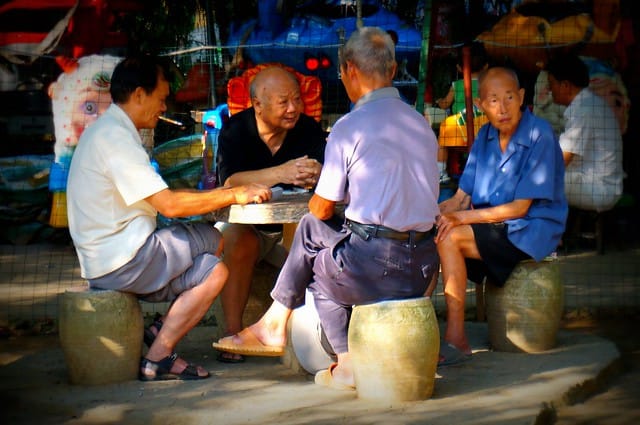
The Chinese really value their health and nowhere is this more obvious than at the local park. I got up really early one day to find that several groups were gathered at Yangshuo Park for their morning exercise routine. On one side of the park a group of seniors were doing tai chi, while over on the other end another group was working on a ballroom dance (satin shoes and twirling skirts included). Not to mention the people out roller blading, riding bicycles and jogging. And those who weren’t exercising were chatting with friends or playing cards.
The day trips
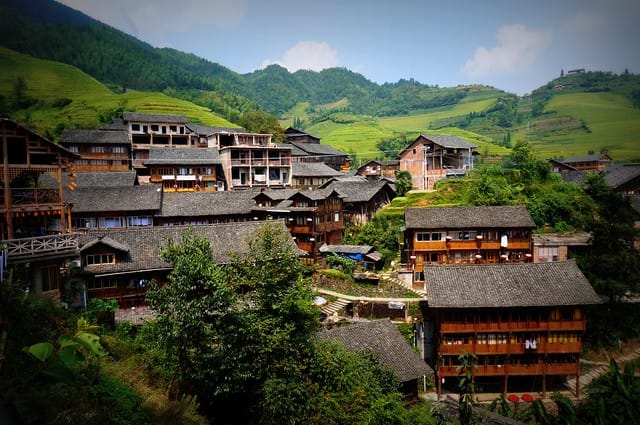
As beautiful as Yangshuo is, part of the appeal of this region is that you can take plenty of day trips to nearby towns and villages. If you are willing to put in a bit of hard work and climb uphill, then the town of Ping’An which is home to the Longji rice terraces and the Long Hair Red Yao Tribe is worth the visit. On the other hand, if you are looking for something a bit more low key, cruising down the Li River aboard a bamboo raft is a relaxing way to take in the scenery.
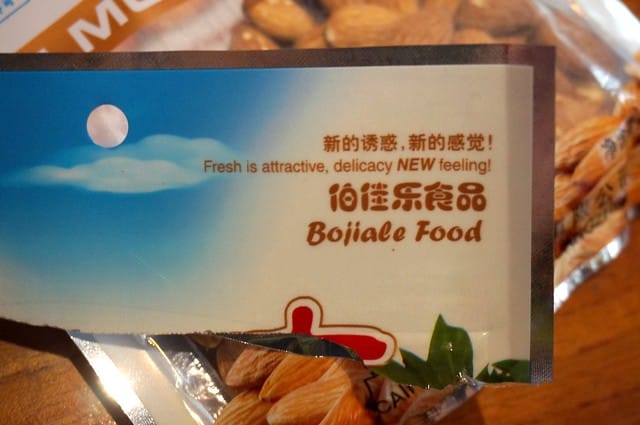
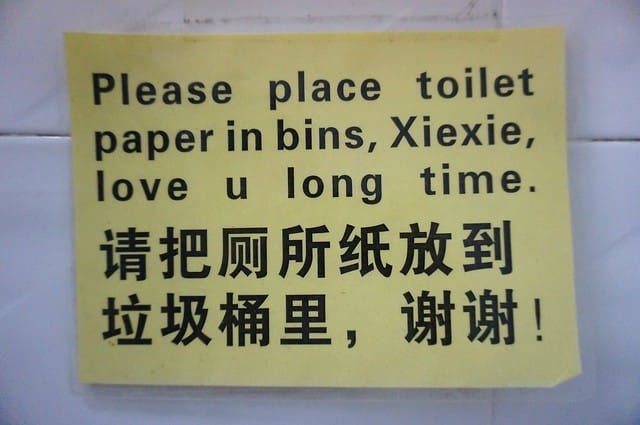
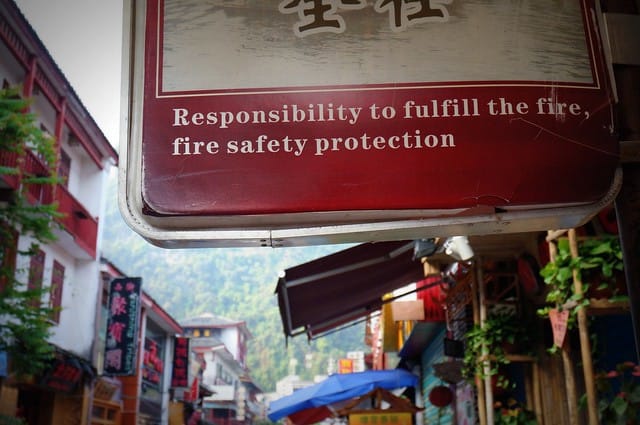
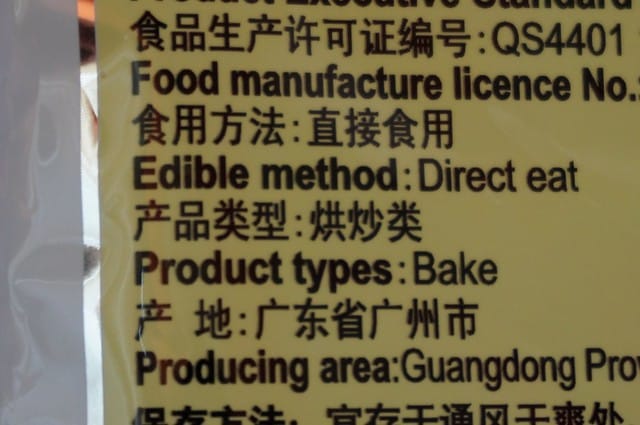
The EngRish signs
Another thing I enjoyed about China were the EngRish signs! Have a look at some of these – they really made me chuckle. (The toilet EngRish was my favourite.)
Planning Your Own Trip to Yangshuo
Samuel and I had three days in Yangshuo, and if you’re heading there yourself, a little planning goes a long way: where to sleep, how to arrive without landing 34 kilometres from town, which river to float down, and where to stand for the best look at those peaks. Plenty has changed since our visit, too. The sleepy backpacker town of our trip now has high-speed rail, e-bikes on every corner and phone payments for just about everything, so wherever it matters, I’ll tell you how things were for us and how they work these days.
Why the Karst Looks Like This
The peaks in all of my photos are more than just pretty scenery. Karst forms when rainwater, which is slightly acidic, slowly dissolves limestone over an almost unimaginable stretch of time. Around Guilin and Yangshuo, that process has gone about as far as it can go, eating away the rock until only isolated towers are left standing on flat valley floors.
Geologists call this fenglin, or “peak forest”: lone towers rising straight out of the rice fields. Its cousin, fengcong, is a cluster of peaks joined together at the base. The Li River corridor between Guilin and Yangshuo has both, which is a big part of why the view seems to reinvent itself around every bend. In 2014, Guilin’s karst, including the Li River section through Yangshuo County, was added to UNESCO’s South China Karst World Heritage site, which describes it as the best-known example of inland tower karst in the world.
If one view looks oddly familiar before you’ve even arrived, there’s a reason. The Yellow Cloth Shoal reflection near Xingping, upriver from Yangshuo, is the scene printed on the back of China’s 20-yuan note. People pull out a bill and hold it up against the real thing (and yes, it’s every bit as silly and satisfying as it sounds).
What the banknote doesn’t show is haze. The same stretch of river can be crystal clear one morning and washed out the next, and the mist that looks so magical at dawn can swallow a viewpoint whole. Samuel and I lucked out with a gorgeous, clear day on the river, but if your plans have a little slack in them, save the big views for the clearest weather you get.
Yangshuo or Guilin?
Samuel and I both preferred Yangshuo, and not by a little. It felt more historic, it was far easier to explore on foot, and the food kept pulling us back out every evening.
Guilin is the region’s transport hub, with the airport and the main train stations, and it’s where the classic Li River cruises begin. Staying there makes sense if you’re short on time or flying in late. But if the countryside, the rivers and the bike rides are the reason you’re coming, a Guilin base means spending part of every day just getting to them.
We did give Guilin a fair shot. We arrived in the heat of the day and waited until evening to head out, and the city was at its best after dark: the main square buzzing with shops and places to eat, and the two pagodas on the lake all lit up. Dinner was a generous plate of spicy mapo tofu made with fresh tofu, plus deep-fried taro balls drenched in caramel sauce, crunchy on the outside and chewy in the middle. The next morning we headed out to the Longji rice terraces. If Longji is on your list, a night or two in Guilin makes sense, since the terraces are about two hours’ drive from Guilin and a little further from Yangshuo, and this private Longji rice terraces day tour from Guilin takes care of the driving. For everything else, we’d still pick Yangshuo.
Once you’ve settled on Yangshuo, the next question is which part of it:
- West Street and the town centre: Restaurants, the night market, bike rentals and the river are all within walking distance. It’s lively, so if you’re a light sleeper, check how close a hotel is to the bar strip before you book. This is the area where Samuel and I stayed, and you can browse hotels in Yangshuo to compare places in and around the centre.
- The Yulong River valley: Villages west and southwest of town, with quiet guesthouses among the rice fields and the cycling lanes and raft piers practically on the doorstep. Evenings in town will mean a taxi or scooter ride. Look for hotels in the Yulong River Scenic Area.
- Xingping: A small old town about an hour from West Street and close to the high-speed rail station. It’s the quietest of the three and the handiest base for sunrise and sunset viewpoints and the 20-yuan stretch of the Li River. Here are places to stay in Xingping Ancient Town.
Monkey Jane’s has since left West Street, by the way. Its owner closed the original hostel in town and now runs a smaller café and guesthouse in an old brick house on the Li River, out in the countryside. If you’re after a lively hostel right in the centre, you’ll be choosing from a newer crop of places these days.
Getting to Yangshuo
Guilin is the gateway for almost everyone. Samuel and I came up from Hong Kong the slow way: a train to Guangzhou, a scramble across town between two different stations, then an overnight train to Guilin that rolled in about an hour and a half late, with nothing left for breakfast but salty peanuts and a few little cakes from the day before. These days, a handful of direct high-speed trains run from Hong Kong West Kowloon to Guilin West each day in about three hours, or you can change trains in Guangzhou.
From Guilin, you have three ways to cover the last stretch.
By high-speed train. Trains from Guilin’s stations reach Yangshuo Station in roughly 20 to 45 minutes. What catches almost everyone out is that Yangshuo Station isn’t actually in Yangshuo. It sits about 34 kilometres from West Street, out near Xingping. A shuttle bus timed to train arrivals takes about an hour to reach the bus hub on the edge of town, and from there it’s a short taxi ride to West Street. If you’re staying in Xingping, though, the train is perfect.
By coach. Buses from Guilin take about an hour and a half and drop you at the bus station in town, within easy reach of West Street. With a big pack and a room in the centre, this is the least fuss.
By river. The Li River cruise doubles as transport: you board outside Guilin and step off in Yangshuo a few hours later. More on that next.
Guilin Liangjiang International Airport is the closest airport.
Li River Cruise, Li River Raft or Yulong Raft?
Samuel and I spent about an hour and a half on the Li River, and I’ve written about that trip in my post on rafting the Li River. If you’re planning your own time on the water, it helps to know there are really three different experiences here, and they’re easy to confuse.
The Li River cruise is the classic. Boats run one way, downstream, from piers outside Guilin to Yangshuo, and the trip takes roughly four to five hours depending on the water level. Boats leave from two piers, Mopanshan and Zhujiang, depending on the class of boat and the operator. Neither pier has a public bus, so a ticket that includes a hotel transfer saves a lot of hassle. This Li River cruise to Yangshuo with Guilin hotel pickup lets you choose a three-, four- or five-star boat. Lunch is usually included, and many boats dock at Longtoushan Pier, a 15- to 20-minute walk from West Street. In the dry months (roughly January to March), low water can mean a shortened route instead of the full run.
The Li River raft covers what’s often called the essence of the river: Yangdi to Xingping, past Nine Horse Fresco Hill and the Yellow Cloth Shoal of banknote fame. Just don’t picture a lone boatman with a pole. These are small four-seat rafts made to look like bamboo but powered by an electric motor. It’s a shorter outing than the cruise and sits closer to the water, and it’s easy to arrange from Xingping or Yangshuo.
The Yulong River raft is a different river and a different experience altogether. The Yulong is a smaller river winding through the countryside southwest of Yangshuo, and its rafts carry two people, pushed along by a raftsman with a long bamboo pole. The popular upper stretch from Jinlong Bridge to Jiuxian covers about six kilometres in roughly 60 to 90 minutes, with nine small weirs to slide down along the way, so expect the odd splash. Shorter stretches run further downstream, closer to town. Tickets are sold per raft rather than per person, so a solo traveller ends up paying for the seat beside them too. A Yulong River bamboo raft ticket with a choice of routes lets you lock in your stretch ahead of time.
| Li River cruise | Li River raft | Yulong River raft | |
|---|---|---|---|
| Route | Guilin piers to Yangshuo, one way | Yangdi to Xingping, plus shorter loops | Several stretches; Jinlong Bridge to Jiuxian is the longest popular one |
| Time on the water | About 4–5 hours | Shorter; roughly an hour or more, depending on route | Roughly 60–90 minutes on the upper stretch |
| Boat | Large boat with seating and a viewing deck | Small four-seat electric raft | Two-person raft, poled by hand |
| Highlights | The full sweep of the Li River | Nine Horse Fresco Hill, the 20-yuan scene | Quiet countryside, stone bridges, gentle weir drops |
| Best for | Arriving from Guilin, families, seeing the whole river | Short on time, staying in Xingping | Couples, pairing with a bike ride |
A word on the weather: heavy rain can shut all of this down. The worst flooding in decades closed the Li River scenic area for days in June 2024, and the Li River rafts were halted again during heavy rain in June 2026. If you’re visiting in the wetter months, keep a spare day up your sleeve, and carry your passport, since river tickets work on a real-name system and the busiest dates book up in advance.
Cycling the Countryside, Then and Now
On our last morning, the town was still half asleep at eight o’clock, a completely different Yangshuo from the one we’d seen at the night market. Samuel and I fuelled up with breakfast, rented a couple of bikes (just under two dollars each back then!) and pedalled until we were well into the countryside, where we stopped for a breather beside a lily pond. Afterwards we headed back to our hostel rooftop to enjoy the view.
These days, guesthouses and rental shops all over town rent out pedal bikes and e-bikes by the day, usually with a deposit, and e-bikes have become the default. If you’ve never ridden one, practise on a quiet lane before tackling the main road out of town.
If you’d like a route to follow, the classic loop heads into the Yulong River valley, west and southwest of town: roughly 20 to 25 kilometres, mostly flat, winding through villages and rice fields out to Jiuxian and back. Alternatively, follow the Ten-Mile Gallery road toward Moon Hill. We set off early ourselves, and it’s worth doing. The lanes are quieter, the air is cooler and the light on the peaks is softer.
Some travellers ride up the valley and then float back down on a Yulong raft. The rafts only go one way, though, so work out how your bike gets back before you board. If you’d rather leave the navigating to someone else, this private day tour with a Yulong valley bike ride pairs the cycling with a Li River raft and a climb up Xianggong Hill.
Sunrise and Sunset Viewpoints
Every rooftop in Yangshuo comes with a view, but to look down on the karst rather than up at it, you’ll need to climb. The best-known lookouts are around Xingping.
Xianggong Hill is the sunrise classic, with a bend of the Li River and peaks layered into the distance, often wrapped in morning mist. Entry costs ¥60, and the climb is a few hundred stone steps, usually 15 to 20 minutes, to a set of viewing platforms. It’s about 28 kilometres from Yangshuo with no direct bus, so plan on a pre-dawn taxi, a driver or a tour, and expect company. This one is no secret. A private Xianggong Hill sunrise tour from Yangshuo or Guilin takes care of the early-morning transport and includes the entry ticket.
Laozhai Hill, at the edge of Xingping’s old town, is free but makes you earn it: 1,149 steps to a summit more than 300 metres high. Allow the better part of an hour to get up. There was no trail at all until a Japanese traveller climbed the hill in 1996 and was so taken with the view that he stayed, and the path today largely exists thanks to him. From the top you look straight down onto the river bend, and it’s a favourite spot for sunset.
Moon Hill, about 8 kilometres south of Yangshuo, is closer and easy to fold into a bike ride along the Ten-Mile Gallery. A small entry fee and roughly 800 steps (20 to 30 sweaty minutes) bring you to the huge natural arch near the top, with wide views across the valley.
Whichever you choose, check the conditions before you go. A morning fog can hide even the most famous view completely, so if the forecast looks murky, keep a second morning in reserve.
Eating in Yangshuo, Morning to Night
Samuel and I ate at Cafe Mimosa seven times in three days, which tells you everything about how we spent our time. My breakfast favourites were the homemade banana bread, packed with nuts, and hummus with fresh pita. Any morning that starts with hummus is a good morning in my books.
After dark, the street stalls took over. Samuel went for a skewer of meat from a cook who was very generous with the spices: tender, smoky and properly hot. We also tried the backpacker classic, a banana pancake, Chinese-style, with the banana mashed into the middle rather than sliced on top.
The dish everyone will tell you to try is beer fish, or pijiu yu, Yangshuo’s signature dish. Fresh river fish is braised with local beer (Liquan, brewed in Guilin), tomatoes, chilli and garlic, and you’ll find it on menus all over town. Plenty of restaurants display their fish out front, so ordering by pointing is perfectly acceptable. In the morning, do as the locals do with a steaming bowl of Guilin rice noodles.
If the weather turns on you, a cooking class makes a good rainy-day plan. This Yangshuo cooking class with a market visit starts at a local market, and beer fish is one of the dishes you can choose to cook.
When to Go and How Long to Stay
Late spring and early summer are the wettest months around Guilin and Yangshuo, and that’s when river closures are most likely. Autumn tends to bring clearer, drier days, while low water in winter can shorten the cruise route. Chinese public holidays, especially the first week of October and Lunar New Year, bring huge domestic crowds, so book rafts and rooms early or steer clear of those dates.
The heat can be fierce, too. On our hike up to a viewpoint at the Longji rice terraces it felt like 40 degrees, and in Guilin we waited until evening for things to cool down before heading out. If you’re travelling in the hot months, save the climbs and bike rides for early morning and carry more water than you think you’ll need.
We had three days in Yangshuo. If you can, give it three or four nights: a day on the river, a day on a bike or raft in the Yulong valley, a day for Xingping and a sunrise or sunset climb, plus a spare day if you’re visiting in the wet season.
Before You Go
In recent years, China has let Canadian and British passport holders, along with travellers from dozens of other countries, visit visa-free for up to 30 days. The scheme runs on fixed end dates and has so far been renewed year by year, so check that it still applies to your passport before you book. If you’re only passing through Guilin on the way to a third country, Guilin Liangjiang Airport is also part of China’s 240-hour visa-free transit scheme for eligible nationalities.
Set up Alipay or WeChat Pay before you fly. Both accept foreign Visa and Mastercard cards, and you’ll be scanning QR codes for everything from noodle stalls to bike rentals. Keep some small notes on you as well. Your passport will come out often too, for train tickets, cruises and rafts. And since many of the apps you rely on at home won’t work in China, sort out your phone situation before you land rather than after.
Plan around those few things, leave room for the weather, and Yangshuo has a way of taking care of the rest.
And that was Yangshuo! My week in China flew by, and it was hardly enough time to even begin scratching the surface of such a vast country, but in spite of the little hiccups I may have had a long the way, I look forward to exploring more of this country one day.
Have you been to China? What was your favourite place?
Yangshuo was indeed one of my favourite places in China too, though I was there in March several years ago, and it was bloody freezing! Riding a bike out of town is definitely a highlight, though I didn’t know about all the international food. I wonder if that’s a new thing; I was there 4 years ago, so I guess it could have changed a lot since then.
Ahh, that sounds nice…if you have the right clothing. 😉 China was going through a crazy heat wave while we were there – I felt like I was back in SE Asia.
The EngRish signs are hilarious. Chinese are always funny. My next home is China. It is land of beauty from its culture to its land nature. This is land of my dream.
Hahaahha, love you long time. So good. Also that picture of your rooftop view is gorgeous! Loved reading this post. Yangshuo is definitely going on my list. Thanks for sharing 🙂
That was my favourite sign too. 😉
I like EngRish signs – direct translation. Actually these signs are made for tourist who want something to smile about.
Did you visit Yangshuo’s Chinatown? No, really, my English-speaking Chinese tour guide (who really didn’t show us much because we preferred wandering on our own) pointed it out. I’m still confused about the whole thing.
Haha, a Chinatown in China?? I completely missed that part. Did it look any different from the rest of the town?
As always you crack me up Audrey with the signs but I’m over the moon with the “Wow!” moment the b/w photo of the man on the bamboo raft creates. That’s an award winning photo.
Thanks Maria. That’s also one of my favourite photos from my time there – the town looks so peaceful. 🙂
I’m living and teaching English in Hubei right now. I’ve actually been planning a trip to Yangshuo during the winter holiday so I am very excited to see your pics and commentary. Let me ask though, what is the best way to get from Guilin to Yangshuo. Bus? Is there a train? And around how much money should I save up in preparation if you had to give a rough estimate? Let me hear your advice!
You can either take a direct bus from Guilin to Yangshuo or go as part of a tour. I went for the tour option, so they picked me up from my hostel in Guilin, we went rafting down the Li River, and then after the day’s outing they drove us the rest of the way to Yangshuo. I think the tour I took came to about $30 USD, but you can obviously get there for a lot less if you just take the direct bus. In terms of budgeting, it all depends on how many tours you end up taking because that’s what adds up! Food and accommodations were actually quite affordable.
We’ve have been just for a day, didn’t stay overnight as we found a cheap hostel in Guilin. I remember the market and the local food we tried – some fried tofu with chili and baked sweet potatoes. The mountains looked so amazing. Really miss this place and the locals!
These photos look amazing. I haven’t been to China yet, but I feel like I always enjoy myself most when I get out of the city and into the countryside. The ox bone comb sounds interesting too!
That first photo is amazing!! We had very little interest in visiting China when we lived in Taiwan, though now we are starting to wonder why! Hopefully one day we will make it back to give China the proper time it deserves. Yangshuo looks like a beautiful place to experience!
We were in Yanghsuo in 2008 — it remains one of my favorite places I’ve traveled! After weeks of huge, smoggy Chinese cities (in August, no less), Yangshuo was such a breath of fresh air! We did the bicycle ride and the trip to the rice terraces also– both incredible.
China’s a funny old place. I’ve yet to go (you can’t count the day visit from hong kong as all I did was go and buy cheap dvds) but when I do can see it being somewhere you go for a long time and not a quick in and out trip.
Beautiful pics of what seems a beautiful area!
Hahah the love you long time sign is hilarious!
We spent three months in China and our favorite place was either Beijing or Xi’an. Beijing because it’s so big and awesome and Xi’an for the amazing food.
OMG, you had Kaesespaetzle in CHina. That is my favourite dish in the whole world! I loved my time in Yangshuo. It is such a pretty place!
Visiting Yangshuo was one of the highlights of my two years in China! I went in February right after Chinese New Year and the old town was still strung up with red lanterns. It was magical!
hahaha….Lost in translation?
Haha, yup. There were lots of quirky signs with rather mysterious phrasing. 😉
Keep trying to convince my Girlfriend to go to China with me. Think this is perfect ammo! It looks beautiful and a nice way to get out of the city – did you find anywhere else like this?
I didn’t spend that much time in China, so I didn’t get to visit that many destinations. However, if you’re looking for unique landscapes in China, also try looking up Zhangjiajie National Forest Park – haven’t made it there but it looks pretty spectacular. Vang Vieng in Laos is also known to be quite scenic with all its karst formations.