
If you haven’t heard of Machu Picchu before, then you must’ve been hiding under a rock since, well…1911. Machu Picchu tops many of our travel bucket lists, but many people that I’ve met have expressed regret at doing something wrong during their first visit to this UNESCO World Heritage Site. So, how can you make your trip to this top travel destination run smoothly? Here are some Machu Picchu tips to help you out:
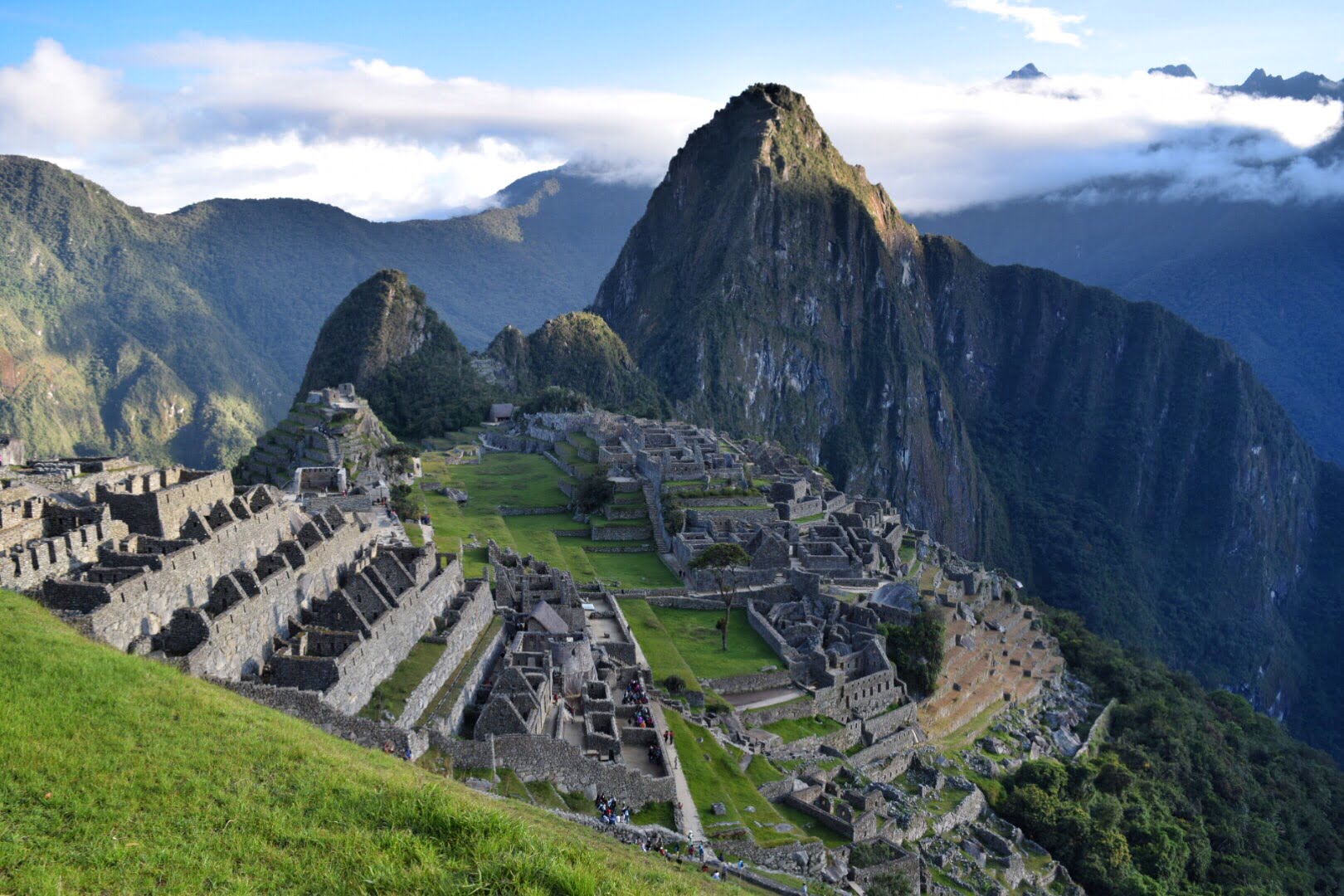
Buy your Entrance Tickets Ahead of Time
Since 2011, Machu Picchu has started limiting visitors to 2,500 visitors per day, so make sure to buy your ticket in advance. This can easily be done online. If you’re a student, you can even get a discount on your ticket! Furthermore, if you’re planning on climbing Machu Picchu mountain or Huayna Picchu, you will be given a specific time during which you can enter these sites (usually an hour window). Looking to buy your tickets? You can do so here. If you’re worried about ensuring your spots for a certain day, you can see the number of entrances available per day by checking the “availability” box in the top left corner.
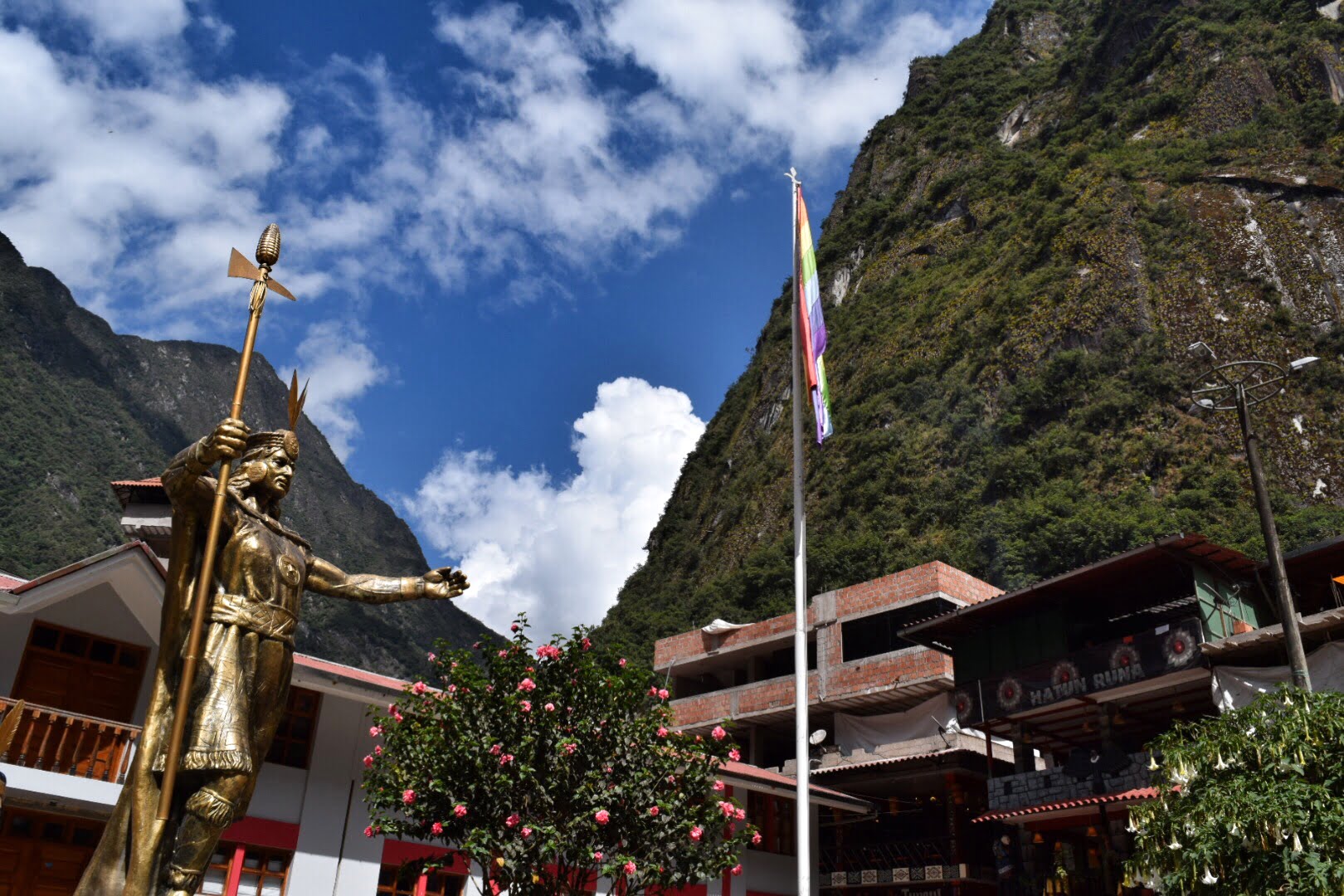
Spend the Night in Aguas Calientes
So so so SO many people do Machu Picchu as a day trip from Cusco. This involves waking up early in the morning, taking the 3.5-hour train ride to Aguas Calientes, Peru and boarding a bus to reach Machu Picchu…all in one day. After following these steps, they tend to arrive to the top of this buzzing tourist area at the peak time (around 12-3 in the afternoon). If you want pictures without hundreds of people in them, come before this peak time. I recommend staying the night in Aguas Calientes, which is quite a cheap destination, and visiting Machu Picchu first thing in the morning.
Take the Bus to Machu Picchu
From Aguas Calientes, there are two ways to reach the entrance to Machu Picchu: a 20-minute bus ride that zigzags up the mountain or an hour and 45-minute hiking trail. My only regret during my visit was choosing the hiking trail (don’t worry, I’ll explain). This hiking trail is pretty brutal as it is pure stairs. Imagine doing this trail before the sun rises with tens of other travellers and you’ve got, well, a lot of British people cursing.
I started hiking around 4:40 a.m. and by the time I got to the entrance of Machu Picchu, it was around 6:30. With my ticket, I had also bought entrance to Machu Picchu mountain from between 7-8 a.m. However, after already having hiked one mountain, I was too exhausted to make it to the top of another one (only about 25% of my group did). Conserve your energy and take the bus, it’s only $24 USD round trip! Needless to say, I took the bus down.
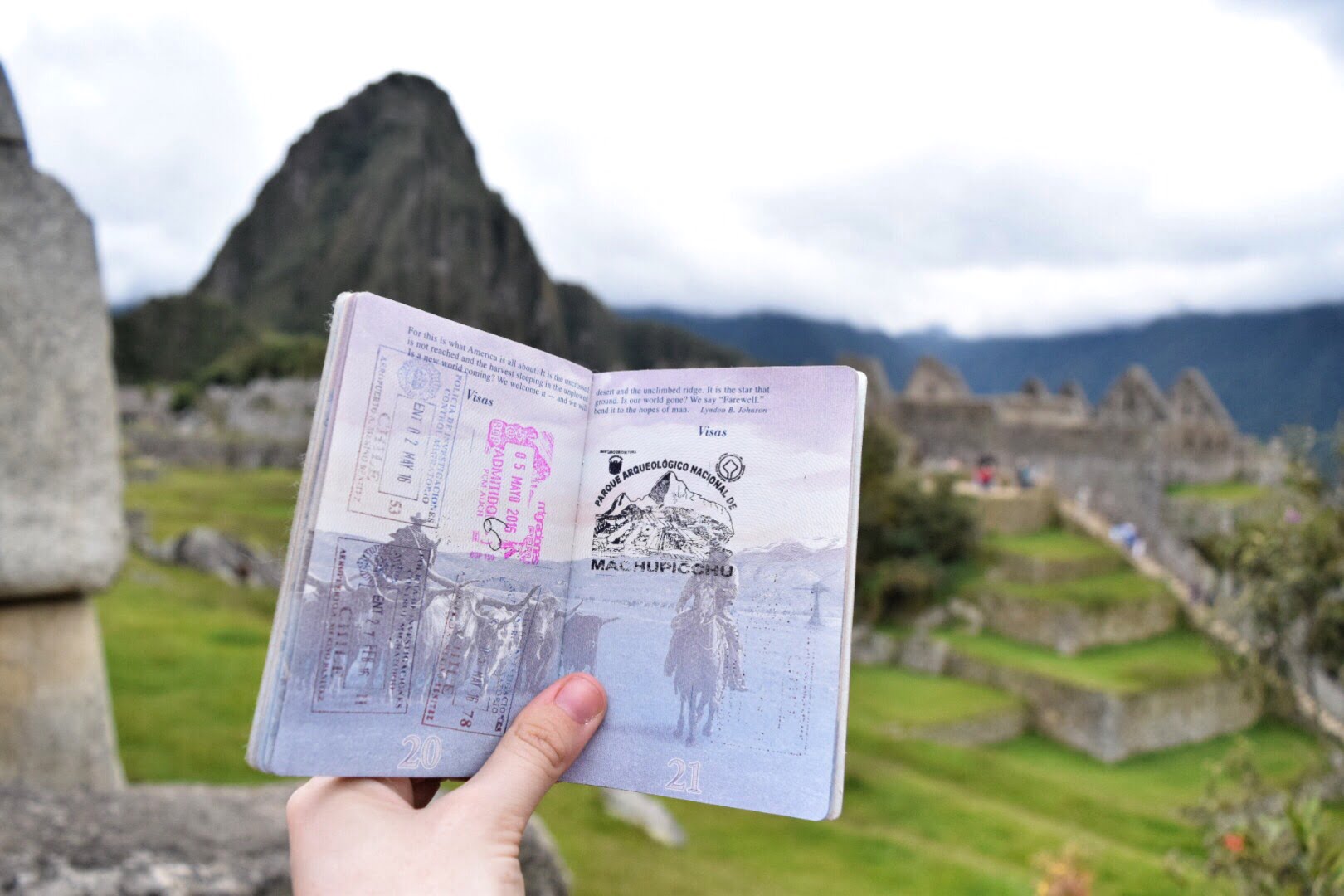
Get your Machu Picchu Passport Stamp
Did you know that you can get a stamp on your passport for having visited Machu Picchu? They start doing stamps at 9 a.m. by the entrance. As soon as you enter the gate, look left and you’ll notice a table. Here, the stamp is typically laying out and you can stamp your passport yourself! Even if you don’t need a passport for identification (for citizens of countries like Argentina, Bolivia, Chile, etc.), I recommend bringing your passport anyway to be able to add another beautiful stamp to your collection.
Hire a Guide to Tour Machu Picchu
Machu Picchu is one of those tourist sites that weirdly enough has no explanatory signs. If you’d like to really understand what you’re seeing as well as the history behind it, I recommend getting a group guide once you’ve entered. My group was able to secure a 3-hour tour for 20 nuevo soles per person (that’s only $6 USD).
Choosing How You’ll Get There
Between Samuel and me, we’ve now approached Machu Picchu by rail, on foot along the Inca Trail and by the cheapest back route going, and how you get there shapes your whole day.
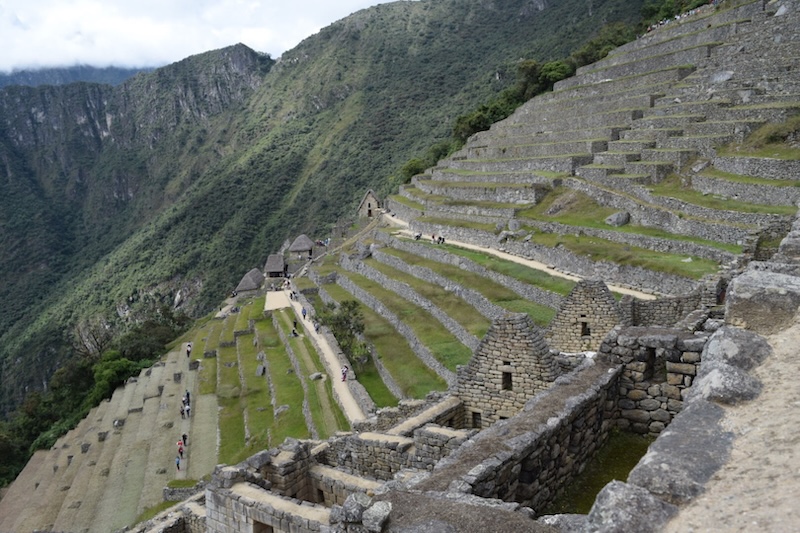
The standard approach is the train. Services run from Ollantaytambo in the Sacred Valley (and from the Cusco area) to Aguas Calientes, where the buses leave for the entrance. It’s the simplest option, and it gets you to the ruins with fresh legs.
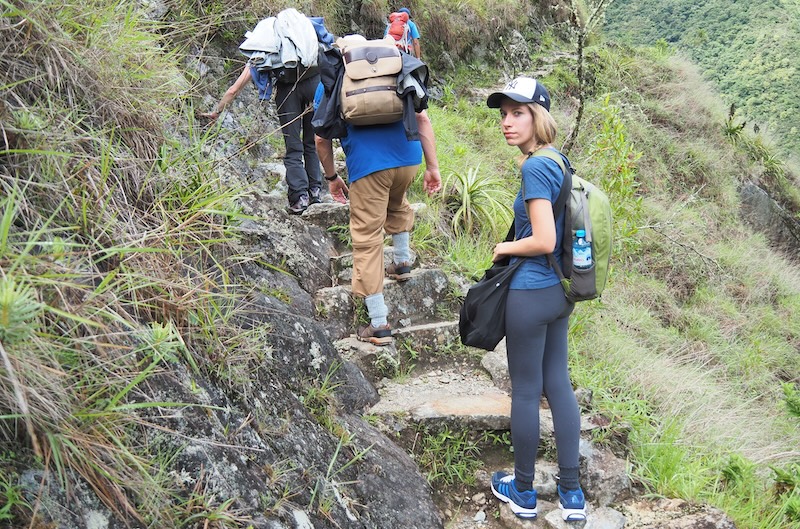
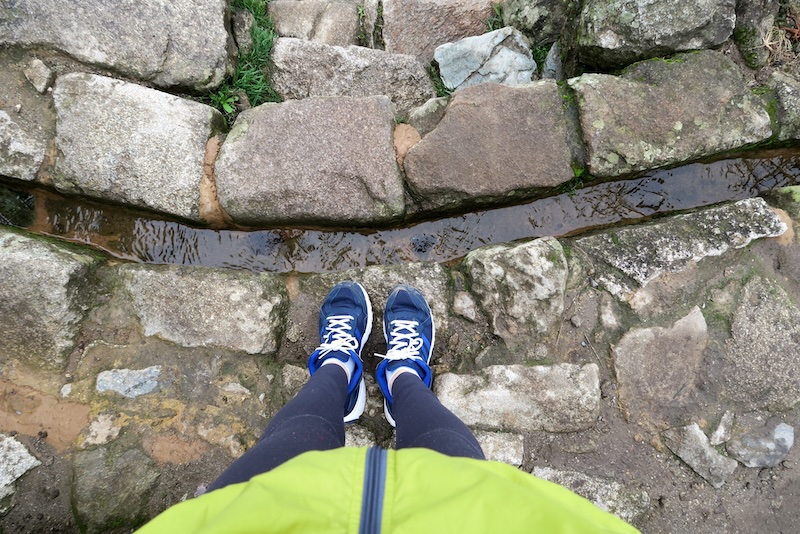
When I came back years after my first visit, Samuel and I did the short Inca Trail, which is a good fit if you’d like a taste of trekking without committing to four days. The train drops you at a trackside stop known as Kilometre 104, and within minutes of setting off we were standing in our first Inca site, Chachabamba. After that, the trail climbs for most of the morning. It was hot, sticky and almost entirely uphill, until we got deeper into the mountains, closer to the waterfalls and streams, where the forest turned lush and mossy and the air finally cooled down. We stopped at the terraces of Wiñay Wayna, scrambled up a staircase so steep it’s easier on all fours, and walked through the Sun Gate to our first look at the citadel. That night we slept in a proper hotel bed in Aguas Calientes (we crave our comfort), and the next morning we went back up for a guided tour. Like the classic trek, the short trail is booked through a licensed operator, and packages usually bundle the train, permit, guide and hotel night. This two-day short Inca Trail tour with a hotel night in Aguas Calientes follows the same route we walked, from Kilometre 104 past Wiñay Wayna to the Sun Gate, with a guided visit to the citadel the next morning.
The classic four-day Inca Trail is the full commitment. Permits are capped each day, porters and guides count towards that cap, and the trail closes every February for maintenance, so plan this one months ahead rather than weeks.
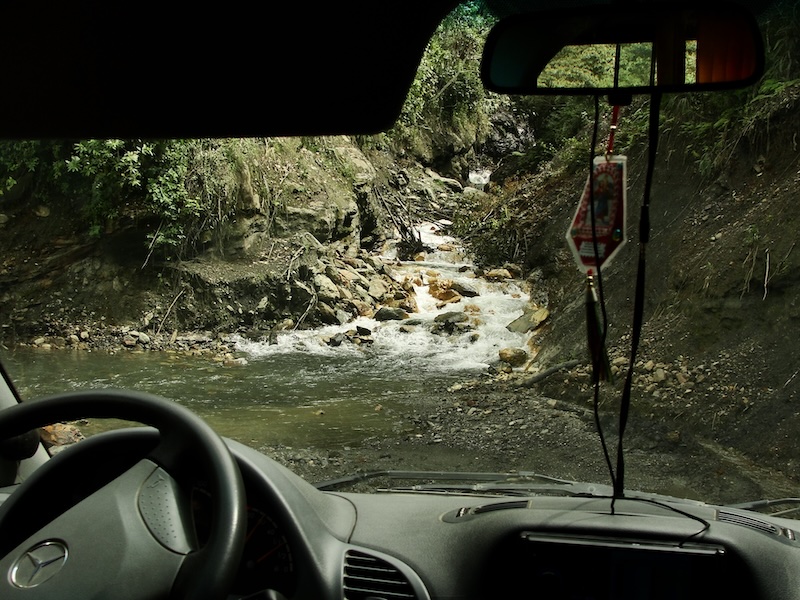
Then there’s the budget route, which Samuel took on his first visit back when he was, in his words, the ultimate cheapskate backpacker. It involved a van along a twisting off-road track, a ride on a wooden trolley strung along a cable, some walking and a train. And then, to save a few more dollars, he walked up the hill to the ruins and arrived exhausted before he’d seen a single wall. These days the route runs by road via Santa Teresa to the Hidroeléctrica station, where you either walk about two and a half hours along the railway tracks to Aguas Calientes or hop on a short train. It’s cheap, but it’s a long day, and landslides close the walking path from time to time during the wet season.
| Approach | Effort | Plan ahead | Best for |
|---|---|---|---|
| Train + bus | Easy | Weeks | Most first-time visitors |
| Short Inca Trail | One long day of hiking | Months in busy season | A taste of the trail plus a second look at the site |
| Classic Inca Trail | Four days, high passes | Many months | Committed trekkers |
| Hidroeléctrica route | Long road day plus a walk | Flexible | Tight budgets and patient travellers |
Wherever you start from, keep the altitude in mind. Cusco sits at roughly 3,400 metres, Machu Picchu is closer to 2,430 metres, and both Aguas Calientes and Ollantaytambo are lower than Cusco. Spending your last night or two in the Sacred Valley or in Aguas Calientes makes the early start easier on your body as well as your alarm clock. Depending on your train times, you can compare hotels in and around Aguas Calientes or hotels in and around Ollantaytambo.
Picking the Right Ticket
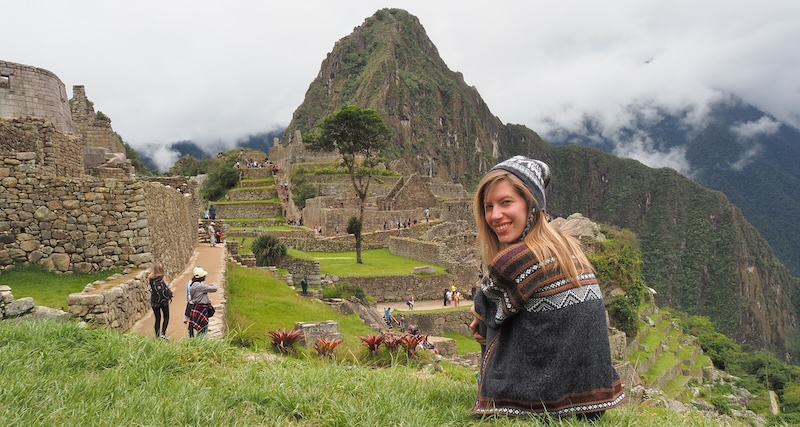
These days it isn’t enough to just have a ticket; it has to be the right one. Visits are split into circuits, each with set routes and timed entry slots. Circuit 1 (Panoramic) sticks to the upper terraces, Circuit 2 (Classic) pairs the upper viewpoint with a walk down through the main ruins, and Circuit 3 (Royalty) explores the lower sectors. If you’re after the famous postcard view, with the citadel spread out below Huayna Picchu, book Circuit 1 or 2. Circuit 3 skips that viewpoint, and it catches a lot of people out because it’s the circuit that comes with the Huayna Picchu climb. For most first-timers, Circuit 2 is the safe bet. Routes that include a mountain climb cost more and tend to sell out early.
Buy directly through the Ministry of Culture’s platform, tuboleto.cultura.pe. You can no longer hold a slot while you think it over. Once you’ve picked your circuit, date and entry time, you currently have about 15 minutes to pay before the slot goes back on sale, so have your passport details and card ready before you start. A limited number of tickets is also sold in person each day in Aguas Calientes, but don’t count on them in the busy months.
If you’re arriving on an Inca Trail package, ask your operator which circuit your entry includes. Trail tickets are tied to a specific circuit inside the citadel, and it may not be the one with the classic view from above.
Fog, Weather and the Case for a Second Look
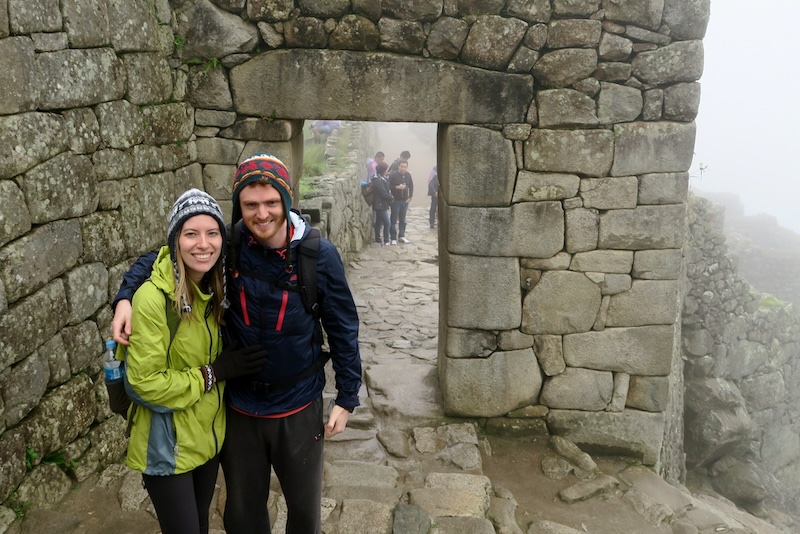
On my second visit, Samuel and I started the morning standing in thick, cold fog, unable to see Machu Picchu at all. Around half past eight the rain stopped, and over the next few hours the clouds slowly lifted until the sun broke through and the citadel appeared. The day before, we’d walked through the Sun Gate under blue skies. Six or seven years after my first visit, it still had that wow factor, partly because Machu Picchu never looks quite the same twice. The weather here changes dramatically, and fast.
So yes, an early entry slot still beats the crowds, but don’t pin your whole trip on a single early ticket. In the drier months, morning mist usually burns off by mid to late morning. In the wet season, conditions swing back and forth all day. If the view matters to you, leave yourself time to wait it out, choose a slightly later entry, or buy a second ticket for another time slot or the following morning. That’s one of the quiet perks of the short Inca Trail: you see the site from the Sun Gate on day one and up close on day two.
Heavy rain can close trails, too. Sections of the Inca Trail network have been shut after storm damage and only reopened weeks later, so if you’re travelling in the wet season, build in a spare day and check official announcements before you set off.
What You’re Actually Looking At
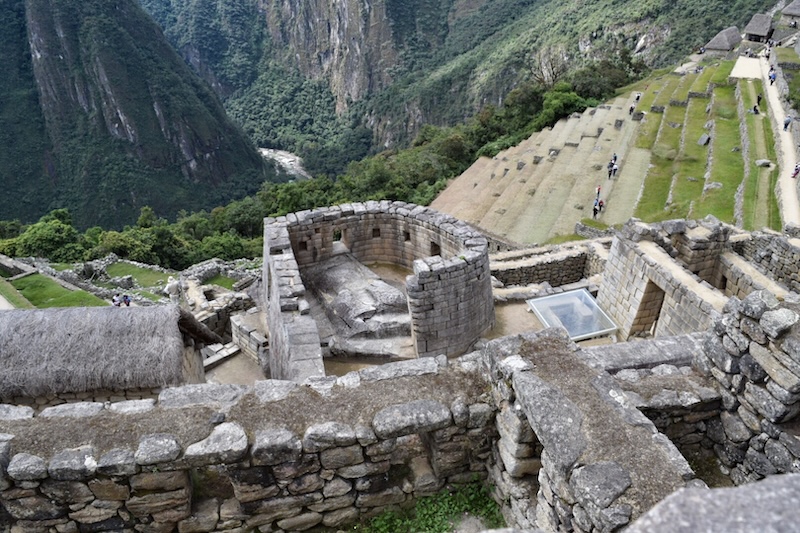
It helps to know what Machu Picchu was before you walk through it. Many archaeologists now see it as a royal estate built for Pachacuti, the Inca ruler behind the empire’s great fifteenth-century expansion, rather than a fortress or a “lost city.” Radiocarbon dating of human remains suggests it was in use from roughly 1420 to 1530, and it was abandoned around the time of the Spanish conquest. Among the structures worth seeking out are the Temple of the Sun, the Temple of the Three Windows and the carved Intihuatana stone.
During our tour, our guide talked about how the Incas mummified important people and placed them in caves around the mountain. The burial caves are very real: Hiram Bingham’s teams found more than a hundred of them after 1911, when local farmers led him up to the ruins. The interesting part is who was actually buried there. Analysis of the remains shows that most were ordinary residents, workers drawn from all corners of the Inca empire to keep the estate running, rather than members of the royal family.
If you arrive on foot, you’ll get a preview of all this before you even reach the citadel. Wiñay Wayna, usually translated as “forever young,” is a steep hillside of farming terraces, fine stonework and a chain of ritual fountains, and it would be a headline attraction anywhere that didn’t have Machu Picchu next door.
Everyone seems to leave Machu Picchu with at least one lesson they wish they’d learned sooner, and I’d love to hear yours.
Do you have any tips for visiting Machu Picchu?
These are really helpful tips. I guess Machu Picchu is an epic place and taking care of these small things can enhance the experience of visiting it.
Thank you! Yes, they definitely do. I wish I had known these tips the first time around!
Just in time. I’ll go to Macchu Picchu in July! Thanks for those tips, especially the hike to the entrance. I’ll definitely take the bus.
No problem! I hope these will help in your planning!
Great tips. This is one of my dream destinations, so I’ll definitely keep this in mind. I would definitely have opted for the hike, so I’ll have to think twice about it now!
Lisa | farawaylisamae.com
haha yeah I thought the hike was going to be awesome and it was a bit disappointing! although I definitely recommend the hike to Machu Picchu mountain once you are already in Machu Picchu.
What a wonderful place! Thanks for sharing your tips! Cheers!
No problem! I’m glad you enjoyed reading!
Super helpful article, thank you! I want to visit sometime in the coming years. I didn’t know you had to get a ticket, but it makes sense.
weirdwonderfulwanderlust.blogspot.com
You will love it, it’s a great experience!
Well one important tip would be to do the Inca Trail. A much better experience I’d say!
Definitely! I want to go back and do it when I have more time.
Machu Pichu has always captivated my imagination since I watched “The motorcycle Diaries”. Now that I’ve read your tips, the lust has only increased. Hope of finally getting there one day. Thanks.
No problem! I hope you get to see it one day!
This is super helpful – I’m starting to plan a trip for next May! Can’t wait!x
Good luck! Have the best time!
Really helpful, I am planning to visit Machu Picchu next Autumn 🙂
Have the best time! It is a great trip to take! 🙂 I’m glad I could be helpful
Thanks this guide will help, when I get a chance to visit Macchu Pichu.
No problem! I’m glad I could share some advice 🙂
Nice, didnt know you actually have to book the tickets in advance! Thanks for the information and inspiration 🙂
When is the best time to go? ?
May through October is the best time to trek since you’re in the dry season, but the trail can get busy during July and August when most people are on holiday. Also, keep in mind that the trail is closed every year in February for repairs. If you’re planning on trekking you’ll want to book months in advance to ensure you can get a spot since there are restrictions on the number of people allowed on the trail each day.
Hi Audrey, thanks for these great tips. We’ll be in South America from February and think we’ll be heading to Machu Picchu late April. Glad to have your advice, we’ll check out Aguas Calientes for a couple of days ahead of the bus trip. I think there’s a pretty cool train trip there from Cusco.