
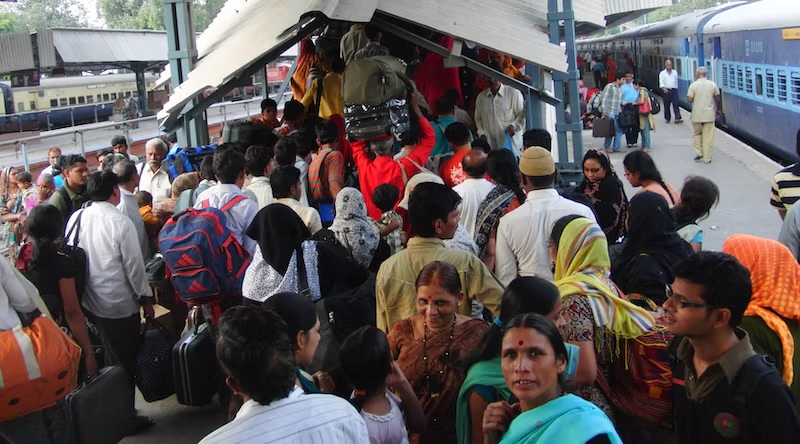
For anyone travelling in India, the train journeys are half the adventure. Not only is this one of the easiest and most efficient ways to see the country, but it also feels like a right of passage. If you can navigate a crowded platform with luggage in tow and elbow your way onto an Indian train, then surely you can survive anything!
Yes, you’ll need to brace yourself for some long rides, and likely a few train delays, but they say half the fun is getting there…at least in retrospect. (That was certainly not how I felt when I found out my train to Varanasi was delayed by 5 hours!)
With that in mind, today I’m sharing a list of travel items to bring on an Indian train for some added safety, comfort and fun, because trust me, you’ll need to find ways to keep yourself entertained on those 20+ hour rides.
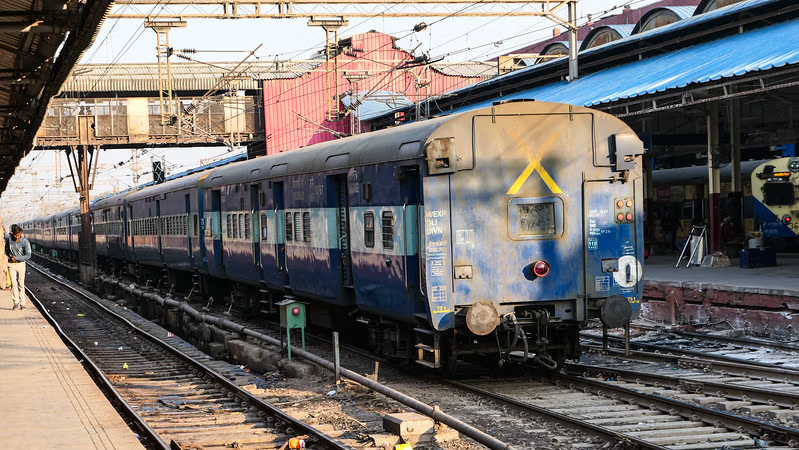
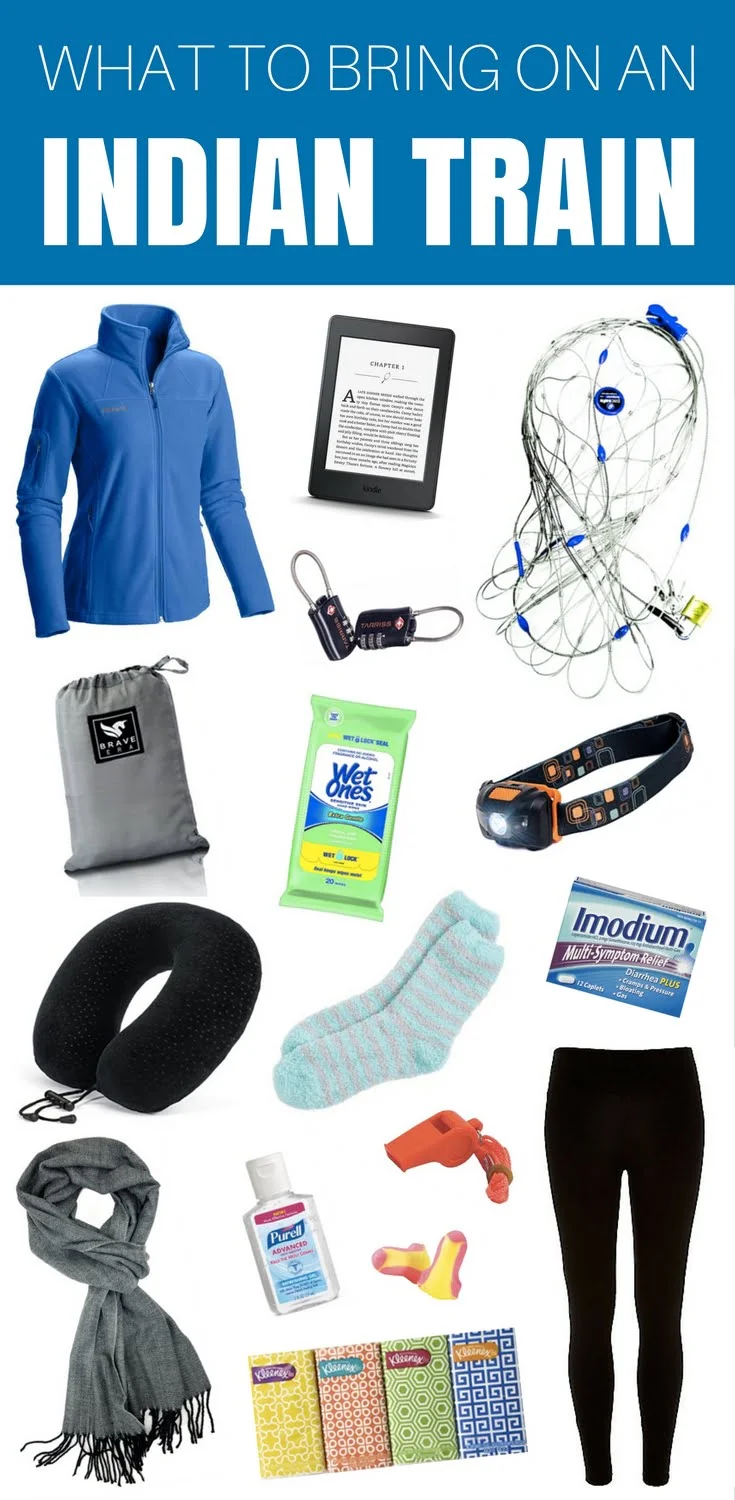
Things to Bring on an Indian Train: Essential Packing List For Comfort, Health & Safety
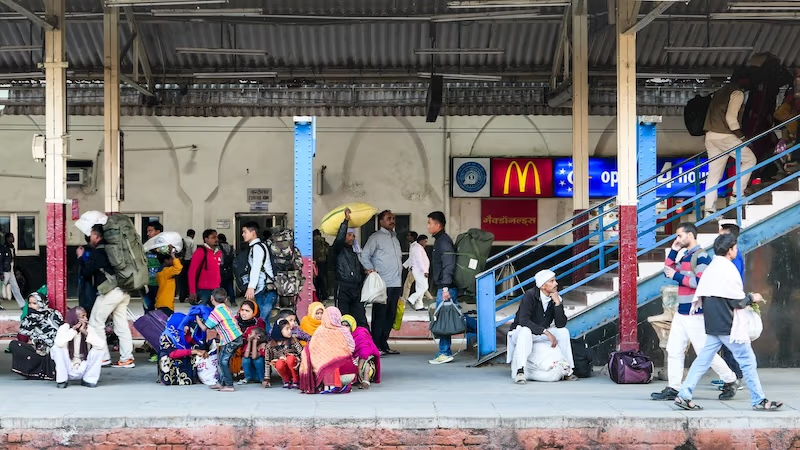
Warm clothes:
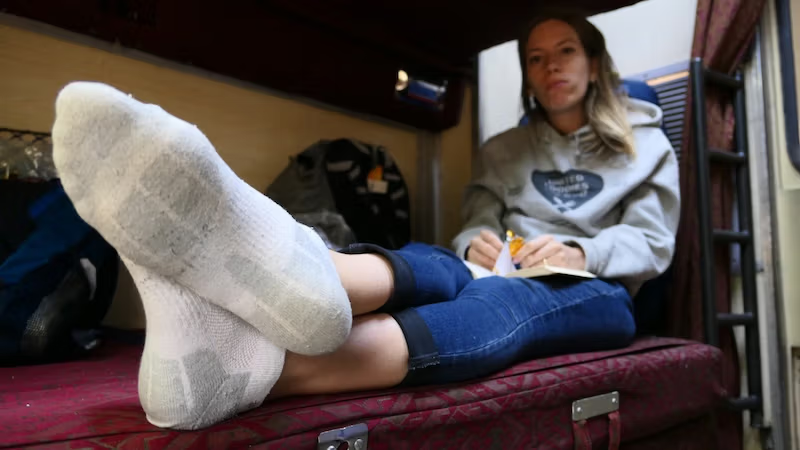
Even if it’s warm out, it can get pretty chilly in AC1 and AC2 with the air conditioning on full blast – especially if you end up on the top bunk! – so pack a thick hoodie or a warm fleece. My travel outfit in India consisted of a hoodie, thick leggings, fuzzy socks and a scarf. If you’re travelling in the Sleeper Class this isn’t so much an issue as you’ll have open windows and fans; I met a few travellers who complained about it being too warm in that section, so keep that in mind and dress accordingly.
Pacsafe:
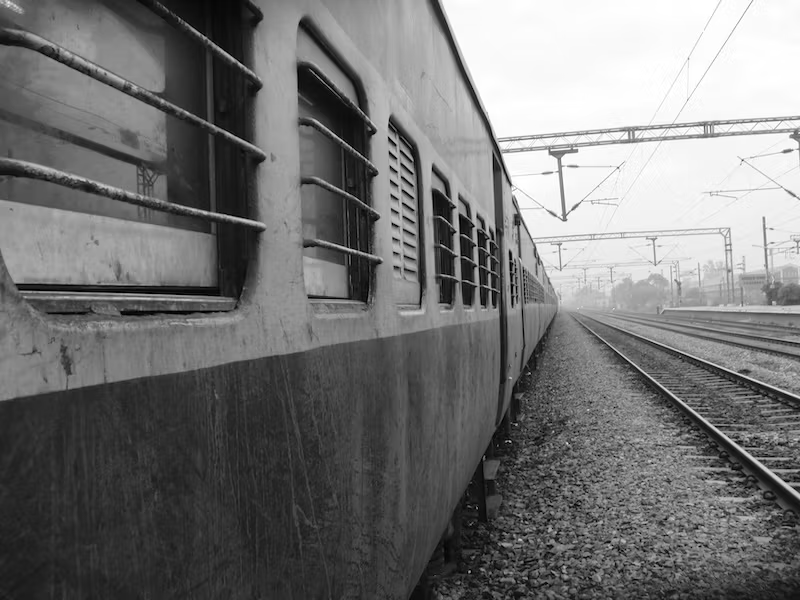
You’ll be able to store your main backpack or suitcase underneath the bottom berth (I always keep mine locked with a combination lock ), but it’s a good idea to keep your smaller daypack with your documents and valuables close to you. If you’re a deep sleeper, consider locking your daypack in a Pacsafe and keep that behind your head where it’s out of reach.
Reading material:
I always bring my Kindle with me and make sure I have a couple of books to last the journey.
Whistle:
I know this may sound a bit overboard, but if you’re travelling as a solo female in AC1 where there aren’t always as many passengers, a loud whistle could help keep you safe. We had an incident on one of the overnight trains where a man in uniform tried to assault a foreign female while her boyfriend went to the bathroom (she was alone in one of the 4-berth cabins in AC1), so safety isn’t something to take lightly. If you’re travelling alone, it might actually be a better idea to travel in the Sleeper Class where it’s more of an open layout and you are surrounded by people – safety in numbers. I’ll be writing more about safety in India in another post.
Travel pillow:
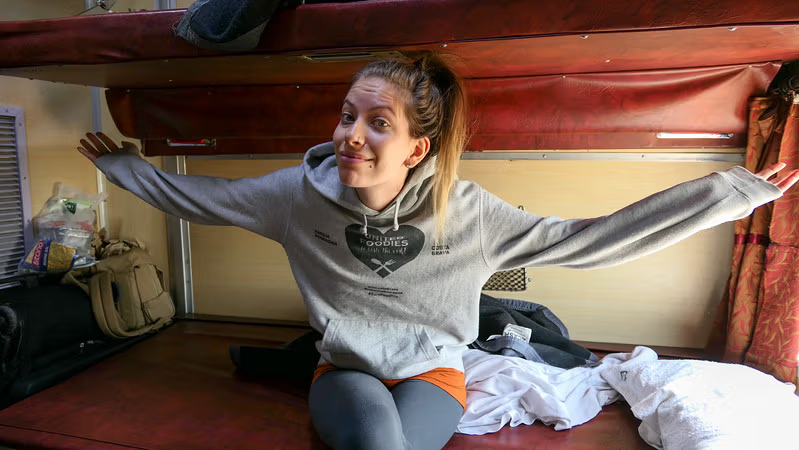
If you’re travelling in AC1 or AC2 attendants will come around with pillows, however, in the Sleeper Class no pillows are provided. Either way, I’d recommend bringing your own travel pillow. While the pillowcases we got in AC1 were clean, the pillows themselves had seen the test of time and were heavily stained.
Ear plugs:
If you’re a light sleeper a pair of ear plugs will come in handy. Trains can get a bit loud.
Silk sheet:
This is something to add to your packing list if you’re planning on doing a lot of train travel and/or staying in hostels. Again, while the bedsheets we were provided were clean, the blankets were not and unfurled a big cloud of dust, so a silk travel sheet set that you can use as a liner might be something to look into.
Toilet paper:
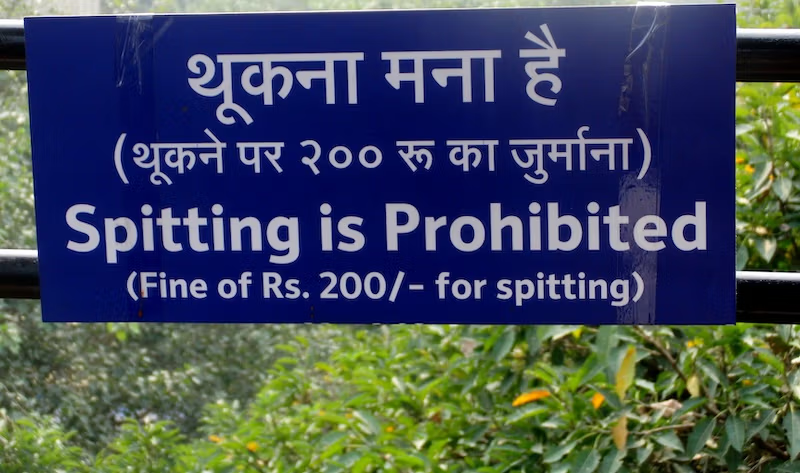
On a good day, you may find half a roll of toilet paper in the bathroom, but more often than not, you’ll find that there is no toilet paper at your disposal. You can buy packs of tissues or rolls of toilet paper at convenience stores and little shops in the train station, so stock up.
Wipes and sanitizer:
Sometimes water runs out on the longer train rides and that means you can’t wash your hands. Bring a pack of baby wipes and some hand sanitizer. Trust me, you’ll need it.
Water:
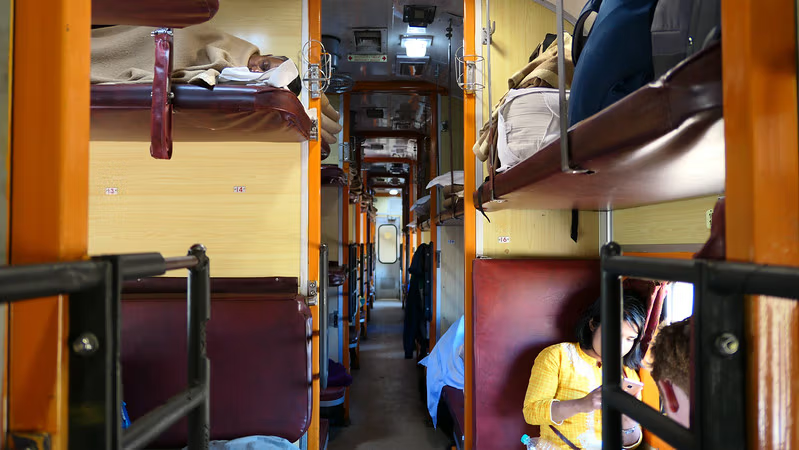
You might be tempted not to drink water so you can avoid the toilets on the train, but getting dehydrated is no fun either. You can pick up 1.5L water bottles at the station and vendors will also come onboard to sell soft drinks.
Snacks:
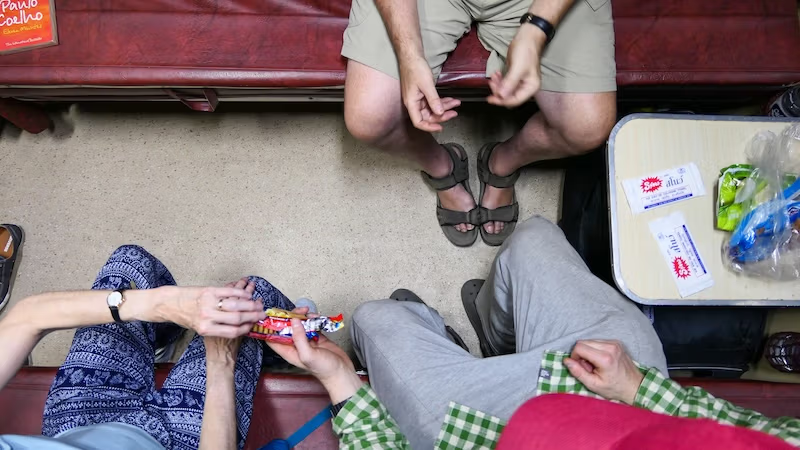
Indian train rides are notoriously long and they also tend to be delayed, so it’s good to come prepared with food to last you the journey. Most train stations have little convenience stores where you can pick up things like cookies, chips, peanuts, chocolates, and other non-perishable snacks. You can always restock your supplies when vendors come through the train.
Imodium:
In case you get Delhi Belly. It always strikes at the worst of times!
Headlamp:
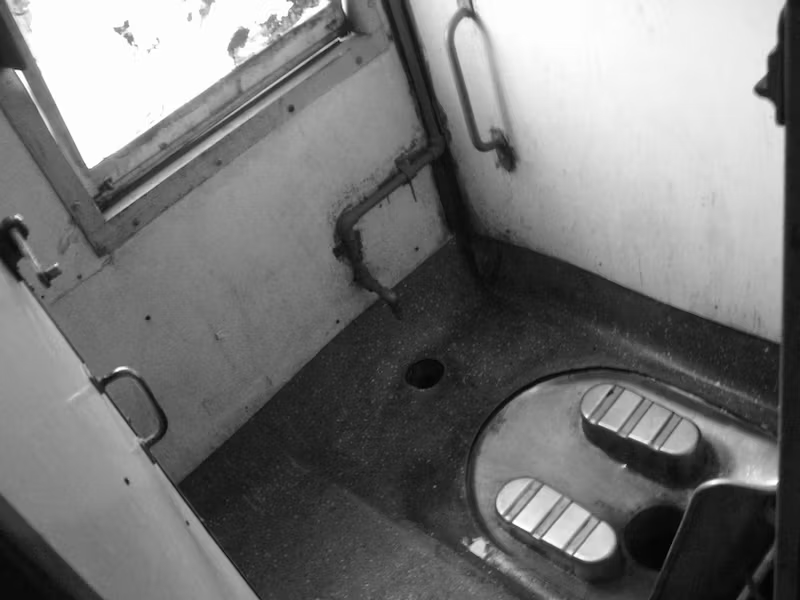
This comes in handy if you need to use the bathroom in the middle of the night when the lights have been dimmed. I’d choose a headlamp over a flashlight as this frees your hands for business!
Small bills:
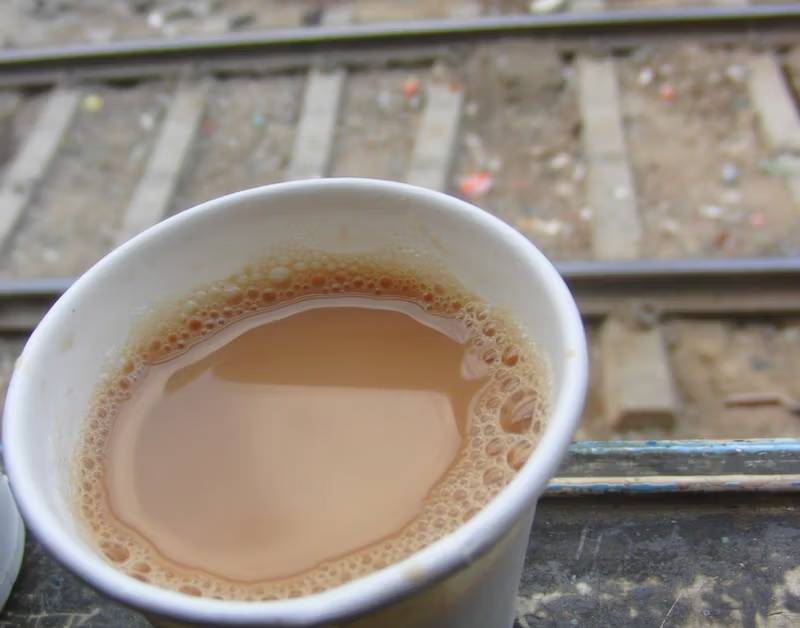
It’s a good idea to have small bills on you in case you get hungry (it can be quite hard to break large bills). A cup of chai should cost you around 10 rupees, which is about $0.15.
And those are my essentials. Let me know if there’s anything else you’d bring along to help ease those long journeys.
Indian Train Travel: Classes, Booking, and On-Board Essentials
If you’ve read the original packing list for Indian trains above and thought, “Okay…but how do I choose a class, book a berth, not miss my coach, and avoid hunger at 2 a.m.?”—these next sections are for you.
How India’s Railways Began, and How Big They’ve Grown
The first passenger train in India left Bori Bunder station in Bombay on the afternoon of April 16, 1853, hauling 14 carriages and around 400 invited guests the 34 kilometres to Thane behind three locomotives named Sahib, Sindh, and Sultan. A 21-gun salute marked the departure, and that single afternoon run is still marked annually as the anniversary of Indian Railways. What began as a colonial-era project to move cotton and administrators has since grown into one of the largest rail networks on the planet, now moving somewhere in the neighbourhood of 25,000 trains and tens of millions of passengers every single day. Riding an overnight train today, threading through stations that didn’t exist when that first engine pulled out of Bori Bunder, is a small way of stepping into a piece of transport history that’s still very much a living, breathing system rather than a museum piece.
Picking the Right Class for Your Route
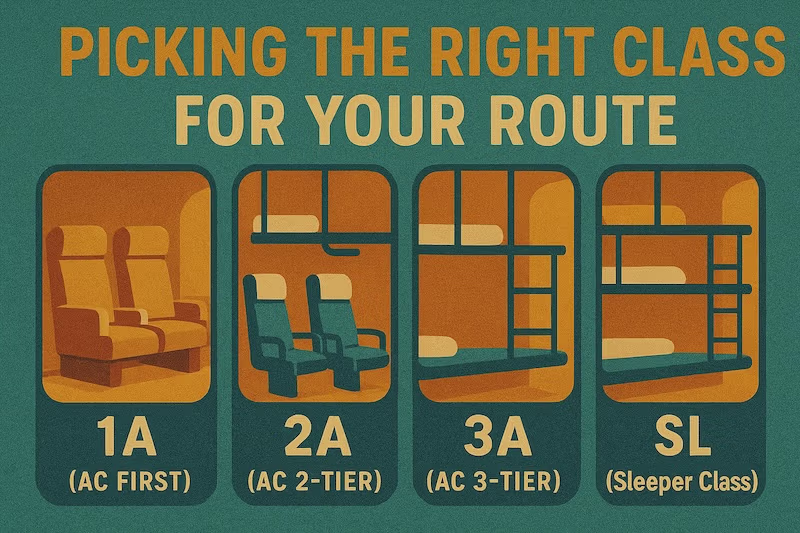
Indian Railways has a seat or berth for every budget and comfort level. Think about time of day, journey length, temperature, and how much you want to sleep before you book.
| Class | A/C | Berths/Seats | Bedding | Privacy | Best For | Watch-Outs |
|---|---|---|---|---|---|---|
| 1A (AC First) | Yes | 2 or 4-berth cabins | Yes | Door and attendant | Splurge nights, maximum privacy | Limited availability; pricey |
| 2A (AC 2-Tier) | Yes | 4 berths and 2 side berths | Yes | Curtains | Comfortable overnights | Cold A/C; bring layers |
| 3A (AC 3-Tier) | Yes | 6 berths and 2 side berths | Yes | Curtains on newer coaches | Budget overnights | Busier; higher foot traffic |
| SL (Sleeper Class) | No (fans) | 6 berths and 2 side berths | No | Open bays | Cool seasons, day trips, social vibes | Hot in summer, dusty |
| CC (AC Chair Car) | Yes | Reclining seats | No | Assigned seats | Daytime routes | Light jacket for A/C |
| EC (Executive Chair) | Yes | 2+2 seating | Sometimes | Quieter car | Fast day trains (Shatabdi/Vande Bharat) | More expensive |
| 2S (Second Seating) | No | Bench/assigned seats | No | Open | Short hops | Noisy and basic |
| Vistadome | Yes | Panoramic seats | No | Big windows | Scenic routes | Limited routes, higher fare |
Berth Basics
- Lower berth: Most convenient; doubles as day seating. Downside: people may sit on it during the day.
- Middle berth (3A/SL only): Fine for sleeping, annoying during the day because it folds down late.
- Upper berth: Cave-like peace; you can nap any time. Downside: climb needed; colder under A/C vents.
- Side lower/upper: Along the aisle; breezier and great for people-watching. Downside: narrower, more foot traffic.
A good rule of thumb: for long overnights, 2A upper (quiet and curtains) or 3A upper (budget and okay sleep) tend to work best. For winter day rides, Sleeper Class is perfectly fine and very social.
How to Book Tickets
There are four main ways travellers book:
- IRCTC (official website/app): Cheapest fares, full control. Create an account, add international phone if needed, and keep your PNR (10-digit booking number) handy.
- Authorised partners/OTAs: If IRCTC verification gives you trouble, third-party sites and apps can book for a small fee.
- Foreign Tourist Quota (FTQ): A limited set of seats reserved for foreigners on select trains. Accessible through IRCTC or at larger station counters.
- Tatkal (last-minute): A quota released one day before departure — 10 a.m. for AC classes, 11 a.m. for non-AC. Prices are higher; tickets go fast.
Waitlist vs. RAC
- WL (Waitlist): Not yet confirmed. You cannot board if still WL at departure. Watch your status — WL usually moves as people cancel.
- RAC (Reservation Against Cancellation): You have the right to board and a shared seat or berth that may convert into a full berth if others cancel.
Check your PNR status on the IRCTC app or “Where Is My Train” up to departure — it updates in real time.
Booking Timeline Tips
- Festival seasons and school holidays: Book as early as possible. Indian Railways currently opens booking 60 days ahead of the journey date for most trains, so mark your calendar the moment your dates are set.
- Popular overnight routes (Delhi–Varanasi, Mumbai–Goa): booking on the opening day itself is the safest bet in peak season; a week or two out is usually fine the rest of the year.
- Using Tatkal? Be online and logged in ahead of the window opening; fill passenger details in advance. Booking rules around this window shift periodically, so it’s worth a quick check on the IRCTC site close to your travel date.
On the Day: Station and Boarding
- Arrive 45–60 minutes early. Big stations are a maze; spare yourself the sprint.
- Find your platform on departure boards — look for your train number.
- Coach positions are often marked on LED displays; ask staff if unsure.
- PNR charting: Paper charts still appear on boards; your name and berth are printed there. The app is quicker.
- Porters (“coolies”) wear red; agree on price before they grab your bag.
Porters Are Licensed — Agree on the Price Anyway
Those red-shirted porters aren’t freelancers picking up bags on a whim. Each one carries a badge issued in the name of the President of India, and railway zones publish official tariffs based on luggage weight and station category — a head load under roughly 40 kilograms typically runs somewhere around ₹80 to ₹100 at a major station, less at smaller ones. In practice, though, published tariffs and what actually gets quoted at the platform don’t always line up, and porters will often name a higher figure before you’ve said a word. This isn’t a scam so much as standard bargaining — state your price, agree on a number before the bag leaves your hand, and keep a note of the porter’s badge number if a dispute comes up. It’s a small piece of friction in an otherwise well-organised system, and knowing the ground rules beforehand takes the sting out of it.
Safety and Etiquette
- Keep valuables on you or in a small daypack secured to your body.
- Lock big bags under the lower berth with a cable or chain.
- Respect shared space: fold up berths on time, share seating during the day, keep shoes near your berth.
- Dress comfortably and modestly — it blends in and means fewer stares.
- Lights out etiquette: use a headlamp after lights dim; keep noise low.
Food and Water on the Train
You’ve got four options — mix and match based on the train and your stomach.
| Option | What It Is | Pros | Cons | How To |
|---|---|---|---|---|
| Pantry Car | Onboard kitchen (not on every train) | Hot meals; delivered to seat | Quality varies; peak times sell out | Ask the pantry staff or TTE; pay in cash or digital |
| Station Vendors | Snacks and meals sold on platforms | Fresh chai, samosas, regional treats | Short halts; hygiene varies | Hop off only if the stop is long; keep an eye on your coach |
| E-Catering | Meals ordered to your seat via apps | Big menus; branded restaurants | Needs data signal and planning | Enter your PNR through an official e-catering app to order by station |
| DIY Picnic | Your own snacks and food | Control over hygiene; cheaper | Heavy to carry; limited variety | Stock up on nuts, fruit (washable), biscuits, instant noodles |
Water: Buy sealed Rail Neer bottles onboard or at stations; keep a large bottle and a smaller sipper. Avoid cut fruit and salads unless you’re comfortable with the vendor.
Chai note: A small cup is usually ₹10–20. If you hear “chaiii, chaiii,” follow your nose.
Hygiene and Health
- Toilets: Most long-distance trains have both Western and squat toilets in each coach. Carry TP, wipes, and sanitiser. Soap often runs out.
- At night: Bring a headlamp, hang your toiletry bag on the door hook, and wear flip-flops.
- Bedding: 1A/2A/3A provide sheets, blanket, and pillow. A silk liner or light travel sheet is worth packing regardless.
- Health kit: ORS (rehydration salts), Imodium for emergencies, pain reliever, and any prescriptions. Don’t skip water to avoid the loo — sip steadily.
Packing by Class
If You’re in AC Classes (1A/2A/3A)
- Light fleece or hoodie, scarf, warm socks
- Earplugs and eye mask
- Travel sheet (optional but worth it)
- Power bank (sockets can be busy)
If You’re in Sleeper Class
- Light blanket or sheet, travel pillow
- Dust mask or buff in dry season
- Extra wipes and hand soap sheets
- Small cloth to wipe the window rail and berth
Route Ideas and Realistic Durations
| Route | Typical Duration | Notes |
|---|---|---|
| Delhi to/from Varanasi | 12–15 hrs | Great overnight in 2A/3A; multiple daily trains |
| Mumbai to/from Goa | 8–12 hrs | Coastal views; book early in high season |
| Jaipur to/from Jodhpur | 5–6 hrs | Easy daytime ride; CC or SL works well |
| Delhi to/from Amritsar | 6–8 hrs | Day ride; Golden Temple awaits |
| Kolkata (Howrah) to/from NJP (Darjeeling gateway) | 9–12 hrs | Overnight; connect to shared jeep or toy train |
| Bengaluru to/from Hospete (Hampi) | 7–10 hrs | Night train and short auto to Hampi |
| Chennai to/from Madurai | 8–10 hrs | Scenic Tamil Nadu; solid overnight |
| Udaipur to/from Jaipur | 7–8 hrs | Day or night; 3A is comfortable |
| Agra to/from Varanasi | 10–13 hrs | Overnight; 2A/3A recommended |
Scenic Rides Worth Timing For
- Konkan Railway (Mumbai–Goa–Mangalore): Tunnels, bridges, lush coast.
- Kalka–Shimla Toy Train: Heritage hill railway with hairpin bends and wide valley views.
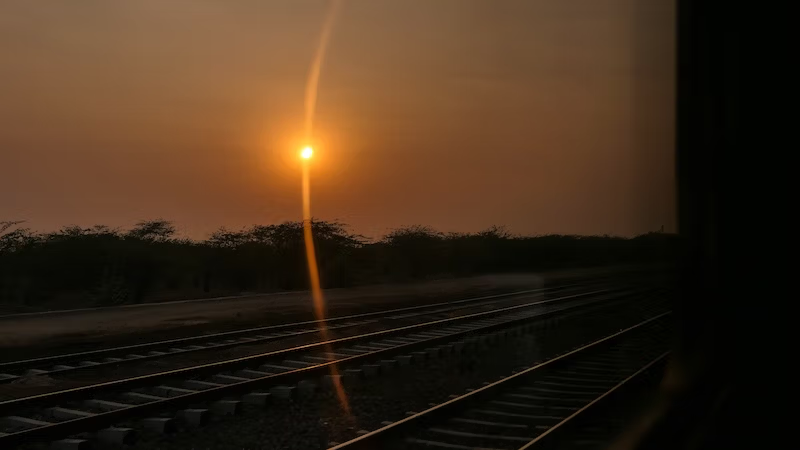
- Jodhpur–Jaisalmer: Thar Desert sunrise or sunset if you time it right.
The UNESCO-Listed Toy Trains
The Kalka–Shimla line isn’t just scenic — it’s one of three Indian hill railways collectively recognised as a UNESCO World Heritage Site under the name “Mountain Railways of India,” alongside the Darjeeling Himalayan Railway and the Nilgiri Mountain Railway in Tamil Nadu. Darjeeling’s line went first, listed in 1999; the Nilgiri line, the only rack-and-pinion railway in the country, followed in 2005; Kalka–Shimla rounded out the trio in 2008. The Kalka–Shimla stretch alone climbs through 103 tunnels and crosses more than 800 bridges over its 96-kilometre run, gaining well over a kilometre of elevation on a track laid in the early 1900s to connect the plains with what was then the British summer capital. Some sections now run with Vistadome coaches — glass-roofed cars built for the views — so it’s worth checking availability if a hill-railway detour fits your route; the climb, the switchbacks, and the mountain air make it a different kind of train journey altogether from the flat-country overnight runs most travellers experience first.
Where to Sleep at Key Rail Stops
The train drops you off — somewhere to sleep takes care of the rest. Here are confirmed options at common destinations on the routes above, spanning everything from backpacker dorms to heritage palaces.
- Delhi — Andaz Delhi (Hyatt): A 5-star in the Aerocity district, close to IGI Airport and well placed for an early or late train connection. Contemporary rooms, a rooftop pool, and a relaxed atmosphere that feels calmer than central Delhi after a long journey. Suits business travellers and couples wanting a splurge night before or after a long ride.
- Agra — ITC Mughal, A Luxury Collection Resort & Spa: The standout hotel in Agra — set across 23 acres of Mughal-style gardens, 1.9 miles from the Taj Mahal and 3.7 miles from Agra Railway Station. The only Indian hotel to have won the Aga Khan Award for architecture. Suits honeymooners and travellers wanting one indulgent night near the monument.
- Varanasi — BrijRama Palace: A heritage boutique set in a 200-year-old palace directly on the Ganges ghats — one of the most atmospheric positions in any Indian city, reachable only by boat except during the monsoon months when the river route can close. A real contrast to the chaos of the railway station. Suits couples and travellers prioritising atmosphere over budget.
- Varanasi — Zostel Varanasi: A budget-friendly backpacker hostel in the Bangali Tola area, a short walk from the ghats, with dorms, private rooms, and a rooftop common area for meeting other travellers. Suits solo backpackers and anyone keeping costs down after a long overnight ride.
- Jaipur — Jai Mahal Palace (Taj Hotels): A heritage palace set in 18 acres of Mughal gardens, a short drive from Jaipur Railway Station. One of the more restrained options in the Taj portfolio — beautiful without being overwhelming. Suits couples and travellers wanting heritage without full-on spectacle.
- Jodhpur — Novotel Jodhpur ITI Circle: A reliable mid-range international-chain option with an outdoor pool, garden, and fitness centre, a few miles from Mehrangarh Fort. Suits families wanting predictable comfort and kid-friendly amenities after the Jaipur–Jodhpur or Udaipur–Jaipur legs.
- Jaisalmer — Suryagarh: A fort-style heritage hotel built from the ground up outside the city, with a desert spa, camel rides, and stargazing on-site. Suits honeymooners and travellers wanting the Thar Desert leg of a trip to feel like an occasion rather than just a stopover.
Tours to Book Around Your Train Stops
A few of the destinations above are worth building an extra day around. These are bookable in advance rather than negotiated on arrival.
- Taj Mahal Sunrise Tour, Agra: A guided early-morning visit timed to reach the Taj Mahal as the gates open, before the crowds and heat build up, often paired with a stop at Agra Fort. Suits first-time visitors who want the classic postcard shot without an afternoon of queuing.
- Ganges Sunrise Boat Tour, Varanasi: A small wooden boat ride along the ghats at dawn, passing the cremation ghats and morning rituals, usually followed by a short walk through the old city. Suits travellers who want context and a guide rather than negotiating a boat solo at the riverbank.
- Thar Desert Camel Safari, Jaisalmer: An afternoon jeep or camel ride out into the dunes, with a campfire dinner and the option to sleep out under the stars before heading back the next morning. Suits adventure travellers and anyone treating the Jodhpur–Jaisalmer leg as a highlight rather than a detour.
Solo and Female Traveller Notes
- Book upper berths for privacy; ask to swap if you’re assigned a lower and feel exposed.
- Sit near families during the day — they’re often wonderfully protective.
- Share your PNR and arrival time with a friend; pre-book a taxi (Ola/Uber where available).
- Consider day trains for your first ride to build confidence, then graduate to overnights.
Families With Kids
- Aim for a bay of 4 in 2A or side berths so little ones can stretch out.
- Bring colouring books, magnetic games, audiobooks, and snack boxes you can refill.
- Set toilet breaks before lights out, and pack pyjamas and a soft blanket to signal bedtime.
Tech Worth Having
- IRCTC Rail Connect: Official booking app.
- Where Is My Train (Android): Live location, platform info, PNR status — works partially offline, which matters in gorges and rural stretches.
- NTES: Live train status (official).
- Google Maps Offline: Watch your progress; know when your stop is next.
- Ola/Uber: For safe onward rides (works in most big cities).
- Official e-catering apps: Order food to your seat by entering your PNR.
Build Delay Buffer Into Your Itinerary
- Don’t book tight connections to flights or tours on the same day. Give yourself a cushion of hours — or an extra night — for peace of mind.
- If you must connect, choose morning arrivals (more recovery time if delayed).
- Have a Plan B: a list of nearby hotels at your arrival station and screenshots of directions.
If Something Goes Wrong
- Your best friends on board are the TTE (Ticket Examiner) and coach attendant. They can help with berth swaps, issues, and information.
- 139 (Rail Madad) is the unified Indian Railways helpline for all needs — security, medical, general enquiries, and complaints. Dial 139 and press 1 for security or medical emergencies. Available in 12 languages, 24 hours a day, and works on basic phones without a smartphone.
- For lost items, note your coach and seat or berth number and file a report at the next major station.
Trip-Prep Checklists
Pre-Booking Checklist
- Decide class based on season, journey length, and comfort needs.
- Create or verify your IRCTC account (or choose a trusted partner).
- Check FTQ and Tatkal options if dates are tight.
- Screenshot your PNR and itinerary to your phone.
Day-of Departure Checklist
- Cash in small bills (chai and snacks love ₹10, ₹20, ₹50).
- Lock checked bag; cable it under the berth.
- Pack within reach: TP, wipes, sanitiser, headlamp, layers, snacks, water, power bank.
- Arrive 45–60 minutes early; confirm platform and coach position.
On-Board Bedtime Routine
- Lay out travel sheet; stash shoes in a corner or bag.
- Secure daypack to your body or berth.
- Set alarm for 30–40 minutes before your stop.
- Hydrate, but not a full bottle just before sleep.
After-Arrival Checklist
- Keep calm getting off — do not jump while the train rolls.
- Head to the main exit where rideshares and prepaid taxis queue.
- Double-check you have phone and passport before leaving the platform.
- Ping your check-in text to someone who cares about you (hi, Mum!).
Indian Train Travel FAQ
Which class should I book for my first overnight train in India?
If you want comfort without a huge splurge, 2A (AC 2-Tier) is the sweet spot: you get bedding, curtains for privacy, and fewer people than 3A. Budget-minded travellers who still want A/C usually pick 3A, and Sleeper is best in cooler months for those comfortable with no A/C and their own bedding.
How early do I need to book tickets?
Indian Railways currently opens bookings 60 days before the journey date for most trains — that’s the window to mark on your calendar for popular routes and festival seasons. Last-minute tickets can happen via Tatkal (one day prior), but they sell out in minutes. Booking-window rules have shifted more than once in recent years, so it’s worth a quick check on the official IRCTC site close to your travel dates.
What happens if my ticket is waitlisted (WL) or RAC?
WL means you don’t have a seat or berth yet. If it stays WL at departure, you shouldn’t board that coach. RAC lets you board with a shared seat that often converts into a full berth as cancellations come in. Keep checking your PNR — it can clear even hours before departure.
Is it safe for solo female travellers on Indian trains?
Thousands of women ride the rails daily. Choose upper berths for privacy, sit near families during the day, and keep valuables on you while you sleep. Arrive early, pre-book your onward ride, and trust your instincts — if a seat feels uncomfortable, ask the TTE to move you near other women or families.
Will I get bedding on board?
Yes, in 1A/2A/3A you’ll be handed a sealed bedding pack with sheets, blanket, and pillow (quality varies). In Sleeper and seating classes, bring your own travel pillow and light blanket or sheet.
Can I charge my phone or laptop on the train?
Most long-distance coaches have power outlets (near berths in AC classes and at the ends of cars). They’re shared, so bring a power bank and avoid hogging sockets. Voltage fluctuations happen — use a surge-protected charger if you have one.
Is the food on trains safe to eat?
Plenty of travellers eat railway meals daily without issue. Stick to hot, freshly cooked items, sealed water, and reputable station vendors. If you’re picky about hygiene, order e-catering from known restaurants or pack a DIY picnic.
How do I find my coach on the platform?
Check the LED displays or posted coach position boards. Your coach code (e.g., A1, B2, S6) is on your ticket. Trains can be very long — walk toward your coach section rather than boarding any door and hauling bags through narrow aisles.
Can I hop off at stations to grab snacks?
Only if the scheduled halt is long enough and the train is on time. Keep your coach number in mind, don’t stray far, and reboard well before the whistle. Platform vendors near your own coach or e-catering delivered to your seat are the two safest bets for not getting left behind.
How much luggage can I bring?
There isn’t strict airline-style enforcement on most trains. A large backpack or suitcase and a daypack are standard. Store big bags under the lower berth and lock them; keep valuables in your daypack and secure it to yourself or the berth while sleeping.
What is Tatkal and how do I use it?
Tatkal is a last-minute quota released one day before the train’s departure, opening at 10 a.m. for AC classes and 11 a.m. for non-AC. Fares are higher and demand is fierce. Have your IRCTC account logged in, passenger details saved, and payment method ready before the window opens.
What if my train is delayed or cancelled?
Delays are part of the adventure — build buffer time before flights and tours. If severely delayed, ask the TTE about alternatives or rebook on the app. For cancellations, you can usually claim a refund through your booking channel. Keep screenshots and your PNR handy. A five-hour delay into Varanasi, or somewhere similar, is a common enough story among travellers on this route that it’s worth planning for rather than hoping around.
Have you travelled on an overnight Indian train?
What else would you recommend bringing along?
Great list Audrey! I agree with all of them! Especially the sanitizer and wipes. Not just for TP but to clean the little desk shelf and naga hide pad. They are filthy! We also brought ear plugs as a necessity. Indians will party on trains sometimes all night and keep the lights on. A bandana around your eyes and some ear plugs made some of our train rides bearable.
Being in India, I travel by train extensively and one thing I never fail to carry is my earphones.
Great list and useful tips for long train journey – I feel they’re not only for fit for India, but some other countries like China.
I am sorry that you have to bring a whistle along with you for your safety. It makes me feel ashamed to be Indian. 🙁
Let’s hope that changes one day…..
Hey Audrey,
Great list! 🙂 Whistle and earplugs are my must not only during my travels, everyday I have them with me because you will never know. Yes, earplugs would really help, trains can be really loud.
Thanks for sharing 🙂
Such a good list. I recommend you also bring pain relief and fever medicine.