
It has certainly been a while since I spent this much time in art galleries and museums! Now that I travel with Sam, my travels are mostly centred around local food and outdoor activities, however, there was a time when my idea of travel was going to an art gallery, people watching at an outdoor cafe, popping over to a history museum, and then making my way to yet another cafe…
This past week I had one of my friends visit me in Berlin and I reverted back to my old ways. Rebecca flew in from London and on one particularly rainy Friday, we decided to go museum-hopping around Berlin’s Museum Island all day long! My feet were aching by the end of it, but it was nice to have an entire day devoted to history and art.
If you’re an art lover, then Berlin’s Museum Island might be the place for you. Here’s what to expect:

Alte Nationalgalerie
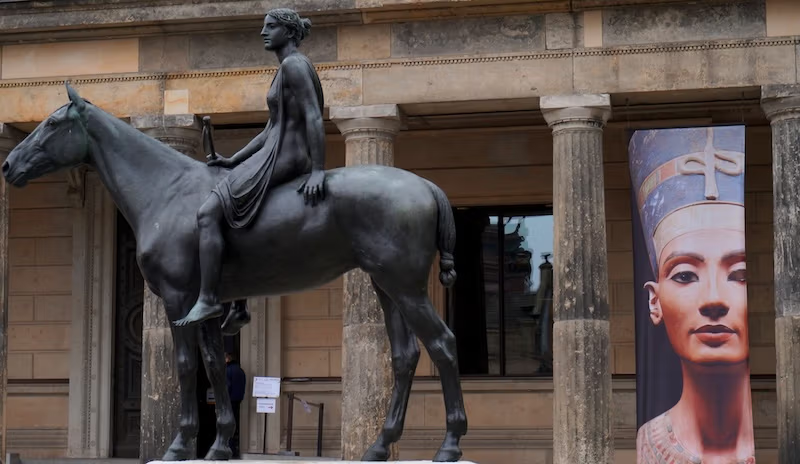
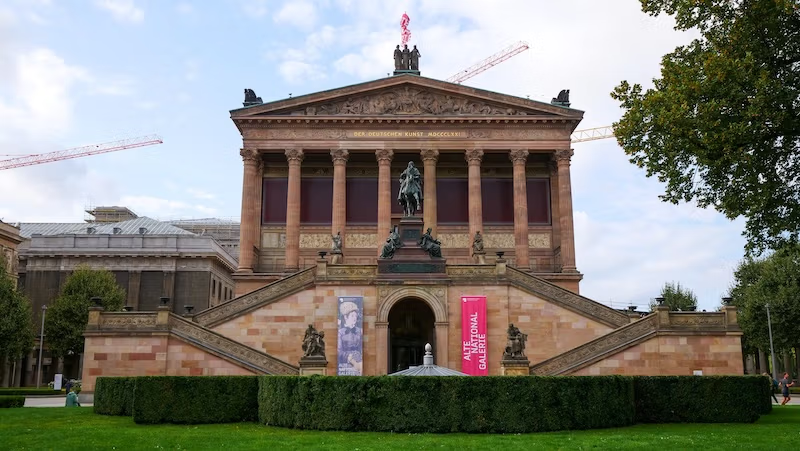
From the exterior this gallery looks a lot like the Acropolis found in Greece, which may lead you to think it focuses on Greek and Hellenistic art, however, once you set foot inside you’ll find that the Alte Nationalgalerie (Old National Galery) focuses on 19th century paintings and sculptures.
The gallery encompasses pieces from the French Revolution to the First World War, and you’ll find the works of artists like Edouard Manet, Claude Monet, Auguste Renoir, Caspar David Friedrich, Paul Cézanne, and Auguste Rodin among others.
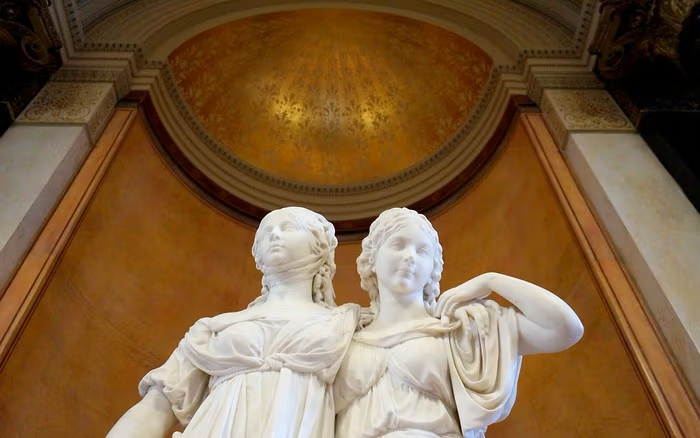
My favourite part, however, were the sculptures by Johann Gottfried Schadow. If there’s a man who could turn a block of marble into the most angelic of figures, it was Schadow!
Neues Museum
The Neues Museum, or New Museum, was a pretty cool place to visit because it houses both the Egyptian Museum and the Museum of Prehistory and Early History.
I got to see sarcophagi, busts of pharaohs, and hieroglyphs, however, the crowning jewel was the gallery which holds the bust of Nefertiti – the great Egyptian queen who enjoyed unprecedented power.
Bode-Museum
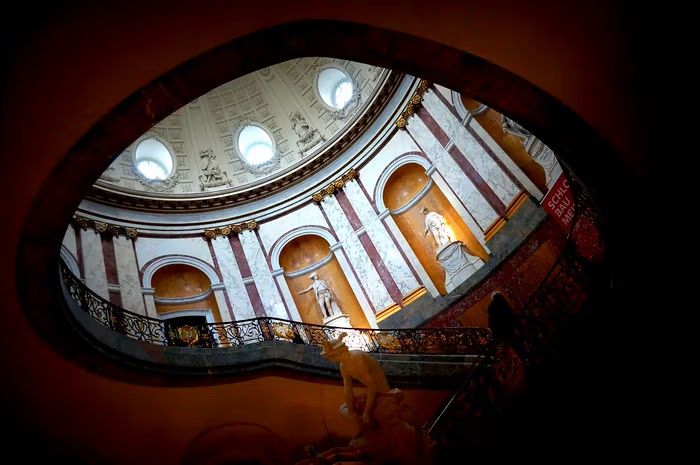
I really enjoyed visiting the Bode-Museum because the building itself is a thing of beauty.
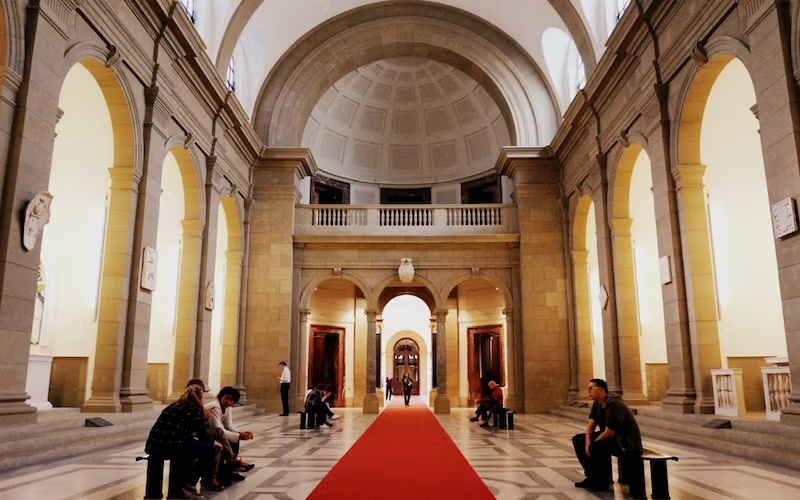
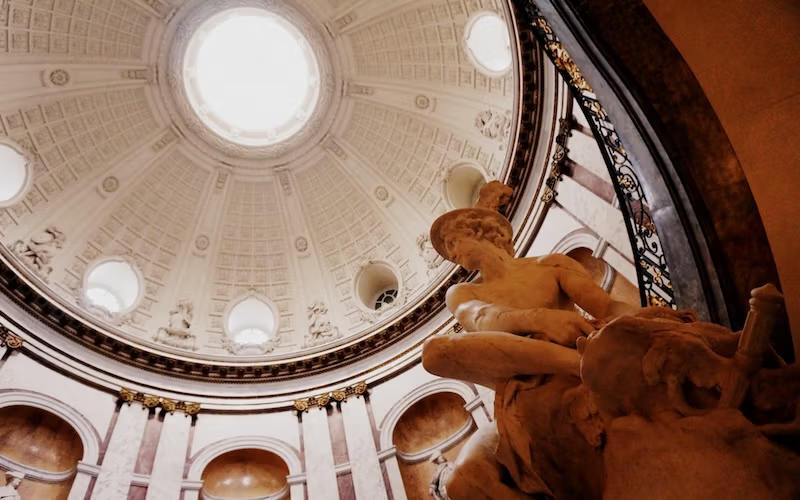
Reaching the galleries on the second floor involves going up a grand staircase clothed in red carpet, and the dome which towers above is also quite eye-catching.
Inside, the collection is very diverse and includes a section dedicated to sculptures which range from the Early Middle Ages to the late 18th century.
There was a mixture of works by world-renowned sculptors like Donatello and Bernini, as well as pieces by lesser known artists.
Many of the pieces housed here were religious in nature – altars, crucifixes, and sculptures of saints.
This museum was very quiet in comparison to some of the others I visited on the Museum Island – I saw one artist working on a sketch and another young man reading a novel in an empty gallery – but for the most part I had the place to myself.
Pergamonmuseum
With an estimated 1 million visitors each year, this is by far one of the most popular museums in all of Germany!
This one building houses the Collection of Classical Antiquities, the Middle Eastern Museum, and the Museum of Islamic Art.
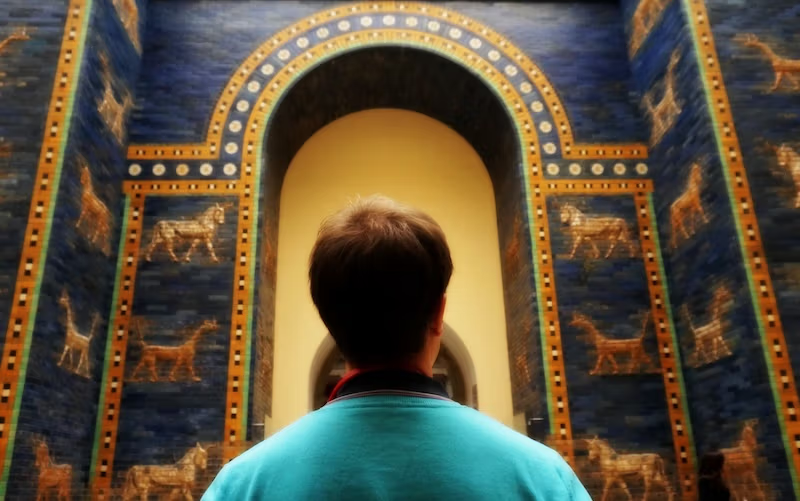
The highlights, for me, included seeing the Pergamon Altar of Zeus (which was brought back from an ancient Greek city and put back together piece by piece inside the museum!) and the Ishtar Gate (which was one of the 8 entrances to Babylon).
The wow factor of the Pergamonmuseum is the fact that it houses these massive ancient structures which once functioned as gates, markets, and palaces!
I do have to warn you and say that this museum gets very crowded. It’s particularly popular with student groups, so some areas were very much push-and-shove.
Altes Museum
The Altes Museum, or Old Museum, houses a permanent exhibition on the art and culture of the Greeks, Etruscans, and Romans…and this is the only museum that I didn’t get to visit!
I have to admit that I was pretty wiped out after walking through the previous 4, so I’ll leave it to you to do the exploring.
More info:
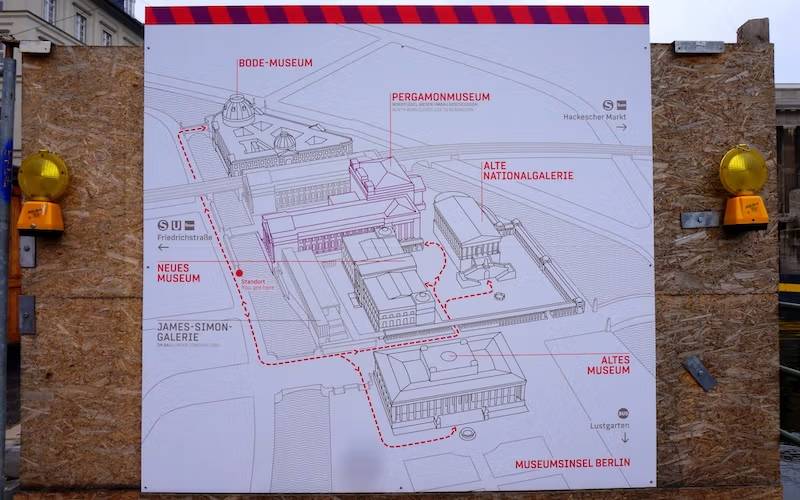
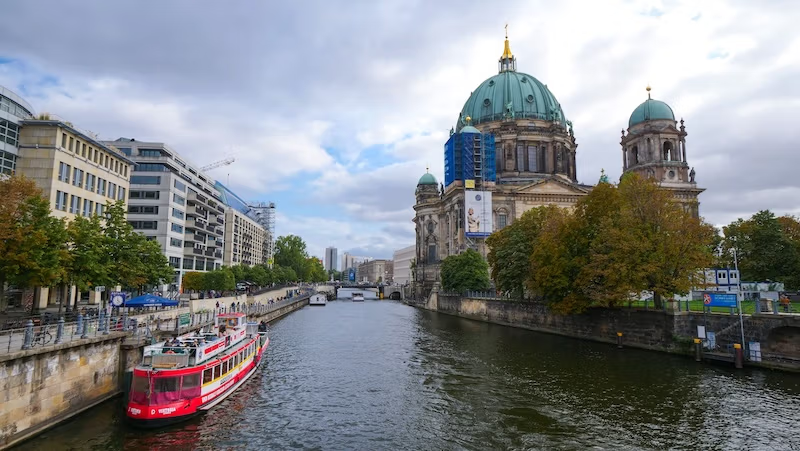
- The Museum Island, also known as Museuminsel, is a UNESCO World Heritage Site. This small island sits on the Spree River and it houses 5 of Berlin’s top museums.
- While you can pay for individual admission at each of the museums, it’s certainly worth getting a pass if you plan on going to more than two. A day pass to visit all 5 museums on the island is 18 Euros.
- If you’re going to be visiting a lot of the main attractions in Berlin and you decide to obtain the Berlin Welcome Card (worth 38.50 Euros), then admission to the museums on the island is already included in the price. That might be a better option as opposed to trying to cover all 5 museums in 1 day!
- Many of these museums and art galleries on the island have little restaurants and cafes, which means you can enjoy a bite to eat while you rest your legs.
Museum Island Experience: Practical Tips, Local Wisdom & Itineraries
Before You Go: Passes & Smart Planning
- Book Ahead: Especially for the Pergamonmuseum and Neues Museum, booking a time slot online is highly recommended, particularly during weekends or peak season. This saves you from long queues—your feet will thank you!
- Arrive Early (or Late): The museums open around 10am. Mornings are quietest; late afternoons (after 3pm) see fewer crowds, and the vibe gets a little more relaxed.
- Plan Your Route: The island is compact, but pacing yourself is key. Four or five museums in one day is ambitious—even for diehard art fans. Pick your top three, and allow time for breaks.
Ticket Hacks & Pass Math
Berlin loves a good pass, but the menu can be confusing. Here’s a quick cost comparison (adult prices):
- Single Museum Ticket – €12–14 each. Worth it if you’re a Sprinter seeing just one big hitter.
- Museum Island Day Pass – €18. Covers all five on the island for one calendar day. Best for the Classic Day-Trip.
- Berlin WelcomeCard + Museum Island – €55 for 72 h (includes unlimited BVG transport zones AB & free entry to the Island museums). If you’re spending at least three days sightseeing U-Bahn-to-the-max, this is the wallet-friendly sweet spot.
- Annual State Museums Pass – €25 under-30s / €50 adults. Moving to Berlin for a digital-nomad sprint? This lets you pop in for sculpture sketches on your lunch break for a whole year.
Book Pergamon in advance – The main hall is undergoing a long-term renovation and timed slots can disappear during high season. Reserve online and screenshot your QR because cellular reception inside those stone walls is patchy.
Decide Your Time Budget: Sprinter vs. Stroller
| Traveller Type | Time Needed | Plan In a Nutshell |
|---|---|---|
| The Sprinter (museum marathoner on limited layover) | 4–5 hrs | Prioritise Pergamon (pre-book timed slot) + one additional museum of your choice. Grab a currywurst to go and call it a win. |
| The Classic Day-Trip | 6–8 hrs | Aim for three museums with a recharge break at Lustgarten. Use the €18 Island Day Pass; follow the flow Pergamon → Neues → Alte Nationalgalerie to balance antiquities and impressionists. |
| The Weekend Stroller | 2 days | Break it up: Day 1 – Pergamon & Bode; sunset river cruise. Day 2 – Neues & Altes + extra wander time in Nikolaiviertel for medieval vibes and cake. |
Tip: Friday evenings (open till 20:00) are quieter; glide through the galleries once the school groups have gone in search of döner.
Planning Your Museum Island Day: What to Know Before You Go
How an Island Became a Museum
Museum Island didn’t happen by accident, and it didn’t happen fast. It started with one building: in 1830, the architect Karl Friedrich Schinkel completed the Altes Museum for King Friedrich Wilhelm III, a neoclassical rotunda meant to put the royal art collection in front of the public for the first time. His son, Friedrich Wilhelm IV, is the one who had the bigger idea — a sketch survives of his vision for a “sanctuary for art and science” spanning the whole northern tip of the Spree island, all colonnades and connected galleries. It took nearly a century to actually build: the Neues Museum followed in 1859, the Alte Nationalgalerie in 1876, the Bode-Museum in 1904, and the Pergamonmuseum, the last of the five, only in 1930.
Then came the war. Allied bombing gutted several of the buildings, and the Neues Museum in particular sat as a roofless ruin for over sixty years — you can still see the scars deliberately left in the brickwork from its 2009 restoration, a decision that split opinion in Berlin at the time. UNESCO named the whole ensemble a World Heritage Site in 1999, by which point the island had spent half a century as a divided city’s quiet, half-forgotten backdrop rather than the drawcard it is today.
Before You Go
- Book ahead for the Neues Museum. Timed entry is strongly recommended, particularly on weekends and during summer. The queue without a reservation can eat into your day quickly — and your feet will already be doing enough work.
- Note on the Pergamonmuseum: The museum is completely closed for major renovation. The North Wing, with the Pergamon Altar and the Museum of Islamic Art, is scheduled to reopen on 4 June 2027 — but the South Wing, home to the Ishtar Gate, the Processional Way of Babylon, and the Market Gate of Miletus, stays closed well beyond that, likely into the 2030s. The alternative — and it’s genuinely worth your time — is the Pergamonmuseum Das Panorama, a separate temporary exhibition building directly opposite the island at Am Kupfergraben 2. It features a stunning 360° panorama by artist Yadegar Asisi alongside around 80 original sculptures from Pergamon. Tickets are €12 adult / €6 concessions / free under 18.
- Pace yourself. Five museums in one day is technically possible, but most visitors find four is already a lot. Pick your top three, leave room for a proper lunch break, and save something for next time.
Passes & Ticket Options
Berlin has a few different pass options and it’s worth knowing which one actually fits your trip:
- Single museum ticket — €12–14 per museum. Makes sense if you’re only visiting one or two.
- Museum Island Day Pass — €24. Covers all the museums on the island for one calendar day, including the Panorama. Note: prices vary by season and any special exhibitions running, so always double-check current rates at smb.museum before you go.
- Berlin WelcomeCard + Museum Island — approximately €62 for 72 hours (AB transport zones). Includes unlimited public transport and free entry to the Island museums. A good deal if you’re spending three full days in Berlin and moving around a lot.
- Museum Pass Berlin — €32 for three consecutive days across 30+ Berlin museums. Worth it if you’re planning museum visits beyond the island.
The Building You’ll Walk Through Without Knowing Its Story
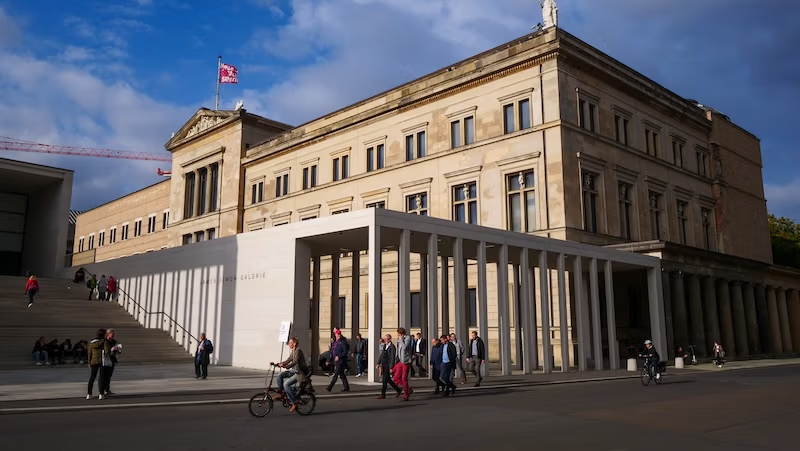
Every visitor to Museum Island funnels through the same modern stone-and-colonnade building to buy tickets, check a bag, or grab a coffee before the crowds thicken. Almost nobody stops to ask who it’s named for. The James-Simon-Galerie, designed by David Chipperfield and opened in 2019, honours James Simon — a Jewish textile merchant and one of Berlin’s most significant art patrons, who funded the very excavation at Amarna that turned up the bust of Nefertiti and personally donated it to the museum in 1920. The building itself had a rough road to completion: an earlier glass-and-steel design was scrapped after years of public objection, and locals nicknamed the finished, more traditional version “the world’s most expensive cloakroom.”
It’s more than a lobby, though. Beneath it runs the Archaeological Promenade, an underground corridor gradually being extended to link the Pergamonmuseum, Neues Museum, Altes Museum, and Bode-Museum, so that eventually visitors won’t need to step back outside between collections at all.
How Much Time Do You Have?
| Traveller Type | Time Needed | Plan In a Nutshell |
|---|---|---|
| The Sprinter (limited time) | 3–4 hrs | Start at the Neues Museum (Nefertiti), then cross to the Panorama at Am Kupfergraben 2 for the Pergamon experience. Grab a currywurst and call it a win. |
| The Classic Day-Trip | 6–8 hrs | Aim for three museums with a proper lunch break. A good flow: Neues Museum → Alte Nationalgalerie → Panorama, with a Bode-Museum wander if your feet are still cooperating. |
| The Weekend Stroller | 2 days | Day 1 — Neues Museum & Bode-Museum; evening river cruise. Day 2 — Alte Nationalgalerie, Altes Museum, and the Panorama. Add a wander through Nikolaiviertel for medieval atmosphere and cake. |
Tip: Thursday evenings many museums stay open until 20:00 — quieter than daytime, and school groups have usually cleared out by then.
What to Bring
| Essentials | Why You Need It |
|---|---|
| Refillable water bottle | Museum cafés charge a lot for water. Fill up at the Lustgarten fountains. |
| Light scarf or cardigan | Air conditioning in the galleries is aggressive — always colder than outside. |
| Portable phone charger | Audio guides and photo-taking drain batteries faster than you’d expect. |
| Notebook and pencil | The Bode-Museum especially invites sketching — I watched someone do a full charcoal study of a Donatello. Bring a notebook and slow down. |
| Comfortable shoes | The island is walkable but the museum floors are hard marble. Cushioning matters by hour four. |
What Not to Miss in Each Museum
Alte Nationalgalerie
- Caspar David Friedrich’s romantic landscapes — moody, atmospheric, and exactly what 19th-century German Romanticism looks like at its best
- Manet, Monet, and Renoir — a strong impressionist collection for a gallery not primarily known for it
- Johann Gottfried Schadow’s sculptures, particularly the Princesses — my favourite thing in the whole museum
- The neoclassical façade itself — from the outside it looks like the Acropolis transplanted to Berlin, which is a bit disorienting and a lot impressive
Neues Museum
- The Nefertiti bust — give yourself more time here than you think you need. She really is as impressive as advertised.
- Sarcophagi, papyrus scrolls, and hieroglyphs from the Egyptian collection
- The Berlin Gold Hat — a 3,000-year-old bronze age artefact that nobody fully understands yet
- The central atrium — beautifully restored, with the old building visible through the new architecture
Bode-Museum
- The grand red-carpeted staircase and the dome above it — the building is worth visiting for the architecture alone
- Italian and Byzantine sculpture — Donatello’s figures in particular
- The Münzkabinett coin collection — 500,000+ coins, medals, and banknotes. Strangely compelling.
- The quiet — this museum is genuinely peaceful compared to the others. Worth building in as your afternoon wind-down.
Pergamonmuseum Das Panorama (the current Pergamon experience — separate building at Am Kupfergraben 2)
- The 360° Asisi panorama — an immersive reconstruction of ancient Pergamon as it looked in 129 AD, with the Altar visible on the acropolis in its original context
- Around 80 original sculptures from the Pergamon collection, including pieces from the Telephos frieze
- Tickets €12 / €6 concessions / free under 18. Book online to skip the queue.
- Note: the Pergamonmuseum itself is completely closed for renovation. The North Wing, with the Pergamon Altar, is due to reopen 4 June 2027; the Ishtar Gate and the rest of the South Wing collection stay closed well beyond that.
Altes Museum
- Greek vase art and Roman portrait busts
- Etruscan jewellery — smaller and quieter than the other collections but lovely
- The view from the museum steps across to Berlin Cathedral — worth the climb even if you’re running out of steam
The Bust That Still Sparks an Argument
When the Neues Museum gets crowded, it’s almost always for one thing: a single limestone bust, 47 centimetres tall, in a room the museum keeps deliberately dim. What’s easy to miss standing in front of her is that Nefertiti has been the subject of an unresolved argument for over a century. German archaeologist Ludwig Borchardt uncovered the bust at Amarna in 1912, and it left Egypt under a finds-split arrangement standard for the era — Germany maintains the split was conducted fairly and the acquisition was legal. Egypt disputes that account, arguing Borchardt downplayed the bust’s significance during the division process specifically to keep it, and has formally requested its return more than once, most recently through a petition launched in 2024.
Germany’s official position is that there are currently no negotiations over the bust’s return. Whatever side of the argument you land on, one practical fact is worth knowing before you visit: Nefertiti has never left Berlin since she arrived, and hasn’t been lent to a single exhibition abroad — officials cite the bust’s fragility, though skeptics note it also happens to end any question of whether she’d come back.
A Few Things Worth Knowing
- Temporary exhibitions: The island always has rotating shows running alongside the permanent collections — check the official smb.museum site before you go.
- If you’re travelling with children: Most museums have scavenger hunt guides and hands-on activity rooms, particularly on weekends. The Neues Museum is especially good for this.
- Museum cafés: The Bode-Museum café is quiet with river views. The Neues Museum café does good cakes. Both are worth factoring into your schedule as a proper break rather than a quick stop.
- Lange Nacht der Museen: Every summer, Berlin’s Long Night of Museums runs extended evening openings with live music and performances. If the timing lines up, it’s a completely different atmosphere.
Where to Stay Near Museum Island
Mitte puts you within easy walking distance of the island, and the options span a wide range of budgets and travel styles.
- Radisson Collection Hotel, Berlin — right on the Spree, a five-minute walk from the island, with a floor-to-ceiling cylindrical saltwater aquarium rising through the lobby and a spa with an indoor pool. Best for couples or a splurge stay; the cathedral-view rooms are worth the upgrade.
- The Circus Hotel — a design-led boutique hotel in a restored 19th-century building overlooking Rosenthaler Platz, a short walk from the island, with a garden courtyard and a roof terrace bar. Suits couples or solo travellers who want personality over predictability.
- Novotel Berlin Mitte — on Fischerinsel, about a ten-minute walk from the island, with 152 family rooms, a children’s play area, and a sauna. The straightforward pick for families.
- Adina Apartment Hotel Berlin Hackescher Markt — five minutes on foot from the island, with a full kitchen in every studio and apartment plus an on-site sauna and whirlpools. Good for families or anyone staying more than a couple of nights who wants the option to cook.
- Motel One Berlin-Hackescher Markt — on Dircksenstrasse near Alexanderplatz, about twenty minutes on foot from the island, with a 24-hour lounge bar and reliably comfortable beds for the price. The budget-friendly choice for solo travellers and backpackers who still want a design-forward room.
Guided Tours & Boat Cruises Worth Booking
- Museum Island: Neues Museum & Pergamon Panorama Guided Tour — a small-group, skip-the-line tour covering the Nefertiti bust and the Pergamon Panorama’s original sculptures, with a Museum Island day pass included for the remaining museums afterward. Worth it if you’d rather have context than wander the galleries cold.
- One-Hour Sightseeing Boat Tour from Museum Island — a round-trip cruise departing near Hackescher Markt that passes the Berlin Cathedral, the Nikolaiviertel, and the island itself, with onboard audio guide commentary. A relaxed way to see the buildings from the water after a morning on your feet.
- Third Reich & Cold War Walking Tour — a two-hour guided walk starting near the Brandenburg Gate, covering the Reichstag, the Holocaust Memorial, and Checkpoint Charlie. A solid way to extend a Museum Island day into a fuller picture of Berlin’s twentieth-century history.
Where to Eat
- Restauration 1840: Just across the river at Hackescher Markt, in the historic S-Bahn arches. Classic Berlin beer hall feel — wood panelling, hearty German food, exactly what you want after a full day on your feet. Address: Am Zwirngraben 8-10.
- Picnic by the Spree: If the weather holds, grab pastries from a nearby bakery and sit by the river steps. The people-watching is excellent and it gives your legs a proper rest.
- Museum cafés: All five museums have in-house options for a quick refuel between galleries — useful for keeping momentum without leaving the island.
Photography, Bags & Practical Notes
- Photography: Non-flash photography is generally allowed, but check for signage around special exhibitions and star pieces — the Nefertiti room at the Neues Museum in particular has restrictions. When in doubt, ask.
- Bags: Large backpacks go in the free cloakrooms at the entrance. A small crossbody bag is all you need inside.
- Accessibility: All museums have lifts, ramps, and accessible restrooms. Free wheelchairs are available at the entrance on request.
- Audioguides and apps: Worth using, especially in the Neues Museum where the context around the Egyptian collection makes a real difference. Saves you from spending five minutes in front of a display wondering what you’re looking at.
A Suggested Day
Morning:
- Arrive by 9:45am and start at the Neues Museum — head straight for Nefertiti before the crowds build up
- Explore the Egyptian and prehistoric collections at your own pace
Late Morning:
- Walk to the Alte Nationalgalerie for the impressionist paintings and Schadow sculptures — allow at least 90 minutes
Lunch:
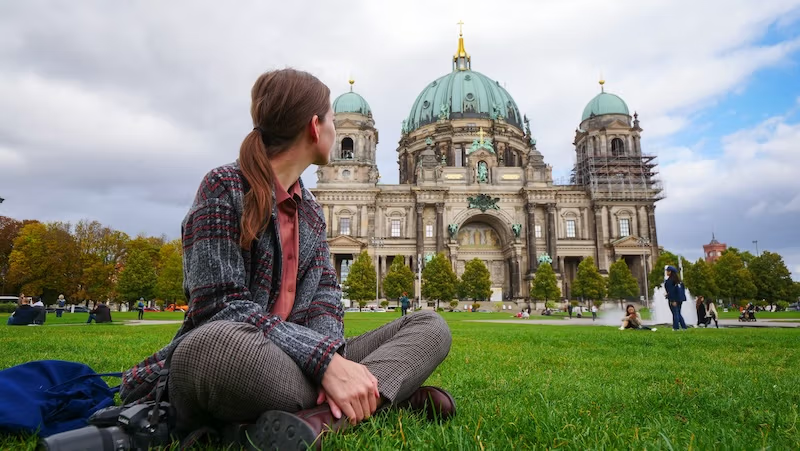
- Refuel at a museum café or take a proper break on the Lustgarten lawns with a view of the Berliner Dom
Afternoon:
- Cross to Pergamonmuseum Das Panorama at Am Kupfergraben 2 (directly opposite the island) for the ancient city experience — allow 60–90 minutes
- If energy allows, finish at the Bode-Museum for a quieter, more contemplative end to the day — ideal for sketching or just sitting in a peaceful gallery
Tip: Even Berliners come back to Museum Island again and again — you’re not meant to see everything in one visit. Leave something for next time.
A Few Local Habits Worth Adopting
- Go slow. Pick a handful of works or a single theme and spend real time with them. Berliners come here to sketch, read, and sit — not to tick off every room. The Bode-Museum especially rewards this approach.
- Combine art with the neighbourhood. The area around the island is lovely on foot — a walk along the Spree, coffee in Hackescher Markt, a wander through Nikolaiviertel for some medieval atmosphere and cake.
- Check for English-language tours. Many museums offer free guided tours with ticket purchase, particularly on weekends. Worth asking at the entrance.
FAQ: Berlin’s Museum Island
What is Museum Island and why is it special?
Museum Island (Museuminsel) is a UNESCO World Heritage Site on the Spree that concentrates five world-class museums in one walkable cluster — perfect for an all-day art and history deep dive.
Which five museums are on Museum Island?
Alte Nationalgalerie, Neues Museum, Bode-Museum, Pergamonmuseum, and Altes Museum. Together they span 19th-century art, Egyptian antiquities, sculpture, classical collections, and Near Eastern masterpieces.
Is anything currently under renovation?
Yes — and this is important to know before you go. The Pergamonmuseum is completely closed for major renovation. Its North Wing, with the Pergamon Altar, is scheduled to reopen on 4 June 2027, but the South Wing — home to the Ishtar Gate, the Processional Way of Babylon, and the Market Gate of Miletus — stays closed well beyond that, likely into the 2030s. The alternative in the meantime is the Pergamonmuseum Das Panorama — a separate temporary exhibition building at Am Kupfergraben 2 (directly opposite the island) featuring a 360° immersive panorama plus 80 original Pergamon sculptures. It’s genuinely impressive and worth including in your day.
How much does it cost?
Single museum tickets run €12–14 each. The Museum Island Day Pass covers all five museums (including the Panorama) for one day — currently €24. If you’re spending three days in Berlin and using public transport, the Berlin WelcomeCard + Museum Island (approximately €62 for 72h) covers transport and museum entry together. Always check current prices at smb.museum as these do change.
Do I need to book ahead?
For the Neues Museum, timed entry is strongly recommended on weekends and in summer. For the Panorama, booking online in advance is also advisable. The other museums are generally walk-in friendly outside peak season.
What are the unmissable highlights?
Nefertiti’s Bust (Neues Museum), Caspar David Friedrich’s landscapes and Schadow’s sculptures (Alte Nationalgalerie), the red-carpeted staircase and Donatello figures (Bode-Museum), Greek and Roman antiquities (Altes Museum), and the 360° Asisi Panorama for the Pergamon experience (separate building, Am Kupfergraben 2).
Can I take photos?
Non-flash photography is generally allowed, but some rooms restrict it — especially around star pieces like the Nefertiti bust. Watch for signage and follow staff guidance.
What about bags and accessibility?
Large bags go in free cloakrooms at the entrance. All museums are step-free with lifts, ramps, and accessible restrooms. Free wheelchairs are available on request at the entrance.
Where can I eat nearby?
Each museum has a café for a quick break. For a proper meal, Restauration 1840 at Hackescher Markt (Am Zwirngraben 8-10) is a classic Berlin beer hall a short walk across the river — ideal after a full day on your feet. The Lustgarten lawns are perfect for a picnic if the weather holds.
I am not really a museum fan, but this one looks pretty cool. Nicely presented by you! Thanks for the insights!
There is definitely a great feeling about dedicating an entire day to soaking up art and history, but you are right – the feet just can’t take it day in and day out!
I’m coming to Berlin in less than a month! I can’t wait to visit the city.. it was a last minute addition to my itinerary and I have no idea what I was thinking in the beginning when I didn’t plan to go there!
I remember my first visit to Museum Island back in 2007 (God, 2007! That makes me feel old). On the roof of one of those grand old buildings I glanced at the words ‘MODERN ART’ in pink neon.
“Yes!” I thought to myself, “I guess this gallery is Berlin’s version of the Tate Modern or MoMA. Can’t wait”
I paid the entry fee and walked past busts of Tutankhamen and ancient Egyptian jewelry, confused as hell until I got outside and read the pink neon sign properly: ‘ALL ART WAS MODERN ONCE’
Ohhhh. The beauty of visiting the Neues Museum by accident? A new found love of all things ancient and Egyptian. It’s good to get outside our comfort zones.
I absolutely adore museums – thank you for the great overview of what Berlin has to offer! It sounds fantastic!
I’m not too into art museum, but I love a good history museum! Will keep this one in mind!
With all the times I’ve been to Berlin, it’s surprising I’ve never been to the Museuminsel, as I’ve never thought of Berlin as a good city to appreciate old stuff when there’s so much new, cool stuff too! But you’ve made me reconsider: next time, eh?!
I can only do one museum per day, and that by no means is every day. I get very choosy on what museums I will visit. I did love the Pergamon!
I am a fan of history. Museums being the only place i can get rich history, i do spend the days exploring and reading like you guys did.
Hi Audrey,
Thanks so much for this really nice post! It’s a perfect summary – I haven’t been at Museum Island for a while, so it’s a great update too 🙂
All the best,
Claudia
I’m not a huge museum person, but I do enjoy going in them from time to time, especially when I know something about the pieces in them. While I haven’t been to Berlin, or Germany for that matter, I’m hoping to get there this next year while I’m living in Spain. This guide will definitely come in handy as it explains what all the museums offer. Thanks!
Thanks for the review Audrey, it sounds like you had a great time. I must admit though that I’m like you and hate it when it goes overcrowded. I prefer museum visits to be around an hour to two hours long and no more. Also for the temperature to be reasonable inside rather than too hot.
The exhibits sound great. For some reason reading this reminded me of a museum I visited more than a decade ago in Budapest. I dare say regional influence would be a factor.
How long is the Berlin Welcome Card valid for? A week?
I was there a couple of times. It’s a nice place to explore for an hour or two before your lunch :).
Can’t wait to visit Berlin. I went on a whirlwind tour of Europe and missed it in 2008. Terrible! I missed many cities to be honest though…. Can’t wait to go! I’ll definitely visit some of these museums 🙂 Some of the buildings look as spectacular and the art inside. Europe is awesome for that. Love the architecture.
Great overview, Audrey! I’ve been to Berlin in March and I visited three of the mentioned museums in a row — my feet were killing me in the end, but it was so worth it! Berlin is such a fantastic city for art and archeology geeks!
I don’t do a lot of museums when I travel but when I was in Berlin I had to visit the Pergamonmuseum. The Pergamon alter and Ishta gate were both incredible and I really enjoyed the ancient Greek artifacts.
You are certainly right Audrey, all five museums is way too much for one day! It’s still a shame you didn’t make to the Altes Museum, the once royal museum, built by the most prominent German architect of the 19th century, Karl Friedrich Schinkel. While you will find other buildings of his throughout Berlin, I would recommend that you also visit the Neue Nationalgalerie. It was built by the most prominent German architect of the 20th century and once director of the famous Bauhaus, Ludwig Mies Van der Rohe, one of the great masters of modern architecture. So even if “less is more” is the design principle, the visit at the Neue Nationalgalerie will be well worth it, for the building as well as the art… 🙂
Thank you so much for dedicating an entire post to museums. Museums perhaps make for one of the most curious travel attractions. There are people who almost find it to be the “in” thing to travel a famous museum but aren’t actually able to immerse themselves in the “history” …. 🙂 Your post is such a welcome relief
5 museums all on one island – very convenient :-). The bust of Nefertiti would be something to see…
Normally I wouldn’t have an interest in a museum post, but anything about Germany entices me! Though I don’t step foot in museums often, I do love the architecture and the art and the sculptures in this. Beautiful!
I’m not always a big museum person, but when the urge strikes, it is so nice to spend a whole day just meandering from exhibit to exhibit. Especially if it’s a rainy day 🙂 Looks like a really neat place!
I’m a history nerd and love visiting museums! I didn’t realize Berlin had so many great ones. And it’s nice they’re all in one spot so you really can make a day of it!
This reminds me of just how awesome Berlin is – and well Europe in general!