
Easter Island is one of those places that tops many travellers’ bucket lists, but its remote position and its appeal as an exotic tourist destination really drive up the prices of accommodations, meals, and tours. The big question for anyone travelling this way is:
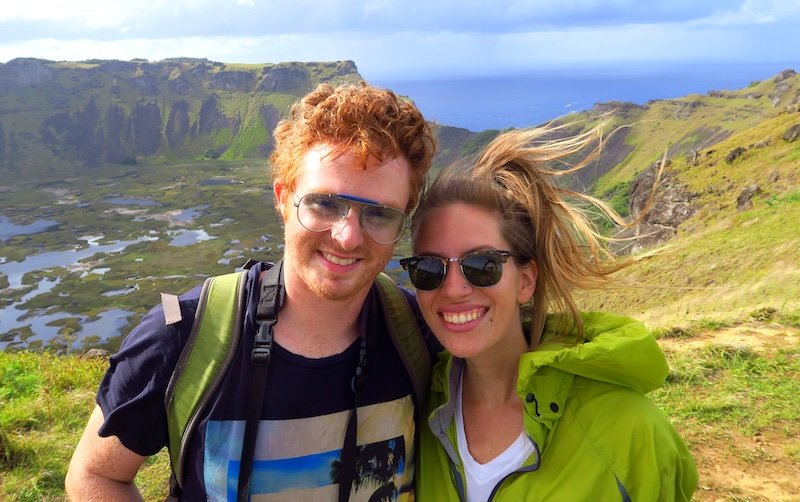
Can you do Easter Island on a budget?
The answer to that is YES!
There are ways to plan a trip to Easter Island so that it won’t cost you a fortune, but at the same time you shouldn’t come here expecting the dirt cheap prices you might find in Southeast Asia or Central America.
Travel in Easter Island comes with a certain price tag, but here are some ways you can keep costs within a reasonable budget:

Book flights in advance
The main reason we ended up in Easter Island is because we found cheap airfare. Regular priced tickets can cost upwards of $1250 USD, however, if you book up to 6 months in advance you can find deals for $550 USD.
I randomly came across these prices when I was daydreaming about Easter Island last year, and since we already had plans to travel in Chile, we just booked those flights the same day. We weren’t going to pass ’em up!
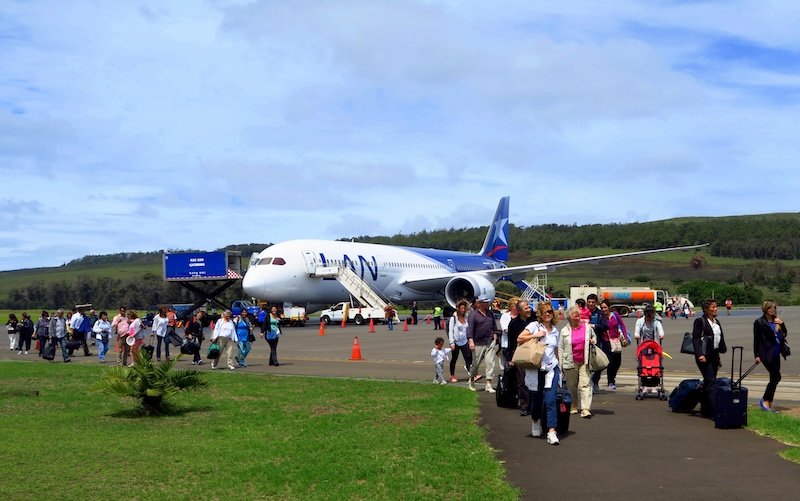
When it comes to flying to Easter Island, LAN has a monopoly since they are the only airline that travels here, but you can save money by planning your trip well in advance. You can read some more tips on how to book cheap flights in this article.

Keep your stay short (if you must!)
I don’t like to tell you to keep your stay short (this is a place that gets under your skin and is really hard to leave!), but the easiest way to keep your budget within check is by having a shorter stay on Easter Island.
I spent a full week there, but if I’m being honest, you don’t need that long to see everything. A full week is great if you want to relax and enjoy some chill island time, however, most visitors come for 3-4 days and you can easily cover the entire island in that amount of time.
FYI – Easter Island is only twice the size of Manhattan and there is only one town centre.

Choose your accommodations wisely
Aside from flights, accommodations are likely to be your biggest expense. Since we were travelling as a group of 4, what made the most sense for us was to rent a cottage. This was cheaper than getting 2 hotel rooms and it also meant we had a kitchen to cook in. We paid $830 USD for 7 nights in a 2-bedroom cottage (this one here), and though those rates may seem high, they’re pretty standard across the island.
Now, if you’re travelling solo or as a couple, an entire cottage may not be the most budget-friendly option. In that case, you may want to look at guesthouses or hostels (some do have shared kitchens), or for the hardcore backpacker, there are camp sites available in the outskirts of town and near Anakena Beach.
Another thing I’ll mention is that you’ll want to get your accommodations sorted well in advance . We booked our cottage months ahead on Booking.com and I was surprised by how many of the properties were already booked solid. This is one destination where you don’t want to just ‘show up and wing it’.
Cut down your meal costs
Restaurant meals in Easter Island are pricey since the majority of their food products have to be brought in by ship or by plane, so we tried to eat out only once a day. We usually had breakfast at the cottage, lunch at a restaurant or little bakery, and then we prepared our dinners at the cottage.

Restaurant meals can cost anywhere between $8,000 – 20,000 CLP ($12-30 USD) per person depending on the restaurant, however, snack-type meals and baked goods can be more affordable. As an example, we had lunch a little bakery one day and paid $1,500 CLP ($2.25 USD) for a cheese and ham empanada and $2,000 CLP ($3 USD) for a beef empanada. Then for desert we got an alfajor for $1,000 CLP ($1.50 USD).
While doing some research about Easter Island, I came across a Lonely Planet forum where someone recommended bringing dry goods in their luggage since it’s cheaper than buying them on the island, so we did just that. The night before flying to Easter Island, we hit up a supermarket in Santiago and bought things like noodle cups, pasta, granola bars, cereal, and little snacks. Once on the island we still went to the market and bought things like fruits, vegetables, and other snacks, so this helped supplement the food we had brought over.

Rent a car to see the island
Another way to save money if you’re travelling as a group is by renting a car to get around the island. Car rentals start out at $40,000 CLP ($60 USD) for a 2-door hatchback with manual transmission, which is the same price as many of the full-day tours around the island.
Automatic transmission costs a bit more, however, most rental companies offer a discount if you rent a car for more than a day. We ended up renting a 4-door automatic Suzuki Jimny with automatic transmission for $50,000 CLP ($75 USD).
I should also mention that there is no such thing as car insurance on Easter Island. The roads do have quite a few potholes and there are lots of wild horses, so you’ll want to take it easy.
Another way to explore the island is by bike. Bicycles rentals start at $12,000 ($18 USD) for 24 hours. I came across bikers who made it to the top of the Rano Kau Crater (you’d need some solid leg muscles for that) and I also saw bikers going to Anakena which is 18 kilometers from Hanga Roa. If you’re a strong biker and you can tackle a few hills, this may be a good option for you.

Budget Planning for Easter Island: Numbers, Itineraries and Practical Guides
Everything above covers the core budget decisions — flights, accommodation, food, and transport. This section goes deeper: a day-by-day itinerary for a 3–4 day visit, a full cost breakdown, getting-around options, self-catering tips, and a comprehensive FAQ covering every question we’ve either had ourselves or been asked since our visit.
3–4 Day Easter Island Itinerary
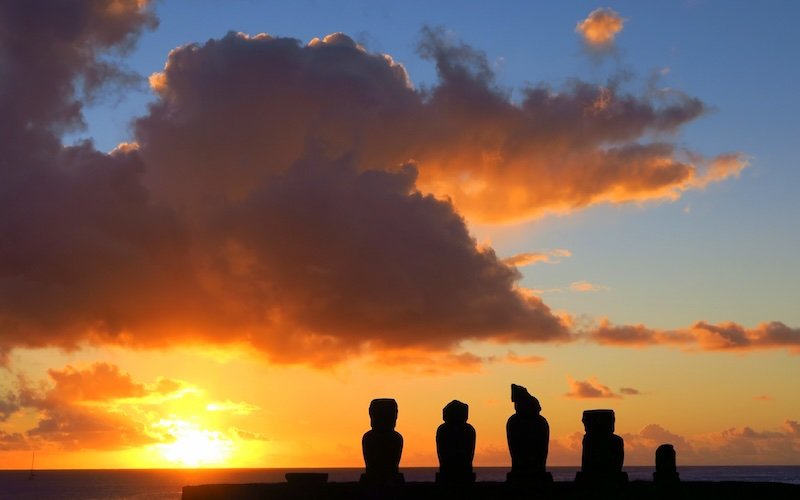
Day 1 — Sunrise, Quarry and Anakena
| Time | Focus | Where | Tiny Tip |
|---|---|---|---|
| 05:15–07:00 | Sunrise with moai | Ahu Tongariki | Arrive 40–50 min before dawn; bring a thermos and headlamp. Stay behind ropes; the ahu (platform) is sacred. |
| 07:15–09:00 | Lava-carved giants | Rano Raraku (moai quarry) | Do the upper loop first before buses arrive; your Park Pass is scanned at the gate. |
| 09:15–10:00 | Cliff views | Ahu Te Pito Kura / navel stone | Good quick stop en route north. Respect signage; don’t touch stones. |
| 10:30–13:00 | Swim + picnic | Anakena Beach | Best budget lunch is a DIY picnic under the palms. If eating out, compare prices at the stalls. |
| 14:30–16:00 | Topknot origins | Puna Pau (red scoria quarry) | Short, quiet stroll with good photo angles. |
| 17:30–sunset | Golden-hour moai | Tahai Complex (walkable from town) | Free, every evening. Bring a light jacket; winds pick up. |

Day 2 — Volcano Rim, Birdman Village and Caves
| Time | Focus | Where | Tiny Tip |
|---|---|---|---|
| 08:00–11:00 | Crater and village | Rano Kau + Orongo | Read the panels — Orongo tells the Tangata Manu (birdman) story that ties the island’s later history together. |
| 11:30–13:00 | Budget lunch | Hanga Roa | Empanadas or bakery items and fruit; refill water bottles before heading back out. |
| 13:30–15:30 | Lava tubes | Ana Te Pahu (banana cave) | Closed shoes essential; watch your head and bring a proper headlamp. |
| 16:00–17:30 | Two ocean windows | Ana Kakenga (Cave of Two Windows) | Stay behind safety lines; squalls can arrive quickly and the cliff drop is significant. |
| 18:00–19:30 | Sunset alternative | Ahu Akivi (seven moai) | Calmer than Tahai; bring a snack and enjoy the wind and space. |

Day 3 — Summit Hike, Snorkel and Stargazing
| Time | Focus | Where | Tiny Tip |
|---|---|---|---|
| 08:00–12:00 | Highest point hike | Mt. Terevaka (from Ahu Akivi) | 3–4 hr out-and-back; sun hat essential. Offline maps help at forks. |
| 12:30–14:00 | Lunch in town | Hanga Roa | A sit-down meal after a summit hike is earned — Hanga Roa has options at every price point. |
| 14:30–16:00 | Snorkel or surf | Pea Beach (in town) | Mask and snorkel rentals are cheaper than tours; ask at the beach about current conditions. |
| 19:30–21:00 | Stargazing | Outside Hanga Roa (dark stretch) | Zero light pollution means a serious Milky Way. Keep lights off around sites. |
Optional Day 4 — Slow Day
- Return to your favourite site at a different time of day — Anakena on a quiet morning, Tongariki under an overcast sky look completely different to your first visit.
- Book one small-group archaeology tour for the stories and context you can’t get from signs alone — worth the spend once, such as the Easter Island Sightseeing Full Day Tour, an eight-hour small-group circuit with pickup included. Then DIY the rest of the day.
Approximate Costs by Travel Style
Prices on Rapa Nui shift with season, cargo ship arrivals, and the exchange rate. These figures are ballparks to help you plan, not guarantees — verify before you book.
| Expense | Shoestring | Savvy-Comfort | Notes |
|---|---|---|---|
| Flights (return from mainland) | Deal hunters: $550–$800 USD | Usual fares: $900–$1,250+ USD | Book early; mid-week departures often price better. |
| Lodging (per night, 2 people) | Hostel bed $25–$40 pp | Guesthouse/apt $70–$140 | Kitchens save significantly over 3–4 days. |
| Park Pass (foreign adult) | US$100 (foreign children: US$40) — valid 10 consecutive days; buy online at rapanuinationalpark.com | Charged in USD for foreign visitors; Chilean nationals pay a separate CLP rate. Prices are adjusted periodically — verify the current rate before you travel. Carry ID; some sites scan QR. | |
| Car hire (per day) | Manual hatch $60–$75 | Auto/SUV $75–$100 | 24–48 hr rental covers all driving sites. No local insurance. |
| Fuel (full island lap) | $20–$35 | same | Only station is in Hanga Roa; hours vary especially Sundays. |
| Bike (24 hr) | $18–$25 | E-bike $35–$50 | Wind and hills are real; plan routes and start early. |
| Meals (per person, per day) | Groceries + 1 snack out $12–$20 | 1 meal out + self-cater $25–$40 | Restaurant mains typically $12–$30. |
| Tours (group, full day) | $60–$90 | $90–$150 | Take one for context; DIY the rest. |
Two-night shoestring (sample): Hostel bed (2×$30) + e-bike (1 day $40) + Park Pass + groceries ($35) + 1 eat-out meal ($18) ≈ $183 + flights/pass.
Three-night savvy-comfort: Apt (3×$95) + car (1.5 days $120) + fuel ($30) + Park Pass + groceries ($60) + 2 meals out ($70) ≈ $515 + flights/pass (for two, split the car — much cheaper per person).
Who Actually Runs the Park You’re Visiting
Most visitors assume Rano Raraku, Orongo, and the other sites inside your Park Pass fall under Chile’s national park service, the way Torres del Paine does. They don’t — not anymore. Rapa Nui National Park has been run since 2018 by Ma’u Henua, an indigenous Rapa Nui community organization, under a 50-year concession from the Chilean state. It’s the first time an indigenous group in Chile has taken over full administration of ancestral land that had previously been managed by a government agency, and it’s still one of the only arrangements of its kind anywhere.
That matters for two practical reasons. First, your Park Pass money stays on the island — it funds conservation, trail maintenance, and jobs for Rapa Nui families rather than flowing into a national budget line. Second, the periodic price adjustments you’ll see mentioned in guides (including this one) aren’t arbitrary corporate pricing; they’re decisions made through the community’s own governance process, with public consultation built in. If a guide or forum post quotes a Park Pass price that doesn’t match what you find at booking time, that’s usually why — check directly with rapanuinationalpark.com rather than trusting any fixed number, including the one in this article.

Getting Around: Which Option When
| Mode | Best For | Budget | Reality Check |
|---|---|---|---|
| Walk | Town + Tahai sunset | Free | Great in Hanga Roa; not for distant sites. |
| Bike | Anakena day, Ahu Akivi, coastal routes | $ | Heat, wind, and hills — bring water and start early. |
| Scooter | Confident riders, flexible routes | $$ | Watch potholes, stray horses, sudden squalls. |
| Car | 1–2 full days covering the whole island | $$–$$$ | No local insurance; drive slowly, expect gravel. |
| Taxi | Specific hops | $$–$$$ | Get quotes first; not cost-effective for full touring. |
| Tour | Deep history day | $$ | Do one, then DIY the second day to balance cost and context. |
Self-Catering: What to Pack and What to Buy on Island
| Item | Why it helps | Where to sort it |
|---|---|---|
| Pasta + sauce pouches | Quick, filling, shelf-stable | Bring from mainland; top up locally. |
| Instant oats + nuts | Cheap breakfasts for early starts | Supermarkets in Hanga Roa. |
| Snack pack | Granola bars, dried fruit, peanut butter | Mainland buys are cheaper. |
| Fresh bits | Eggs, tomatoes, onions, bananas, bread | Island shops; go early after cargo days. |
| Coffee/tea and thermos | Sunrise and sunset comfort at zero cost | Bring your favourite; kettles available in most stays. |
| Reusable bags | Shops may be short | Pack two; plastic is discouraged on the island. |
Where to Stay in Hanga Roa
Hanga Roa is the only town on Easter Island, so the accommodation question is really just which part of it and at what price point. Booking well in advance is non-negotiable — as mentioned in the core of this article, many properties are already full months out. Here’s a spread across budgets, from dorm beds to the island’s only five-star resort:
- La Casa del Kori Hostal — the most consistently recommended budget option on the island, with dorm beds around $35 and private doubles from around $86. Central Hanga Roa location, communal kitchen, relaxed social atmosphere. Frequently described as the best-value stay on the island for backpackers and budget travellers. Good for: solo travellers and budget backpackers.
- HI Easter Island – Kona Tau Hostel — a Hostelling International property in central Hanga Roa with a shared kitchen, garden, and common areas. Solid budget option with reliable facilities; HI membership gets you a discount if you’re a member. Good for: solo travellers and first-time backpackers who want the HI network’s consistency.
- Mata Nui Eco Hostel — a recently renovated eco-guesthouse close to Ahu Tahai, meaning the sunset walk is a few minutes from your door. Garden and terrace included. Good for: budget travellers who want a quieter stay with an environmental conscience.
- Hotel Puku Vai — a 3-star hotel a short walk from the airport with a pool shaped like the Tahonga, a traditional Rapa Nui fertility symbol, set inside a tropical garden. Air-conditioned rooms with private bathrooms, buffet breakfast, and rooms sized for one, two, or three beds. Good for: families and travellers who want reliable mid-range comfort with a pool to cool off in after a day at the sites.
- Nayara Hangaroa (formerly Hangaroa Eco Village & Spa) — the island’s only five-star property, with 75 rooms built from volcanic stone and cypress wood in a design inspired by the ceremonial village of Orongo. Largest pool on the island, ocean-facing rooms with private terraces, on-site spa, and guided excursions arranged through the hotel. Good for: honeymooners and travellers who want a splurge stay with the logistics handled for them.
If you’re travelling as a group of 3–4 (as we were), a self-catering cottage is still the most cost-effective option. Search on Booking.com with a kitchen filter — the savings on food over a week will more than justify the accommodation cost.
Free and Low-Cost Experiences
- Tahai sunset — the nightly ritual, zero cost, and consistently one of the most photographed moments on the island.
- Stargazing just outside town — one of the darkest skies you’ll find anywhere.
- Terevaka hike — the island’s highest point with 360° ocean views in every direction.
- Anakena beach day — palms, soft sand, moai backdrop, bring a picnic.
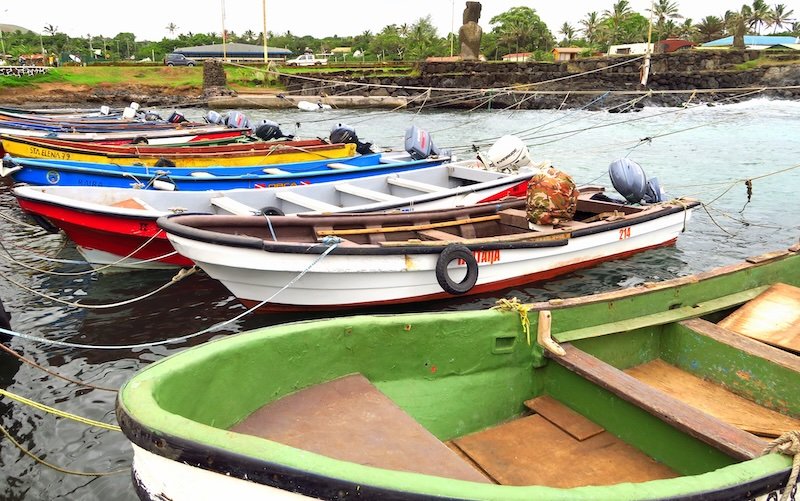
- Harbour wander in Hanga Roa — watch surfers at Pea, observe the fishermen, and appreciate how quietly the horses just trot past like it’s normal.
Sunrise and Sunset: Where to Be
| Moment | Spot | Why |
|---|---|---|
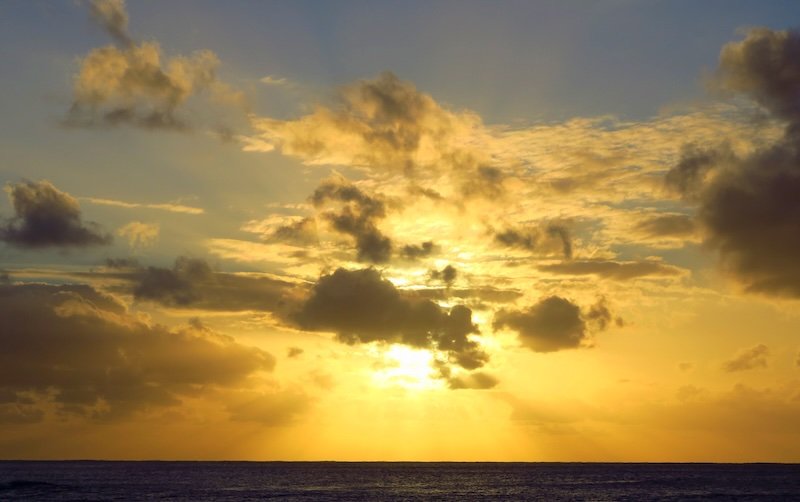
| Sunrise | Ahu Tongariki | Fifteen moai silhouetted against a pink-orange sky. Arrive 40–50 minutes before dawn. |
| Sunset | Tahai | Walkable from Hanga Roa; wide lawns, three ceremonial platforms. Bring a blanket. |
| Golden hour | Ahu Akivi | West-facing moai with soft side-light; fewer people than Tahai. |
The Moai That Walked: What New Research Reveals
Stand at Rano Raraku and you’ll notice something odd if you look closely: many of the moai scattered along the old roads leaning away from the quarry lean forward, with wide, D-shaped bases instead of flat ones. For decades that was dismissed as a carving quirk. It isn’t. Archaeologists Carl Lipo and Terry Hunt spent years analyzing nearly a thousand moai, including 62 found abandoned along the transport roads, and concluded the shape was deliberate engineering — built specifically so the statues could be rocked side to side and “walked” upright to their platforms using ropes and a coordinated team, rather than dragged flat on logs.
They tested it. A team built a 4.35-ton replica with the same forward-leaning, D-shaped base and moved it 100 meters in 40 minutes using just 18 people and ropes — no rollers, no mass deforestation of the island required. That last point matters: for years the “ecocide” theory of Rapa Nui’s history assumed the islanders felled most of their forest to build sledges and rollers for moai transport. The walking method needs a fraction of that timber. It also lines up with something the Rapa Nui had been saying all along — oral tradition has always described the moai as having “walked” from the quarry to their ahu, and it took modern physics several centuries to catch up to what that story meant.

Respect and Rules
- Never touch, climb, or sit on moai or platforms (ahu). They are sacred and irreplaceable.
- Stay on marked paths — erosion causes real damage to archaeological sites.
- Pack it out — bins are scarce; carry your litter.
- Ask before photographing people — courtesy first.
- Park Pass — carry it; sites may scan QR codes; ID is sometimes requested.
- Tapu areas — if signed as off-limits, it is. No exceptions.
Tapati Rapa Nui: When the Island Comes Alive
If your dates are flexible, Tapati Rapa Nui is worth building a trip around. It runs for roughly two weeks every February — the island’s biggest cultural event, and one of the most significant in Polynesia — and it isn’t a show staged for tourists. It’s an internal competition between Rapa Nui families, who form alliances behind two young female candidates and rack up points across weeks of contests: horse races run bareback at Vaihu, outrigger canoe races off Hanga Roa, a triathlon that combines swimming, running with bunches of bananas slung over the shoulders, and paddling on a reed float, plus nightly dance and choir competitions that culminate in the crowning of that year’s Tapati Queen.
The catch is that everyone else wants to be there too. Flights and accommodation for Tapati weeks sell out and spike in price months ahead, so if you’re chasing the festival specifically, book earlier than you would for any other time of year. If you’d rather have the island quieter and the trails to yourself, it’s just as easy to plan around the festival instead — outside those two weeks, Rapa Nui reverts to its usual unhurried pace.
Connectivity, Cash and Logistics
| Thing | What to know |
|---|---|
| ATMs | Machines exist but can run out. Bring backup CLP and a card with no foreign transaction fees. Many small vendors are cash-only. |
| SIM and Wi-Fi | Coverage is improving but still patchy; expect slow hotel Wi-Fi. Download offline maps and translations in Santiago before you fly. |
| Fuel | Single station in Hanga Roa; hours vary, especially Sundays. Top up when you pass it. |
| Groceries | Stock fluctuates with cargo ships; shop early. Prices are higher than mainland — your pre-island shop pays off. |
| Sunday rhythm | Quiet island pace. Confirm opening hours for tours and shops the day before. |
| Weather | Four seasons in a day. Pack a light waterproof and sun protection together. |
What to Pack
- Soft-shell and light rain jacket (wind is real)
- Sun hat and SPF 50 (no shade on crater rims)
- Closed shoes (lava tubes, uneven trails)
- Swim gear and quick-dry towel (beach breaks)
- Headlamp (caves, pre-dawn starts)
- Reusable bottle and filter
- Daypack and dry bag (squalls pass quickly but soak thoroughly)
- Copies of documents (Park Pass, ID, booking printouts)

Easter Island (Rapa Nui) FAQ
Rapid Orientation: Key Facts Before You Go
| Topic | Summary |
|---|---|
| How many days? | 3–4 days is the sweet spot: 1–2 car days for far sites, walkable sunsets, one big hike. |
| Do I need a guide? | Not required. Do one guided day for context, then DIY the rest to save money and revisit at your own pace. |
| Park Pass | Buy before first entry (online at rapanuinationalpark.com or at the town office). US$100 for foreign adults, US$40 for foreign children — verify the current rate before booking. Carry photo ID; some sites scan QR. |
| Driving | Go slow. No local insurance. Horses, potholes, sudden squalls. Fuel only in Hanga Roa. |
| Cash vs. cards | Bring some cash (CLP). Cards accepted widely but not everywhere; ATMs can run dry. |
| Water/food | Self-cater 2 meals per day to cut costs. Groceries fluctuate with cargo — shop early. Filter or boil water if in doubt. |
| Connectivity | Patchy. Download maps, translations, and e-tickets offline before you land. |
| Respect | Never touch or climb moai or platforms. Stay behind ropes. Drones: permit only — assume no. |

Getting There and Timing
Q: When should I book flights?
A: As early as you can. The best deals appear months out and vanish fast. Mid-week returns often price better.
Q: How long is enough?
A: You can cover the highlights in 3–4 days without rushing if you compress driving into 24–36 hours and build in walkable sunsets and one big hike.
Q: Best season?
A: It’s temperate year-round. Expect weather to shift quickly within a single day. Summer is sunnier and busier; shoulder months mean fewer crowds and occasional squalls.
Money, Costs and Booking
Q: Do I need lots of cash?
A: Not a huge amount, but don’t rely solely on cards. Keep cash for small eateries, bakeries, produce stalls, taxis, and tips.
Q: ATMs reliable?
A: There are ATMs, but they can run out near weekends and public holidays. Withdraw early in your stay.
Q: Are prices fixed or negotiable?
A: Park and tour prices are fixed. You can politely ask car or bike shops about multi-day discounts — often they’ll come down a bit.
Q: Should I pre-book lodging and tours?
A: Yes. Rapa Nui has limited beds and vehicles. Book stays and any must-do tour weeks to months in advance — and further ahead still if your visit falls during Tapati Rapa Nui in February.
Park Pass and Sites
Q: Where do I buy the Park Pass and how long is it valid?
A: Buy online at rapanuinationalpark.com or at the Ma’u Henua service office in town. The pass is valid for 10 consecutive days from first use. Current price is US$100 for foreign adults and US$40 for foreign children (Chilean nationals pay a separate CLP rate) — verify before you fly, as the Rapa Nui community, which manages the park directly, adjusts prices periodically through its own governance process.
Q: Can I visit any site at sunrise or sunset?
A: Not all. Tongariki is the sunrise star; Tahai and Ahu Akivi shine at sunset. Respect posted opening hours and any temporary closures.
Q: Can I climb on platforms or touch moai?
A: Never. They’re sacred and fragile. Fines aside, it’s deeply disrespectful to the Rapa Nui people.
Q: Drones?
A: Assume no. Permits are limited and enforcement is strict — gear can be confiscated.
Getting Around
Q: Car or bike?
A: For a budget-smart plan: rent a car for 24–36 hours to hit the far sites; walk or bike the rest. E-bikes help with the wind and hills.
Q: Is there car insurance?
A: No local insurance. Drive carefully and photograph the car thoroughly on pickup, including the tyres.
Q: Fuel stops?
A: One main station in Hanga Roa. Refill whenever you pass it; hours can be limited on Sundays.
Q: Are taxis viable for touring?
A: For individual hops, yes. For full-day touring they’re expensive compared to a day’s car hire split among 2–4 people.
Q: Hitchhiking?
A: You’ll see it, and locals can be kind — but don’t build your schedule around it. Daylight only, common-sense precautions.
Food, Water and Self-Catering
Q: Can I bring food in my luggage?
A: Pack sealed dry goods (pasta, oats, snacks) on a mainland supermarket run the night before. Declare fresh produce if asked; buy fresh items on the island.
Q: Is tap water drinkable?
A: Many travellers boil or filter. A bottle with a built-in filter saves money and plastic.
Q: Vegan/vegetarian friendly?
A: Possible, but choice is limited. Self-catering combined with the island’s fruit and vegetable shops makes it workable.
Q: Cheap eats?
A: Bakeries (empanadas), set lunches, and produce stalls. Aim for DIY breakfast and dinner, then eat out at lunch for the best value.
Lodging and Services
Q: Best area to stay?
A: Hanga Roa — it’s the only town. You’ll walk to Tahai, shops, bakeries, and the harbour.
Q: Kitchen access — worth it?
A: Yes, significantly. A kitchen slashes your daily spend. Even hostels often have shared kitchens.
Q: Laundry?
A: Many stays offer paid laundry; otherwise, sink-wash essentials with a small packet of detergent.
Safety and Health
Q: Is Rapa Nui safe?
A: Generally very safe. Standard travel sense applies — don’t leave valuables in cars; stick to lit streets at night.
Q: Animals on roads?
A: Yes — horses and dogs. Slow down and never swerve sharply on gravel.
Q: Ocean conditions?
A: Can be rough with rip currents. Ask locals about Pea, Anakena, and especially Ovahe before swimming.
Q: Medical care?
A: There’s a clinic in town; serious issues require evacuation. Travel insurance is essential, especially if you’re renting any vehicle.
Q: Sun and insects?
A: UV is high even on overcast days — SPF 50, hat, and long sleeves for crater walks. Mosquitoes can appear after rain; pack repellent.
Q: Earthquake and tsunami risk?
A: Heed signage. If you feel strong, sustained shaking, move to higher ground quickly and follow local instructions.

Culture and Etiquette
Q: What do locals prefer the island be called?
A: Rapa Nui (the Polynesian name) and Isla de Pascua (Spanish) are both used; “Easter Island” is understood universally. Lead with Rapa Nui when speaking with locals.
Q: Any useful phrases?
A: Try “Iorana” (hello) and “Mauruuru” (thank you). Spanish goes a long way; a genuine smile goes further.
Q: Tipping?
A: Not mandatory; around 10% is appreciated for good service. Round up on small bills.
Q: Photography etiquette?
A: Ask before photographing people. At sites, respect ropes; no tripods on platforms; don’t block paths for long shots.
Packing and Gear
Q: What do most visitors forget?
A: A headlamp for caves and pre-dawn site visits, and a light rain shell for squalls that appear with no warning.
Q: Footwear?
A: Closed shoes for quarry paths and lava tubes; sandals for beaches only.
Q: Do I need a paper map?
A: Offline app maps are fine. Screenshot the island map and your day’s route anyway as battery insurance.

Photography and Stargazing
Q: Best sunrise and sunset spots?
A: Sunrise: Tongariki — arrive 40–50 minutes before dawn. Sunset: Tahai (walkable) or Ahu Akivi (quieter). Arrive early and respect all boundaries.
Q: Night sky tips?
A: Step outside town lights, turn all lights off, use red-light mode on headlamps. If you’d rather have it organized for you, the Rapa Nui Stargazing tour sets up telescopes at a dark viewing spot and finishes with night photography of the moai at Anakena Beach, which is otherwise closed to the public after dark. The Milky Way here is something else entirely.
Families, Solo Travellers and Accessibility
Q: Good with kids?
A: Yes — beach time at Anakena, easy walks, open lawns at sunset. Keep children off platforms and away from cliff edges near caves.
Q: Solo traveller safety?
A: Comfortable. Tell your host your day plan; avoid remote cliff edges in high winds; carry a whistle and headlamp.
Q: Accessibility?
A: Terrain is uneven at many sites. Some viewpoints have flatter access (Tahai, Tongariki roadside). Confirm step-free lodging with your host before booking.
Tours, Guides and Activities
Q: Which tour is worth paying for?
A: A full-day archaeology and history circuit. You’ll get the migration stories, the birdman cult, and the site context you can’t get from signage alone. The Easter Island Sightseeing Full Day Tour is a well-reviewed small-group option that covers the main sites in a single day with hotel pickup included.
Q: Can I dive or snorkel on a budget?
A: Snorkel sets rent cheaply near Pea. For something more organized, the Easter Island: Snorkeling Tour on Coral Reefs takes you to Ovahe Beach to swim over submerged moai replicas and coral with equipment and a guide included — the water here is some of the clearest in the Pacific. Dive shops also exist around Hanga Roa; compare a few operators and check conditions and reviews before committing.
Q: Surfing?
A: Yes — rent gear and lessons around the harbour. Always ask about reef exposure and current conditions on the day.
Do you have any other suggestions for visiting Easter Island on a budget?
Renting a car was by far the best thing I did on the island (money wise of course). I and another woman who was staying at the same hostel went in on one together to save even more. It allowed us to take our time at all the different sights and wait out the buses of tour groups that passed through. Can’t recommend it enough.
Renting a car really is the way to go. Also, I found that most car rental agencies were willing to come down on the price, so a little bargaining never hurts.
Easter Island is definitely on my bucket list! Great tips 🙂
Thanks Francesca! I hope you get to visit soon!
I’ve always put off Easter Island because of the price so it’s great to know that you can visit on a budget! I’d probably end up renting a car like you guys; road trips are such fun 🙂
Sounds like a real hardcore bucket list destination!
3 days seem enough to get a good grasp of the island, but at the same time it’s so remote you want to spend more time there!
Good to know that Easter Island doesn’t *have* to be super expensive – it’s definitely on my must-visit list!
Great tips Audrey – I didn’t realize Easter Island was that small… I’ve been keeping watch on deals here for the longest time and they are always for 5 nights or longer. From what you’re saying, that might be overkill. I’ll narrow my search for something a little shorter.
Sounds like I need to add this to my list as well. Sounds super do-able.
We loved Easter Island but I think 3 days is a good duration, maybe 4 if you want to do one of the big hikes.
It us worth exploring the extras that your accommodation might offer before booking instead of just looking at the price per night. Our accommodation included pick up and drop off at the airport, rental bikes but most helpfully the owner had a vehicle he would rent to guests which only cost about $30 per day.
In respect of eating out we found that if you went to the restaurants a little further from the centre (which isn’t very far given the size of the place) that prices especially for drinks dropped sizeably.
Finally check the national park prices before you go as when we went in December you would pay twice as much if you paid in USD instead of CLP
Hi. Is it possible to rent mopeds on the island? I’m planning on going at the end of the year and I don’t have a drivers licence! Thanks!
Yes, you can rent scooters on the island. I don’t know if you’ll need to show a driver’s license for that, but I remember renting a car on the island was a super relaxed process. Just be aware that there is no such thing as vehicle insurance on the island, so any damages are your responsibility. I’m assuming you have experience riding, so I’m just mentioning it as a heads up.
Hey, thanks for the advice! We are heading to Easter Island in a few days and I was reading about the costs. We actually got our ticket for $450 thanks to Edreams. Hate booking on third party sites but hey. For accommodation, AirBnB is definitely the way to go… for the same price as a tent rental, you can get a private room in someone’s house. We are paying about $30 per night for that. Definitely bringing our own food. In Santiago now and was told to stock up on fruits and veggies even! Thanks again 🙂
Tam @ http://freshcoffeestains.com
Great tips! Easter Island is definitely on my bucket list. Now I know book months in advance. And I’ll definitely be bringing in some of my own food.