
When we were planning our trip to Japan, we decided to dedicate one whole month to Tokyo. This was in part because we knew there was so much to see and do around the city, but also because we wanted to plan some fun and easy Tokyo day trips. The idea was to use the city as a base to explore some nearby destinations without necessarily having to pack up our bags and switch accommodations every few nights. Today, I’m going to highlight 5 of the trips Sam and I went on, so let’s dive in!

Fun & Easy Tokyo Day Trips: Best Day Tours and Must-See Spots from Tokyo, Japan
Odaiba
A day trip in search of robots
This was by far the closest and easiest day trip from Tokyo, but it just goes to show that you don’t always have to go far to be wowed by a place.

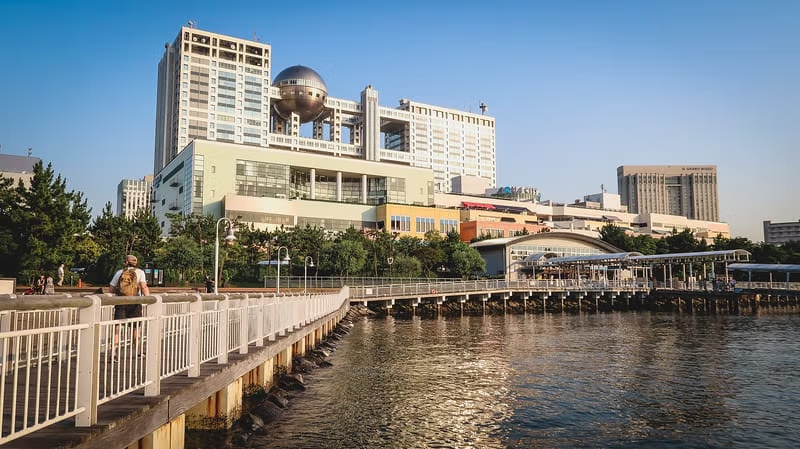
Odaiba is a large artificial island in Tokyo Bay and we knew to expect futuristic constructions and lots of shopping malls, but what we weren’t expecting were robots – lots and lots of robots!
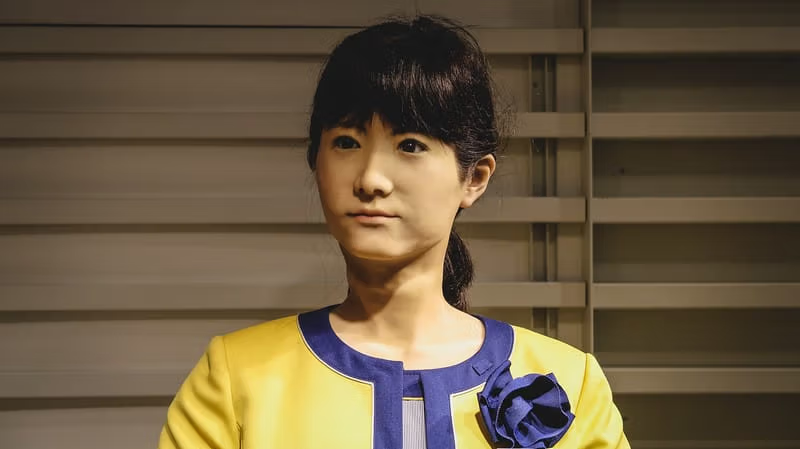
First, we came across Junco Chihira, an interactive android inside Aqua City Shopping Complex that looks just like a human. Junco works the information desk at the mall and is trilingual, speaking Japanese, Chinese and English! She can answer any queries pertaining to transport access, tourist information and restaurants, but most people around the info desk were really there to snap photos of her – ourselves included!
Next, we came face to face with Unicorn Gundam, a massive 20-meter robot that stands guard outside DiverCity. Gundam is a fictional robot from an anime series and undergoes a transformation a few times a day, changing from Unicorn Mode to Destroy Mode. I can’t say I had heard of Gundam before coming to Japan, but it was still pretty cool to see him; it felt like I was in the movie Transformers.
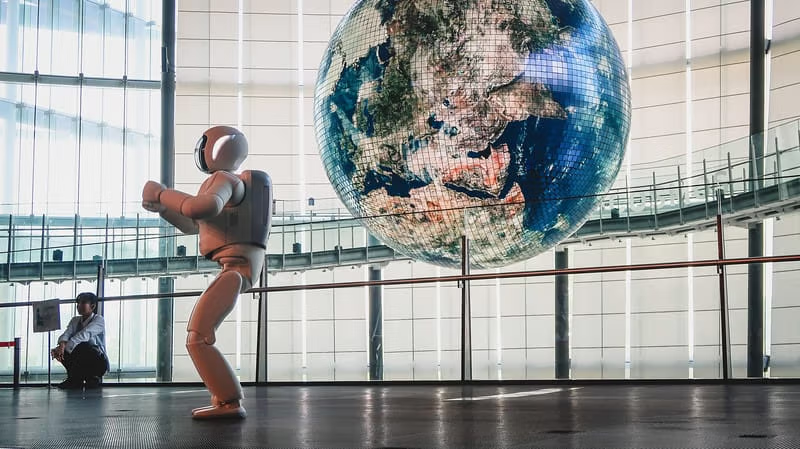
Last but not least, we can’t forget about Asimo, a humanoid robot housed in the National Museum of Emerging Science and Innovation. We watched him give a demonstration of his skills and were pretty amazed. He walked, hopped on one foot, played football, and pretty much won the crowd over.
And that’s just the tip of the iceberg when it comes to robots in Odaiba; there were plenty more to interact with at the museum I mentioned earlier, so if you’re looking to come face to face with robots, Odaiba is an ideal day trip.
Distance from Tokyo: 17 kilometres
Yokohama
A day trip in search of street food
We travelled to Yokohama for food and food alone, and this turned out to be a great decision! Yokohama is home to the largest Chinatown in all of Japan and Asia, and we were spoilt for choice when it came to street food.
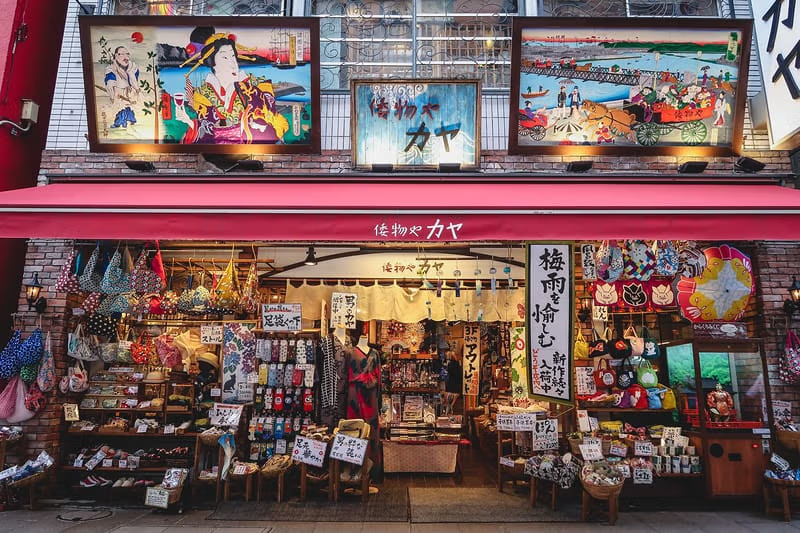
We wasted no time hitting up the main pedestrian street where we sampled things like steamed buns stuffed with sweet beef and caramelized onions, shrimp and pork dumplings, sesame balls, egg tarts, bubble tea, and cute panda-shaped buns, just to name a few.
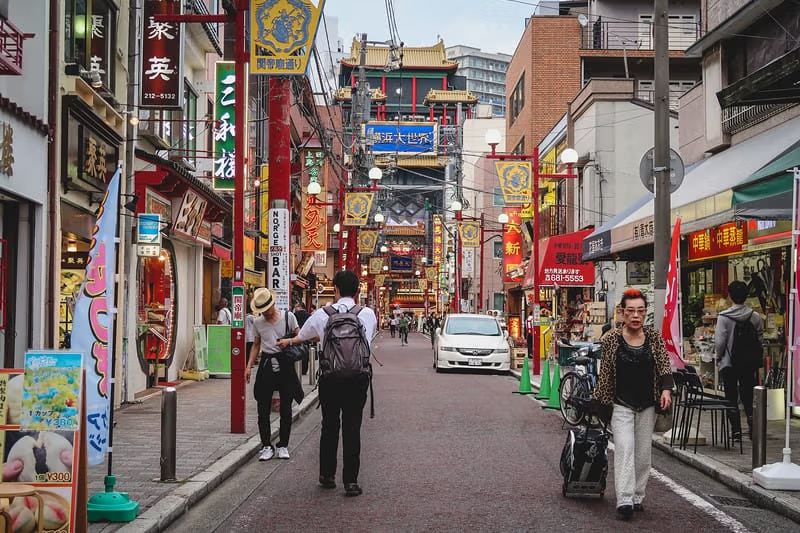
Aside from all the street food on offer, Yokohama Chinatown also had an abundance of restaurants ranging from open buffet to a la carte and budget eats to fine dining. We ended up finding a little restaurant on a small side lane where we ordered a spicy ramen soup and mapo tofu with rice.
We left Yokohama feeling stuffed beyond belief, yet knowing we had sampled a mere fraction of what this place has to offer.
Distance from Tokyo: 40 kilometres
Kamakura
A day trip in search of temples
Our day trip to Kamakura was all about exploring this coastal city’s shrines and temples – quite the tall order when you take into account the fact that Kamakura is home to 65 temples and 19 shrines, some of which date as far back as the 8th century! Since we only had one day in Kamakura, we decided to focus on just 3 attractions.
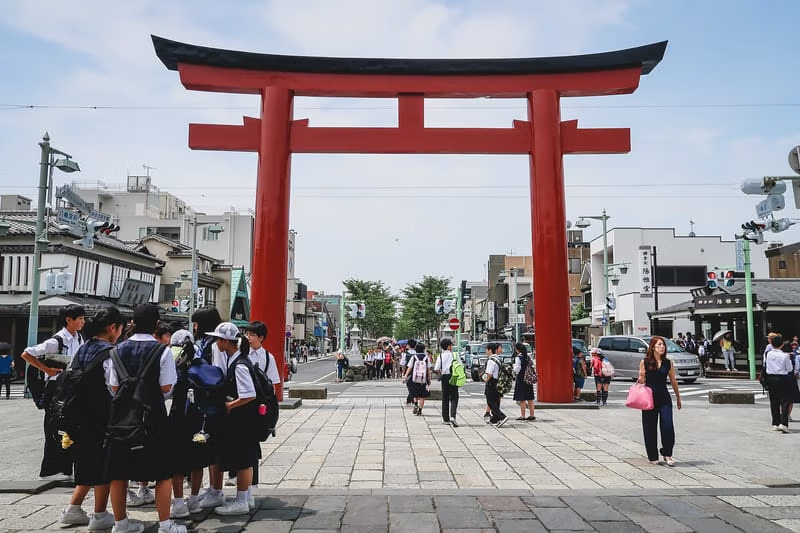
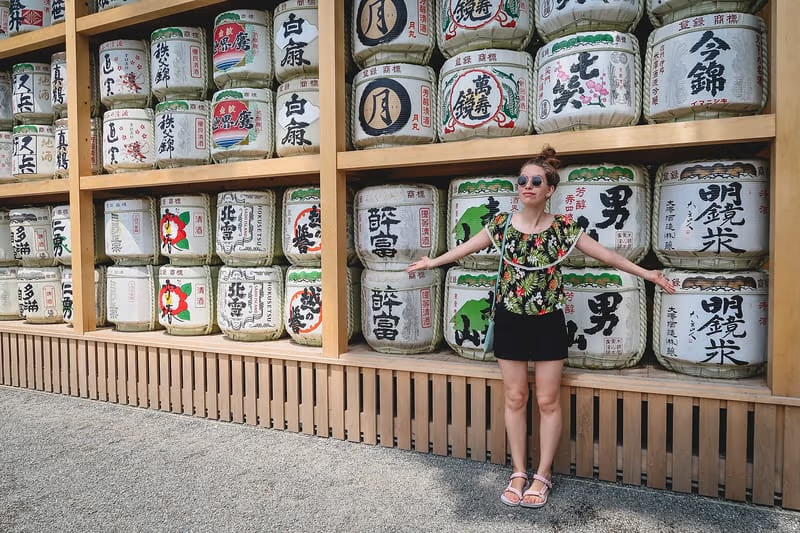
First up, we visited Tsurugaoka Hachiman-gu, a Shinto shrine that is dedicated to Hachiman, the patron god of samurais. This temple was a short walk from the train station and we enjoyed getting to stroll the grounds where we came face to face with a massive wall of sake offerings.
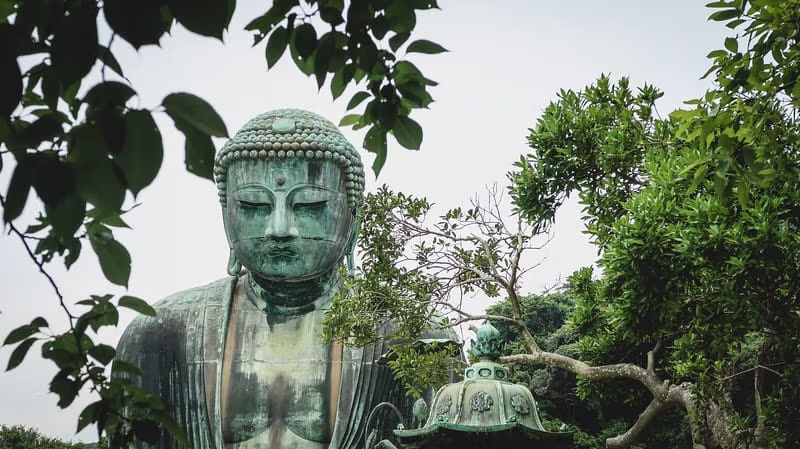
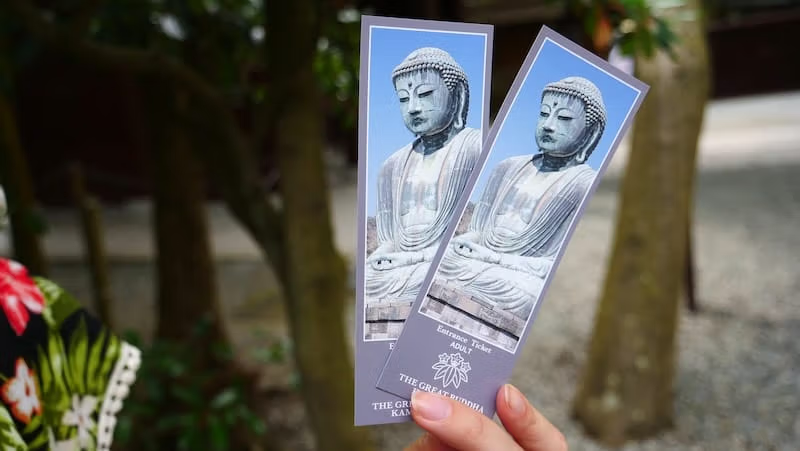
From there, we continued on to Kotoku-in, a temple that’s home to the second-largest Buddha in all of Japan. It stands 11.4 meters tall and since it’s hollow inside, it’s open to visitors, though we opted out since we were visiting Japan in the middle of summer!
The third temple we visited was Hasedera, most famous for its eleven-headed statue of the Goddess of Mercy, though we were most impressed by the Benzaiten Grotto, which was basically a long cave with carvings and statues that adorned its walls.
In between all the shrine and temple hopping, we also managed to walk the full length of Komachi-dori; this is a pedestrian street that is lined with small restaurants, cafes, and street vendors serving up delicious street food, so we sampled some of the local eats.
Distance from Tokyo: 55 kilometres
Mount Takao
A day trip in search of nature
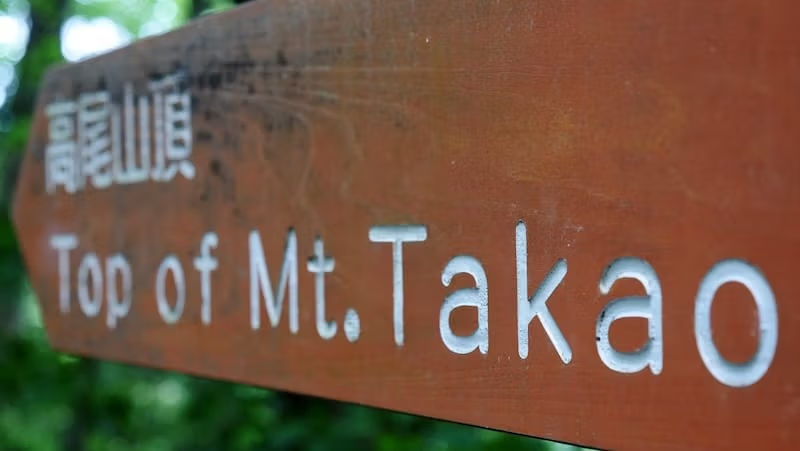
As much as we enjoyed Tokyo, towards the end of our stay we were craving some time closer to nature and Mount Takao proved to be the perfect escape. Located just 1 hour away from Tokyo, Mount Takao felt worlds away from the city’s rapid pace.
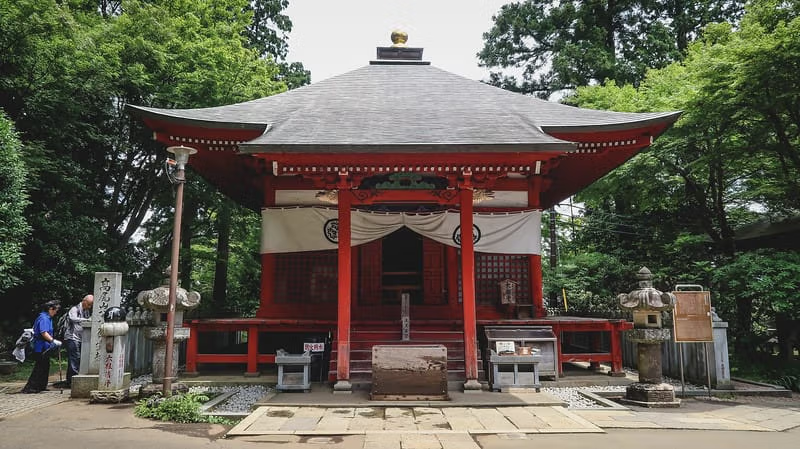
Some of the highlights from this day trip included feasting on soba noodles at a little restaurant at the base of the mountain, strolling through a cedar-lined path on our way to visit the main temple, and sampling lots of street food from the vendors that line the mountain path. A quick heads up: you won’t go hungry on Mount Takao!
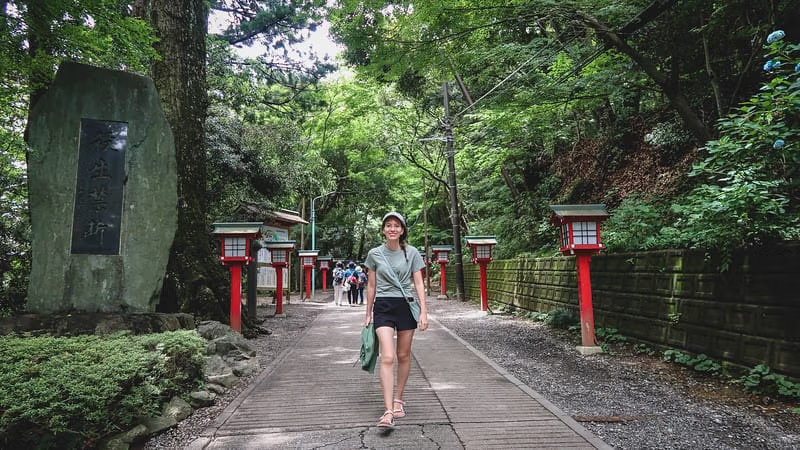
This was a really fun day trip from Tokyo and I would say it’s a great option even for non-hikers. Mount Takao stands 599 meters tall, but there are a few different ways to get halfway up the mountain including a funicular (the steepest in all of Japan) and a chair lift. From there, the “hike” to the top is actually a very light stroll with only a few sets of stairs along the way.
Distance from Tokyo: 50 kilometres
Nikko
A day trip in search of culture
So technically Sam and I spent a few days in Nikko, but since it’s a popular day trip from Tokyo, I decided to include it on this list.
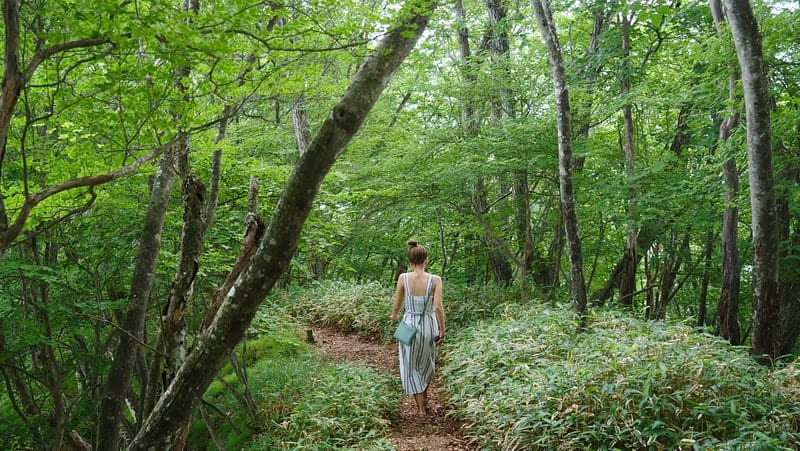
Nikko is a small city, that really feels more like a town, and it is best known for its Shinto shrines and Buddhist temples scattered in the forest – a few of which are listed as UNESCO World Heritage Sites.
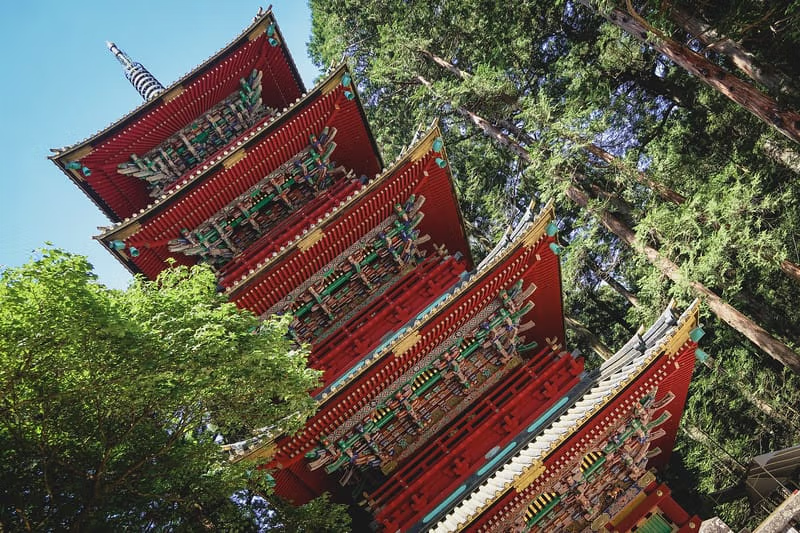
Some of the main attractions in Nikko include Tosho-gu, a shrine dedicated to Tokugawa Ieyasu who was the founder of the Tokugawa shogunate; the Shinkyo Bridge, which legend says was formed by two big snakes intertwining to allow passage across the river; and Rinno-ji, a temple with elaborate wood carvings that also houses gilded wooden Buddha statues.
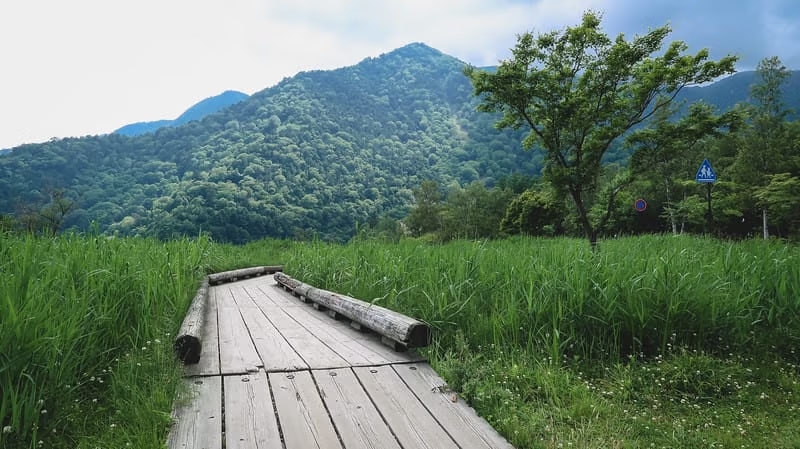
A day trip to Nikko might be a bit rushed to venture further afield and cruise on Lake Chuzenji, marvel at Kegon Falls, or unwind at Kinugawa Onsen, but there is plenty to enjoy in the town.
This is by far the furthest Tokyo day trip I’ve listed, so if you want to maximize your time, it’s best to start early. You can always nap on the train, but don’t miss the final approach into the Nikko where you’ll be treated to stunning forest and mountain views.
Distance from Tokyo: 149 kilometres
Of course, there are only so many day trips we could squeeze into our 1-month stay, so feel free to chime in the comments if you have any other suggestions of fun and easy Tokyo day trips to add to this list!
A Few Things That Have Changed Since Our Visit
We’ve had so many readers plan Tokyo day trips using this post over the years, and we genuinely love hearing about your experiences in the comments. Since we first published it, though, a few things have shifted — and some of them affect the very highlights we were most excited about. We’d feel bad not flagging them.
Asimo has retired. We were completely charmed watching him perform at the Miraikan, and we know a lot of you have gone specifically hoping to catch that live demonstration. Unfortunately, Honda retired Asimo from all public performances in March 2022, so the show we described is no longer running. The Miraikan itself is still absolutely worth a visit — it remains one of the best science museums we’ve ever been to, and it continues to showcase cutting-edge robotics research with Asimo’s legacy very much honoured throughout. It just won’t be the live performance we watched. Go for the museum, not the show, and you won’t be disappointed.
The Unicorn Gundam is on borrowed time. As of this update the statue is still standing outside DiverCity — but Bandai Namco announced in 2026 that it will be permanently taken down at the end of August 2026. If you’re planning a visit after that date, the statue won’t be there anymore. The evening light show has also been affected by an intermittent mechanical issue since 2025, so it’s worth checking the official DiverCity site before you go to confirm what’s running on the day you visit.
Junco Chihira, the android at Aqua City’s information desk, has had variable availability over the years — she was one of the unexpected highlights of our Odaiba trip, but whether she’s actively on duty when you visit is now genuinely uncertain. Pop by the information desk and see what you find.
A few other Odaiba changes worth knowing about: teamLab Borderless, which was running in the old Venus Fort building when we first published this post, moved to Azabudai Hills in 2024. teamLab Planets is still running in nearby Toyosu, though, if digital art is on your list. And Immersive Fort Tokyo, which replaced Venus Fort itself, opened in March 2024 and then closed again in early 2026. Odaiba is a lively area but it does shift — always worth a quick check before you go to see what’s currently on.
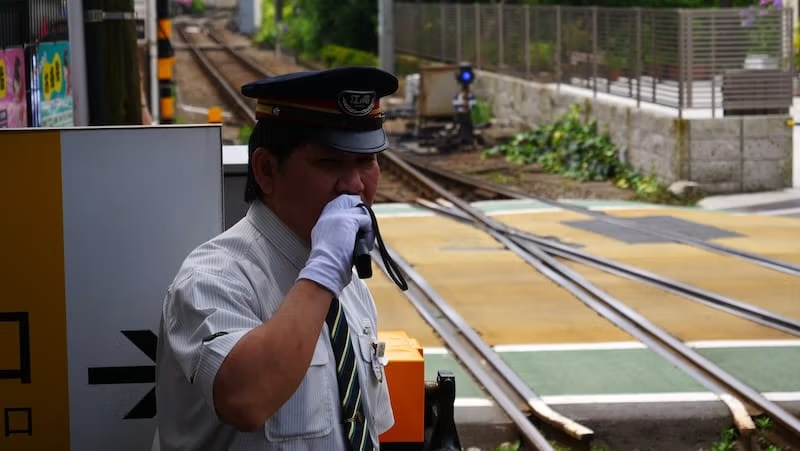
Getting to Each Destination
One thing we didn’t think to include when we first wrote this post was the actual transport side of things — which, given that Japan’s train network can feel bewildering on arrival, probably wasn’t ideal. Here’s the practical version.
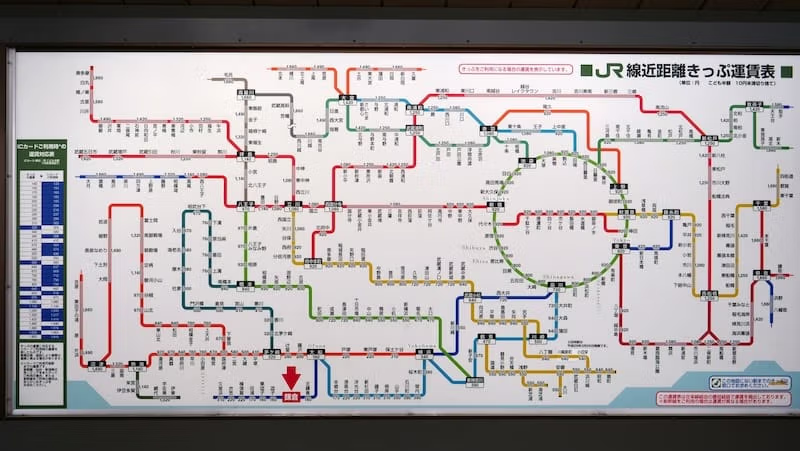
For Odaiba, you don’t need any special pass at all. The Yurikamome monorail from Shimbashi takes about 25 minutes and is covered by your regular IC card — just tap in with your Suica or Pasmo and go. The Rinkai Line from Osaki is another option if you’re coming from that side of the city.
Yokohama is equally straightforward. Multiple JR and private lines connect it to central Tokyo in 30 to 40 minutes, all on IC card. Depending on where you’re based, the Tokyu Toyoko Line from Shibuya or the Keihin Tohoku Line from various central stations will likely be the most direct route.
For Kamakura, the JR Yokosuka Line from Tokyo Station is the most direct option — about an hour, covered by IC card. If you’re planning to also visit Enoshima on the same day, it’s worth looking at the Odakyu Enoshima-Kamakura Freepass from Shinjuku, which covers your round trip plus unlimited rides on the Enoden tram and discounts at a number of temples and attractions. Check current pricing when you plan, as fares can change.
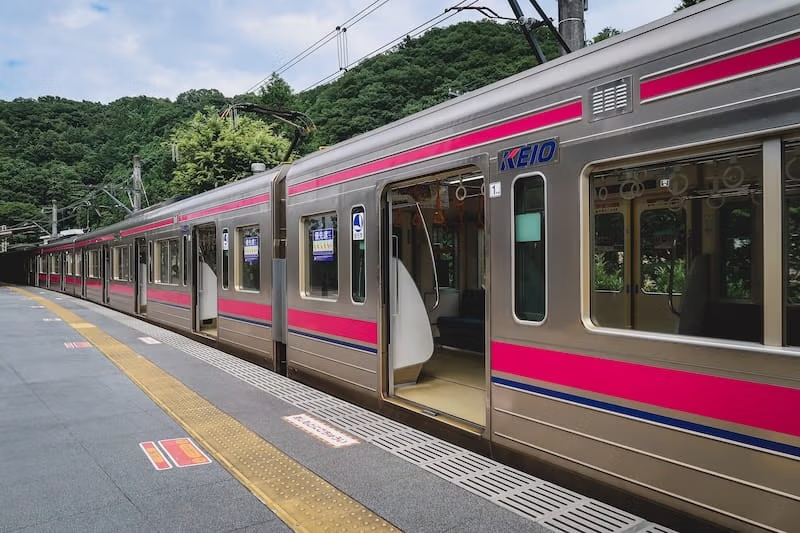
Mount Takao is a direct Keio Line train from Shinjuku to Takaosanguchi Station, about 50 minutes, no reserved seat needed. One handy option: Keio’s Takaosan Ticket bundles your round-trip train fare with discounted chairlift or cable car tickets and saves roughly 20% compared to buying them separately. Ask at Keio Line stations for current availability and pricing.
Nikko is the most involved, but also now has the most pleasant option. The classic route is the Tobu limited express from Asakusa — about two hours to Tobu-Nikko Station. Since 2023, there’s a newer and noticeably more comfortable choice: the Spacia X, Tobu’s premium limited express, which does the same journey in roughly an hour and 47 minutes. It’s a beautifully designed train and genuinely worth the effort of reserving in advance — seats sell out quickly on weekends and especially during autumn foliage season, so book ahead if your timing overlaps with either.
The Tobu Nikko World Heritage Pass covers your Tobu trains and buses within Nikko and is a solid day-trip option; note that entry fees to the shrines are separate. If you have a JR Pass, you can also reach Nikko via Utsunomiya, but the Tobu route from Asakusa is generally more direct and easier to navigate.
One honest warning about Nikko specifically: the last limited express back to Tokyo runs earlier than you might expect — sometimes before 6pm depending on the day and season. Check the timetable before you go and plan your afternoon around it. We’d hate for you to be scrambling for a slow local service in the dark.
Where to Stay for These Day Trips
Since all five of these trips work as day excursions, most readers use Tokyo itself as a base and hop out for the day. Where you stay in the city can still make a real difference to how early you can leave and how tired you are by the time you get back, so here are a few options that suit different styles of trip.
For a budget-friendly base with an easy walk to trains, Sakura Hostel Asakusa is a solid pick for solo travellers and backpackers. It’s a five-minute walk from Senso-ji and Asakusa Station, and the hostel runs a 24-hour café and lounge along with weekly organised activities, which makes it easy to swap trip notes with other travellers before you head out to Kamakura or Nikko in the morning.
Travelling with kids or as a small group, K’s House Tokyo Oasis, also in Asakusa, is worth a look. Its family room sleeps three across a double bed and a tatami-matted futon space with a private bathtub and toilet, which solves the usual problem of trying to book a hostel dorm for a family of three. It’s a three-minute walk from Asakusa Station on the Tsukuba Express line, putting Yokohama, Odaiba, and points beyond within easy reach without an early alarm.
For a more central, general-purpose base, Hotel Gracery Shinjuku suits couples and first-time visitors who want to be near a major transit hub. It’s a 4-star hotel best known for its rooftop Godzilla head, and being right by Shinjuku Station means quick access to the Keio Line for Mount Takao or the JR lines heading out toward Yokohama and Kamakura, without needing to cross the city first.
What to Budget for Entry Fees
Odaiba and Yokohama are essentially free to explore — you’ll spend money on food and transport but there’s no gate to pay for Chinatown or the Gundam statue. The Miraikan charges admission; check their official site for current pricing as it’s updated periodically.
Kamakura is where entry fees start stacking up, though none of them are particularly steep. Tsurugaoka Hachimangu is free to walk around. Kotoku-in, the Great Buddha, is around ¥300 for adults. Hasedera is around ¥400 for adults. Kencho-ji and Hokokuji’s bamboo grove run ¥300–500 each. A typical day of three or four sites will cost around ¥1,000–1,500 in entry fees — very reasonable given how much you see.
The chairlift or cable car at Mount Takao costs around ¥490 one way or ¥950 return for adults. You can walk the entire mountain for free if you prefer, but the chairlift is a lovely open-air ride and worth the cost. There’s no entry fee to the mountain itself.
Nikko’s Toshogu runs roughly ¥1,300–1,600 for adults — check the current rate on the official Toshogu website before you go as pricing can vary. A combination ticket that includes the Treasure Museum costs more. Budget around ¥2,000 per person for a thorough visit to the main World Heritage cluster.
A tip for all five destinations: bring cash. Card acceptance at temple gates and street-food stalls has improved but is still inconsistent, particularly in Kamakura and Nikko. A few thousand yen in small notes is good insurance.
When to Go
Cherry blossom season (late March to early April) is extraordinary at Kamakura — the long approach to Tsurugaoka Hachimangu is lined with cherry trees, and the whole town takes on a different mood. The crowds are serious, though. If you’re going during peak bloom on a weekend, aim to arrive before 9am and you’ll have a much calmer morning than anyone arriving at midday.
June and July are hydrangea season, and Hasedera in Kamakura is one of the best spots in Japan to see them — the path winds up through banks of purple and blue and it’s genuinely beautiful. We visited in high summer, which we found hot enough to skip going inside the Buddha, but the hydrangea crowds are notably lighter than the spring rush, so there’s a reasonable trade-off there.
Autumn (September to November) is probably our favourite season for all five of these trips. The foliage around Nikko’s shrine forests is something else entirely, Mount Takao’s cedar paths turn golden, and the air is finally cool enough to enjoy a full day of walking without wilting. Peak autumn weekends at Nikko can be very busy — but weekdays and early mornings are manageable.
Winter is underrated for this particular list. Fewer tourists everywhere, and on clear days you can see Mount Fuji from the summit of Takao in a way that summer haze makes impossible. Nikko in winter morning light is quietly spectacular, and Odaiba and Yokohama Chinatown are perfectly comfortable year-round since most of their highlights are indoors.
On rainy days: save Mount Takao and Kamakura for blue skies. Wet temple stairs and low cloud hiding the forest views are no fun. Odaiba and Yokohama Chinatown are the right call when the weather turns — almost entirely indoors and enjoyable regardless of forecast.
A Few Things Worth Knowing Before You Go
Odaiba
It’s a natural half-day, and we’d pair it with something else if you have the energy. The Miraikan is the real anchor now that Asimo’s live shows have ended — it’s a genuinely excellent museum and you could easily spend three hours there without running out of things to see. The Gundam statue remains the other centrepiece of the island; the evening light shows from 7pm onward are a lovely way to close the visit if your timing works out. Check the DiverCity official site for current performance status before you go.
The Gundam You’re Looking At Isn’t the One You Might Expect
It’s an easy assumption to make: the giant robot outside DiverCity looks like “the” Gundam, so most visitors snap a photo and move on without wondering which one it actually is. It isn’t the original. The first Gundam statue to stand in Odaiba was an 18-metre replica of the RX-78-2, the mobile suit from the 1979 series that started the entire franchise, and it stood in Shiokaze Park from 2009 until its removal in 2017. The statue currently on display, the one performing its Unicorn-to-Destroy transformation several times a day, is the RX-0 Unicorn Gundam, a completely different design pulled from Mobile Suit Gundam Unicorn, a series that didn’t air until 2010. The distinction matters if you’re a fan trying to place the statue in franchise history, and it’s a detail most visitors, understandably, never think to ask about. As a footnote to the mechanical issue mentioned earlier, the transformation sequence broke down in June 2025 and spent months stuck fixed in Destroy Mode before a partial repair — one more reason to treat any performance you catch, in whichever mode, as a bit of a bonus rather than a guarantee.
Yokohama
Come hungry and plan to graze rather than sit down for one big meal. The tabehodai all-you-can-eat restaurants lining the side streets are popular with locals and typically run around ¥1,500–2,000 for a couple of hours — a genuinely good deal if you want to try many things without making individual decisions at every stall. Go for the panda-shaped buns, the soup dumplings, and if you spot them, the Taiwanese black pepper buns — baked rather than steamed, with a peppery pork filling that’s perfect for a cold afternoon.
Kamakura
Start at Tsurugaoka Hachimangu since it’s free and close to the station, then make your way toward the Great Buddha. The walk between the two takes you through Komachi-dori — give yourself time on this street rather than rushing past it. The stalls and cafes are worth the unhurried amble. Hasedera is best combined with the Great Buddha since they’re a short walk apart; most people spend about 45 minutes at each. For anyone adding Enoshima to the day, the Enoden tram from Kamakura connects the two and the ride itself is one of the prettiest short train journeys in the area.
For a more guided introduction to the temples, the Kamakura: Great Buddha, Hase Temple, and Komachi Street Tour covers the same core sites we visited, with a local guide filling in the history at each stop. It’s a good option for history-minded travellers who want more context than a signboard can offer, or for families who’d rather not manage train transfers on their own.
Why Kamakura Was Once the Capital of Samurai Japan
It’s easy to walk through Kamakura’s temple-lined streets today and take it for a pretty seaside town with a famous statue, without realising it once ran the entire country. In 1185, the warlord Minamoto no Yoritomo set up a military government here after defeating his rivals in the Genpei War, choosing Kamakura in part because its surrounding hills and single coastal approach made it easy to defend. Seven years later he was formally named shogun, and for the next century and a half, Kamakura, not Kyoto, was where the real decisions got made, even though the emperor and his court stayed on in the old capital as figureheads. The arrangement ended in 1333, when a rival samurai family overthrew the shogunate and moved power back to Kyoto, but the temples built during Kamakura’s stint as capital, including several you’ll walk past today, are what’s left of that stretch at the centre of Japanese politics.
Mount Takao
The chairlift is the more scenic option — open-air, good views, 12 minutes of just sitting and enjoying the forest — and the cable car is faster and enclosed. If both are running and the queue isn’t too different, we’d take the chairlift up. Note that it closes around 4:30pm, so plan your descent accordingly. If you’re visiting between late March and mid-December, the Beer Mount at the mid-mountain cable car station is worth knowing about — it’s a seasonal all-you-can-eat and drink buffet with panoramic views, and it’s a wonderfully impractical way to reward yourself after a hike. For actual craft beer, TAKAOBEER KO52 BREWERY & TAPROOM at the foot of the mountain — in the KO52 TAKAO complex near the station — brews small-batch beers on site and is the right stop on the way back to Shinjuku.
If you’d rather start the hike at first light instead of catching an early train from Shinjuku, Hotel Takaone sits a one-minute walk from Takaosanguchi Station and was built specifically as a base for exploring the mountain. Overnight guests get access to a seasonal sunrise hiking tour with a local trail guide, plus a rooftop lounge looking out over the station and surrounding hills, making it a natural fit for anyone treating Mount Takao as more of an adventure than a quick outing.
If you’d rather not navigate the trail junctions yourself, the Mount Takao Guided Hiking Tour pairs an English-speaking guide with a cable car ride, a stop at the Takao 599 Museum, and a hike up to the summit for those Fuji views on a clear day. It’s a good option for first-time hikers or anyone travelling solo who’d rather have local context along the way.
Nikko
The World Heritage shrine cluster is concentrated enough that you don’t need to rush, but the day goes faster than you’d expect. The Toshogu complex alone warrants at least 90 minutes if you actually want to look at things rather than just pass through. Rinnoji and Shinkyo Bridge are close by and together make for a satisfying morning. If you’re going in autumn, Lake Chuzenji and Kegon Falls are stunning but genuinely feel like a second trip — we’d say they require an overnight stay to do without feeling frantic. For a day trip, the town itself is more than enough.
For travellers treating Nikko as an overnight rather than a rushed day trip, Nikko Kanaya Hotel is worth the splurge. Opened in 1893, it’s Japan’s oldest Western-style resort hotel, built on a hillside overlooking the Daiya River a short walk from Toshogu. Past guests have included Albert Einstein and Frank Lloyd Wright, and the hotel runs a free shuttle to and from Tobu-Nikko Station, which makes it a genuinely romantic, low-hassle base for a honeymoon-style overnight stay.
For travellers doing Nikko as a day trip and wanting the transport and logistics handled, the From Tokyo: Guided Day Trip to Nikko World Heritage Sites tour covers Toshogu, Lake Chuzenji, and Kegon Falls by bus with a guide, which sidesteps the tight train timetable mentioned above entirely.
Nikko’s Spring Grand Festival and the Procession of a Thousand Samurai
If your Nikko trip happens to land in mid-May, it’s worth knowing that Toshogu holds its biggest event of the year on the 17th and 18th. The Spring Grand Festival opens with yabusame, mounted archers in traditional dress firing at targets while galloping past at full speed, a practice with roots in centuries-old samurai training exercises. The following day brings the main event: over a thousand participants dressed in full Edo-period armour escort three portable shrines along a kilometre-long route, re-enacting the 1617 procession that carried Tokugawa Ieyasu’s remains to Nikko from Mount Kuno. It’s a solemn re-enactment rather than a festival with food stalls and music, so arrive early if you want a clear view along the main approach, and know that a smaller autumn version of the same procession runs in mid-October if your travel dates land there instead.
Food Worth Bringing Home
Given that food was the entire reason we went to Yokohama and a significant part of why we loved every other destination on this list, an edible souvenir section felt mandatory.
From Yokohama, the panda buns are more of an “eat immediately while walking” experience than a travel-well treat. If you want something to take home, the Chinatown bakeries stock mooncakes and egg tarts that hold up reasonably well, and they make a nicer souvenir than anything wrapped in plastic at the airport.
From Kamakura, the classic is Hato Sablé — dove-shaped butter biscuits that have been made at the same shop near the station since 1897. They’re extremely popular with Japanese visitors and for good reason: simple, perfectly buttery, not too sweet, and the tins are lovely enough to keep. Find them at Toshimaya near Kamakura Station.
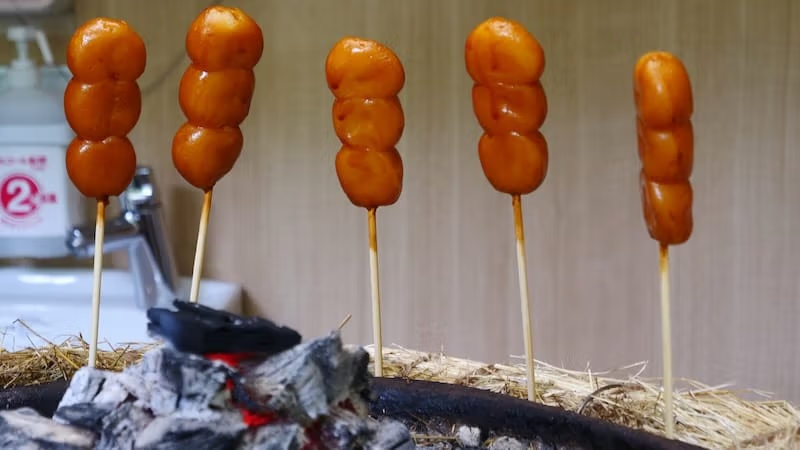
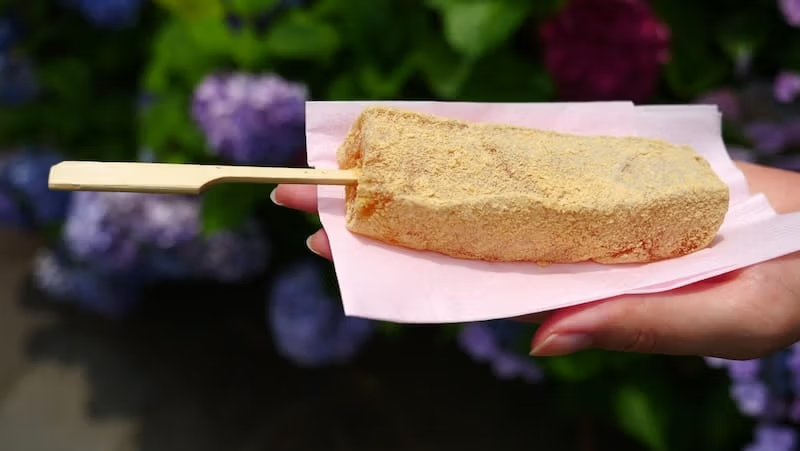
From Mount Takao, the temple stalls along the trail sell Tengu Pepper — a small bottled spice blend named after the long-nosed mountain spirits Takao is famous for. Earthy, mildly citrusy, and takes up almost no space in a bag. The dango skewers you’ll eat on the mountain don’t travel, but you’ll be thinking about them on the train home.
From Nikko, Yuba Maki — dried tofu-skin rolls, a Buddhist delicacy historically associated with the temple monks — turns up in every shop in town and is genuinely good. Lightweight, keeps well, and specific enough to Nikko that it doesn’t feel like a generic Japan souvenir. Also worth picking up: Nikko Dorayaki, a pancake sandwich with sweet bean paste filling, makes a fine train snack on the way back to Tokyo.
Nikko: Is One Day Really Enough?
Honestly, it depends on what you’re hoping to get from it. As we mentioned, we technically spent a few days there ourselves — but we’ve also heard from plenty of readers who did it as a day trip and felt very satisfied. If you’re focused on the main World Heritage shrine and temple cluster — Toshogu, Rinnoji, Shinkyo Bridge — a long day trip on an early train is completely doable. Those sites are compact enough that you can see them properly without sprinting.
Lake Chuzenji and Kegon Falls, however, are further out and genuinely feel like a different excursion. We’d say they reward an overnight stay rather than a frantic afternoon addition. Staying overnight also means you can visit Toshogu first thing in the morning before tour groups arrive, which is a genuinely different experience from the busy midday version — quieter, more atmospheric, better light on the gold lacquer.
For a day trip: early train, shrine cluster, Shinkyo Bridge, a good lunch of yuba dishes somewhere in town, and the first available Spacia X home. That’s a full and satisfying day.
A Few Questions We Get Asked
Which day trip is the easiest for first-timers?
Odaiba, without question. It’s the closest, almost everything is in English, it’s almost entirely indoors if the weather turns, and you tap your IC card and go — no reserved seats, no passes, no complicated connections. It’s a good first day trip for building confidence before tackling Kamakura or Nikko.
Which is best purely for food?
Yokohama Chinatown wins easily, but Mount Takao is a surprisingly close second if your idea of a good food day involves grazing your way up a mountain. Kamakura’s Komachi-dori also gets overlooked by people focused on the temples, which is a shame — it’s genuinely excellent.
Can we do Nikko as a day trip or should we stay overnight?
Day trip is doable if you focus on the main shrine cluster and take the early Spacia X from Asakusa. Just watch the last limited express timetable carefully — it runs earlier than you’d expect. If you want the lake and the falls as well, stay overnight.
Which is best on a rainy day?
Odaiba or Yokohama Chinatown — both are almost entirely indoors. Save Kamakura and Takao for clear days. Wet temple stairs and obscured forest views aren’t the versions of those places you want.
Can we combine two destinations in one day?
Kamakura and Enoshima work well together on the Enoden tram and it’s a popular combination. Yokohama makes a good half-day paired with something back in Tokyo. We wouldn’t try to combine Nikko with anything else — too far, and the last train is too early to make it relaxed.
Is Mount Takao suitable for people who don’t hike?
Very much so. The chairlift or cable car takes you halfway up with no effort, and from there the path to the summit is a gentle, well-paved stroll with food stalls and temple stops along the way. We’d recommend it to almost anyone.
Do we need to book anything in advance?
For the Spacia X to Nikko on weekends or during autumn foliage season — yes, book ahead, seats sell out. For everything else, the only real advance consideration is Kamakura during cherry blossom peak weekends, where arriving early is more useful than any booking. Everything else is walk-up.
What’s the best season overall?
Late September through early November is the sweet spot for most of these trips — comfortable temperatures, autumn colour, manageable crowds on weekdays. Spring cherry blossom season is beautiful but busy. Winter is genuinely underrated, especially for Takao’s clear-air Fuji views and Nikko’s quiet mornings.
Excellent article! There are a lot of spots I haven’t been to yet. Wanna see them! I guess I really have to visit Mt. Takao next time I’m in Tokyo.
Oh! I love this place. Such a coincidence that I have a colleague who’s looking for a planning trip to Tokyo and good thing I came across your site. Thank you for sharing. This is such a wonderful trip.
These day trips sound so much fun! Is Tokyo and around good for solo travelers?
Wow! this sound like so much fun. Have been planning to visit Tokyo soon. Thanks for sharing.
You had me at street food! My favorite food in the world is ramen and I’ve always wanted to do a ramen tour in Tokyo. I also imagine the street food in Japan to be incredible. I hope I get to try these day trips some day.
Wow, robots amaze me! I just added these places to my bucket list. I hope to visit when I’m there.
I think I cannot do a day trip only in Tokyo, Japan. Funny but true. Because Tokyo has so many things to offer and I can’t do that for a day.
Japan has a soft spot in my heart! I love the country, their culture, the food and the people! As a self proclaimed Otaku, going to Odaiba has been a dream! I have seen my first ever Gundam Kit (Unicorn) in 1:1 scale and I am so amazed!
Thanks for sharing these fantastic day trip ideas! I love the mix of urban and natural experiences. Can’t wait to try out the trip to Nikko – the temples look stunning!