
If there’s one thing I really like about Korea, it’s their cafe culture. Themed cafes in Seoul are wildly popular, and it seems that the wackier the idea, the bigger the clientele! What is one to do with so many choices? Why visit them all, of course! On our last trip to Korea, Sam and I set out to explore as many unique themed cafes as possible ranging from cat cafes and dog cafes to secret garden cafes and traditional tea houses. This is a selection of some of the places we visited:

Unique themed cafes in Seoul:
Dog Cafe
Bauhaus is probably my all-time favourite themed cafe in Seoul. The idea? You purchase a drink and then you get to hang out with some lovable dogs for a few hours!
The cafe is divided into 2 sections: one area for the smaller dogs where you can find a Whippet, a Corgi, a Pomeranian, a King Charles Cavalier, and lots of Chihuahuas; and another area for the larger dogs, where you’ll find a Golden Retriever, an Irish Setter, a Siberian Husky, a Groenendael, a Labrador and more.

Dog owners can also bring their dogs to play, so you might find other breeds. It’s always funny when you think you’re playing with one of the local dogs from Bauhaus, and then you realize the owner is waiting for their dog to hop off your lap so they can take them home.
Address: 64 Yanghwa-ro, Mapo-gu, Seoul

Cat Cafe
When it comes to themed cafes in Seoul, cat cafes are what started it all, and while they may not be considered that unusual around these parts, they are still quite the novelty for visitors.
Sam and I went to 고양이 카페 (Cat Cafe) located in Hongdae, which is our go-to cafe whenever we’re in Seoul. The staff are really friendly here and the cafe has a very relaxed feel.

Once you’re inside, each person has to order a drink and that acts as your admission ticket.
Most cat cafes have a mix of breeds like Siamese, Persian, American Shorthair, Abyssinian, and well, more breeds than I could recognize, to be honest! You can buy cat treats to try and lure the cats your way.
Address: 162-14 Hongik-ro 6-gil, Donggyo-dong, Mapo-gu

Poop Cafe
Poo normally isn’t an acceptable conversation topic at the table, but Seoul seems to think otherwise.
One of the most unusual cafes we visited was the Poop Cafe, or Ddong Cafe, located inside the Ssamziegil Cultural Complex. The theme was apparent from the minute we walked through the doors, with giant swirls of poo gracing each table.
We ordered a latte, a mango lassi, and most importantly, a poo-shaped waffle with lots of Nutella smeared on top. You get the visual?

Our waffle was served on a plate that was meant to resemble a squat toilet, and if you come closer to lunchtime and order pasta, this is served in a miniature toilet bowl.
After finishing our drinks, we went outside where they have a little stand that sells poo-shaped pancakes. Again, these have that distinct swirl shape and they were filled with chocolate sauce. Each pancake was 1,000 won and they were surprisingly delicious.
Address: 4th-floor Ssamziegil Building, 38 Gwanhun-dong, Jongno-gu, Seoul

Flower Cafe
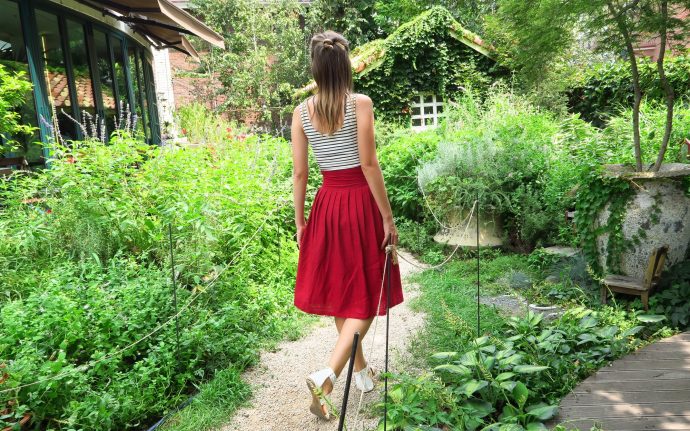
For something straight out of a fairytale, you can visit Poete. This cafe was formerly known as Blüte and it’s located in a quiet side street in Hongdae.
As you take the steps up to the premise, it almost feels like you’re walking into a scene from Hansel and Gretel.
The cafe is surrounded by a thick garden filled with colourful flowers and in the back, there’s a little cottage that looks like something out of Spreewald.

Food and drinks in this cafe are a bit pricey with most teas running you 9,000 won, but the calm country-like setting makes it a really nice spot for a date.
We ordered some ice tea, a lemon tart, and beer when we visited and everything was presented beautifully; our tray came with flowers in tiny glass vases and the attention to detail was apparent.
They also have an outdoor terrace with stringed lights, which I’m sure is very pretty if you come in the early evening.
Address: 31-8 Hannam-dong, Yongsan-gu, Seoul

Sheep Cafe
Also known as Thanks Nature Cafe, the sheep cafe is located in Hongdae at basement level with an outdoor terrace. Two sheep, Lulu and Lola, call the cafe home, and just like Mary sang, their ‘fleece is white as snow’.
Once you’re in the cafe, each person is expected to order a drink or a snack and then you are free to visit the sheep in their outdoor pen.

You can also try feeding them hay if you arrive right around feeding time.
One thing to bear in mind is that the sheep are not at the cafe year-round. Summers in Seoul are unbearably hot, so the sheep get to escape the city and have a bit of a holiday in the countryside.
Address: 486 Seogyo-dong, Mapo-gu, Seoul

Raccoon Cafe
Blind Alley is Seoul’s first raccoon cafe and when it comes to themed cafes, it’s one of the most unusual ones I have ever visited.
This cafe is divided into two areas and the idea is that first, you order a drink or a dessert, and then you go to the next room where you get to observe the raccoons – no petting allowed.

We went there on a hot summer afternoon and ordered the Raccoon Patbingsu, which is a shaved ice dessert with red bean paste, ice cream, cereal, whipped cream, and oreo cookies. It was the perfect size to share between two people, and it was oh-so-refreshing!
After finishing our dessert, we went to the adjacent room where the raccoons have a fun crawl space with ramps, boxes, ropes and poles – it’s basically their own jungle gym. They also have chairs and couches where you can sit and watch the raccoons at play.
Address: 76 Cheongpa-ro 47-gil, Yongsan-gu

Traditional Tea House
This one is not quite a themed cafe, but it’s still a very cool experience so I thought I’d include it here. There are no cute animals involved, but having tea in a traditional Korean tea house is a must-do when in Seoul.
These tea houses are sprinkled across the city, but the best place to find a good selection is by wandering the back lanes of Insadong. One of our favourites is the Shin Old Tea House.

I really enjoy the traditional tea houses because they are usually in quiet back alleys so it’s very serene plus they also tend to play soft music.
Once you’re inside, you can grab a mat and take a seat at one of the tables. Then you’ll have a selection of teas to choose from, either hot or iced. I’d recommend the plum tea for something sweet and fruity. You’ll also get a plate of rice cakes and persimmon jellies to enjoy with your tea.
Address: 47-8 Insadong-gil, Gwanhun-dong, Jongno-gu

Of course, there are plenty of other themed cafes in Seoul – these are just the ones I’ve managed to visit so far.
You can also find dress up cafes, parrot cafes, study cafes, board game cafes, Charlie Brown cafes, creepy doll cafes, and hanbok cafes scattered across various Seoul neighbourhoods.
One thing to keep in mind is that some of these cafes are fads while others do stand the test of time. I’ve arrived at more than one cafe to discover that it’s already gone, so before you visit, do a quick search to see if these are still open.
For more ideas of things to do in the city, check out our 50 things to do in Seoul travel guide!
Have you been to any themed cafes in Seoul or elsewhere?
What’s the most unusual cafe you’ve ever visited?
This blog post is part of the #SeeKoreaNext campaign to promote South Korea as a tourism destination. When the time to travel is right, Korea will be welcoming visitors with open arms.
A Few Things Worth Knowing Before Your Café Crawl
One thing I always tell people before they head to Seoul with a café crawl in mind: check before you go. I mentioned it at the end of this post and it bears repeating — some of these places don’t survive. Since Sam and I originally visited, two of our favourites have permanently closed. Bauhaus Dog Café is gone, and Blind Alley Raccoon Café closed during COVID-19 (the raccoons were rehomed to a zoo, which is actually a relief). The cat café and sheep café are both confirmed still running. The Ddong (poop) café and the flower café are murkier — the poop café appears to have gone through at least one closure and revival in the past year or two under a slightly different look, and the flower café’s exact current address has moved around enough over the years that I’d treat the address below as a starting point rather than gospel. Do a quick search on all four before building your day around any single one of them.
The good news is that the themed café scene in Seoul has only grown. One that’s become a firm favourite since we first wrote this post is 943 King’s Cross in Hongdae — an unofficially Harry Potter-themed café spread across five floors, with free costume use on the upper level, themed drinks, and photo zones on every level. It’s the kind of place you’d easily spend two hours in without realising it. Worth adding to your list if any of the above is closed when you visit.
Why Seoul Has So Many Cafés
Walk five minutes in almost any direction in Seoul and you’ll pass a dozen coffee shops, which starts to explain why a city can support this many themed concepts in the first place. Seoul is home to somewhere north of 18,000 cafés on its own, which works out to roughly one for every 500 residents — a density that leaves Tokyo and New York well behind. The habit goes back further than you’d think: Korea’s first café, a “dabang,” opened in 1902 inside Seoul’s Sontag Hotel, after King Gojong reportedly developed a taste for coffee served to him by a Russian ambassador’s sister-in-law. For decades dabang were meeting halls for politicians, artists and businessmen rather than quick coffee stops. One theory architecture professors here return to often is spatial: Korean apartments are compact and rarely built with the kind of living room Western homes take for granted, so the café becomes the extra room — a place to sit for three hours with one drink and nobody blinks. That’s also why a themed café isn’t seen as a gimmick here so much as a legitimate, competitive way to give people a reason to choose your particular room over the one next door.
Where the Cafés Cluster
Seoul is big, but the cafés in this post sit in a few natural neighbourhoods which makes planning a lot simpler. Most of our visits happened across two main areas:
- Hongdae (Mapo-gu): Cat Café, Thanks Nature Sheep Café, and 943 King’s Cross all sit here, along with dozens of indie dessert and concept cafés. Nearest station: Hongik University (Line 2 / AREX / Gyeongui-Jungang Line).
- Insadong (Jongno-gu): The Ddong Café sits at the top of the Ssamziegil complex, and the back lanes here are where you’ll find the best traditional tea houses. Nearest station: Anguk (Line 3), Exit 6.
- Hannam side streets: Poete (formerly Blüte), the flower café, has moved locations more than once over the years — double-check the current address before you go. Taxis or buses from Hangangjin (Line 6) keep the walk short if it’s still in that area.
Why Insadong Became Seoul’s Tea House Quarter
Insadong’s tea houses aren’t a recent tourist invention layered onto an old street — the street earned that identity slowly, over about 600 years. During the Joseon dynasty this was a residential quarter for mid-ranking government officials, close enough to Gyeongbokgung and Changdeokgung palaces to matter, and it happened to sit near Dohwaseo, the royal painting bureau. That put working artists and scholars in the neighbourhood from the start, and their tastes shaped what kind of businesses opened around them. Everything shifted after 1910: as the old aristocratic families lost their positions under Japanese rule, many sold off their belongings, and Insadong turned into Korea’s biggest antiques market almost by accident. Galleries followed in the 1970s, and by 2002 the area was formally designated Korea’s first Traditional Culture Street. The tea houses tucked into the back alleys today are really the last surviving thread of that original scholarly, artistic character — which is why they still feel distinct from a themed café built for Instagram.
A good day out links Hongdae in the morning, Insadong around midday, and works in the flower café or a tea house in the late afternoon. The whole loop is very manageable on the Seoul subway.
Where to Stay for Your Café Crawl
If Hongdae is your base, RYSE, Autograph Collection sits about 300 metres from Exit 9 of Hongik University Station and leans into the neighbourhood’s design-forward energy, with a rooftop bar and lounge, valet parking, and rooms built around clean, contemporary lines — a solid pick for couples or a splurge-worthy first night in Seoul. For a tighter budget, Dream House is an eight-minute walk from Hapjeong Station and around ten minutes from Hongdae’s main strip, with a semi-buffet breakfast, a rooftop garden terrace, and rates that make it one of the better-reviewed cheap stays in the area — good for solo travellers or backpackers watching costs. Families or anyone wanting more polish without leaving Hongdae should look at L7 Hongdae by LOTTE, close to Exit 8 of Hongik University Station, which has an on-site restaurant, bar, fitness centre, and — for an extra charge in season — a rooftop pool, a genuine rarity among Seoul hotels.
Basing yourself in Insadong instead puts you closer to the tea houses and the Ddong Café. Orakai Insadong Suites offers spacious suites with fully equipped kitchens plus an indoor pool, sauna, and fitness centre, which makes it a practical choice for families or anyone staying more than a few nights. For something more in keeping with the neighbourhood’s character, Hanok Hotel DAAM is a genuine hanok-style stay just a two-minute walk from Changdeokgung Palace, with a garden and non-smoking rooms — ideal for couples who want the traditional-Korea experience to extend past the tea house and into where they sleep.
Guided Ways to Explore Beyond the Cafés
If you want more structure around your Insadong stop, the Half-Day Insa-dong Walking Gastroventure Tour starts at Exit 6 of Anguk Station and threads through the neighbourhood’s alleys with a local guide, including tastings of rice cake and traditional Korean herbal tea along the way — a natural pairing with a tea house visit, since it gives you the historical context the tea houses alone won’t.
In Hongdae, the AROMIND Create Your Own Luxury Niche Perfume workshop is tucked into a quiet alley about six minutes from Hapjeong Station. Over roughly ninety minutes, a professional perfumer walks you through building a fragrance from more than two dozen natural, Korean-inspired scent bases, and you leave with a bottled 50ml perfume — a good rainy-day alternative to another round of café-hopping, or a fun add-on for couples.
For a broader taste of the city, the Downtown Seoul Guided Food and Market Tour takes small groups of up to twelve through more than eight local tastings, often including Gwangjang Market, before finishing at a hidden traditional teahouse in Insadong just steps from Anguk Station — a fitting way to end a day that started in a dog café and finished somewhere considerably calmer.
A Few Gentle Rules for Animal Cafés
Most animal cafés have their own posted rules and the staff are usually pretty good about enforcing them, but a few things are worth knowing going in:
- Order first. Your drink is almost always your entry ticket — keep the receipt if you’re there on a busy weekend when time limits apply.
- Sanitize hands before and after any animal contact. Most cafés have sanitizer or a small wash station near the entrance.
- Respect the rest zones. If a dog retreats to its bed or a cat disappears behind a gate, that’s a clear “do not disturb.”
- No flash, no loud noises. Stressful for the animals and not great for the other guests either.
- Only café-approved treats. Outside food can make animals sick and most cafés sell small treat cups at the counter anyway.
- Secure loose items. Especially in the raccoon room — except Blind Alley is gone now, so this one is more of a general life tip.
- For tea houses: shoes off when asked, sit on floor cushions rather than raised platforms, keep your voice down. The whole appeal of these places is the calm.
The Law Behind the Animal Cafés
Blind Alley’s closure wasn’t purely a COVID casualty story — it also landed in the middle of a genuine regulatory shift. In December 2023, South Korea amended its Wildlife Protection and Management Act so that, as of the 14th of that month, it became illegal to exhibit “wild animals” — raccoons among them — in any facility not registered as a zoo or aquarium. Existing cafés were given a four-year grace period, running to December 2027, to either meet the stricter husbandry and safety standards required for zoo registration or shut their doors, and touching, feeding, or climbing on the animals became immediately banned regardless. It’s worth understanding this because it explains why a raccoon café can vanish overnight while a dog, cat, or sheep café down the street carries on unaffected: dogs, cats, and sheep are legally classed as domestic animals or livestock, which sit outside the new rules entirely. If you come across a café advertising more exotic wildlife — foxes, otters, capybaras — assume it’s operating on borrowed time under that grace period, and don’t be surprised if it’s gone by your next trip.
One thing worth saying: if any animal café feels overcrowded or the animals look stressed, it’s completely fine to leave after your drink. Your spending is a vote — the ones that look after their animals well have earned it.
A Few Korean Phrases That Actually Help
Most cafés have photo menus and at least some English, but these few phrases go a long way — and the staff always seem to appreciate the effort:
- “아메리카노 아이스/핫 하나 주세요.” — Americano iced or hot, one please.
- “라떼 두 잔 주세요.” — Two lattes, please.
- “디저트 추천해 주세요.” — Please recommend a dessert.
- “사진 찍어도 돼요?” — May I take photos?
- “현금/카드 돼요?” — Do you take cash or card?
Budget and Timing
- Drinks typically run ₩6,000–₩12,000 or more depending on the café — it’s worth checking current menus before you go as prices have been creeping up.
- Animal cafés on weekends and holidays sometimes add a time limit of 60–90 minutes, particularly when they’re busy.
- Best timing: weekday mornings or just after lunch for quieter visits. Insadong picks up after midday; Hongdae is best in the late afternoon and early evening.
- For photos: the flower café terrace is best at golden hour when the string lights come on. Tea houses are loveliest early, before the day-trippers arrive.
Typical Spend by Day
| Spend Level | What It Covers | Worth Upgrading | Save More By |
|---|---|---|---|
| One drink | Entry + 1 beverage at most animal cafés | Treat cup for the animals | Visiting weekdays before 3pm |
| Drink + dessert | Signature dessert or shaved ice at whichever cafés are open when you visit | Window or terrace seat | Sharing one dessert between two |
| Multi-stop day | 3–4 cafés across Hongdae and Insadong | Arrive early at your top pick | Grouping stops by neighbourhood to avoid taxi hops |
Themed Cafés in Seoul — FAQ
Are the cafés in this post still open?
Some are, some aren’t, and a couple are genuinely hard to pin down right now. Bauhaus Dog Café has permanently closed, and Blind Alley Raccoon Café shut down during COVID-19. The cat café and sheep café in Hongdae are confirmed still running. The Ddong (poop) café and the flower café are less certain — both appear to have gone through changes recently, whether that’s a temporary closure and revival or a relocation — so treat the addresses in this post as a starting point and do a quick search before making either the centrepiece of your day. The themed café scene rotates faster than most cities.
What’s new since this post was written?
The biggest addition to the Hongdae café scene since we visited is 943 King’s Cross — an unofficially Harry Potter-themed café with five floors of themed rooms, free costume use, and a decent menu. It’s consistently one of the most visited themed cafés in Seoul right now and worth adding to your list, especially if you’re making a day of it in Hongdae anyway.
What does a café crawl typically cost for a day?
Drinks typically run ₩6,000–₩12,000 each, though prices have been rising so it’s worth checking current menus. Most animal cafés use your drink as the entry ticket. For a relaxed day hitting three or four cafés and sharing a dessert or two, budget somewhere in the ₩50,000–₩80,000 range per person — more if you’re ordering food at each stop.
How should I plan the day?
Start in Hongdae in the morning when the animal cafés are quieter. Move to Insadong around midday for a wander past the Ssamziegil complex and a tea house stop. If you want the flower café terrace at its best, save that for late afternoon when the string lights come on. The whole loop is very manageable on the Seoul subway.
What should I order that feels properly Seoul?
Patbingsu (shaved ice with red bean) at Blind Alley was our favourite — although the café is gone now, most animal cafés serve their own version in summer and it’s always the right call. At the tea houses in Insadong, try the plum tea if you want something sweet and fruity. Rice cakes and persimmon jellies come with it.
What’s a good backup plan if a café is closed or packed?
In Hongdae you can usually swap between the cat, sheep, and Harry Potter café without losing much time — they’re all within easy walking distance of each other. In Insadong, if the Ddong Café turns out to be closed or mid-change, the Ssamziegil complex has plenty of other spots and the dessert stalls outside are worth lingering at anyway. A board game café makes a good late-day fallback anywhere in the city.
Do these cafés take cards?
Most do, though smaller spots may prefer KakaoPay or cash. It’s worth having a small amount of Korean won on you for street stalls and the poo pancake stand outside Ssamziegil, which is a separate vendor from the café itself. More tips on spending a day in Seoul here.
This is a fab post, I love it! I love the idea of themed cafes and this covers some crazy but fabulous types that I need to visit! Pinned for future reference 🙂
I’m glad you enjoyed the post and I hope you’ll get to check out some of these quirky cafes in Seoul! I’m really looking forward to travelling to Taiwan and Japan in the coming months; they’re also really into themed cafes, so it’ll be fun!
Seoul takes it to a whole ‘nother level! I mean, a raccoon cafe??
Not sure I could do the poo cafe, though… that’s taking it a little far, I think!
Haha, the poo cafe is pretty unusual! I’m heading to Taiwan next and I know they have a toilet themed restaurant, so I’ll be hitting that one up for sure. 😉
Oh man, sheep and raccoons? Love it! So far the only animal cafes I’ve been to feature cats. Clearly it’s time to up the ante!
So I’ve been doing some research and apparently Taiwan has a llama cafe out in New Taipei City!
I just saw that! Might be worth checking out.
Toast Chat near the Taipei 101 is a good cat cafe. The Hello Kitty cafe closed, sadly. But this place is still open: https://morefunwithems.wordpress.com/2014/10/27/fish-bowl-cafe/. I’ve seen it but haven’t been in – yet!
I’ve just moved to Seoul and these will be on my list! A sheep cafe sounds just too cute!
That’s awesome! I hope you’ll enjoy your time in the city, Natalia! 🙂
Oh man this seriously moved South Korea quite high on my list of countries to visit next. I am a sucker for this sort of thing. So fun 🙂
Glad to hear that, Michelle! If you’re into quirky cafes, you’ll love the city. There are still so many others to visit: wedding dress cafes, board game cafes, doll cafes and more!
I swear one of these was literally a dream idea my 8 year old son was thinking through with me tonight. Great post! Great blog!
I had heard about the cat café and the hello kitty one before, but none of the others! I want to go to the dog café!
Thanks for sharing these cafes. I have been to Hello Kitty Cafe in Hongdae. Looking ofrward to flower cafe soon 🙂
I love love love this post! Just reading it makes me want to go to Korea badly… If i ever visit Korea someday, I will visit their themed cafes. ?
South Koreans are creative to entirely different level. Your post is sooo great that my desire to visit South Korea and its amazing places reached its peaks. wonderful!!!:)
OMG!! Now that I have friends in Seoul I am going even faster. Korea has been on my bucket list for so long. But a racoon cafe? I might bring my stuff to move in!
I am in love already 🙂 And not only because of all your beautiful pictures!
I absolutely LOVED both Blind Alley and Bau Haus. My sister is a US military spouse living there currently and I got to go over Christmas holiday. We’re both highly allergic to cats, so the cat cafes were out of the question. And the pool bread is so delicious, especially if you like Nutella
Wanted to let you know that we accidentally found a meerkat cafe in Hongdae this past weekend! It’s by the Thursday Bar…
I love tea and I will go to Seoul this March. When I read about the traditional tea house in Insadong, I said to myself, I will go there, it’s a must. Do you have a recommendation?
Hi. I wish to know the address of the soondubu jjigae which i saw it on youtube. Which exit of hapjeong station? Because im heading to seoul next month and wish to try ths tofu stew.
Hope to receive your reply soon.
Thanks!
Ahh, I visited that restaurant over a year ago now, so I don’t remember the exact address. That being said, you can find sundubu jjigae in almost every Korean restaurant – it’s a very popular dish and they make it well!
In Seoul there’s a cafe called Florte in Hongdae that is fantastic. They’re like a peak themed cafe with flower everything. I don’t support the animal cafes other than cat and dog because there’s a HUGE exotic animal trade and the animals are kept out of their natural settings. I did write a post about my favorites recently!
Please keep the animals’ welfare in mind. These cafes, unless they’re rescued, are known to mistreat their animals. And many of them never see natural sunlight or their natural habitats.