
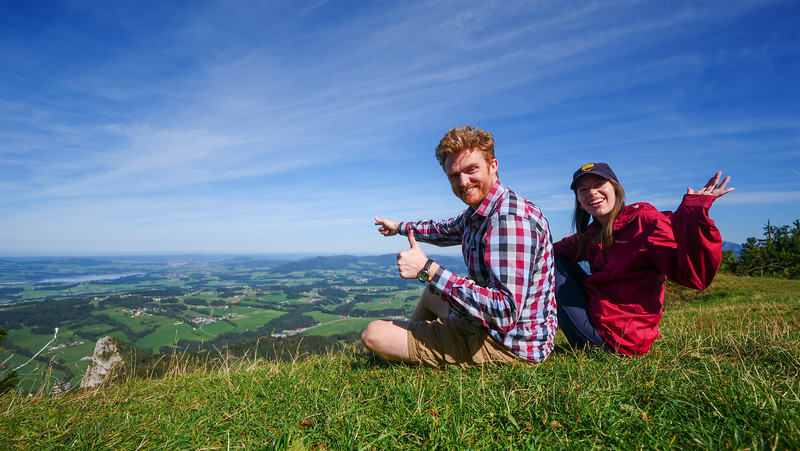
So you’ve spent a few days enjoying all the things to do in Salzburg, Austria and now you’re craving a bit of time in the mountains. Why not enjoy a day trip to Gaisberg?
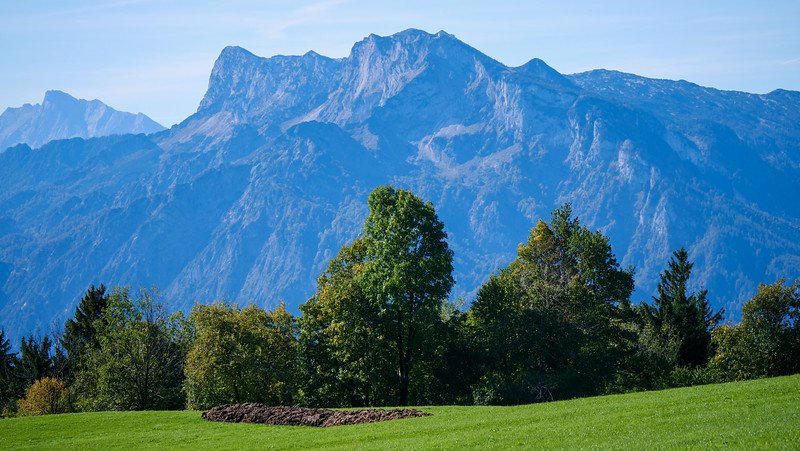
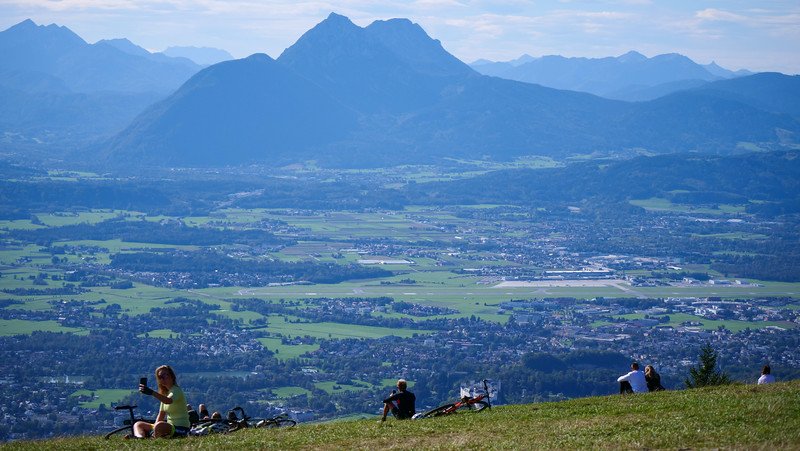
Gaisberg is a local mountain in Salzburg that stands 1,287 meters above sea level in the Salzkammergut Mountains, which is a mountain range that forms part of the Northern Limestone Alps.
Public transport makes it super easy to get there and all the hiking trails start at bus stops, so you can just ride the bus and start hiking.
Its ease of access makes it a popular day hiking destination with locals and visitors alike.
Plus, you have the draw of delicious Austrian cuisine that you can enjoy once you reach the mountaintop!
So if a day hiking in the mountains, enjoying alpine views, and feasting on hearty dishes is your idea of a good time, read on to find out how you too can do this day trip to Gaisberg.
How to get to Gaisberg
Getting to Gaisberg from Salzburg’s old town is very easy and only takes 30 minutes using public transportation.
That’s right! You can hop on a bus in the old town and in less than half an hour you can be enjoying the Alps!
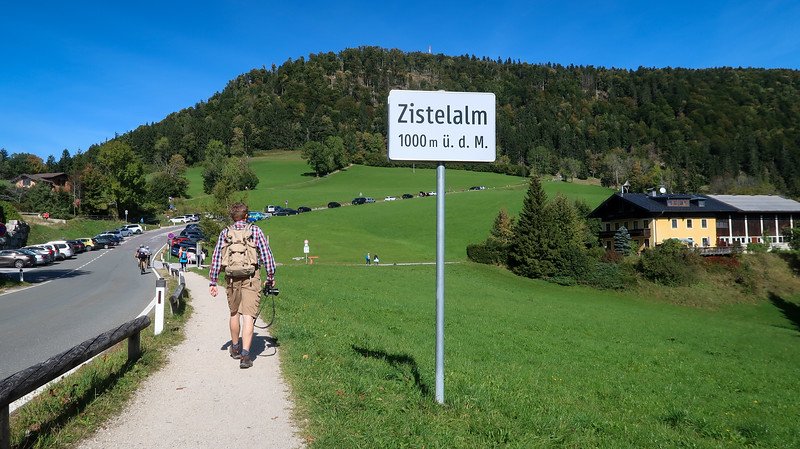
We took bus #151 from Mirabellplatz. If you want to ride the bus right to the peak then get off at Gaisberg Gaisbergspitze. However, if you plan to hike you’ll want to get off earlier.
We got off at Gaisberg Zistelalm and joined the trailhead there.
Hiking Trails in Gaisberg
The nice thing about hiking in Gaisberg is that there are trails of all lengths and levels of difficulty. Hiking trails can range from 15 minutes to 3 hours, and are between 1 and 11 kilometres in length, so there’s something for everyone.
There are 3 circular trails in Gaisberg:
- Route 13a – Gaisberg Circular Trail – easy – 1-1½ h – 5.9 km – Line 151 to Zistelalm
- Route 13b – Zistel Trail – easy – 30 min – 2.6 km – Line 151 to Zistelalm
- Route 13c – Gaisberg Peak Circular Trail – easy – 15 min – 1 km – Line 151 to Gaisbergspitze
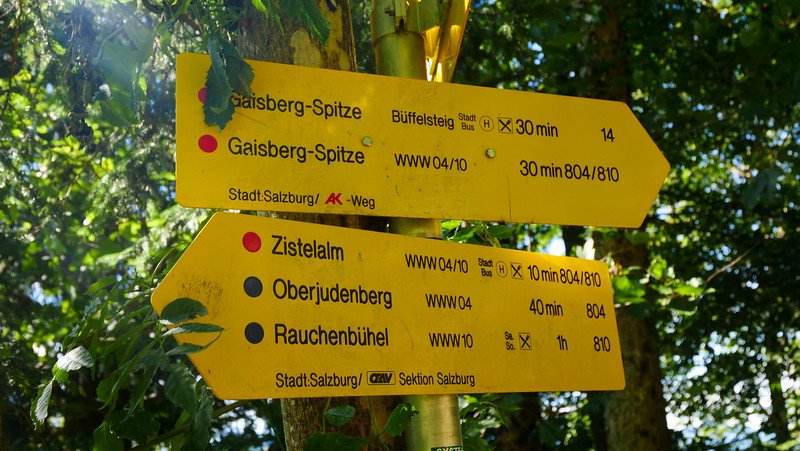
There are also several one-way hiking trails in Gaisberg. You can do them round trip, or hike up and then take the bus down:
- Route 12 – easy – 2¾ h – 6 km – Line 151 to Bildungscampus Gnigl, Line 2 or 23 to Obergnigl
- Route 13 – moderate – 2½ h – 6 km – Line 6 to Ludwig-Schmederer-Platz
- Route 14 – easy, but rocky – 2½ h – 8 km – Line 6 to Ludwig-Schmederer-Platz
- Route 15 – Dr. Herbert Walterskirchen Trail – easy – 2¾ h – 11 km – Line 7 to Aigen S-Bahn
- Route 16 – easy – 3 h – 11 km – Line 7 to Josef-Kaut-Strasse or Valkenauerstrasse
- Route 17 – moderate (long, steep and slippery in parts above Zistelalm) – 3 h – 11 km – Line 7 to Josef-Kaut-Strasse (17a) or Valkenauerstrasse (17)
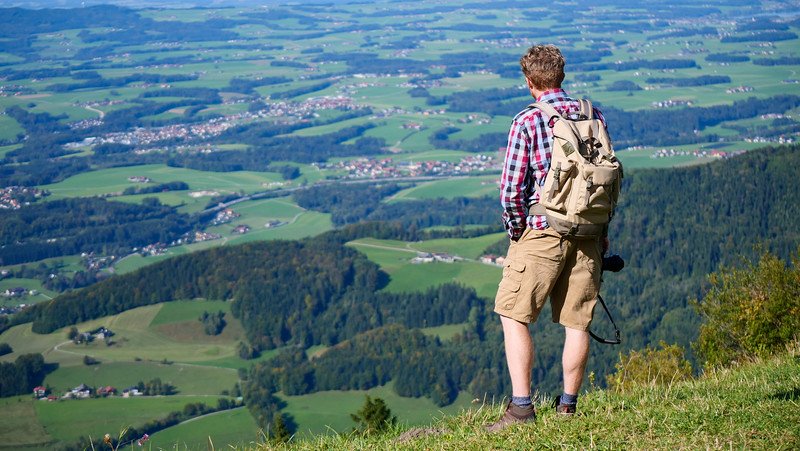
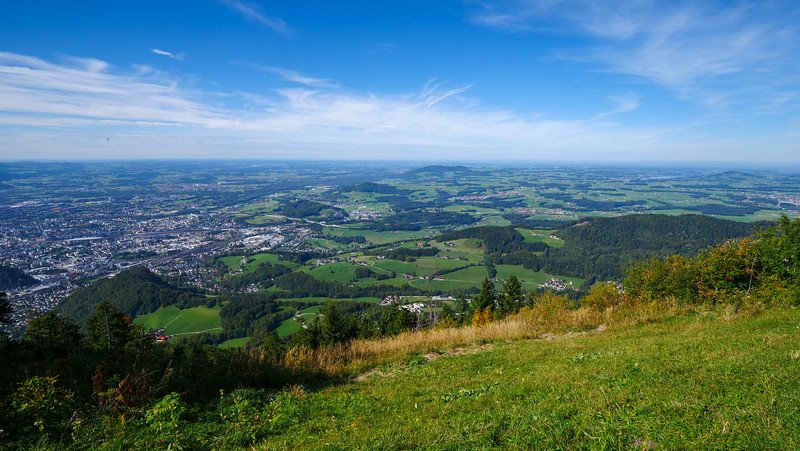
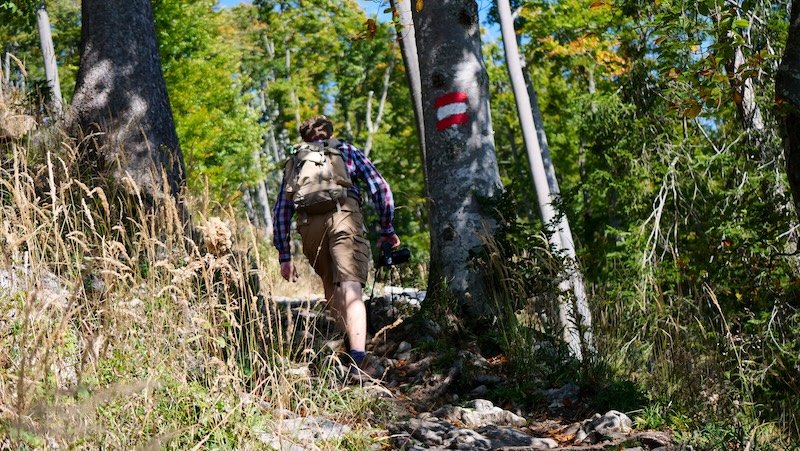
We hiked up from Zistelalm and alternated between a trail that started off a bit steep, and later another that was easier and zigzagged the rest of the way up the mountain.
There were plenty of markers along the way, so we felt quite confident even though there weren’t very many hikers on our trail.
You can find the Gaisberg hiking trails map here complete with bus lines, bus schedules, and descriptions of each trail.
Eating Austrian food in Gaisberg
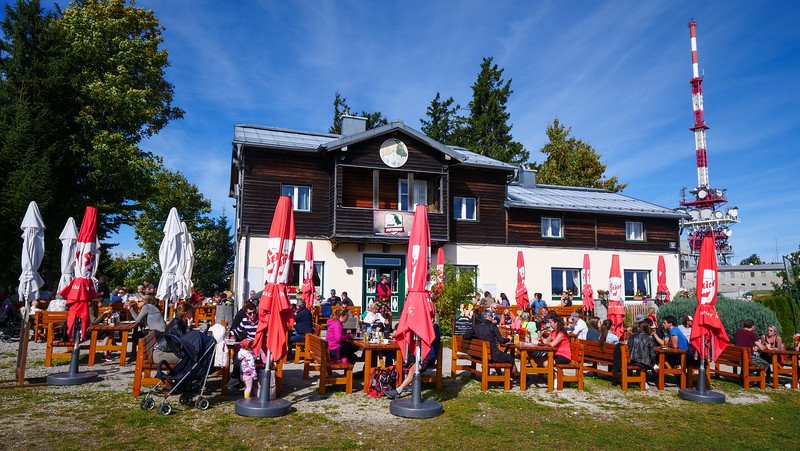
Once we reached the summit of Gaisberg, there were a couple of restaurants to choose from. We ate at Goasn Wirsthaus.
We were lucky enough to snag a table outdoors after waiting around a few minutes (it was packed!) and proceeded to order some typical Austrian dishes.
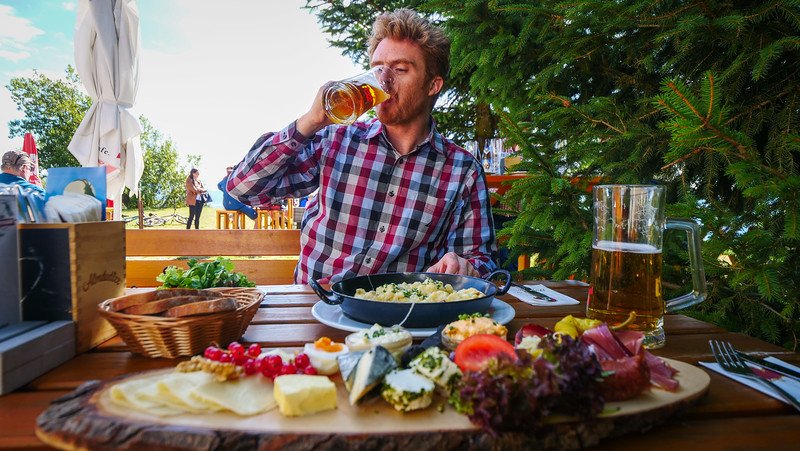
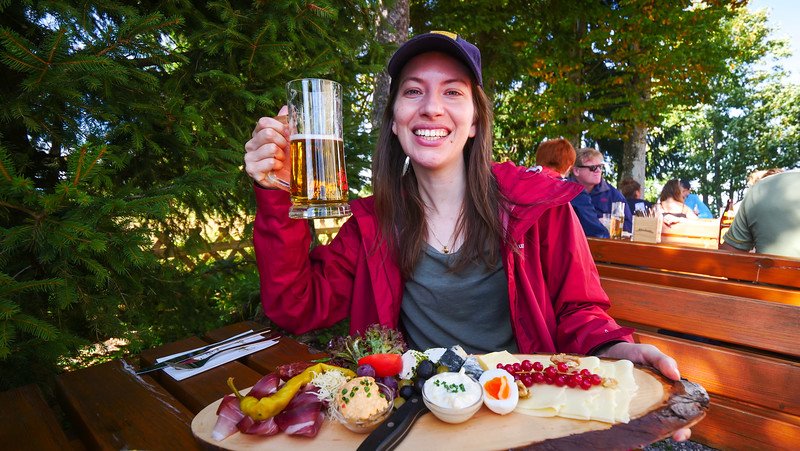
We got Marend, which is a snacking board featuring an assortment of mountain cheeses, cured meats, sausages, spreads, breads, grapes, eggs, olives, and more. It felt like the perfect alpine snack and paired wonderfully with two pints of Stiegl beer.
And because we were pretty hungry from the hike up, we also got the Kasnocken, a noodle dish that’s fried in a pan with cheese and topped with crispy onions.
This was actually one of our favourite meals in Salzburg, so we’d highly recommend it if you’re able to get a table!
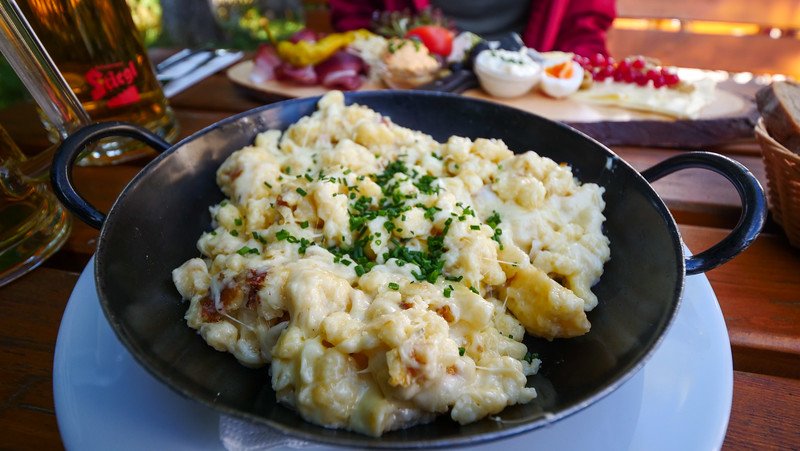
If this dish sounds familiar its because this is Austria’s version of Germany‘s Käsespätzle. If you’re travelling in the region, you’re bound to encounter it on the menu often!
There are a few other restaurants sprinkled around Gaisberg, so depending on which trail you hike, you’ll have different dining options along the way.
Is a day trip to Gaisberg worth it?
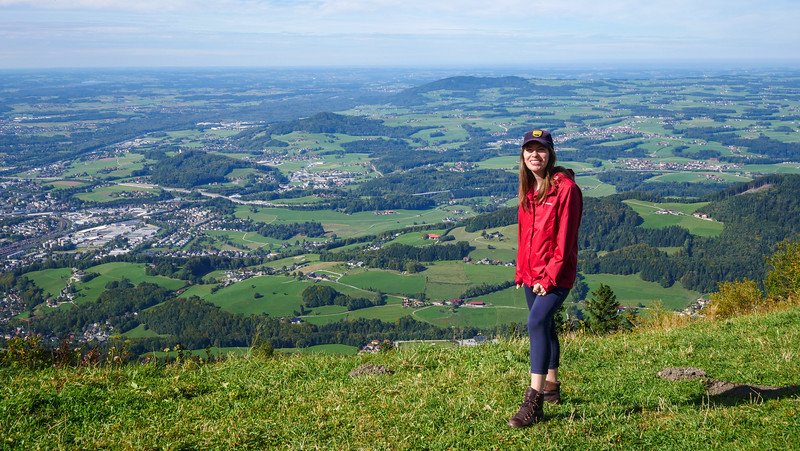
After enjoying a leisurely lunch and soaking in the views from the mountaintop, we then hopped on local bus 151 and rode back into Salzburg. The trip was as easy as can be and it offered a nice taste of nature without having to travel very far.
It’s easy to see why Gaisberg is such a popular destination with locals and visitors alike – the ease of getting there makes it the hiking destination of choice.
I also think a day trip to Gaisberg is a nice way to get a taste of the Alps, especially if your travels aren’t taking you as far as Tyrol (though I would recommend adding the Alpbachtal Valley and attending the Almabtrieb to your list for a future visit!)
If this day trip to Gaisberg is of interest, then you might also enjoy a day trip to Werfen. This is another super easy day trip from Salzburg (only 45 minutes by train) and you can spend the day hiking The Sound of Music trail, visiting Hohenwerfen Castle, rafting on the Salzach River, touring the largest ice caves in the world, or enjoying more Austrian cuisine.
Gaisberg Day Trip: Practical Tips and Extra Mountain Adventures
The basics are all in the section above. Here’s the practical planning side — the best season for each type of visit, what to pack, a few activities we didn’t get to try, and some food notes beyond the Marend and Kasnocken we’ve already raved about.
When to Hike Gaisberg
Gaisberg is worth visiting in all four seasons, but each one delivers a different experience:
- Spring: Wildflowers, flowing streams, and quieter trails. Some paths can be muddy after snowmelt, so waterproof shoes are useful.
- Summer: Peak hiking and cycling season with long daylight hours and busy mountain restaurants. Weekends can get crowded — an early start helps.
- Autumn: Crisp air, golden forest light and panoramic views of the Salzkammergut. Arguably the most photogenic time to visit and one of the best seasons for Austrian harvest festivals in the valleys below.
- Winter: Groomed snow paths for winter hiking and snowshoeing near the peak, plus informal sledding for those who bring their own toboggan. Check current conditions and dress properly — Bus 151 runs year-round, so access is straightforward regardless.
What to Pack
- Comfortable hiking shoes — waterproof if you’re visiting in spring or after rain
- Light jacket or fleece — even in summer, the mountaintop is noticeably cooler than the city
- Rain jacket — mountain weather shifts quickly
- Reusable water bottle — refill at the mountain restaurants
- Sunscreen and hat — UV intensity is higher at altitude
- Small snacks — for the trail; though honestly, you’ll want to save your appetite for the summit
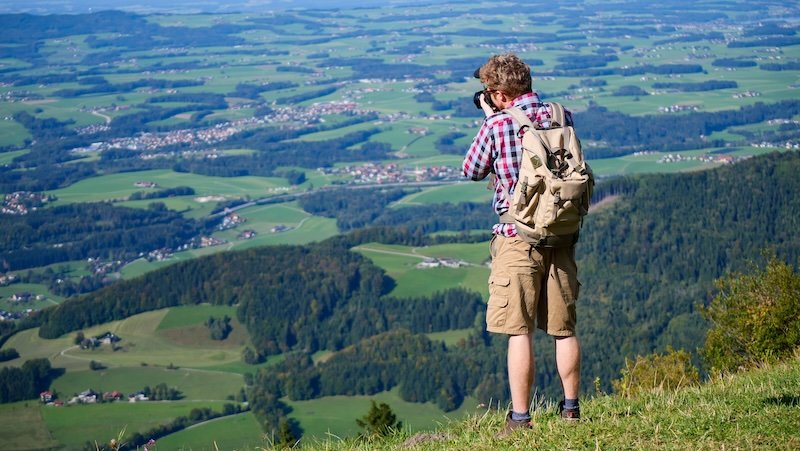
- Camera or phone — the views over Salzburg and the lakes are worth the extra battery
- Cash or card — for bus fares, hut food, and a cold Stiegl at the top
- Trekking poles — optional, but useful on the steeper or rockier sections
- Offline map — the Gaisberg trails map is downloadable; trail markers are good, but having it saved helps
The Gaisberg’s Racing and Railway Past
Before Bus 151 existed, the way up Gaisberg was a rack railway. The Gaisbergbahn opened in 1887 and hauled day-trippers from the city up to the summit for over four decades, until it was dismantled in 1928 and replaced by the road that the bus now follows. Traces of the old trackbed still cross a couple of the hiking routes, including a stretch simply marked “Zahnradbahntrasse” on the trail signs — a nod to the cogwheel line that once ran there.
That new road turned Gaisberg into a motorsport venue almost immediately. From 1929 to 1969, the Gaisberg Hillclimb was one of Europe’s most prestigious hill climb races, part of the European Hillclimb Championship from 1932 onward. Drivers like Rudolf Caracciola and Hans Stuck once pushed factory Alfa Romeos and Porsches up the same switchbacks hikers now walk, watched by crowds that topped 25,000 in its 1950s heyday. Safety concerns eventually ended the competitive race in 1969, but it wasn’t forgotten — since 2003, the Gaisbergrennen has returned each June as a regularity rally for historic cars, with vintage vehicles once again working their way up the mountain at a rather more sedate pace than their 1960s predecessors.
Activities Beyond Hiking
If hiking isn’t your main motivation, Gaisberg has plenty of other reasons to make the bus trip.
Cycling up Gaisberg
The winding road up to Gaisberg is a classic climb for local cyclists and a regular weekend challenge for road bikers from Salzburg. Rent a bike in the city and join the steady flow of weekend riders, or join a guided City and Countryside Mountain Bike Tour, which starts in Salzburg’s old town before heading out into the surrounding countryside with optional technical training along the way. E-bikes make the ascent very manageable for casual cyclists who still want to take in the views.
Tandem paragliding
The peak of Gaisberg is a licensed launch point for tandem paragliding and watching pilots glide out over Salzburg is impressive from the restaurant terrace. If you want to go up yourself, several experienced local operators run tandem flights from here, including this tandem paragliding flight over Salzburg from Gaisberg and this Top of Salzburg tandem paragliding experience. You take Bus 151 from Mirabellplatz, meet your pilot at the summit, take a few steps off the edge, and float above the Alps. No experience needed, all gear provided.
Winter activities
In colder months, Gaisberg becomes a snow outing. Bring a sled for some informal tobogganing on the lower slopes, try the groomed winter hiking paths, or simply sit in a mountain hut with a hot chocolate and watch the snow settle on the Alps. The bus still runs, which makes winter visits nearly as easy as summer ones.
Gentle walks and nature
Not every trip up the mountain needs to be a workout. The shorter circular loops through wildflower meadows and cool forest paths are ideal for a slow afternoon walk, a picnic, or simply sitting quietly somewhere with a view. Gaisberg works just as well at a low tempo.
Cross-Country Skiing and Quieter Winter Trails
Beyond the toboggan and the winter hiking paths, Gaisberg quietly doubles as a cross-country skiing spot. A network of groomed Loipen threads through the lower slopes and surrounding meadows, ranging from short beginner loops to longer routes for skiers looking to put in real distance. It’s a far less crowded way to spend a winter morning than the summit paths get on a clear weekend, and the trailheads are reachable from the same Koppl-side bus stops that serve some of the summer hiking routes. Rental gear generally needs to be sorted in the city beforehand, since there’s no equipment hire up on the mountain itself.
Where the Locals Eat: Goasn Wirtshaus and Goasn Alm
Goasn Wirtshaus isn’t the only Kohlmayr family operation at the summit — it shares the site with the Goasn Alm, a cosier hut-style neighbor with the same 360-degree panorama and a slightly more rustic menu. Between the two, there’s flexibility depending on whether you want a proper sit-down meal or something closer to a mountain-hut snack stop, and if one is fully booked on a busy weekend, the other is worth checking. The operation has picked up a bit of local recognition too, having been named Salzburg’s most popular culinary excursion destination by the Austrian food guide Falstaff — a decent sign for a spot that’s easy to dismiss as just “the restaurant at the top of the bus route.”
More Austrian Mountain Food to Try
Beyond the Marend board and Kasnocken we already covered, here are a few other dishes worth ordering if you spot them on the menu:
- Gulaschsuppe: Rich beef goulash soup — warming after a cold summit walk.
- Kaiserschmarrn: Fluffy shredded pancakes with icing sugar and fruit compote. Works as dessert or, honestly, as lunch on a mountain.
- Apfelstrudel: The classic warm apple strudel with cream or vanilla sauce.
- Brettljause: A rustic board of cold cuts, pickles, cheese, radishes, and bread — best enjoyed with a panoramic view and no particular rush.
- Stiegl beer or Almdudler: The herbal lemonade that’s an Austrian staple — try it if you haven’t.
Mountain restaurants at Gaisberg also serve soups, lighter salads and child-friendly options, so there’s something workable for everyone in the group.

Other Things to Do Near Gaisberg
Sound of Music sites
Many iconic filming locations are within easy reach of Salzburg. Before or after your hike, visit Hellbrunn Palace, Mirabell Gardens, or Leopoldskron Palace for a taste of cinematic history that’s particularly fitting given Gaisberg’s own place in the film’s landscape.
The Salzkammergut lakes
The Salzkammergut region spreads east of Salzburg with one stunning alpine lake after another. If you’re keen for a swim or a boat ride, or just lakeside time with a good view, Fuschlsee, Wolfgangsee, or Mondsee are all reachable by bus or train. If you’d rather not plan the logistics yourself, the Austrian Lakes and Mountains half-day tour covers Fuschl Castle and a boat crossing on Wolfgangsee to the town of St. Wolfgang, with a coffee-house stop replacing the boat ride in winter.
Salzburg’s Old Town in the evening
After a day on the trails, the Old Town makes a natural finale. Coffee and cake at a traditional café, a classical concert, or climbing up to Hohensalzburg Fortress for the sunset view — all within walking distance of wherever Bus 151 drops you in the city.
Wellness and thermal baths
A few hotels and spa facilities in the Salzburg area offer thermal baths with mountain views — a useful thing to know after a full hiking day when your legs would appreciate something warmer than a cold shower.
Responsible Hiking
Austria takes real pride in its natural spaces and visitors are expected to do the same:
- Stay on marked trails to prevent erosion and protect plant life.
- Carry your rubbish back to Salzburg — bins are scarce on the mountain.
- Don’t pick wildflowers.
- Greet fellow hikers with “Grüß Gott” — the local hello.
- Keep noise low and give wildlife space.
Gaisberg Trip Essentials
| Item | Need-to-Know |
|---|---|
| Elevation | 1,287 m (4,222 ft) |
| Vertical gain (Zistelalm to summit) | ~350 m (1,150 ft) |
| Bus 151 frequency | Roughly hourly on weekdays and about every 30 minutes on weekends and holidays, running from around 9:15 AM to 5:15 PM from Mirabellplatz — check the current timetable before you go, since it’s not an all-day frequent service |
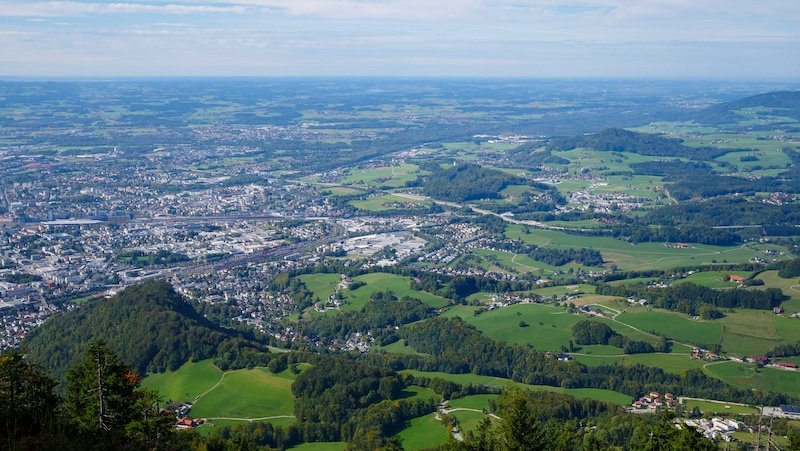
| Best panorama spots | Summit radar dome (360° views) · Paraglider meadow (5 min west of Goasn Wirt) · Nockerlbank Viewpoint on Route 13a |
Where to Stay in Salzburg
Bus 151 departs from Mirabellplatz, which is in the heart of Salzburg’s Old Town. All five hotels below are within walking distance of that stop, which means you can roll out of bed, walk a few minutes, and be on the bus to the Alps without a taxi or early morning scramble. An added bonus: guests staying in registered Salzburg accommodation receive the Salzburg Guest Mobility Ticket, which covers all public transport in the province — including Bus 151 to Gaisberg — at no extra cost.
- Arthotel Blaue Gans — a boutique hotel in the historic Old Town with a distinctive focus on contemporary Austrian art, with original works placed throughout the rooms and common spaces. Walk to Mirabellplatz in around 10 minutes. Reliably excellent service and a good restaurant. Confirmed on Booking.com.
- Hotel Krone 1512 — a small, recently renovated boutique hotel on a cobblestone pedestrian lane in the Old Town, a short walk from both Mirabellplatz and Mozart’s birthplace. Family-run with a notably warm welcome. Very Good on Booking.com with consistently strong reviews for personal service.
- Small Luxury Hotel Goldgasse — a luxury boutique in an 800-year-old building in the pedestrian Old Town, close to Hohensalzburg Fortress and within walking distance of Mirabellplatz. Well placed for a post-hike evening stroll through the Old Town with dinner and a beer before bed. A honeymoon or splurge-night pick — confirmed on Booking.com and Hotels.com.
- Hotel am Mirabellplatz — a family-run boutique hotel that sits directly opposite Mirabell Palace, right at the Bus 151 departure point itself. Modern rooms with a mini-bar and air conditioning, a breakfast buffet, and on-site childcare services, which makes it a solid pick for families doing the Gaisberg day trip with kids in tow. Confirmed on Booking.com.
- YoHo — International Youth Hostel — a budget-friendly hostel about a 10-minute walk from Mirabellplatz, with private rooms as well as dorms, a communal kitchen, free WiFi, and nightly Sound of Music screenings in the common room. A solid option for solo travelers and backpackers who still want an easy walk to the bus stop. Confirmed on Booking.com.
Gaisberg Day Trip FAQ
What makes Gaisberg a great day trip from Salzburg?
It’s about 30 minutes by bus, has well-marked trails for all levels, sweeping Salzkammergut and Northern Limestone Alps views, and mountaintop restaurants serving hearty Austrian food. You can bus to trailheads, hike as much or little as you want, and bus back into the city whenever you’re ready.
How do I get there on public transport?
Take Bus 151 from central Salzburg (Mirabellplatz) toward Gaisberg. For the summit with minimal hiking, get off at Gaisbergspitze. For a scenic ascent, get off at Zistelalm and follow the waymarks to the top. The bus runs roughly hourly on weekdays and more frequently on weekends and holidays, so it’s worth checking the current timetable rather than assuming a bus every half hour.
Which beginner-friendly loop should I pick?
Three easy circular options: Route 13a Gaisberg Circular (5.9 km, 1–1.5 hours) from Zistelalm; Route 13b Zistel Trail (2.6 km, ~30 minutes) from Zistelalm; Route 13c Peak Circular (1 km, ~15 minutes) from Gaisbergspitze. All are well signed and suitable for families.
I want a proper hike with some ascent — best route?
Start at Zistelalm, take the steeper forest path up, and descend via the gentler zigzag trail. Expect roughly 350 m of vertical gain to the summit. Confident hikers can link loops or pick a one-way route (Routes 13–17) and bus down.
Can I mix hiking and transit — up one way, down the other?
Yes, and it’s one of the best things about Gaisberg. Hike one direction and ride Bus 151 the other depending on legs, weather, and how long lunch goes.
What are the best viewpoints for photos?
- Gaisbergspitze (by the radar dome) for 360° panoramas
- Paraglider meadow (a short walk west of the huts) for action shots as pilots launch
- Windows on the Route 13a circular for Salzburg city and lake district layers
Where should I eat at or near the top?
Goasn Wirtshaus near the summit is what we’d recommend from personal experience — the Marend board and Kasnocken were one of our favourite meals of the whole Salzburg trip. It shares the site with the Goasn Alm, so if one terrace is full the other is usually an option.
What should I pack for a simple day out?
Comfortable hiking shoes, a light wind and rain layer, water, sunscreen and a hat, snacks, and small cash or a card for huts and the bus. In shoulder seasons, an extra warm layer for the summit makes a real difference.
When is the best season to go?
- Spring: Wildflowers and fewer crowds (trails can be muddy)
- Summer: Long days and busy terraces — start early on weekends
- Autumn: Crisp air and golden larches — the most photogenic season
- Winter: Snow paths, cross-country skiing, and informal sledding; check conditions before going
Is Gaisberg suitable for kids, seniors, or casual walkers?
Absolutely. Use Bus 151 to reduce the ascent, pick the easy loops, and build in hut breaks. Trail markers are clear throughout. Avoid icy or steep sections in winter without appropriate footwear.
Can I bring a dog or a bike?
Dogs are welcome on a lead; bring water and be mindful around livestock areas. The Gaisberg road is a local cycling classic — share the road, descend carefully, and give hikers space near the summit paths.
Any quick add-ons if I have extra time?
Salzburg Old Town for an evening stroll, cake, and a visit to Hohensalzburg Fortress at sunset. Werfen (Hohenwerfen Castle, Eisriesenwelt ice cave, Sound of Music Trail) for a second full day. Or lake-hopping in the Salzkammergut — Fuschlsee and Wolfgangsee are both accessible from Salzburg.