
So, you’re a foodie and you’re wondering what foods to try in Takayama, Japan on your visit? Well, we’ve got you sorted!
When Sam and I travelled to Takayama, we made it our mission to try as many dishes as possible ranging from street food to haute cuisine.
We knew we wanted to try Takayama noodles and Hida beef, which are two local specialities, but aside from that, we also ended up discovering traditional tea houses serving a myriad of teas and desserts, enjoying multi-course kaiseki meals at our ryokan, and trying sansai cuisine which strictly utilizes foraged mountain vegetables.
Of course, our visit to Takayama also included plenty of sightseeing and a fun day trip to Shirakawa-go to see the farmhouses, but as you’ll soon discover, food was a major focus of the trip.
I hope you’ve brought your appetite because this Takayama food guide is going to make you hungry!
Foods to Try in Takayama, Japan That Will Make Your Mouth Water!
All The Best Things To Try Eating and Drinking in Takayama, Japan
Takayama Ramen
The fun thing about eating ramen in Japan is that every city has its own take on the dish, and of course, one of the foods to try in Takayama is its ramen!
Takayama noodles were high on our list, and it wasn’t long before we found a noodle shop that lured us in with its replica ramen bowls.
Seriously, you’ve got to love Japan’s fake food displays – they just make everything look so enticing!
We grabbed a table at Kajibashi, a cosy ramen restaurant with dark wood panels and a dimly lit interior.
I couldn’t help feeling like I was at a pub, except with bowls of ramen on the menu.
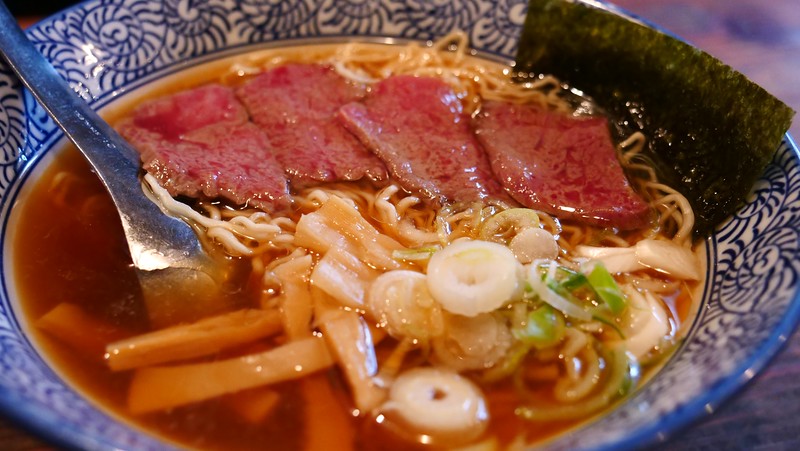
Sam and I decided to order two different bowls of ramen to do a little comparing.
I got the classic Takayama ramen which came in a dark miso broth with noodles, bamboo shoots, scallions, seaweed and a slice of pork.
Meanwhile, Sam got the Hida beef noodles featuring exactly the same ingredients, except the pork was swapped for four slices of Hida beef and a price tag to match.
We found the Takayama noodles to be thinner and curlier than previous ramen experiences.
The broth was enriched with soy sauce and miso, so it was quite a bit saltier than I’m used to, but still very tasty.
Also, note that we got the regular bowls but you can go even bigger if you’re feeling hungry!
Hida Beef
Another popular food to try in Takayama is Hida beef.
Hida beef is the name given to beef from black-haired Japanese cattle that have been raised in the Gifu Prefecture.
What sets this beef apart is the marbling (a mesh-like fat that runs through the meat), which makes it quite tender and gives it a distinct juiciness.
We tried Hida beef a few different ways during our visit to Takayama.
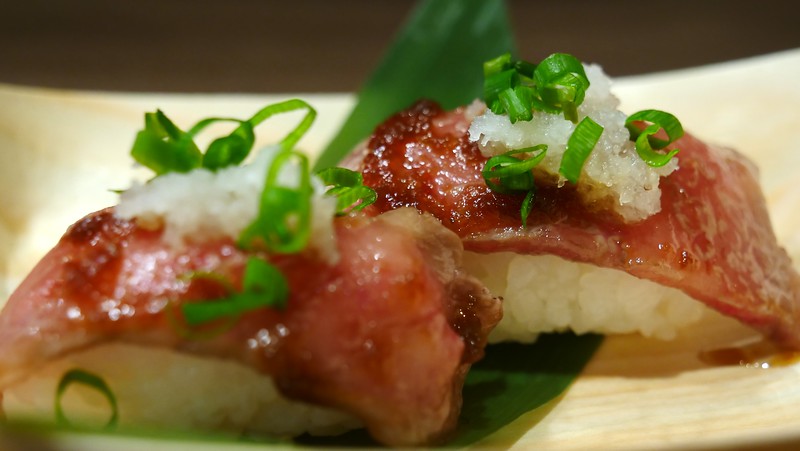
First, we tried Hida beef sushi, also known as Hida beef nigiri, where it is served on top of rice.
The meat was lightly torched and that melted a bit of the fatty marbling. It was served slightly pink (medium-rare) and just melted in our mouths.
The Hida beef nigiri is one of those must-try foods in Takayama and the best part is that you can get it in restaurants or as street food.
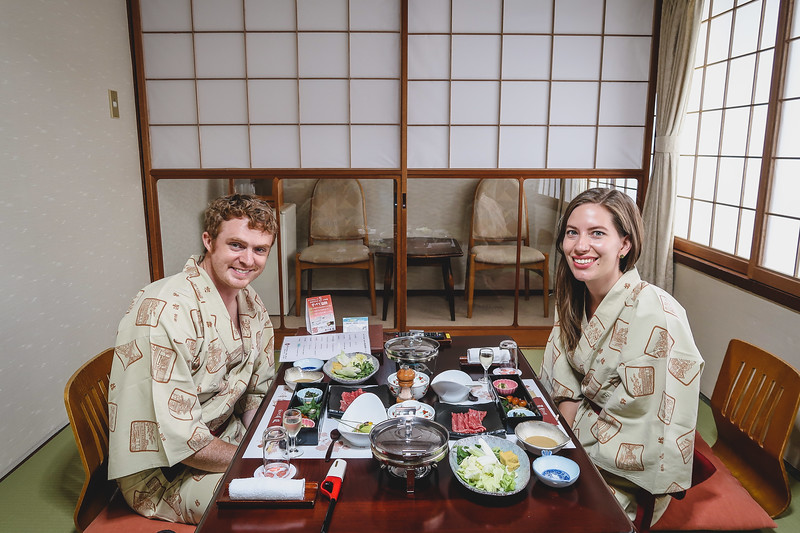
Because the ryokan where we spent the night specialized in Hida beef, we also got to try it at dinner time 3 different ways.
We had Hida beef steamed buns, Hida beef shabu shabu, and lastly, Hida beef steak. Each dish was so unique and showcased the versatility of the beef.
Most restaurants in Takayama feature Hida beef in some shape or form, so keep your eyes open if you want to try this local speciality.
Street food and snacks
Sam and I really enjoy visiting markets and trying the local street food wherever we travel, so in Takayama we did exactly that.
We visited the Miyagawa Morning Market, which is set on the east side of Miyagawa River and also spreads out to some of the side streets.
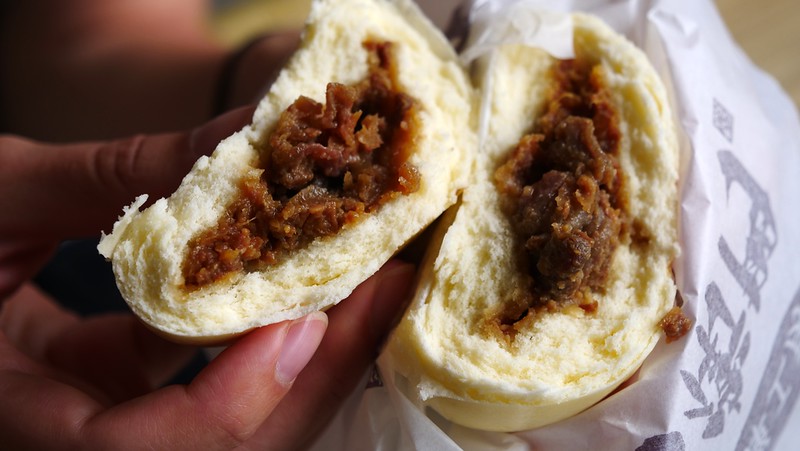
Here’s a list of some of the street food we tried along with prices:
- Chestnut Ice Cream: a wafer cookie shaped like a chestnut, but filled with vanilla ice cream. It would’ve been cool if it was actual chestnut ice cream – ¥250
- Hida Beef Bun: a plump steamed bun filled with sweet Hida beef and bamboo shoots – ¥430
- Hida Beef Croquette: a fried mash potato croquette with minced Hida beef – ¥190
- Hida Beef Skewer: grilled Hida beef on a skewer with a bit of ground pepper – ¥450
- Hida Beef Takoyaki: ball-shaped snack filled with pieces of beef instead of the classic octopus – ¥350
- Rice Crackers: crunchy crackers wrapped in dry seaweed with all sorts of seasonings like wasabi and spice – ¥120-150
- Soy Sauce Ice Cream: soft-serve vanilla ice cream with soy sauce, which was salty yet refreshing – ¥380
- Hida Beef Nigiri: lightly broiled Hida beef on top of rice, so think of it as beef sushi – ¥700
Tea and traditional Japanese sweets
So far we’ve talked about savoury foods to try in Takayama, but it’s time to move on to the desserts!
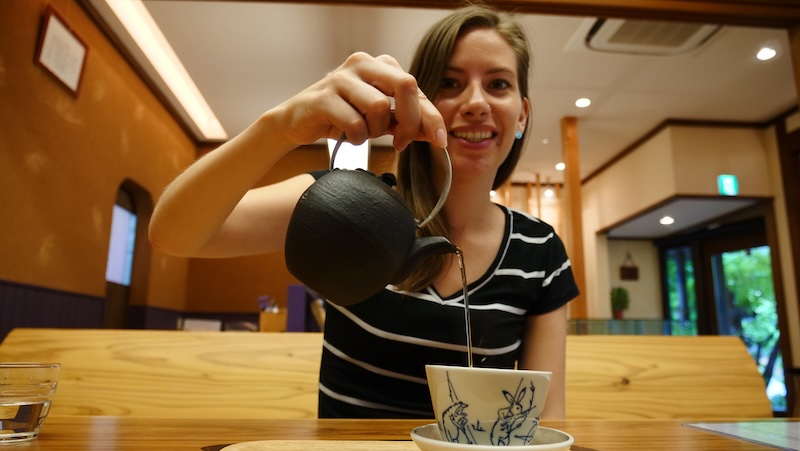
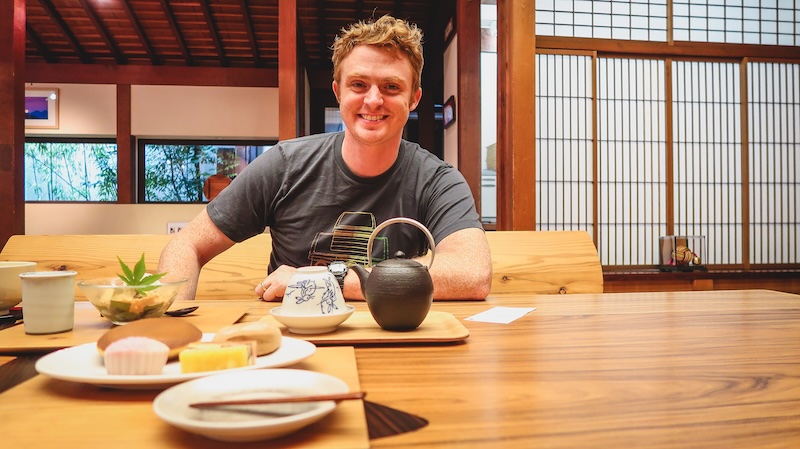
As you may have noticed in our videos, we had a lot of rain during our trip to Takayama, and since we couldn’t do much outdoors, one afternoon we decided to visit a traditional Japanese tea house.
We were the only guests at the time, so we grabbed the table on the tatami floors and got to perusing the menu.
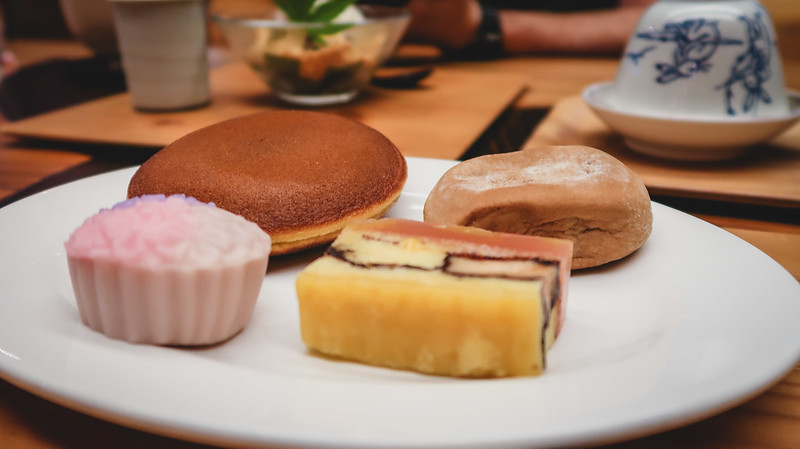
For dessert, we got the warabimochi which is a jelly-like mochi served with toasted soybean powder. The mochi was matcha flavoured and it came with red beans and a scoop of vanilla ice cream.
Aside from that, we also ordered the dessert platter, which came with four treats. There was a fluffy pancake sandwich stuffed with red azuki beans, a purple sweet potato dessert, a sponge cake with a delicious jelly, and a ginger almond cake.
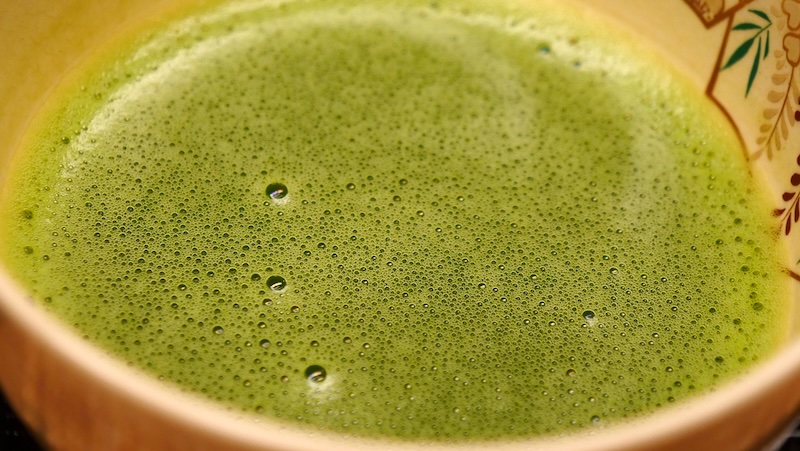
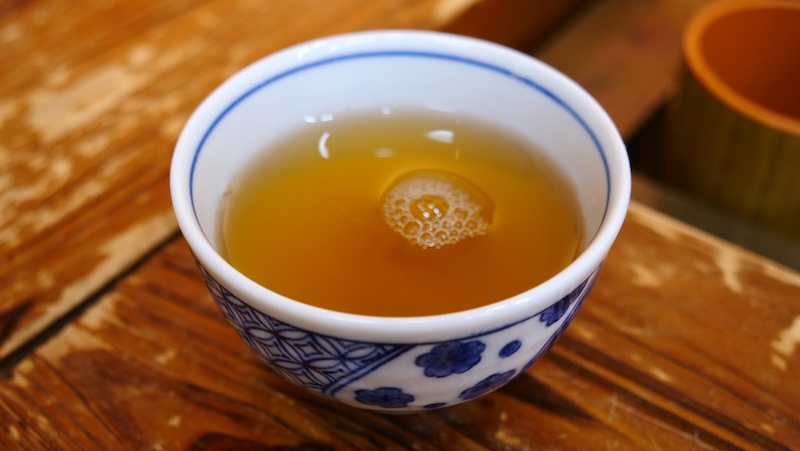
We paired all of this with a matcha tea and roasted tea. The matcha was a bit bitter for my taste, but the roasted tea was the perfect pairing for the desserts, in my opinion.
This was one of my favourite moments in Takayama and a really fun way to spend a rainy afternoon.
This particular tea house has changed hands since we last visited, so the tatami floors and low tables are gone, but they still serve tea and traditional Japanese desserts.
You can find it on GoogleMaps as 恵那川上屋 高山花筏店.
Mountain vegetables and Buddhist cuisine
When it comes to foods to try in Takayama, another unique experience is eating sansai ryori.
Sansai means “mountain vegetables” and the ingredients used in the preparation of these dishes are typically foraged not farmed.
These mountain vegetables are often used as ingredients in shojin ryori, or Buddhist vegetarian cuisine.
The restaurant we ate at was listed as “Local Cuisine Hisadaya” on GoogleMaps, but the sign read “Antique” once we reached the place.
We were a bit confused at first, but the photos matched the place even if the names didn’t!
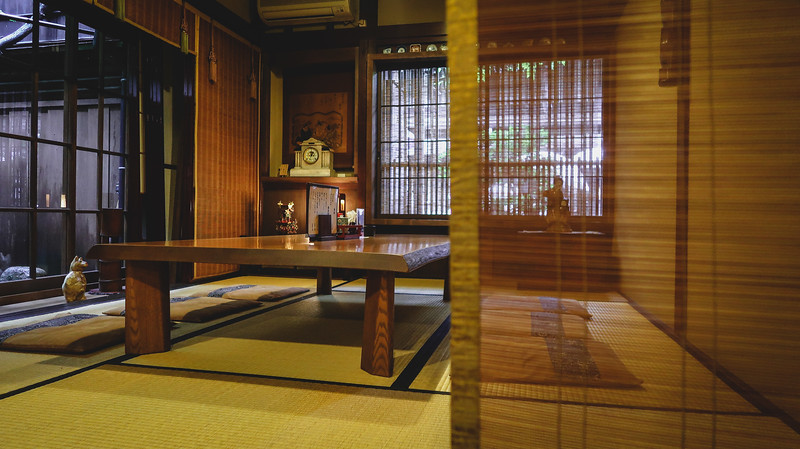
The interior of this restaurant was beautiful and everything you’d expect from Japan.
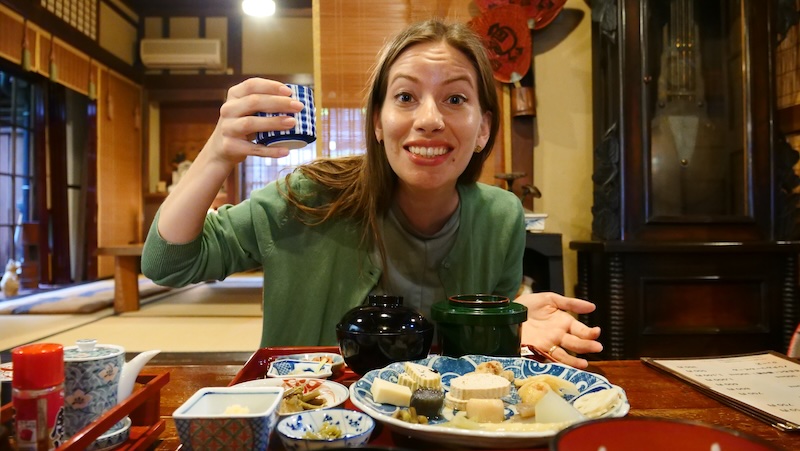
We dined in a traditional setting with low tables and cushions, soft music playing in the background, and an exquisite array of little dishes.
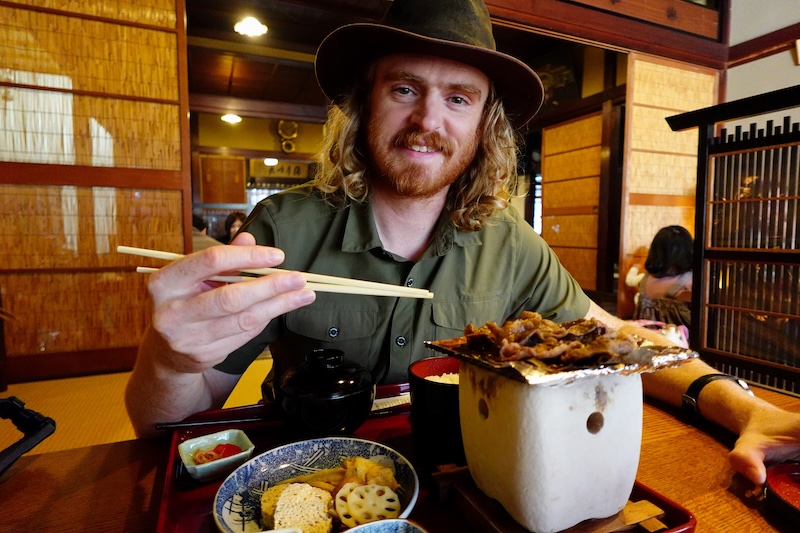
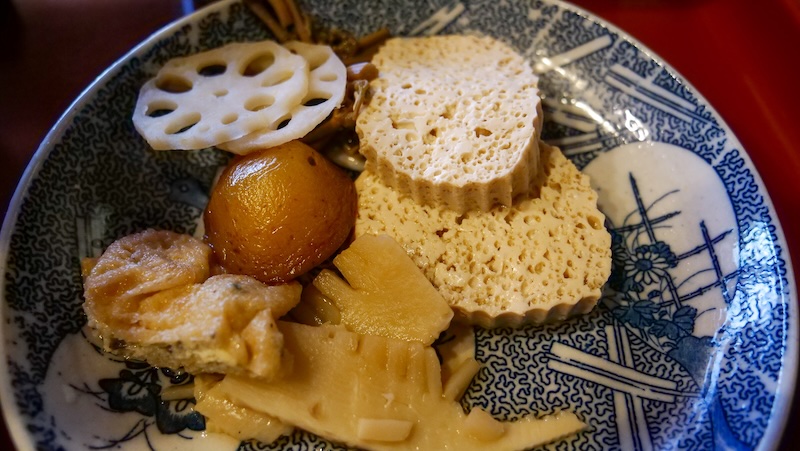
We ended up ordering two kinds of sansai ryori platters which featured compartmentalized dishes with various kinds of pickled and seasoned mountain vegetables.
The dishes featured wild mushrooms, tofu, pickles, radishes, water chestnuts, bamboo, roots and shoots.
Each meal also came with a bowl of rice and a cup of green tea.
The only difference between the platters that Sam and I ordered was that mine was entirely vegetarian and his came with fish and meat.
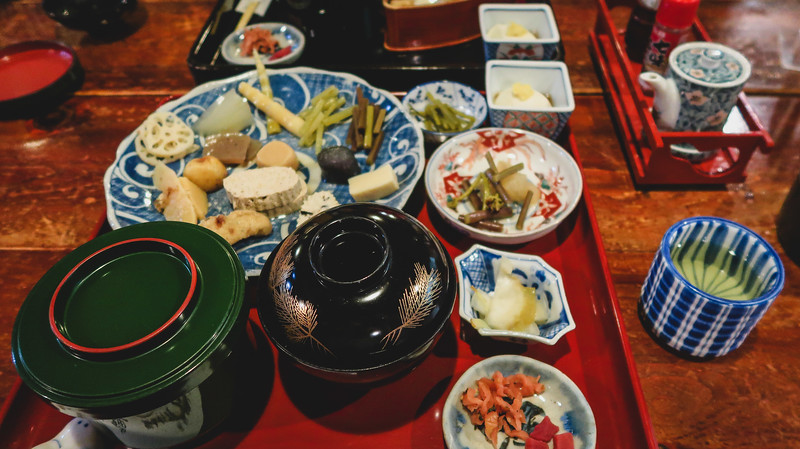
When we first decided to eat at this restaurant I wondered whether “mountain vegetables” would be a substantial enough meal or whether we’d leave hungry…well, we left beyond satisfied!
The dishes may appear small, but they all added up.
Multi-course kaiseki meal
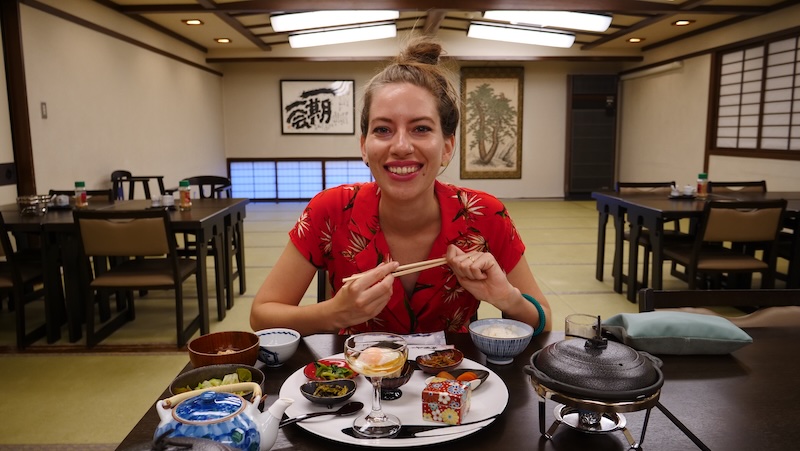
Ryokans typically specialize in kaiseki cuisine, a traditional multi-course dinner with special attention to presentation and hospitality.
These meals were once reserved for the royal noble classes, but today it’s part of Japan’s haute cuisine and staying overnight in a ryokan is a great way to get this experience.
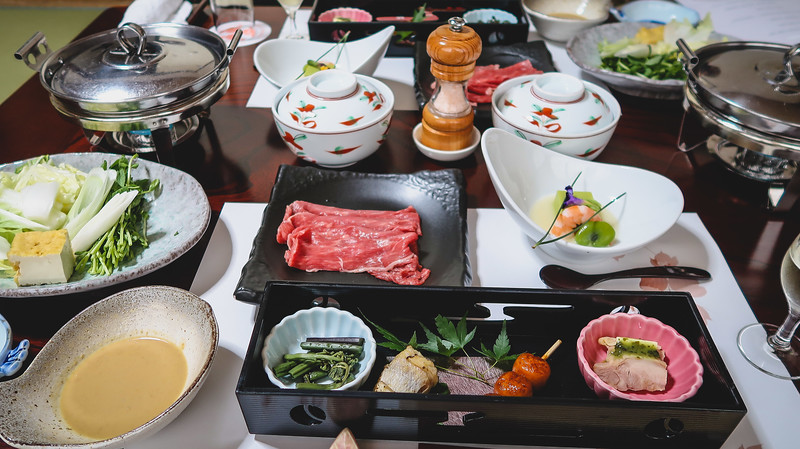
We started the meal with a sweet quince beverage, that was crisp and refreshing, and tasted somewhere between a wine and a liqueur.
We then experienced course after course of tiny dishes with impeccable presentation and attention to detail. Each dish was a work of art!
Some highlights included fatty roast pork with vegetables, bonito fish with ginger sauce and radish, and a pot of shabu-shabu with Hida beef.
We’ll take you through each and every course of the meal in the video below.
How to Plan, Order and Eat Your Way Around Takayama
If you’ve made it this far, you already know Takayama is a foodie’s paradise. You know the what — Hida beef that melts on your tongue and kaiseki plates that look like they belong in an art gallery. This section covers the how: when to arrive at which restaurant, which Japanese words are actually worth memorising, and how to build a day that hits every major taste note without blowing your budget before dinner.
When to Go Where: Meal Timing
| Meal | Best Time | Why |
|---|---|---|
| Miyagawa Morning Market | 07:00–09:00 | Vendors fire up grills early; popular stalls sell out before the tour buses arrive. |
| Lunch Ramen | 11:00 sharp | Most noodle shops seat fewer than 20 people; arrive when they open or queue in the rain. |
| Mid-afternoon Tea | 14:30–16:00 | The perfect lull between lunch and dinner. Teahouses rarely rush you, so linger. |
| Sansai Dinner | 17:30–18:00 | Hisadaya/”Antique” can only seat a handful of parties per sitting; early arrivals get the tatami alcoves. |
| Kaiseki at Ryokan | Pre-booked | Confirm dietary needs 24 hours ahead — chefs source ingredients that morning. |
Many independent restaurants close one day a week (often Wednesday or Thursday) and occasionally on unexpected winter days if conditions are poor. A quick search or phone call confirms hours on the day.
Takayama’s Second Morning Market
Almost every guide to Takayama sends you straight to Miyagawa, and it deserves the attention — but it isn’t the only morning market in town. A five-to-ten-minute walk away, in the plaza directly in front of Takayama Jinya, sits the smaller Jinya-mae Morning Market. Where Miyagawa leans into street food and souvenirs, Jinya-mae stays closer to its roots: local farmers, many of them elderly women, selling the vegetables, pickles, and mountain greens they grew themselves, with far less of a tourist-facing feel.
It’s also where you’re most likely to come across gohei mochi, a Hida specialty that rarely makes it onto restaurant menus: a flattened skewer of rice pounded (not steamed like standard mochi) and grilled over charcoal, then coated in a sweet-savoury walnut or miso glaze. It’s usually cheaper than the beef-based street food a few minutes north, and it makes a good first bite of the day before the Miyagawa stalls get crowded. Both markets run cash-only, so keep small yen notes on hand — vendors rarely have change for anything larger.
Japanese Menu Terms Worth Knowing
Menus are often in Japanese only, sometimes handwritten on wooden slats. Recognising these terms saves time and surprises:
- 飛騨牛 (Hida-gyū) — Hida beef, the star ingredient.
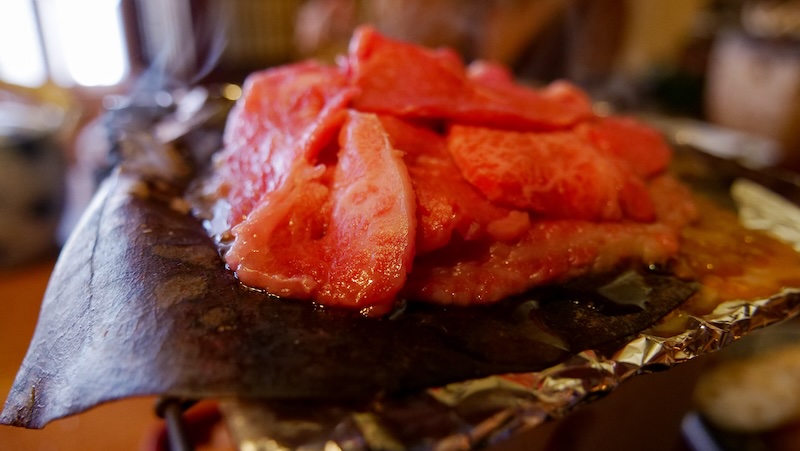
- 朴葉味噌 (Hōba-miso) — Local miso grilled on a magnolia leaf, sometimes topped with vegetables or thin beef slices.
- 高山ラーメン (Takayama rāmen) — House-style ramen, also written as chūka-soba on older signs.
- 山菜 (Sansai) — Mountain greens; look for 天ぷら (tempura) or おひたし (ohitashi, blanched greens) preparations.
- だんご (Dango) — Rice-flour dumplings on skewers. In Takayama these are often basted with soy or miso rather than the sweet soy you find elsewhere.
- 赤かぶ漬け (Akakabu-zuke) — Pickled red turnip, a staple you’ll see at breakfast buffets throughout the region.
Navigating Seating Styles
- Counter seats: Solo travellers or couples should aim for the bar — front-row views of noodles being prepared, beef being torched, or miso leaf sizzling.
- Sunken kotatsu: Some restaurants have heated tables recessed into the floor. Shoes off, legs dangling — a welcome bit of warmth on a cold evening.
- Communal benches at markets: Feel free to share space; locals often volunteer snack recommendations, and you’ll likely walk away with a new lead.
A 24-Hour Food Crawl
If you only have 24 hours in Takayama, here’s a progressive dinner plan that hits every major taste group without breaking the budget:
- 08:00 — Chestnut ice cream and dango
Wander Miyagawa Morning Market with a sweet-salty breakfast combo. - 10:30 — Hida beef croquette
Grab one on the way to Takayama Jinya; eat while walking around the magistrate’s historic house. - 12:00 — Classic Takayama ramen
Kajibashi closes once the broth runs out — arrive before the sign flips to 売切れ (sold out). - 15:00 — Matcha and warabimochi
Duck into a teahouse when the afternoon shower passes through. - 17:30 — Hōba-miso with sake
Many izakayas let you grill it yourself. Pair with local nihonshu made from Hida spring water. - 19:30 — Hida beef nigiri
Finish with two pieces from a stall near Nakabashi Bridge. Night air, lanterns, the day complete.
Total spend: around ¥6,500 (exchange rate varies; check before you go).
Guided Food Experiences Worth Booking
Self-guided eating works well in Takayama, but a handful of small-group and private experiences add context you’d otherwise miss:
- Private Old Town Food & Sake Walking Tour — A guide leads you through Sanmachi Suji tasting street snacks and local sake, translating menus and explaining the food history along the way. Good for a first evening in town, when it’s hard to know what’s worth queuing for.
- Japanese Cooking Class with a Local Family — Held inside a 200-year-old wooden machiya townhouse on Old Town’s main street, this hands-on class has you cooking miso soup, rice, and a rotating selection of home-style dishes alongside your hosts, who share stories about the house and the neighbourhood as you go. Well suited to couples or small families wanting a slower, more personal afternoon.
- Sake Brewery Tasting Walking Tour — A guided walk through the historic breweries of Sanmachi Suji, ending with a tasting session of several locally brewed varieties. Your guide explains how the region’s cold winters and mountain spring water shape the flavour — useful context if you’re already planning to sample sake at dinner.
Pairing Drinks
- Hida sake — Look for breweries like Funasaka (船坂) or Hirase (平瀬). Their junmai ginjō pairs well with delicate sansai plates.
- Doburoku — Unfiltered farm-style sake, slightly effervescent and cloudy. A warming choice for winter evenings.
- Local craft beer — Hida Takayama Beer, a small Gifu microbrewery running since the mid-1990s, bottles a well-balanced dark ale that holds up against marbled beef. It’s not typically poured on tap, so look for it at bottle shops and beer-focused bars around town rather than at the brewery itself.
- Hōjicha latte — Roasted green-tea latte found in cafés along Sanmachi Suji; a natural pairing with chestnut sweets.
Reading the Sugidama
Walk Sanmachi Suji long enough and you’ll notice the same object hanging above shop after shop: a dense ball of cedar branches clipped into a sphere, dangling from the eaves. This is a sugidama, and it isn’t decoration — it’s how sake breweries have marked themselves since the Edo period, a tradition said to trace back to a shrine in Nara dedicated to the god of sake. A freshly hung sugidama is bright green, put up around February or March to signal that the winter’s new sake is ready. From there it slowly browns over the year, so the colour of the ball tells you roughly how old that batch is: green means just-pressed, a fading olive means it’s settling into midsummer, and deep brown means it’s fully matured or already sold through.
It’s a useful thing to know while wandering the old town, because not every sugidama you see belongs to a working brewery — sake shops, izakayas, and restaurants hang them too, as shorthand for “we take our sake seriously.” At an actual brewery like Funasaka or Hirase, though, the ball out front is a real, working signal, and checking its colour before you go in gives you a decent hint of what you’re about to taste.
Budget vs. Splurge: What’s Worth It
| Experience | Cost (per person) | Verdict |
|---|---|---|
| Hida beef sushi street stall | ¥700–800 | A nice teaser — two bites and it’s gone. Worth it as a market snack, not a meal. |
| Hida beef steak at a specialty grill | ¥4,000–6,000 | The right way to understand the marbling. Cooked interactively on a hot plate. Worth every yen. |
| Kaiseki at a mid-range ryokan | Included with stay or ~¥8,000 day-guest | Do it for the cultural experience as much as the food. One of the more memorable things you can do in Japan. |
| All-you-can-eat shabu shabu | ¥3,500–4,500 | Quantity over nuance — fine for groups on a budget, but misses the point of Hida beef. |
| Tea ceremony with sweet pairing | ¥1,500–2,000 | One of the best slow-travel moments in Takayama. The wagashi are as interesting as the tea. |
Understanding Hida Beef’s Grade
The price gap in the table above isn’t arbitrary — it maps almost directly onto how Hida beef is graded. To legally carry the name, cattle must be Japanese Black (kuroge), raised in Gifu Prefecture for at least fourteen months, and certified by the Hida Beef Brand Promotion Council. From there, each carcass gets two separate scores: a yield grade of A or B, and a quality grade from 3 to 5, judged on marbling, colour, and firmness. Restaurants will sometimes mention these numbers on the menu, and it’s worth knowing what they mean — a grade 5 cut is the finest marbling available, while grade 3 is still genuine, certified Hida beef, just leaner and more affordable.
Hida beef’s reputation is relatively recent by wagyu standards. The modern breeding program traces back to a Tajima-line bull brought into Gifu Prefecture from Hyogo — Kobe beef’s home turf — in the early 1980s, and the brand didn’t earn national recognition until it won top honours at Japan’s national wagyu competition in 2002. That history is part of why menus in Takayama treat Hida beef with the same reverence Kyoto gives its Kobe: it’s a comparatively young title, but one the region has spent decades proving.
Where to Stay for the Full Food Experience
If the kaiseki dinner is the highlight you’re planning the whole trip around, staying in a ryokan that specialises in Hida beef makes every part of the experience more cohesive — the yukata, the onsen, the meals arriving course by course in your room. A few options worth knowing, across different budgets and travel styles:
- Ryokan Seiryu — A Hida beef specialist ryokan five minutes’ walk from the Old Town and three minutes from the Miyakawa Morning Market. Onsen on site, access to Spa Alpine with outdoor hot-spring baths overlooking the city. Guest reviews frequently single out the kaiseki dinner here as a highlight of their trip to Japan (rated 8.7). Best for: couples and food-focused splurges.
- Honjin Hiranoya Kachoan — Sat at the heart of Takayama Old Town, steps from the Jinya Morning Market and the Miya River. TripAdvisor Japan Top 25; meals feature Hida beef prominently. Guests can choose from 800 yukata robes, which sounds excessive until you’re standing there trying to find the right weight for the temperature. Free shuttle from the station. Best for: honeymooners and special-occasion stays.
- K’s House Takayama Oasis — A two-minute walk from JR Takayama Station and five minutes from Old Town, this hostel offers private curtained bunks alongside dorm beds, a fully equipped guest kitchen, and a zen-style common lounge built from local Hida timber. Consistently among the best-reviewed budget stays in town. Best for: solo travellers and backpackers who still want a central base for market runs.
- Rickshaw Inn — A six-minute walk from the station, with a family room that sleeps up to six on traditional futons and tatami flooring, plus a free-use kitchen and shared lounge. Rated 9.0 on Booking.com from hundreds of reviews, with guests repeatedly calling out the spacious family rooms. Best for: families wanting space without paying for a full ryokan kaiseki plan.
- Hotel Associa Takayama Resort — A larger resort on the edge of town with mountain-view rooms, a large hot-spring bathing complex looking out over the Northern Alps, and a free shuttle to JR Takayama Station. Its buffet restaurants make it an easy base if you’re combining Takayama’s food scene with a day trip to Shirakawa-go or Kamikochi. Rated 8.5. Best for: groups, families, or anyone wanting resort-style amenities over a traditional ryokan.
Seasonal Specialities
- Spring (April–May): Sansai tempura featuring fiddlehead ferns and butterbur buds — the first foraged greens of the year.
- Summer (June–August): Ayu (sweetfish) grilled whole on skewers at riverside stalls.
- Autumn (September–November): Chestnut monaka wafers and fresh-pressed apple cider from nearby Hida orchards.
- Winter (December–March): Mountain yam hot-pot (tororo nabe) and hot amazake at shrine illuminations — the right thing to be holding when it snows.
Eating Well as a Vegetarian or Vegan
Takayama leans carnivorous, but vegetarians and vegans are far from stuck:
- Shojin ryori restaurants: Ask your ryokan to reserve at least 24 hours ahead — Buddhist kitchens often need prep time for dashi made without fish flakes.
- Sansai platters: Confirm with the chef — “Niku to sakana haitte imasuka?” (Does this include meat or fish?). Most items are plant-based, but some may have katsuobushi on top.
- Hōba-miso DIY version: Order the vegetable option and grill fresh mushrooms, negi onions and bell peppers in miso until bubbling.
- Convenience store onigiri: Look for 梅 (ume) for pickled plum or 昆布 (konbu) for kelp — safe, filling, meat-free snacks between meals.
Food Souvenirs Worth Taking Home
- Keichan spice mix — A local chicken-marinade seasoning blend; works well on stir-fries back home.
- Hida beef jerky — Vacuum-sealed, travel-friendly, and addictive.
- Sarubobo cookies — Shortbread shaped like the red faceless folk talisman you’ll see throughout the town.
- Takayama ramen kits — Dried curly noodles and flavour packets for making the dish at home.
The shotengai (covered arcade) near Takayama Station has a takkyūbin desk where you can ship boxes home if your bags are full.
Takayama Food Guide FAQ
What are the absolute must-try foods in Takayama?
Hida beef in as many forms as possible (steak, nigiri, shabu shabu, buns, skewers), Takayama ramen, hōba-miso grilled on a magnolia leaf, sansai foraged mountain vegetables, and wagashi sweets with matcha at a traditional tea house.
Where should I try Hida beef and which styles are best?
For the full marbling experience, a specialty grill for steak or hot-plate searing is the move. For a quick taste, Hida beef nigiri or croquettes at Miyagawa Morning Market. Don’t skip hōba-miso with thin beef slices — it’s a local classic that’s easy to miss.
What makes Takayama ramen different?
The broth leans shoyu and miso with a salty, savoury punch; noodles are thinner and curlier than you’ll find elsewhere. Toppings are classic — bamboo shoots, scallions, nori — with the option to upgrade pork to Hida beef.
Is there good street food and what does it cost?
Yes — Takayama is one of the better snacking towns in Japan. Rough prices: buns ¥400–500, croquettes ¥150–250, skewers ¥400–500, beef takoyaki-style balls ¥300–400, soy-sauce soft-serve ¥350–400, Hida beef nigiri ¥600–800.
Where can I have tea and sweets on a rainy afternoon?
A tatami-style tea house for matcha or hōjicha with wagashi — warabimochi, dorayaki, seasonal cakes — makes for a relaxing way to spend a rainy afternoon.
What is sansai or shojin ryori — and will it fill me up?
Sansai are foraged mountain vegetables often served shojin-style (Buddhist vegetarian). You’ll get a lacquered tray of many small dishes — mushrooms, roots, shoots, tofu, pickles — plus rice and tea. The portions look modest but tend to add up to more food than expected.
How do I experience a proper kaiseki dinner?
Stay in a ryokan that specialises in kaiseki. Notify them of dietary needs 24 hours in advance; chefs source ingredients the morning of your meal. The ryokan experience — yukata, onsen, course after course arriving at your low table — is as much about the ritual as the food.
Can vegetarians and vegans eat well in Takayama?
Yes. Shojin and sansai sets, veggie hōba-miso, tempura of seasonal greens, and convenience-store onigiri with ume or konbu are all solid options. Confirm dashi without katsuobushi if you’re strictly plant-based.
What drink pairings are worth trying?
Local junmai or junmai ginjō sake pairs well with delicate sansai and kaiseki courses; cloudy doburoku is warming in winter; craft dark ale holds its own against beef; hōjicha lattes are natural with wagashi sweets.
How do I plan meals to avoid queuing?
Markets 07:00–09:00, ramen at 11:00 opening, tea 14:30–16:00, sansai and izakaya dinners 17:30–18:00. Many small shops close once they sell out — arriving early makes a real difference.
What food souvenirs are worth taking home?
Takayama ramen kits, Hida beef jerky (vacuum-sealed and easy to travel with), sarubobo-shaped cookies, keichan spice blends, and seasonal chestnut sweets. Use the takkyūbin desk near the station if your bag is already full.
Any etiquette tips for eating around town?
Queue patiently, order promptly, and slurp your ramen without hesitation — it’s expected and appreciated. Shoes off for tatami rooms; say itadakimasu before eating and gochisōsama deshita when you finish. Cash is essential at stalls; keep coins handy.
And that’s a wrap for this food guide. I hope this blog post gave you a few ideas of foods to try in Takayama and hopefully, it has whetted your appetite for Japanese cuisine in general. Whether you’re travelling to Japan for the first time or returning as a fellow adventurous eater, Takayama is one of those places that really delivers on the food front.
Happy eating, and itadakimasu!
Regional ramen with Hida beef, that is exotic!
The mountain vegetables set looks like it has well over 20 ingredients too.